Bird Question

So here’s my question of the day.

We have two dominant Little Brown Bird types here - house finches and house sparrows. At home yesterday, I had only finches in backyard. At work, the crowd by the lunch tables is entirely sparrows.

What’s different about the two ecosystems? (Note that I don’t expect actual answers.)

Energy Tradeoffs

Kurt Zenz House lays out the reasons to both laud France’s insight 30 years ago to go nuclear, as well as be concerned:

So today, France looks rather smart. It acted decisively in the 1970s to limit its dependence on fossil fuels, and now it’s better positioned than any other non-oil-exporting power to deal with increasing fuel costs and global warming. Indeed, as the world tries to contain carbon dioxide emissions, France is likely to benefit enormously from its nuclear commitment because other countries will purchase French nuclear technology and expertise. The financial markets have taken all of this into account as AREVA’s market valuation has appreciated 300 percent in the last four years.

The catch is that France now produces enough plutonium in their civilian nuclear power activities to make about 10 nuclear bombs per week. This plutonium is transported 1,000 kilometers every week in armed convoys across the country from the reprocessing facility to the fuel-fabrication facility. That material is vulnerable to theft and could be used by terrorists to vaporize a small city.

Starvation, Africa and Climate Change

Written originally elsewhere, elaborated here.

A new study by a California team looks at the effect of the warming of the Indian Ocean, which seems to be anthropogenic in origin, and how that influences precipitation in Africa. It decreases it. People go hungry as a result:

We present analyses suggesting that warming in the central Indian Ocean disrupts onshore moisture transports, reducing continental rainfall. Thus, late 20th-century anthropogenic Indian Ocean warming has probably already produced societally dangerous climate change by creating drought and social disruption in some of the world’s most fragile food economies.

The paper is Funk et al, Warming of the Indian Ocean threatens eastern and southern African food security but could be mitigated by agricultural development, in PNAS this week. It’s on on the web yet, but I’ll post a link when it goes up.

The Price of Gasoline


Just playing with a chart from a Google spreadsheet. Data source: EIA

Global Supply Chains Hit by High Energy Costs

Larry Rohter had a story in the New York Times over the weekend that began to answer one of the questions I’ve had about the embedded energy costs in the things we buy:

The cost of shipping a 40-foot container from Shanghai to the United States has risen to $8,000, compared with $3,000 early in the decade, according to a recent study of transportation costs. Big container ships, the pack mules of the 21st-century economy, have shaved their top speed by nearly 20 percent to save on fuel costs, substantially slowing shipping times.

The study, published in May by the Canadian investment bank CIBC World Markets, calculates that the recent surge in shipping costs is on average the equivalent of a 9 percent tariff on trade. “The cost of moving goods, not the cost of tariffs, is the largest barrier to global trade today,” the report concluded, and as a result “has effectively offset all the trade liberalization efforts of the last three decades.”

A remarkable graph from the latest International Energy Agency Oil Market Report:

Source: IEA

The purple line is total monthly vehicle miles travelled in the United States. The blue is percentage change year-over-year.

Everything’s Bigger in China

China is big coal, but also big green, according to Bloomberg:

China is already the world’s largest renewable-energy producer as measured by installed generating capacity, according to a report today from the Climate Group, a coalition of companies and governments that support solutions to global warming. The country is also the world’s top manufacturer of solar cells and will be the leading exporter of wind turbines by 2009.

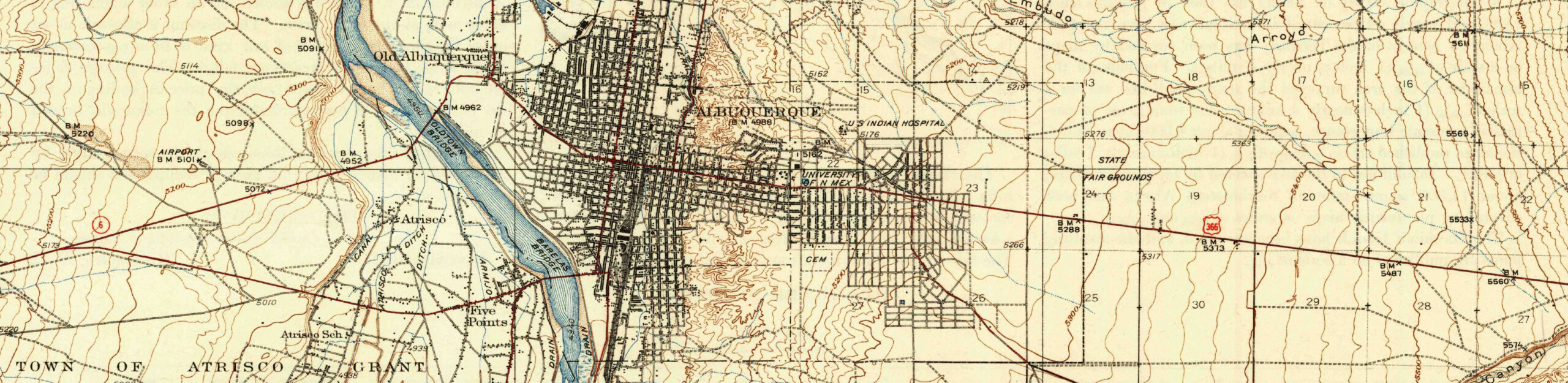
Albuquerque Water Rates

Joel Gay gives Albuquerque water rates a good, hard look:

“You hit ‘em where it hurts — in the wallet,” said Armando Ortega, customer service manager in Alamogordo, which has among the highest water rates in the state. Since adopting a conservation-oriented rate structure in 2003, Alamogordo’s water use has dropped by 40 percent, he said.

But in Albuquerque, where water conservation has slowed to a crawl in recent years, there appears to be little interest in hiking water rates to discourage profligate use. Though the rate structure is up for review and approval Aug. 20, water authority spokesman David Morris said, “There are no plans at this point to revise it.”

buffelgrass

Great video by Mark Betancourt on the threat to the deserts of Southern Arizona posed by invasive buffelgrass:

more info

Giant Novelty Item Update

The giant novelty item to end all giant novelty items:

giant inflatable duck

by Florentijn Hofman

h/t Kittrick