My beloved International District Library
A friend who has been part of the Ribbons of Green brain trust for the last six years reminded me over a taco truck library bench lunch today about the expectations I confront as the book emerges in the next six weeks into public view.
It’s not a water book. It’s a city book.
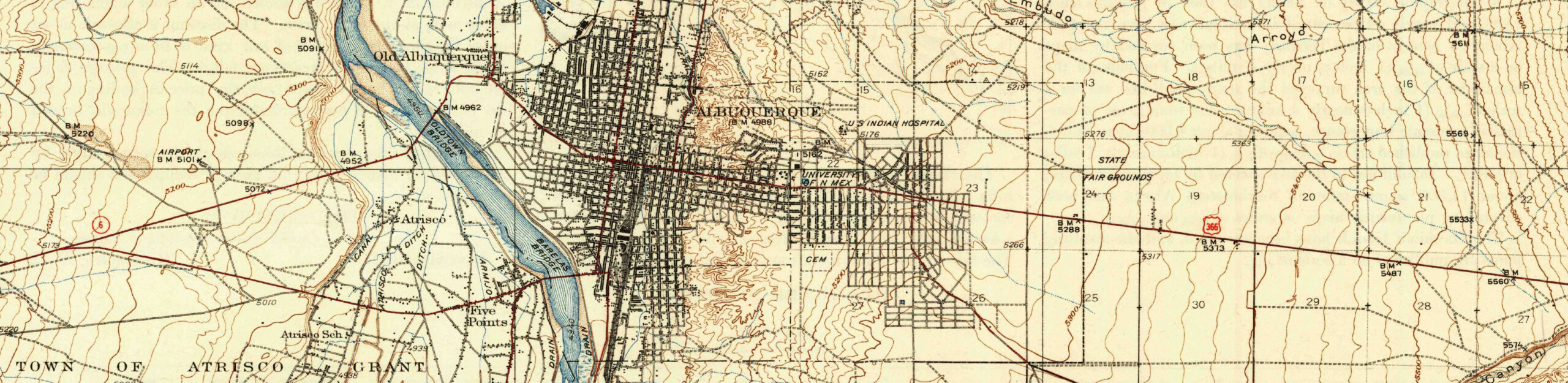
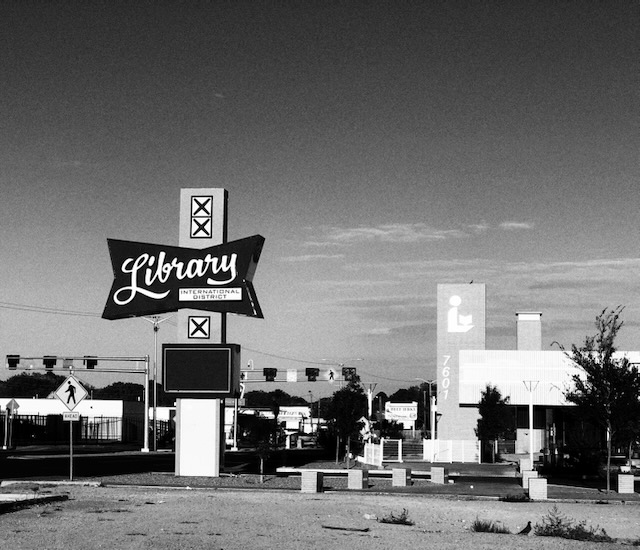
I mention the taco truck library bench lunch deliberately, because that is a city sort of a story – riding our bikes through the International District to check out the new park going in next to the library, then south to the taco truck in the lot next to the union hall, then zigging and zagging past a closed park to find a shady bench in front of the library on which to sit.
I’ve had the crud for nearly a month, and barely been on the bike at all, which is a striking break with my life’s rhythm. The problem with the break is not mainly the exercise, though not exercising when your body’s used to exercising is a problem. It’s the pattern of moving through my city on two wheels. It’s my practice, a city thing.
In the preface to Ribbons of Green, Bob Berrens and I frame the reasons we wrote this book the way we did:
Cities are one of humanity’s great inventions. People come together to share the social and economic benefits that flow from acting collectively at ever-larger scales. They are a tool for what the Bengali-born, Nobel Prize–winning economist and ethical philosopher Amartya Sen calls “capabilities”—the conditions that enable people to achieve what they have reason to value. Things like roads, food supply systems, and schools provide those collective capabilities, and all of them are enabled when people gather and share the cost of delivering them and the responsibility of guiding them toward the community’s desired future.
Our city shares an economic fabric that enables taco trucks (our red barbacoa truck, Zuni and San Pedro, was hoppin’ on a late Sunday morning) and a fabric of public goods that includes a really great library system (this was a two-library bike ride) and more deeply the vibrant cluster of humanity that is the International District on a cool spring Sunday.
There’s a weird naming convention in journalism, the “city desk,” the group of reporters who cover, well, the city. That’s where my roots are as a writer, a youngster at the late lamented Los Angeles Herald-Examiner, the last of L.A.’s gritty tabloids, a summer of unhappy chaos trying to make sense of a city in the midst of a crack epidemic and the Night Stalker and a food poisoning epidemic involving Jalisco cheese. I was there, working a late shift on the Herald-Examiner’s city desk, when we bestowed the name “the Night Stalker” on the serial killer terrorizing LA that summer. I was reading John Gregory Dunne and Joan Didion and imagining becoming the gritty chronicler of city life and failing terribly, lordy was I miserable, because I didn’t know the right questions. But it got me started on this other set of questions – the Lewis Mumford and Jane Jacobs and Edward Glaeser questions, the wonky frame around city life, to which I have happily returned.
To my water audience, I promise you’ll find lots of water stuff in Ribbons of Green. But its importance to our narrative is collective action around water as a means to the end of making a city, and to the big messy shared project of what we would like our city to become.
The park we had to bypass in search of a place to sit and eat tacos was all locked up, a response to encampments. I was pissed. My friend, Socratically wise in the ways of cities and knowing what was coming as I checked each of the park’s gates before stopping my bike and uttering an annoyed “What the fuck?”, just laughed. At both of today’s libraries, we saw city security people, even though both were closed. Cities are complicated, no one thing, ever in tension between competing and conflicting goals and values.
That’s what makes writing about them so interesting.