Preparing for a panel I’ll be moderating at next week’s Colorado River Water Users Association meeting on the next steps in negotiating river management rules, I went back to a similar panel held last summer at the University of Colorado’s Getches-Wilkinson Center. (the session starts at around 3:23:00 here)
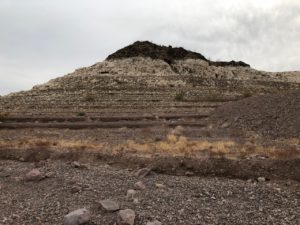
Lake Mead’s “bathtub ring”
John Entsminger of the Southern Nevada Water Authority offered a concise summary of the questions to be resolved (John’s comments, short and worth a listen, begin at about the ~3:34:00 point on the video linked above). Among them:
- the “structural deficit”, in which Lower Basin water users taking their full legal entitlement remove more water from Lake Mead than flows in
- California’s seniority over Arizona under the Colorado River Basin Project Act of 1968 (this is the bit where, under shortages, the Central Arizona Project canal to Phoenix and Tucson could get cut to zero while California still is allowed to take a full supply)
- the Upper Basin’s legal obligation to deliver an average 7.5 million acre feet at Lee Ferry (or maybe 8.25maf) even as climate change shrinks the river
John’s list includes other bits as well (those interested in what happens next on the river are encouraged to watch the video). But the three bullets are important because there are some folks who are beginning to argue for a litigation approach. Clearly, the argument goes, a proper interpretation of the Law of the River favors “us” on this important question (where all values of “us” have a legal argument for why they will win such a dispute).*
Eric Kuhn and I, in the conclusion of our new book Science be Dammed, think such litigation is unlikely because the principals understand what a terrible idea it would be:
In many ways, the basin states are in a similar position to that of the late 1920s. In 1927, six states chose to continue the ratification process of the imperfect compact they had negotiated rather than reopening the negotiations to appease Arizona and face an unknown future. One of the more likely outcomes was a future without a compact, an unacceptable situation to all of the states but Arizona. Today, the choices are to continue with the 1922 compact as written, with its embedded flaws but open to broad interpretation by the parties, or to engage in major litigation at the United States Supreme Court. The outcomes of litigation could include a future without a compact, a future where the compact has been so narrowly interpreted limiting future cooperative and innovative solutions, or even a future where the river is “federalized” far more than it is today.10 All of those are unacceptable to most, if not all, of the basin states. This means that while litigation is always possible, the inherent risks and ensuing chaos are so great that its chances are much diminished.
For those attending CRWUA, the panel will be at 11 a.m. Thursday. John Entsminger will be one of the panelists, along with
- Ted Cooke from the Central Arizona Project
- Terry Fulp from the Bureau of Reclamation
- Andy Mueller from the Colorado River Water Conservation District
- Jennifer Pitt from Audubon
- Tina Shields from the Imperial Irrigation District
- Daryl Vigil from the Jicarilla Apache Nation
* To be clear, because on re-reading after posting I saw how this could be misinterpreted, John Entsminger wasn’t arguing for a litigation approach at all. He was merely pointing out the unresolved legal questions.