
I made the hometown paper. Bob, too.
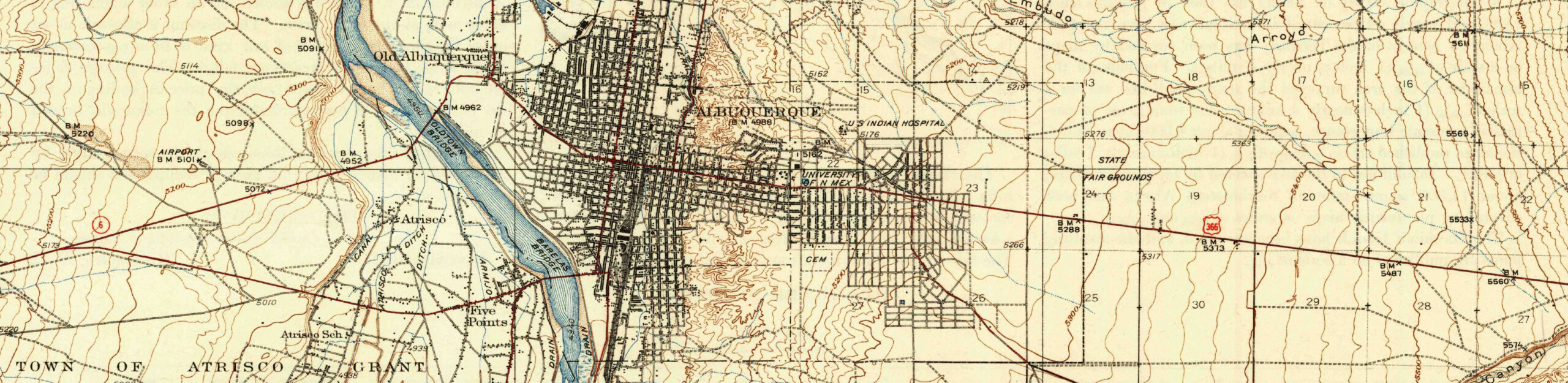
Going through our chaotic collection of old maps at the H-F house, I found a treasure: 2003 BLM map of Albuquerque and vicinity that I’d used to mark a bunch of bike rides with highlighter. Pre-GPS era. I’ve been at this for a long time.
My favorite social media response to the announcement of our new book’s release came from old Internet pal Kim Hannula:
This sounds like the jfleckiest book possible. (Or it would if there are recommended bike rides at the end of each chapter.)
My response:
The bike rides are there, but kinda hiding out, you have to know where to look. 🙂
Ribbons of Green: the Rio Grande and the Making of Modern Albuquerque is about a river and a city, the endless interplay between the two. (To learn more, join us Tuesday at Bookworks!) It’s not a bike riding book. Except it sorta is?
I gotta be honest, I’m nervous! Writing a book is an act of tremendous hubris – thinking one has something sufficiently worthwhile to say that people should spend their money and time with one’s ideas.
To calm my nerves, I met up this morning with my trusty bike riding and book research field work buddy at Albuquerque’s Old Town Plaza. Book or not, our Sunday bike rides anchor my week. We rode west to Gabaldon Drive, one of the first places where we began the “bike riding as book research field work” schtick – maybe 2019? I had an old aerial photo from the 1929 floods, and we were trying place the river’s un-leveed 1929 path on the modern landscape. Today, Gabaldon is half a mile from the river channel. Back in 1929, it was at the river’s edge.
Thus began a practice that has served me well. First, moving back and forth between old maps and modern urban structures, and doing it on bikes, has been central to my understanding of the landscape I’m trying to write about. I can feel the subtle ups and downs of a valley floor shaped by the river long before we built stuff on top of the sediments the Rio Grande laid down. I can feel the old twisty streets of village life, and the overlay of grids as sequential waves of urbanity swept over the landscape.
Second, it’s a blast. At age 67, riding bikes still triggers little kid “let’s go on an adventure!” feels.
We rode up through Duranes and picked up the Duranes Lateral, one of the old community acequias dating to olden times that still thread the valley floor. The Duranes is today a suburban ditch, and it’s slow going, often slowing down to walking pace so as not to alarm the locals out for their Sunday walk. The ditch network is the best way to ride bikes through Albuquerque, but it’s a shared space, and we try to respect the locals.
Stopped for lunch under one of the big old cottonwoods up on the north side of Dietz Farm, a branch fell down and didn’t hit us. (We’ve got some fun cottonwood business in the book, set just down the ditch from our lunch stop. The Duranes is in the book!) A mom and her young son walked past, headed for one of the flowing ditches with their fishing poles. Thick places.
As we turned to head back south, it was starting to heat up, so we switched onto roads – faster for the trip home to beat the heat. Until we saw the open gate. It was on the Griegos Lateral, but a stretch we’d not ridden because the gate was always closed. A talk with one of the ditch walkers confirmed that we could get out on the downstream end – they explained that we wanted the bigger of the two holes in the fence. Local knowledge. Place. That’s the practice.