Water in the desert, Fountain Hills edition
On the road, I made it to greater Phoenix this evening in time to catch the five o’clock show at Fountain Hills, a suburban enclave on the northeast edge of the metro area.
On the road, I made it to greater Phoenix this evening in time to catch the five o’clock show at Fountain Hills, a suburban enclave on the northeast edge of the metro area.
While the current snowpack numbers look lousy for Colorado River Basin runoff, a glimmer of hope for a late-season uptick in the latest Climate Prediction Center seasonal outlook. Green means “odd tipped toward wet”: I prefer to ignore, then the cognitive dissonance caused by this:
The new paper by Ben Cook and colleagues clarifying our understanding the risk of megadrought in the southwestern United States has rightly gotten a lot of attention. Combining paleo records and modeling of a changing climate under rising greenhouse gas scenarios, Cook and his colleagues have created some scary reading: [F]uture drought risk will likely …
Continue reading ‘Megadrought paper: message received, now what do we do?’ »
Last year, I began experimenting with a sort-of-weekly (except when it’s not) emailed water newsletter. I’ve got a few reasons for doing it: Some people read blogs, some people do twitter, some like email, I’m trying to reach folks where they’re most comfortable. Marketing! I’m going to have a book to sell soon, and a …
January was bad for snowpack and therefore spring runoff in the Colorado and Rio Grande basins. February has been worse. But we don’t use water at the basin scale, we use it one irrigation district and city at the time. Here I will attempt to sum up the current snowpack and water supply situation and …
Continue reading ‘Bad January, worse February in Colorado, Rio Grande basins’ »
Getting mentally packed for a reporting trip later this month to southern Nevada, I ran across this delightful bit of business, from (I think) 1904: William R. Clark, a U.S. Senator from Montana, had bought an old ranch in the valley in 1902, land that became the staging area for the Union Pacific’s construction of …
Continue reading ‘Las Vegas, Nev.: “Splendid Climate and Pure Water”’ »
The Colorado Basin’s two primary reservoirs lost, on paper, a million acre feet of water because of January’s dry snowpack, according to the latest numbers from the U.S. Bureau of Reclamation. That’s the difference between what we expected to end the current water year with based on the January forecast, versus what the forecast looks …
Continue reading ‘Lake Powell and the Colorado River Basin’s disappearing 2015 water’ »
We have a mismatch between 20th century plumbing and a 21st century climate. USGS hydrologist Paul Milly and colleagues in 2008 threw down a marker in a Science paper arguing that human interventions (intentional and not) have rendered a basic premise of human water operations invalid. The premise is “stationarity”, the idea that with data …
Continue reading ‘Stationarity and snowmelt in the Pacific Northwest’ »
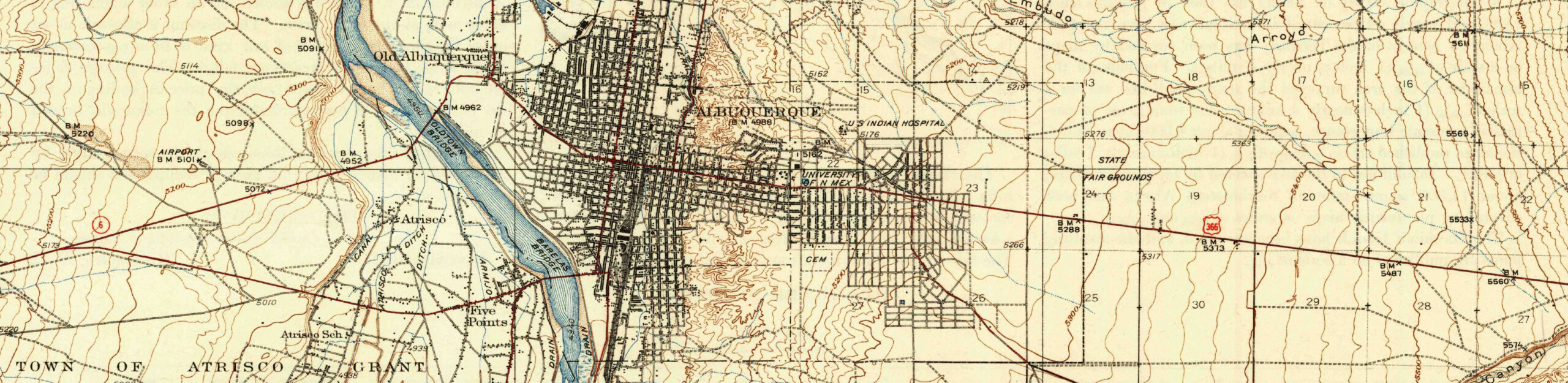
Let’s talk about “polycentric governance” and the problem of regional water institutions, shall we? Because here in New Mexico, we seem to have this a bit messed up, and my book research is leading me into some compare-and-contrast exercises that might be useful in thinking our dilemma through in more detail. Dennis Domrzalski, writing in …
Continue reading ‘Regional water governance: Rio Rancho, Albuquerque and the question of scale’ »
Municipal water demand in the West, according to Gary Woodard of Montgomery and Associates in Tucson, has become decoupled from population growth. Here’s a teaser from a talk he’s giving next month in Tucson: The talk, entitled “The surprising slide in domestic demand: Be careful what you wish for,” focuses on the declines in municipal …