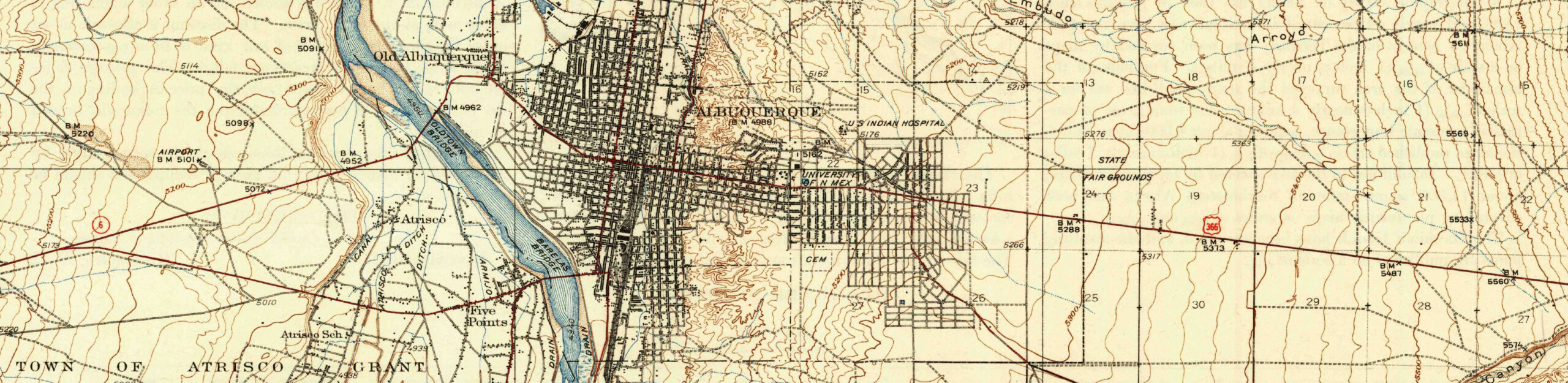
The University of New Mexico Water Resources Program: playing water management’s long game

On the Public Record posted yesterday soliciting water management recommendations for the new presidential administration (and offering some of their own). As happens with that smart blog and audience, cool ideas quickly emerged – better use of remote sensing to measure water use in something closer to real time, municipal leak detection, planning grants for …

Continue reading ‘The University of New Mexico Water Resources Program: playing water management’s long game’ »

Despite drought, the value of California farmland is rising

California’s epic, headline-grabbing drought has not dented the value of the state’s farm land. According to a new USDA dataset released today, California cropland rose 2.1 percent in value per acre in the last year, and 16 percent since 2012. Despite drought, California cropland remains at $10,900 an acre the second most valuable in the …

Continue reading ‘Despite drought, the value of California farmland is rising’ »

I’m the new director of the University of New Mexico Water Resources Program

When Bob Berrens invited me three years ago to join him in teaching a class on contemporary issues in water management in the University of New Mexico’s Water Resources Program, I was hesitant. I was pretty busy – working full time at the Albuquerque Journal, trying to write a book. But heck, it seemed like …

Continue reading ‘I’m the new director of the University of New Mexico Water Resources Program’ »

Lower Colorado water consumption lowest since 1992

update: A correction to this post here, thanks to some excellent journalistic sleuthing by Tony Davis. **** The Bureau of Reclamation’s Aug. 1 Colorado River Lower Basin Water Use Forecast (pdf here) passed a symbolically important milestone: at a forecast consumptive use of 6.998 million acre feet, if the forecast holds, this will be the …

Continue reading ‘Lower Colorado water consumption lowest since 1992’ »

Climate science identifies the problem – it can’t tell us what to do in response

Writing in the latest Nature Geoscience, Reiner Grundmann of the University of Nottingham calls out a problem that I wish I’d understood years ago about our understanding of, and response to, climate change and the family of problems to which it is connected. (I hope that link works, let me know in the comments if it …

Continue reading ‘Climate science identifies the problem – it can’t tell us what to do in response’ »

What happens to local weather/climate when cities tear out lawns?

Climatic consequences of adopting drought tolerant vegetation over Los Angeles as a response to California drought, Vahmani and Ban-Weiss, GRL, July 2016 found that when you tear out lawns, it gets warmer during the day but that overnight cooling could more than balance things out: Transforming lawns to drought tolerant vegetation resulted in daytime warming of …

Continue reading ‘What happens to local weather/climate when cities tear out lawns?’ »

In which Sandra Postel has some nice things to say about my book

I wanna tell you the story of the time I met Sandra Postel in a dry riverbed in the deserts of Mexico. When I first started writing about water more than two decades ago, the work of the water scholar Postel was both informative and inspirational. As much as anything I came across, her work …

Continue reading ‘In which Sandra Postel has some nice things to say about my book’ »

New Mexico’s long history of not building dams on the Gila

Laura Paskus writes: Almost 50 years ago, on June 14, 1967, four couples fired off a telegram from Las Cruces to Sen. Henry Jackson, a Democrat from Washington. Called “Scoop” by his pals, Jackson chaired the Senate committee looking at a bill to authorize the Central Arizona Project, a system of dams, canals and aqueducts …

Continue reading ‘New Mexico’s long history of not building dams on the Gila’ »

Driest monsoon start in Albuquerque since 1993 and a drying Rio Grande

With just a quarter of an inch of rain (0.63 cm) since July 1, this is the driest start to a monsoon season in Albuquerque since 1993, (source) and it’s been hot – 3 degrees F above average, according to the National Weather Service. The result, Laura Paskus reports, is a drying Rio Grande: The river …

Continue reading ‘Driest monsoon start in Albuquerque since 1993 and a drying Rio Grande’ »

Colorado River Lower Basin water users leaving nearly 500,000 acre feet in Lake Mead this year

I’m happy (nay enthusiastic!) to point out the way Lake Mead keeps dropping, but it’s worth nothing this as well: Colorado River water use in Arizona, Nevada, and California this year is currently forecast at 7.006 million acre feet (source: pdf), well below the three states’ nominal legal entitlement of 7.5 million acre feet. The …

Continue reading ‘Colorado River Lower Basin water users leaving nearly 500,000 acre feet in Lake Mead this year’ »