This crew is building an architectural masterpiece in our driveway.
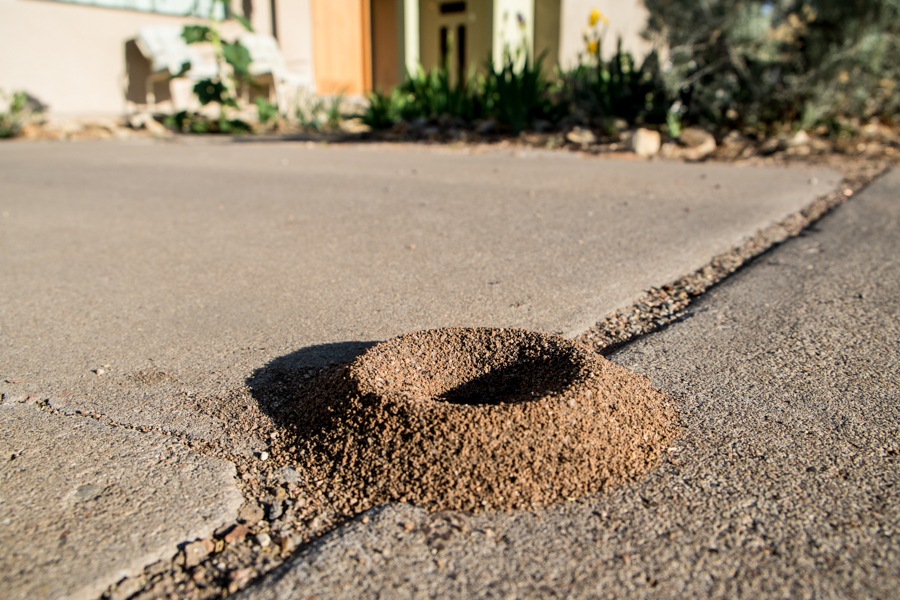
Ant hill in our driveway, April 2014, by John Fleck

This crew is building an architectural masterpiece in our driveway.
Ant hill in our driveway, April 2014, by John Fleck
Now that I’ve figured out how to easily download NASA Landsat imagery, (thanks, USGS!) I don’t think I’m going to get much else done this weekend. It’s an amazing conceptual tool for helping to think about how water moves through western North America. Here’s Albuquerque on April 13, with the colors tweaked to highlight growing plants. Finding the metro area’s golf courses is left as an exercise for the reader:
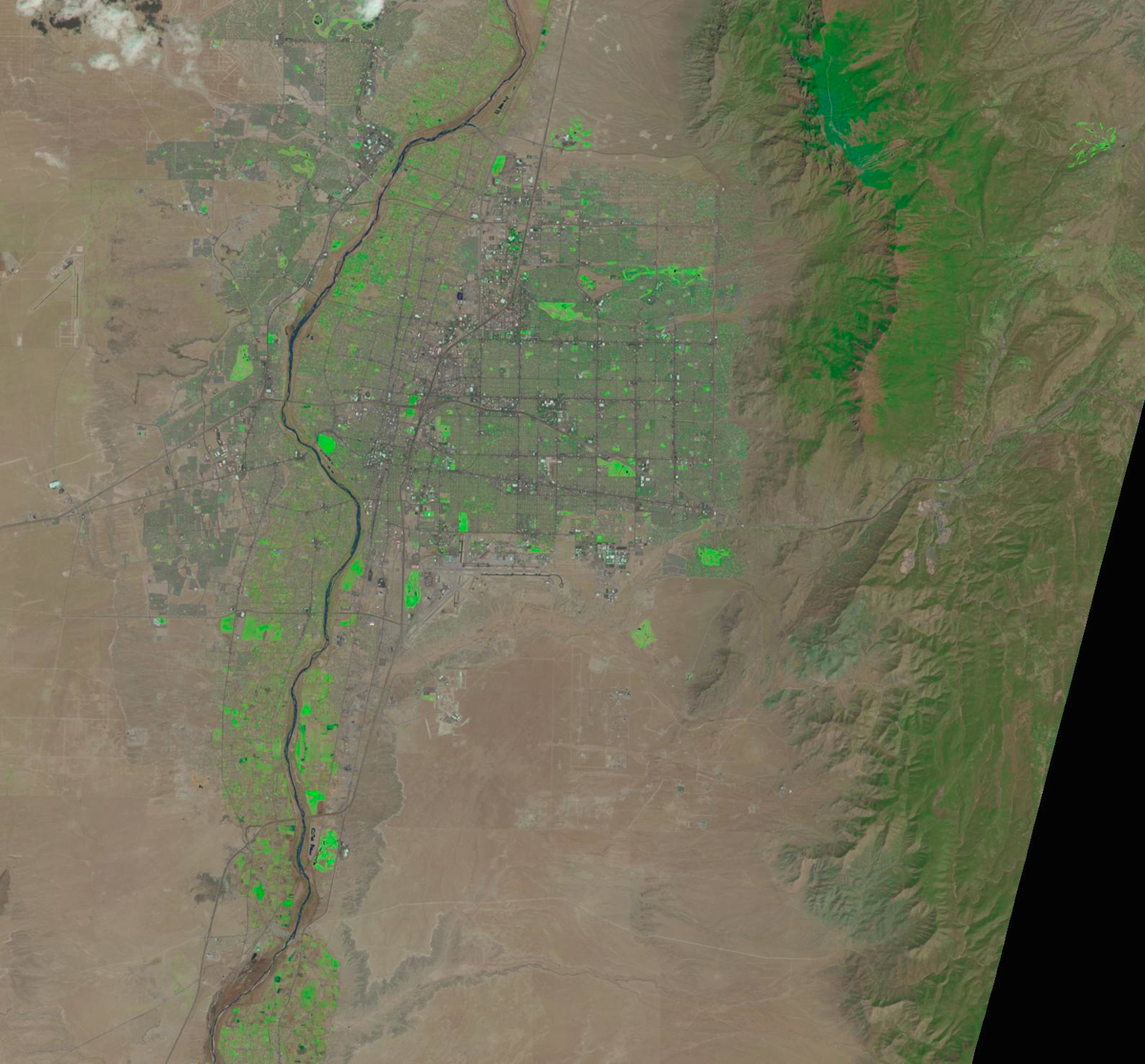
Albuquerque as seen from space, April 13, 2014, via NASA Landsat. Colors enhanced.
I’ve apparently got more time on my hands than skill, but I figured out, somewhat crudely, how to downland LANDSAT maps and make some pictures. Here’s the largely dry bed of the Colorado River on February 27. Apologies for the large file size, but it should have enough resolution to click and zoom if you’re able:
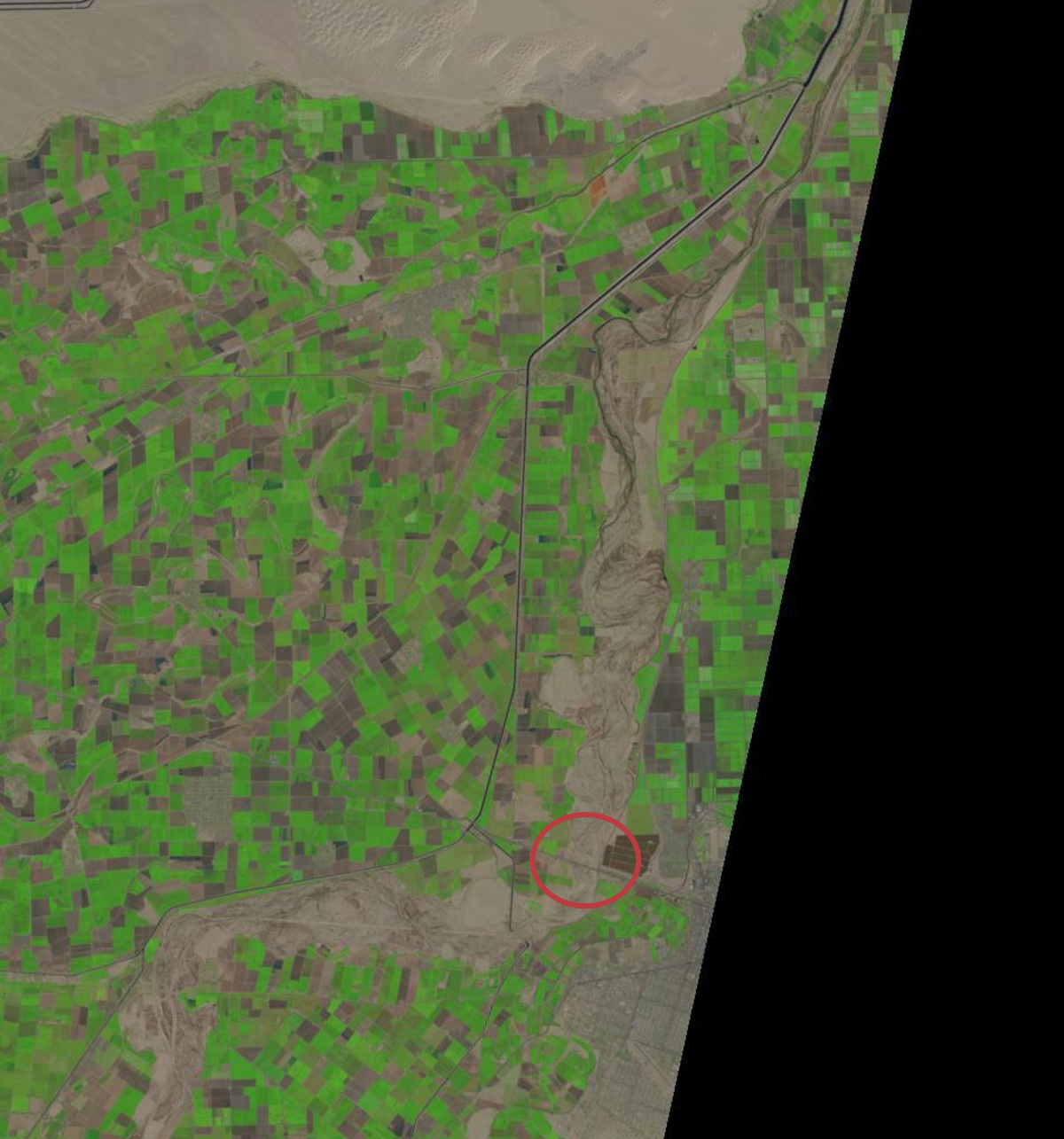
Colorado River, US-Mexico border, Feb. 27, 2014
The circled bit is the San Luis bridge. Here’s roughly the same field of view on Wednesday:
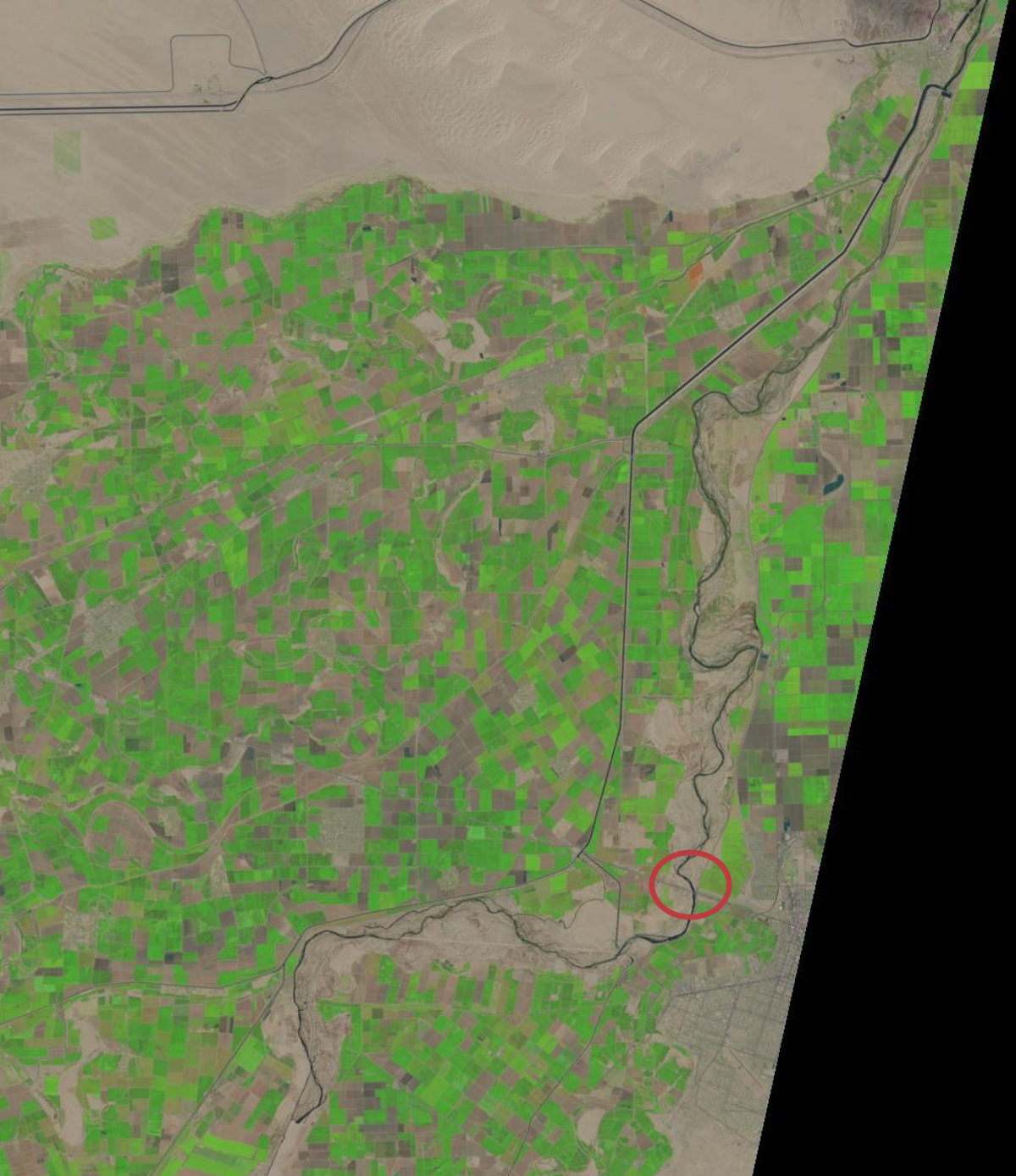
Colorado River, US-Mexico border, April 16, 2014
In Sacramento, you no longer need fear getting a citation for letting your lawn go brown. What’s next – water meters?
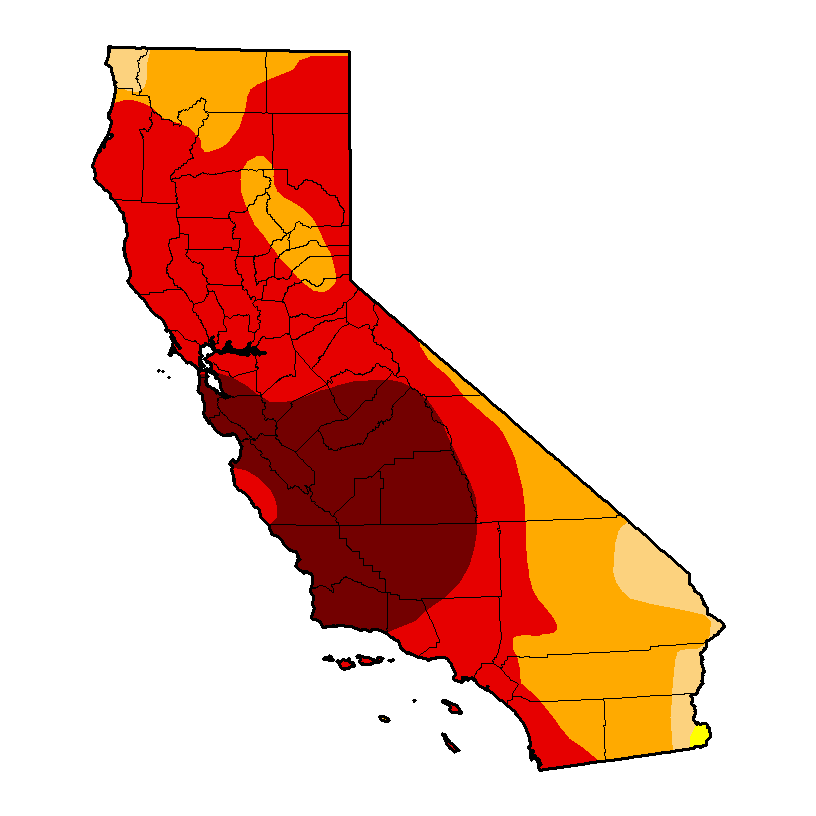
California drought
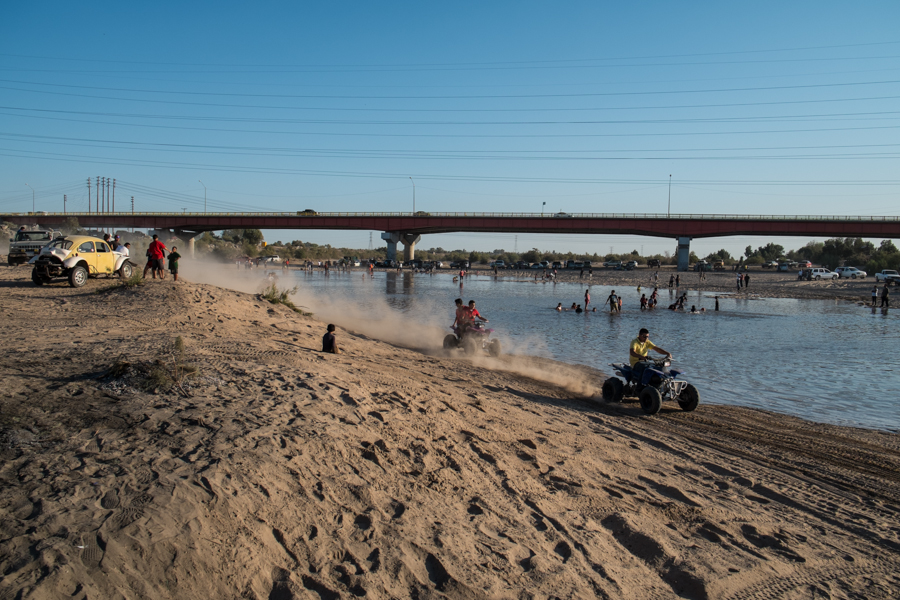
Party at San Luis as the Colorado River returns, March 25, 2014, by John Fleck
When I set up a Google News alert some years ago on the words “Colorado River”, I noticed a revealing pattern. In spring, as the weather warmed, the water management and drought news I was hoping for was increasingly mixed with stories of drunk people drowning in the river. In the fall the mix of drunks and other ill-advised recreationists tapered off.
When I was a kid growing up in the upper middle class suburbs of LA in the 1960s and ’70s, friends would take off in their campers, towing boats, for a weekend at “the river”. In his epic book A River No More
It is the river as theater, where each of the 125,000 weekend visitors compressed into the fourteen miles, and huddled as close as possible to the cool water, can act. To be a protagonist, rather than part of the supporting cast, one needs a sleek water-ski boat in the shape of a tapered arrowhead and powered by a jumble of chrome.
There was beer – “a million cans … can be consumed in one long holiday weekend” – and the throbbing of a disco beat at waterside taverns. “The Colorado is a charnel river at this point,” Fradkin wrote.
He tells the sad story of attempting a kayak trip with a friend from a place called Walter’s Camp, south of Blythe on the Lower Colorado, midway between the Parker Strip and the river’s end at Morelos Dam. Their attempt at a quiet paddle through exquisite desert (I know this, having paddled that stretch myself) was ruined by some three hundred motorboats in the Blythe Boat Club’s annual river regatta. It’s easy to feel sympathy for Fradkin and his friend when a water skier zooms close and sends a sheet of river water over the kayaking pair. But implicit in his argument is something that’s problematic in negotiating the terrain of Colorado River management in the 21st century.
Fradkin calls the Parker Strip “a charnel river” – a death house. But his description of the pulsing humanity is anything but. It’s alive, just with people doing things of which Fradkin disapproves. 125,000 people with their RV’s and motorboats and beer were embracing the river, just with a different set of values than Fradkin’s. This is a hard problem, because there is no a priori value for the Colorado or any river, but we get tangled up in groups who hold each set of values assuming theirs is the right one. We want it as a water supply for our farms and cities, and as a haven for motorboats, and as a place for a quiet kayak, and as a living river that is its own intrinsic value separate from the way humans might choose to use it. There’s conflict among those values, because we can’t have them all simultaneously, and Fradkin is pissy because his values have long been on the losing side.
As a child of the Sierra Club who paddled the river rather than motorboated as a youngster, my cultural sympathies long aligned with Fradkin’s. But here’s the thing I think he gets wrong. When I was a teenager, my Boy Scout troop canoed the same stretch of the river, past Walter’s Camp. It was 1973, around the same time as Fradkin’s ill-fated voyage. It was a quiet delight. But I understand now that the “river” we rode wasn’t really a river at all, but rather a water supply delivery system using the old river’s channel. The “thin veil of vegetation” along the riverside that Fradkin celebrates as he describes the river’s beauty there is really a vestige of the river’s management – what was left to grow after the spring floods were cut down by Hoover Dam to the north. It’s lovely, but ecologically and environmentally, it’s a mess. It’s not a river in any Platonic sense, but rather a human construct. Fradkin simply prefers his construct to theirs.
I took Fradkin along as my trip book last month when I went down to the delta to cover the release of the environmental pulse flow from Morelos Dam. The reason I’m so interested in the pulse flow experiment is because of the way Minute 319, the international agreement that made it possible, attempts to find some sort of common ground spanning the different value systems we have for the river. The deal has a complex mix of farm water and urban water and water for the environment, and nobody got all of what they wanted but the deal recognizes that no one set of values is right, and no one interest group can simply muscle its way to the front of the line.
And then at San Luis Río Colorado, as the border community saw substantial water flow through the usually dry river for which their town is named, I saw a remarkable spontaneous party emerge. There were environmentalists from the United States and Mexico, and scientists, and bureaucrats from the U.S. Bureau of Reclamation, and townsfolk drinking beer and tearing up and down the river’s edge in their four-wheelers. And everybody seemed happy to share the river. There was no one right way.
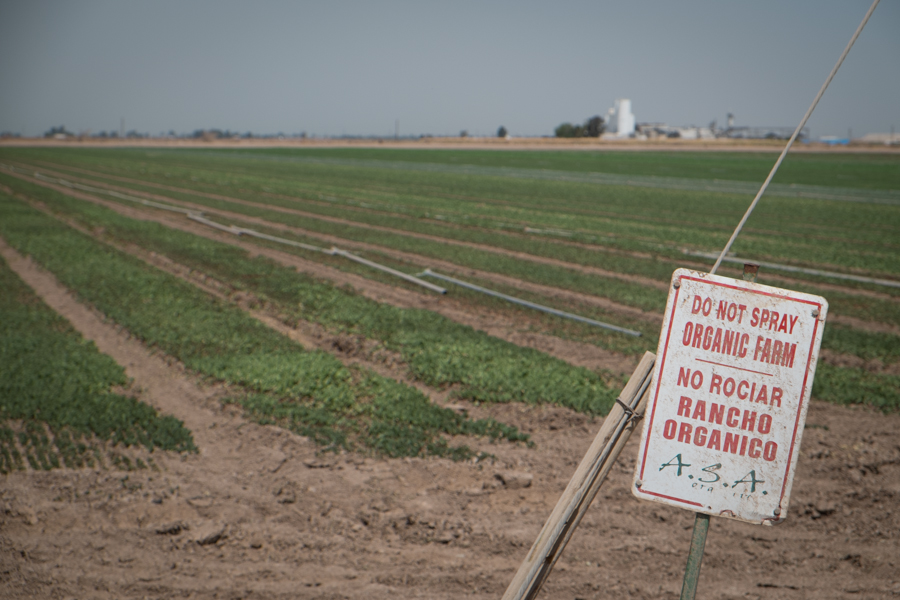
Northside organic farm, Imperial Valley, March 2014
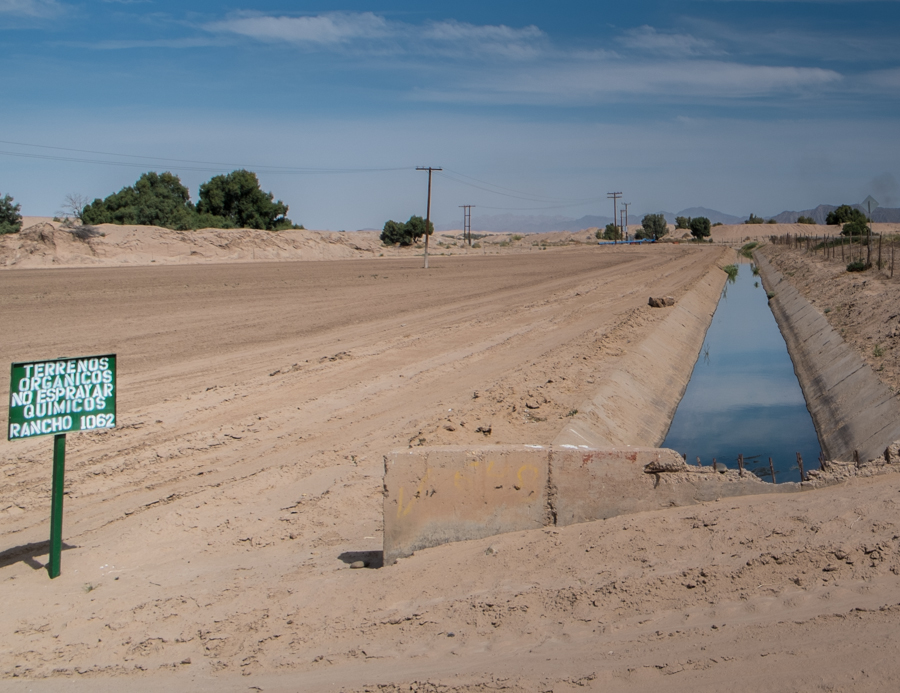
Southside organic farm, Baja, March 2014
The Colorado River pulse flow, three weeks in:
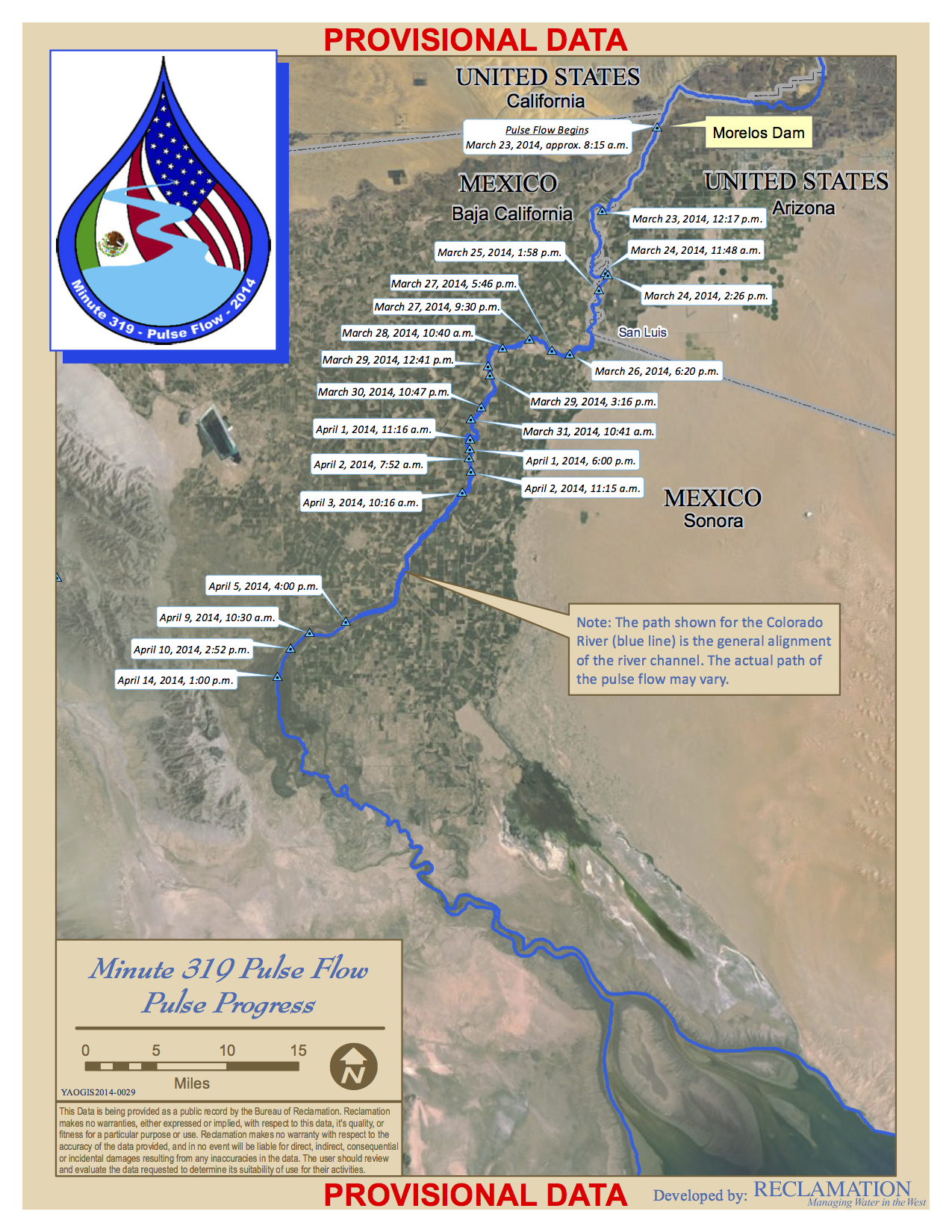
Pulse Flow Map, April 14, 2014, courtesy USBR
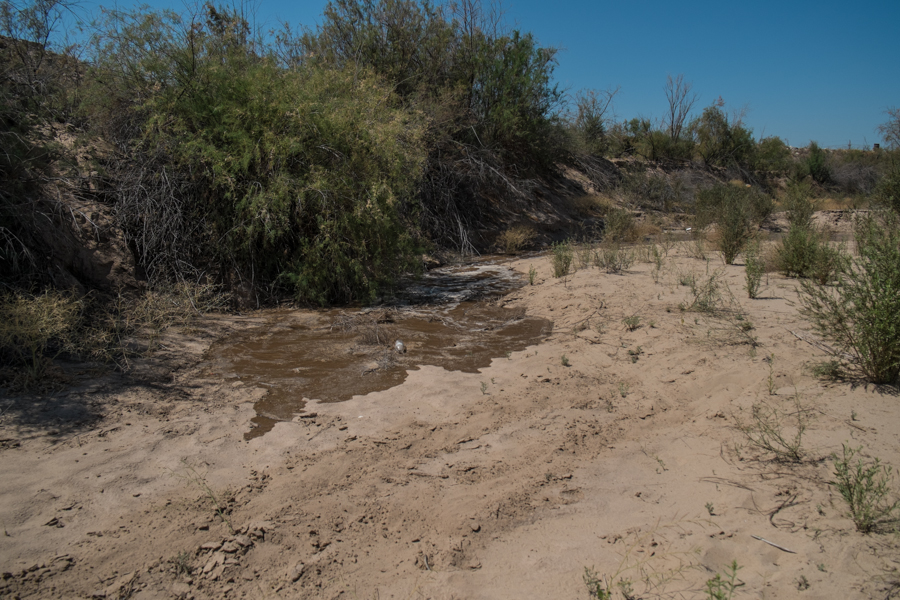
The first fingers of the Colorado Delta “pulse flow” creeping toward San Luis, March 25, 2014, by John Fleck
Sandra Postel on the experience of watching water return to the Colorado’s sandy delta bed, again and again:
For me, some of the most powerful experiences have come from visiting the same location twice – before the river got there, and then again after its arrival.
One morning, we visited a dry, sun-baked, sand-filled channel that, more than anything else, evoked sorrow and loss. My main memory of that first stop at Reach 3 was of the Universidad Autónoma de Baja California hydrology team’s pick-up truck getting stuck in the deep channel sands that the Colorado River had delivered there many years ago.
When we returned to the same spot a few days later, the river was running through it – and the landscape had been completely transformed.
We arrived at sunset, and the beauty was breathtaking. Could this possibly be the same place where the truck had gotten trapped? Why had we not brought a picnic dinner to enjoy by the river’s bank?
To Colorado Basin water nerds’ favorite question – What’s Pat up to? – we have an answer.
According to the Las Vegas Sun, former Las Vegas water czar Pat Mulroy is joining the Brookings Mountain West project:
Robert Lang, director of Brookings Mountain West, said the shrinking Colorado River is one of the most critical issues facing the Western U.S., as it threatens the water supply to Las Vegas and dozens of other cities.
Without a stable supply of water, large portions of the country’s economy, including much of its agricultural sector, would be threatened, with future growth in the region crippled.
Brookings Mountain West began fundraising to hire a water expert before it knew Mulroy was available as part of a plan to direct more resources to studying water issues. When Mulroy announced she was retiring, she immediately became a perfect fit for the job, Lang said.
“She seemed like the most qualified person in the country to hire,” he said.
Mountain West is a partnership between the Brookings Institution and the University of Nevada Las Vegas, with a focus on the future economy of the intermountain west region. (Here’s a piece I did on some of their work back in 2008.)
In addition to the Brookings-UNLV project, Mulroy will be affiliated with the Desert Research Insitute in Reno, according to the Sun.
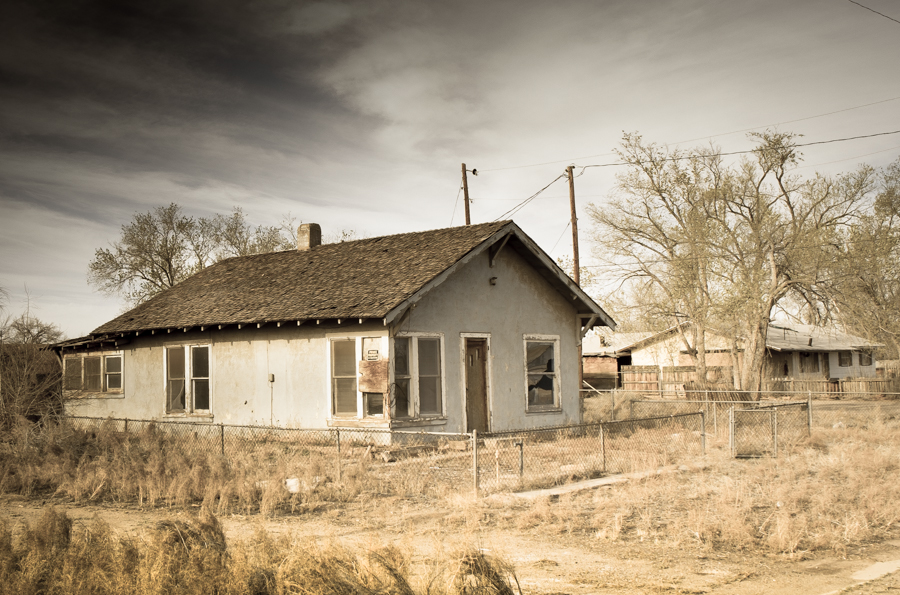
Alvarado Dr., Holbrook, Ariz., March 2014, by John Fleck
This isn’t just old west ruin porn. There’s actually a water policy question here. This is in Holbrook, Ariz. There’s a big, expensive new levee protecting this neighborhood from the Little Colorado River. These properties back onto the levee. How do they decide whose property warrants protection?