
Desal Free-For-All

From today’s Albuquerque Journal*, a thoughtful discussion of the risks posed by the current lack of regulation of desalination of deep brackish groundwater in New Mexico. The backstory is significant interest in drilling into deep aquifers around Albuquerque, bringing up brackish fossil groundwater, cleaning it up and using it to support continued growth that might not otherwise be possible with with current surface water and clean groundwater supplies:

If miles of new subdivisions are made possible by desalinated water, what will sustain those subdivisions if the water runs out?


Perhaps more disturbing of all, however, is the possibility that pumping the deep water could drain fresh-water aquifers above or contaminate existing supplies.

The West’s entire water-law tradition argues against unregulated, unlimited access by new claimants.

* Just to be clear, because there is often confusion on this point. I do cover water for the Journal, but did not write this editorial. The editorial page staff is separate from the news staff.
Global Oil Consumption Still Rising

The United States has undergone a remarkable petroleum belt-tightening in the face of rising oil prices. We’re down 800,000 barrels per day over the first six months of 2008 compared to year-ago numbers, the largest drop in 26 years, according to EIA. But in global terms, oil consumption continues to rise despite the 2008 price increases, up 1.3 million barrels a day outside the major western economies.

Lazuli bunting

My bird of the week (bird of the day?) is the Lazuli bunting, a lovely little blue seed-eater that showed up at the feeder this morning.

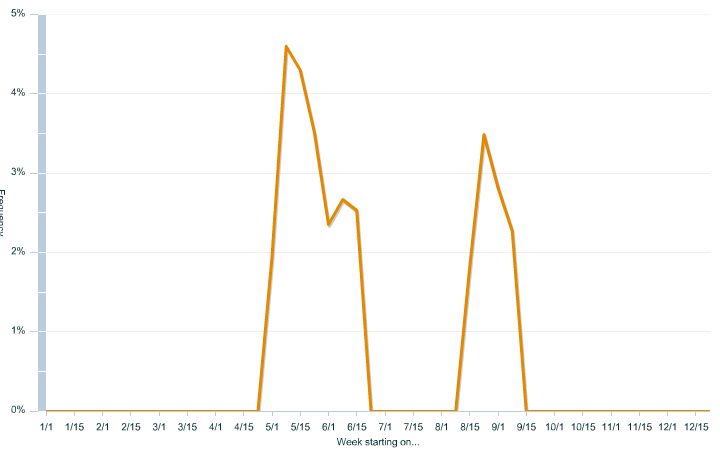
According to both Sibley and the Cornel bird site, we live at or just beyond the southern edge of Lazuli bunting’s summer range, so what we’ve really got here is commuters passing through. You can see it in the time series eBird data:

Lazuli bunting sightings in Albuquerque

They show up in town in town in mid to late April, then disappear until early August. What we saw this morning, I guess, was the first wave heading south for the winter. They spend their winters down on the coast of Mexico. “Who wouldn’t?” Lissa said.

The Chipping Sparrow

chipping sparrowI’m not a serious birder, but I’ve gotten totally hooked lately on eBird.

I heard about it from Chris Witt, the UNM ornithologist I wrote about last month. It’s run by Cornell and the Audubon Society, and provides a platform for birders to enter their observations. It makes it easy to keep your lists, and creates a rich data source for other birders and scientists.

That’s great for me, because half the time I’m not sure what I’m looking at. For example, I never would have figured out I had Inca doves in my back yard if Chris hadn’t told me we have them in the neighborhood. I’m still looking for the Pine siskin, which Chris said has been down from the mountains this summer, hanging out in Albuquerque’s suburban neighborhoods.

The eBird data allows me to see what other birders have been reporting, which gives me a better sense of what I have a chance to see. I’ll miss the rare ones for sure, but I’m more interested in understanding the common ones – our urban success stories.

This morning, there was a little brown bird of some sort in the backyard that I didn’t recognize. It had a little white bit on its head. I went to eBird, and saw that people had been seeing the Chipping sparrow in town. To the bird book, the binoculars, and “bingo”.

(Picture courtesy Cornell world o’ birds)

Bird Question

So here’s my question of the day.

We have two dominant Little Brown Bird types here – house finches and house sparrows. At home yesterday, I had only finches in backyard. At work, the crowd by the lunch tables is entirely sparrows.

What’s different about the two ecosystems? (Note that I don’t expect actual answers.)

Energy Tradeoffs

Kurt Zenz House lays out the reasons to both laud France’s insight 30 years ago to go nuclear, as well as be concerned:

So today, France looks rather smart. It acted decisively in the 1970s to limit its dependence on fossil fuels, and now it’s better positioned than any other non-oil-exporting power to deal with increasing fuel costs and global warming. Indeed, as the world tries to contain carbon dioxide emissions, France is likely to benefit enormously from its nuclear commitment because other countries will purchase French nuclear technology and expertise. The financial markets have taken all of this into account as AREVA’s market valuation has appreciated 300 percent in the last four years.

The catch is that France now produces enough plutonium in their civilian nuclear power activities to make about 10 nuclear bombs per week. This plutonium is transported 1,000 kilometers every week in armed convoys across the country from the reprocessing facility to the fuel-fabrication facility. That material is vulnerable to theft and could be used by terrorists to vaporize a small city.

Starvation, Africa and Climate Change

Written originally elsewhere, elaborated here.

A new study by a California team looks at the effect of the warming of the Indian Ocean, which seems to be anthropogenic in origin, and how that influences precipitation in Africa. It decreases it. People go hungry as a result:

We present analyses suggesting that warming in the central Indian Ocean disrupts onshore moisture transports, reducing continental rainfall. Thus, late 20th-century anthropogenic Indian Ocean warming has probably already produced societally dangerous climate change by creating drought and social disruption in some of the world’s most fragile food economies.

The paper is Funk et al, Warming of the Indian Ocean threatens eastern and southern African food security but could be mitigated by agricultural development, in PNAS this week. It’s on on the web yet, but I’ll post a link when it goes up.