
One day into my little hack and I am comment spam free. I also am free of other comments, which either means I’ve also inadvertently disabled all comments (my testing suggests that is not the case) or that I’m just exceedingly boring, that whatever it is I have to say is not worthy of comment.
2.6
Feels kinda weird to be in the middle of a GNOME release cycle with no major role to play, but I”ve been making a quick editing pass through the release notes this afternoon just to feel useful. Murray Cumming and Colin Charles have done a great job, and there’s been very little need for me to touch anything. Mainly it’s fun seeing how much has been accomplished. The code monkeys have been busy.
Battling Comment Spam
Assuming the blog comment spammers are stupid, lazy or both (reasonable assumptions, at least for starters), I’ve added a simple hack to keep their automated instruments of vile torture at bay. We’ll see how long this works.
(A thought: Is there any kind of torture that isn’t vile?)
The Race
I did some smart things, made a couple of big mistakes, and made, for about an hour and forty seven minutes, the hardest physical effort of my life. About an hour and a half into it, on a long gentle climb on a clean, clear road with the wind at my back, I had a moment of transcendental euphoria. And, as I suspected, I was the only one in my race without those cool wraparound sunglasses.
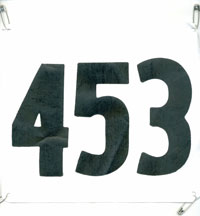
Wish Me Luck
Lissa nailed it when she observed that I hate to go to parties where there are going to be a bunch of people I don’t know. Add to that the fact that I don’t have those cool wraparound sunglasses and you’ll understand why I woke up with a nervous stomach this morning, an hour before my alarm clock was set to go off. It’s not so much that I’m worried about how well I’ll place in my first cycling road race this morning. I’m not really even worried about the pain of two hours of hard riding (in an ugly wind, I might add). No, pathetic as this may sound, I’m mostly worried about fitting in.
Jack Kelley’s Legacy
USA Today yesterday published a remarkable package of stories documenting its internal investigation of the work of Jack Kelley, the paper’s star foreign correspondent. They found:
… strong evidence that Kelley fabricated substantial portions of at least eight major stories, lifted nearly two dozen quotes or other material from competing publications, lied in speeches he gave for the newspaper and conspired to mislead those investigating his work.
Perhaps Kelley’s most egregious misdeed occurred in 2000, when he used a snapshot he took of a Cuban hotel worker to authenticate a story he made up about a woman who died fleeing Cuba by boat. The woman in the photo neither fled by boat nor died, and a USA TODAY reporter located her this month. If Cuban authorities had learned she was the woman in the picture, she says, she could have lost her job and her chance to emigrate.
Househenge
There was a moment Friday afternoon when the cosmos aligned with my pantry.
Teetering on the edge of the equinox, the sun was setting perfectly due west. A broad shaft of light shot through the open back door, through the big family room and the open window between family room and kitchen, straight into the pantry.
This is good, as the pantry is not well lit. It was as if, for one shining moment, some ancient architect had conspired with the heavens to help me find canned peaches.
Why I Love Free Software, Pt. XCVI
Bjorn Reese’s answer to what seemed to me a profoundly obscure question.
Extinction
Environmental science is not a journalistic specialty of mine, so I’ll tread into this terrain gingerly, and leave the heavy lifting to Carl Zimmer in the discussion of a paper that came out today in Science about the loss of butterfiles, birds and plants in Britain over the last 20 to 40 years.
Continue reading ‘Extinction’ »
Water Vapor and Climate Change
More stuff I wrote elsewhere, from today’s Albuquerque Journal, one of those straightforward pieces of climate change research that has the potential to narrow the uncertainty in the models:
A New Mexico researcher hunting for water vapor in the upper atmosphere has found less than expected, suggesting global warming may be less than some predictions.
The research, by atmospheric physicist Ken Minschwaner of the New Mexico Institute of Mining and Technology, also undercuts an argument made by global warming skeptics? that a lack of water vapor could cool the planet.
That puts Minschwaner and co-author Andrew Dessler of the University of Maryland in a comfortable middle ground between global warming skeptics and those who make extreme estimates of warming caused by human burning of fossil fuels.
“It’s kind of a nice place to be,” Minschwaner said.