What is it, exactly, about the Howitzers on Albuquerque’s Old Town Plaza that we should remember?

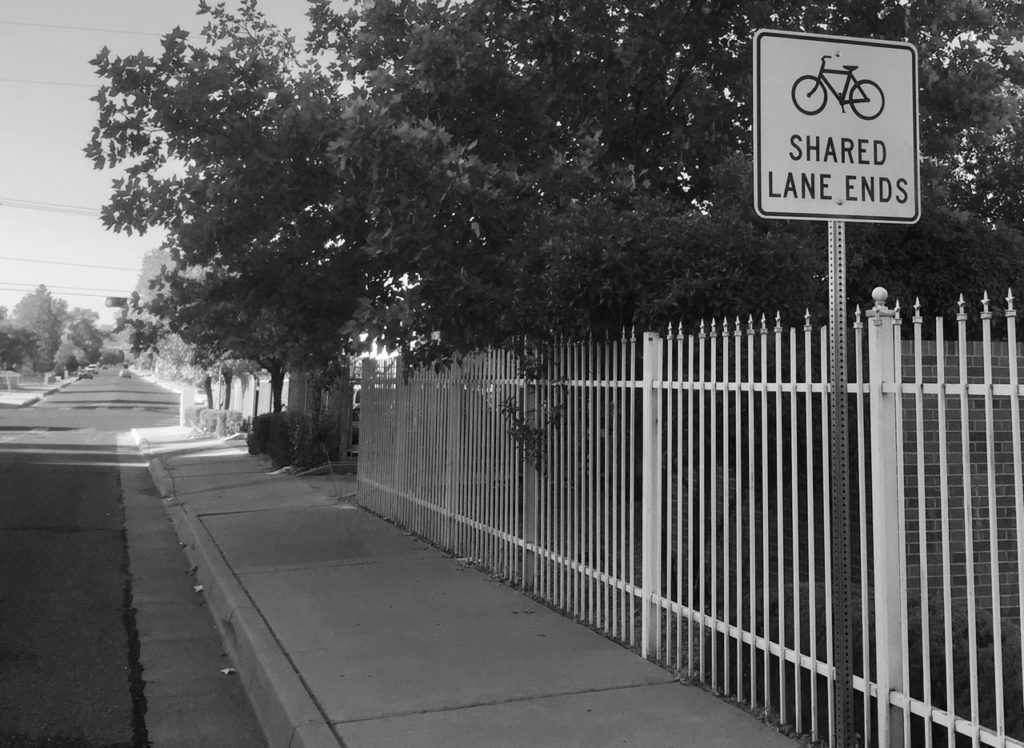
As is often my way, I wandered through Albuquerque’s Old Town Plaza at the tail end of my Sunday morning bike ride, stopping in the shade to enjoy the slow pace and people watching of the tourists mixed with Sunday church letting out.

That time they tried to bring the institution of legalized enslavement of human beings to New Mexico

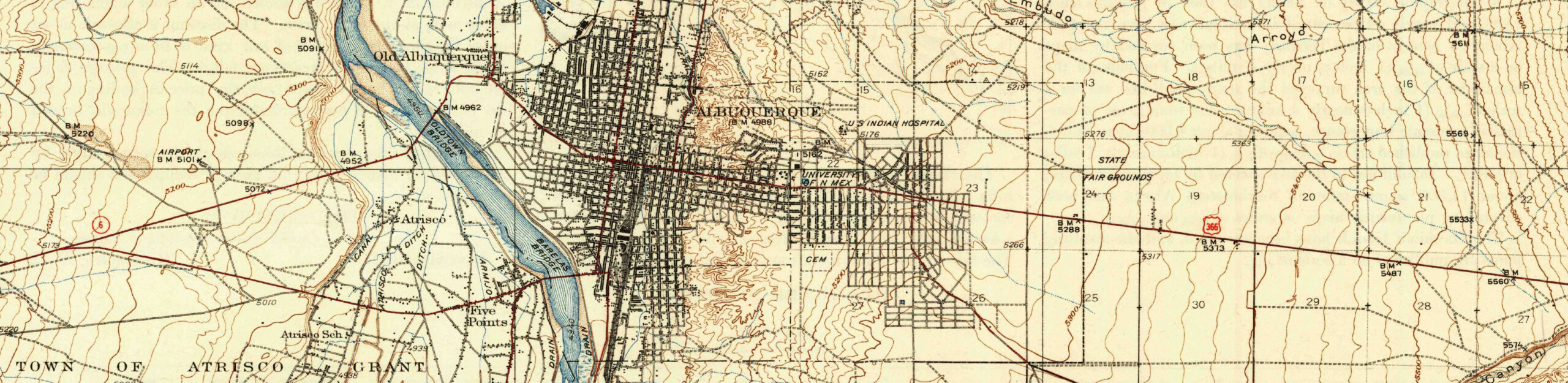
On the west side of the plaza are a couple of replica Civil War-era canons, brass rubbed shiny by kids climbing and playing. There’s a plaque with a history that here in New Mexico we like to tell cute, about the westernmost battle of the Civil War, at Glorieta Pass, to the north of Albuquerque. Union soldiers routed a Confederate expeditionary force, and the fleeing Confederate soldiers buried their cannons in a field near what we now call Old Town so the Yankees wouldn’t get them.

The plaque’s mostly about how the Confederate officer who buried the cannons came back decades later, and they dug them up and made a display, and then later made replicas, which are what the kids have now rubbed shiny.

There’s nothing about why the cannons were here.

“A multi-ethnic democracy,” Yoni Applebaum wrote today in the Atlantic, “requires grappling honestly with the past.”

I sat for a while this morning and looked at the cannons and then, as I often do on my Sunday bike rides, wrote what you are now reading, in my head, tossing around the words and themes, as I rode back across town and up the hill to my house.

The plaque tells the story cute, about pieces of physical military hardware buried in a field, dug up, polished and mounted in a town plaza. There is no mention of the blood shed at Glorieta Pass. And, as often in the telling of this story, there is no mention of why those Confederate soldiers were here. But if we’re gonna grapple, it has to be with the reality that those soldiers were here to claim what is now New Mexico for the permanent legal enslavement of one group of human beings by another.

The Confederate troops who buried those cannons were from Texas. Here is the explanation Texans gave for joining the Confederate struggle:

She (Texas) was received as a commonwealth holding, maintaining and protecting the institution known as negro slavery – the servitude of the African to the white race within her limits – a relation that had existed from the first settlement of her wilderness by the white race, and which her people intended should exist in all future time.

I set the idea to write this aside until I got a text this afternoon from my child about a gathering this evening at 6 p.m. in solidarity with the people of Charlottesville.

It’s being held on the Old Town Plaza.

Collaboration to deal with thorny dairy water and waste problems

From Sandra Postel and National Geographic’s Freshwater Initiative, the story of a collaboration among a dairy farmer, an irrigation tech company, and an environmental group to improve water efficiency in growing dairy forage crops and reduce the impact of dairy waste:

A 2015 pilot of the system on a 40-acre (16.2-hectare) field of silage corn at De Jager Farms produced stellar results. Water use efficiency increased by 38 percent, nitrogen use efficiency by 52 percent, and corn yield by 15 percent.

While saving water was Ray’s initial motivation, the reduced leaching of nutrients into groundwater could have broad societal benefits if more dairies adopt this innovative system.

That time we built a dam in Glen Canyon

Lauren Steely, late of the Bren School, did a neat analysis a few days ago to help visualize Oroville Dam inflow data. She’s using R’s joyplot tool, which is all the rage these days as a new day to line up and visualize variability in datasets that have repeating patterns.

Like, for example, the annual hydrograph on a river.

Here is the way I had been looking at data from the USGS gauge at Lees Ferry, downstream from Glen Canyon Dam on the Colorado River:

Lees Ferry Gauge, Colorado River, data courtesy USGS

It tells a story. You can see the change when they completed Glen Canyon Dam in the early 1960s, and the huge flows in 1983 and for several years after. (See The Emerald Mile.) But it’s kinda squinty and dorky.

I’m not much of a programmer, but happily Lauren shared her code, which I adapted to my data problem. Here’s the same data in a joyplot:

joyplot of USGS Lees Ferry Gauge

The blank lines in the early 1960s are when they were first filling Lake Powell. The little nubs in the bottom right are the Glen Canyon Dam/Grand Canyon experimental environmental pulses.

The mountain ranges in the upper center are what a river looks like before you build the dams.

“springing condition subsequent”

Lawyers have the coolest language.

Consider the doctrine of prior appropriation. “Beneficial use,” the drafters of the New Mexico constitution explained, “shall be the basis, the measure and the limit of the right to the use of water.” It felt like poetry the first time I heard the New Mexico state engineer roll it out pit-a-pat, legal poetry, crisp and to the point. This is language that is doing real work, not just idle words, but language that is, to borrow from the field of legal geography, quite literally shaping the landscape. As with the best poetry, it says much, but also leaves us a trail of ambiguity as well. “I have seen the best minds of my generation….”

And so we have my new favorite legalism – “springing condition subsequent”.

Treaty of Guadalupe Hidalgo

I first heard this late at night last December in a Las Vegas bar, discussing the trick needed to sign a deal with Mexico over the Colorado River. The deal needed to go hand-in-hand with a parallel deal among U.S. states involving handling shortages and surpluses, and it was a chicken-and-egg problem. Each part – the international agreement with Mexico, the internal deal within the US – depended on the other to succeed.

Whichever went first had to be written in such a way that it was contingent on the approval of the other. As I wrote Tuesday, it looks like the Mexico agreement will go first, and is now very close to ready. It will take the form of a “minute”, tacked onto the 1944 U.S.-Mexico treaty governing the sharing of the Colorado River. And it concludes language that has been variously described as “contingent” or a “trigger” – a mechanism by which some of the terms of the deal only when certain conditions are met – in this case the subsequent approval of the parallel deal within the United States.

And that parallel deal? Let it be known as the “springing condition subsequent”.


Institutions and trans-boundary water

River basins governed by agreements that include a combination of institutional mechanisms (such as enforcement, monitoring, conflict resolution, side-payment/issue-linkage, adaptability, and a joint basin commission) tend to exhibit more cooperation than river basins governed by agreements that don’t embody this combination of mechanisms. River basins governed by agreements that include an enforcement and adaptability mechanism as well as a side-payment or issue linkage features – something that constitutes a financial incentive or combines discussions about water with other aspects of bilateral or multilateral relations – are particularly prone to increased cooperation.

Shlomi Dinar, in a piece discussing his recent book, is not talking explicitly here about the evolving U.S.-Mexico water agreements. But he could be.

U.S.-Mexico Colorado River deal is close

With a Senate Hearing tomorrow and a meeting of the Central Arizona Water Conservation District Thursday, we’re starting to see the public rollout of a Colorado River management agreement between the United States and Mexico that now looks like it’s on track to be signed within the next few months.

The biggest clue that this could really happen is that they’ve changed the name from “Minute 32x” to “Minute 323”. The placeholder “x” meant the agreement would be signed sometime, changing it to a “3” suggest people are confident enough that it’s really going to happen soon that they’ve assigned it a number and put it in the queue.

While the full agreement has not been made public, the negotiating team has put together a detailed set of talking points to be taken to the various water agency boards and state agencies on the U.S. side. Here’s the copy included in the CAWCD board packet for Thursday’s meeting:


Quibbling aside about whether or not we’re in fact in an era of “historic collaboration on the Colorado River” (really, Gary, “fake news”?), this is evidence that we are, in fact, in an era of historic collaboration on the Colorado River.

Embedded in the deal are two important pieces.

The first is Mexico’s continued participation in the current binational water conservation scheme, in which water users in both the United States and Mexico agree to curtail their water use as Lake Mead drops. This is the follow-on to Minute 319, the historic 2012-U.S.-Mexico agreement that broke down the key barriers to international management on the river.

The second piece is what’s called in the new minute the “Binational Water Scarcity Contingency Plan”, which is the international flavor of what’s known by the norteños as the “Drought Contingency Plan”. This is the agreement that ratchets up the conservation, making deeper cuts to water use sooner. One of the lawyers in the audience will probably lecture me if I call this piece “contingent” or “trigger” or whatever, but the fact is that this language lays out the details of Mexico’s participation in the new DCP scheme, but it doesn’t take effect until folks on the U.S. side approve the DCP.

Its inclusion here, and the fact that it’s now being made public, is crucial evidence that folks in the United States have settled on the final terms of the deal and we’re not just in the “working out the formalities” part of the process. There’s always been a chicken/egg problem about which would come first, the DCP or the U.S.-Mexico minute, because each depends on the other. The solution has been a contingent minute (don’t scold, lawyer friends) through which Mexican participation is contingent on the separate deal within the U.S. being signed. The only way folks are willing now to go forward with the U.S.-Mexico piece is because they’re confident that the U.S. piece will follow.

These “minutes” (they function kinda like amendments to the U.S.-Mexico treaty, but don’t call them that the lawyers will scold you) part part of a trend away from conflict and toward collaboration as the Colorado River crosses its international border. They add a crucial piece – a joining of water management institutions across the international border in an effort to manage the Colorado River as one river.

Together, these steps demonstrate the extraordinary pivot on the Colorado River from Mark Reisner’s “most litigated river in the entire world” to a system in which the parties stay out of the courts and international tribunals and negotiate mutually beneficial agreements to deal with the Colorado’s problem of overallocation.

Lots more in the agreement, including more provisions for environmental flows in the Colorado River Delta and cross-border water conservation collaborations.

This is a big deal.