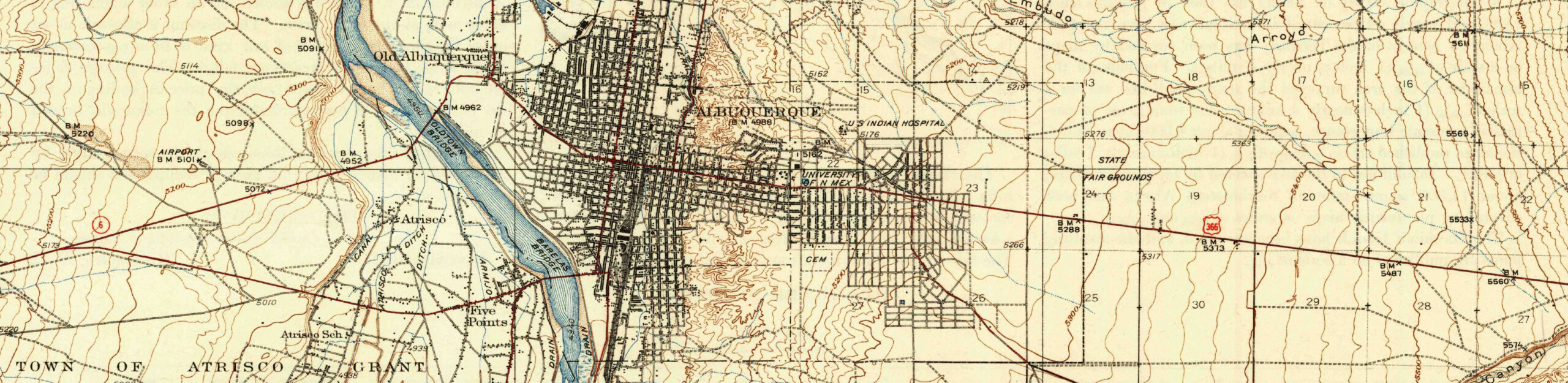

The map is not the territory, but is useful for identifying bus lines.
“What a useful thing a pocket-map is!” I remarked.
“That’s another thing we’ve learned from your Nation,” said Mein Herr, “map-making. But we’ve carried it much further than you. What do you consider the largest map that would be really useful?”
“About six inches to the mile.”
“Only six inches!” exclaimed Mein Herr. “We very soon got to six yards to the mile. Then we tried a hundred yards to the mile. And then came the grandest idea of all! We actually made a map of the country, on the scale of a mile to the mile!”
“Have you used it much?” I enquired.
“It has never been spread out, yet,” said Mein Herr: “the farmers objected: they said it would cover the whole country, and shut out the sunlight! So we now use the country itself, as its own map, and I assure you it does nearly as well.”
—Lewis Carroll, Sylvie and Bruno Concluded
When I was a teenage cross-country runner, I hung a topographic map on my bedroom wall—a nail through the house, a string marked in miles to measure my runs.
It was not about wayfinding. There was no place we hadn’t already wandered as kids; wandering has long been my practice. It was an effort to bring order, to measure and tally, to suss out the relationship between territory and map.
In Boy Scouts, we learned compasses and topo maps and I loved it—reading stories of up and down in the maps’ contour lines, then going into the mountains and living those lines, the hike an exercise in matching map with territory.
The topo maps were reliable representations of the territory, worthy of absolute trust as my teenage buddies and I climbed Mount Whitney and hiked the Pacific Crest Trail. Alfred Korzybski’s aphorism—“The map is not the territory”—was of no use. Yet here I am, in the twilight of my years, still puzzling over the epistemic relationship between the two.
The Quik-E-Mart on Christmas Day
Out riding Christmas morning, I ended up at the Maverik gas station and mini-mart nestled where Interstate 25 and Interstate 40 cross in the heart of Albuquerque. Zoom out on a map of the nation to what web cartographers call “zoom level 6,” and the only visible organization of space will be state borders, maybe rivers, but always interstate highways.
The tools available on my iPad are stunning in the variety of information they present: property boundaries and zoning; flood control channels and land ownership; bus lines and soil types; city council districts; historical points of interest and bike trails; aerial photos taken by Charles Lindbergh (they say) in 1935.
And yes, topographic contour lines.
But none show this: The truckers were working on Christmas, at least some of them; the woman behind the mini-mart counter was working; the unhoused who live in the area were working at staying alive. I watched a young couple walk off with a Christmas breakfast of microwaved pizza slices.
None of the mapping tools, in other words, show the totality of the territory. This is not meant to denigrate the mapping tools, and the knowledge they are able to convey, but to illustrate the epistemic challenge, the challenge of being mindful of what it is that we’re doing when we’re doing knowing.
It’s a neighborhood I’ve become fond of after discovering one of my favorite new “longcuts”—like shortcuts except instead of a shorter route from A to B on my bike, it’s a safer one. Piecing together sidewalks and parking lots and a dirt field, up past the cemetery, by a construction yard, beneath the freeway, around behind the piano repair shop, through the parking lot behind the bedraggled hotel, beneath another freeway, through the ever-present pile of sand covering the bike trail where I have to walk my bike—it provides a route across the automotive landscape we call “The Big I”, a tangle of freeway and frontage road and busy streets.
One of the important evaluative criteria for longcuts is their level of interesting. This route scores high.
There’s a municipal plan for the area with some nice maps. The maps don’t have my longcut, nor do they have the footpath into the Quik-E-Mart that the homeless couple used, heading home with their pizza slices. The planners did not anticipate anyone walking to the Quik-E-Mart. In my wanders, I watch for these little informal paths—territory encoding what James Scott calls “the vernacular,” standing in opposition to the plans of high modernist engineering and architectural planning, evidence that the map is ever not the territory.