The relationship between beetle kills and forest fire

In contrast to common assumptions of positive feedbacks, we find that insects generally reduce the severity of subsequent wildfires. Specific effects vary with insect type and timing, but both insects decrease the abundance of live vegetation susceptible to wildfire at multiple time lags. By dampening subsequent burn severity, native insects could buffer rather than exacerbate fire regime changes expected due to land use and climate change.

The area of study is the US Pacific Northwest. The paper is Do insect outbreaks reduce the severity of subsequent forest fires? Meigs et. al, Environmental Research Letters, Volume 11, Number 4


On the use of the word “decoupling”

I’ve been using the word “decoupling” to describe what is happening in the relationship between water use and population/economic growth. The phenomenon is common, and I blog about it a lot – water use going down even as population and agricultural productivity go up.

Now comes Robert Stavins, a prominent environmental economist, to argue that the word is not quite right. He’s talking about carbon emissions, but his argument generalizes to the way I’ve been using the word:

Decoupling is the wrong word to describe what has been happening.  It is simply the wrong metaphor.  When a caboose is decoupled from a train, it stops moving altogether.  A better metaphor, although less linguistically appealing, would be a “slipping clutch.”  The engine continues to transmit power, and as a result the driveshaft continues to rotate, but less than when the clutch was new.


Is the Colorado River community nearing a water-saving deal?

A flurry of public discussion over the last week about a possible water conservation deal on the Lower Colorado River illustrates the central dilemma in the river basin’s water use problems.

tl;dr This is a very important agreement. Modeling suggests that, if implemented, it could slow the steep decline in Lake Mead. The water conservation goals are achievable without crashing the West’s economy, but politics back home, in the individual states, remains the most important stumbling block.

The longer version:

The dilemma is this:

random picture of Hoover Dam and Lake Mead, meant to make it look really empty

random picture of Hoover Dam and Lake Mead, meant to make it look really empty

At the scale of the basin as a whole (seven US states and two in Mexico), the river’s waters are overallocated. Members of the formal and informal governance network of water managers working at that scale all know that everyone needs to take less water.

The question of who takes how much less, and when, is a staggeringly difficult negotiation. But then – and this is the far harder part, the dilemma – the representatives of each state have to go back home and sell that deal to political constituencies who don’t work and think at the basin scale, people who are skeptical of any deal to give up water to which the feel they are entitled.

This is one of the central arguments in my upcoming book (preorder now if your opportunity cost of money is low and you’re willing to wait four months to actually read it) – the difference between basin-facing politics and the domestic-facing politics of water management back home. There is a great deal of evidence that across all water use classes and geographies, communities are capable of using less water without suffering significant harm. But folks don’t always realize this, and at the local level tend to cling to the security of their old paper Colorado River water allocations, even if there isn’t enough wet water to meet them all.

At the individual community level, this is rational. Voluntarily giving up water absent a broad water use reduction deal just means that other users will take more and the system can still crash. Collectively, if everyone acts on this local-level rationale, we’re screwed.

The Deal

As first reported by Tony Davis and then ably followed up by Ian James, Caitlin McGlade, and Henry Brean, The Deal calls for Arizona and Nevada to take larger reductions in their annual Colorado River allocation than are required under the current rules, and brings California into the allocation reduction scheme as well at some point in the future if the bigger Arizona and Nevada cuts aren’t enough to slow the decline in Lake Mead.

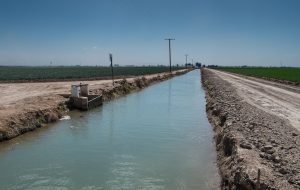
Water in the desert - the Colorado River's Parker Strip

Water in the desert – the Colorado River’s Parker Strip

When I was finishing up the final draft of the book’s manuscript last December, the basic shape of the deal was emerging, looking a lot like what we see today. What wasn’t clear (and still isn’t) was whether it could be packaged in such a way that it could be sold to skeptical water users back home in the states. (As a newspaper reporter by training and inclination, this was a tricky problem. We’re used to having the next day’s paper to revise and extend our remarks as things change. How to write something in December, with this uncertainty hanging over the system, that will hold up next September? Buy my book! See how I did!)

It’s still not clear whether this deal can be sold back home, and there remain some subtle unresolved bits: “There are still significant issues that we need to keep working through. So we’re going to keep at it, and it may take several months. It may take another year,” California’s Tanya Trujillo told James.

Selling it in Arizona

It’s emerged into public view now because Arizona’s leadership decided it needs to get on with the task of lining up the political support it will need back home. As I’ve written elsewhere and as I argue in my book (On the shelves Sept. 1! Preorder now!), Arizona’s domestic water politics, especially its hostility toward California, is one of the biggest stumbling blocks to a deal.

Arizona has a long history of hating on California over water, but the biggest sting is the 1968 deal that allowed construction of the Central Arizona Project. The canal was necessary to get Arizona’s share of the river’s water to the people in the Phoenix-Tucson corridor who needed it, but it came with a price. To get federal legislation needed to build it, Arizona had to agree to junior priority, standing behind California in the water line should supplies run short. That means that in theory California could dig in its legal heels and force Arizona to take huge cuts without losing a drop. You can see that importance of that historic sting in Arizona Department of Water Resources chief Tom Buschatzke’s op-ed on The Deal. It is crucial for Buschatzke to convince Arizonans on this point:

California would take reductions as well, but not before the lake has fallen to still lower levels. Current law states that California does not take reductions in deliveries until the Central Arizona Project completely dries up. Equity and fairness demand a different outcome.

California’s water leaders have made clear, often in private and increasingly in public, that they realize that brinksmanship, clinging to their 1968 politically won senior priority even as supplies to Phoenix are cut to zero, defies a sense of rightness and equity about sharing the river’s water. This echoes a point Brad Udall made in a series of talks in the summer of 2013 that had a significant impact on my thinking. It always seemed clear to me that any deal would inevitably require California to take cuts too. California agreeing to this in a formal, legally enforceable way, would be a huge deal.

What does California get in return?

In terms of what is now publicly known about the deal, what California gets is an agreement by Arizona and Nevada to take deeper cuts, sooner, than the current Lake Mead operating rules allow. Modeling runs implementing the terms of the deal suggest that may be enough. Under a set of dry years they call the “stress test”, there’s a 50-50 chance that with the additional Arizona and Nevada cuts Lake Mead will never drop low enough to require California to take its first tier of cuts. But the model also shows a worst case (a one in ten chance) under the stress test that California might have to take cuts as soon as 2019. (The “stress test” models a set of dry years with flows 16 percent below the long term median of the system’s historic performance, to give a feel for operations under climate change/drought conditions).

I have a bunch more thoughts and questions (blogger’s prerogative, it’s the end of the semester and I’m focused right now on helping our UNM Water Resources Program students). I’m especially curious about the current state of domestic politics among California water agencies, and also some of the more arcane terms of the deal, like what’s up with Intentionally Created Surplus below 1,075 under the agreement?

Delta smelt, culture wars icon

Fiorina told delegates at the state Republican Party convention here that protections for the threatened Delta smelt were a product of the “tyranny of the left, the tyranny of environmentalists.”

I fear discussions of the Delta smelt and environmental costs and benefits of moving California’s water from north to south have passed the point of useful discourse and into the realm of culture wars politics. (Quote from David Siders in the Sacramento Bee.)

A new favorite in the “cracked mud journalism” genre

As a connoisseur of cracked mud and journalism of the drought apocalypse, I tip my hat to the folks at Sports Illustrated for this:

not, apparently, a baseball field

not, apparently, a baseball field

“The Pacifics want to do their part to call attention to California’s drought conditions and so we won’t wash our uniforms for games after we draw 500 fans,” vice president of marketing Kim McGinnis said. “We’re hoping that this campaign will engage our fans in an innovative and fun way and, at the same time, potentially save thousands of gallons of water on our laundry.”

I love minor league baseball even more.

San Diego’s great water use decoupling

The San Diego County Water Authority’s use peaked in 2002 at 732k acre feet. Last year it was down to 522kaf, a 29 percent drop even as population has risen by 12 percent. This is one of many examples of “decoupling” between growth and water use. As we adapt to conditions of increasing water scarcity in the western United States, this is a good thing. But as Ry Rivard reports in Voice of San Diego, there are downsides:

Over a decade ago, Southern California water officials rushed to build or expand treatment plants so they could keep up with the demand for drinkable water. That cost hundreds of millions of dollars.

Now demand for water has fallen dramatically. The treatment plants sit largely unused during parts of the year and officials are fighting over how to pay for some of them.

In which Russian pirates publish my previous book on the Internet

One of those Russian pirate sites has published a pdf of my previous book, The Tree Rings’ Tale, in the Internet. I feel that, as an author, I have now arrived:

Russian pirates

Russian pirates

I of course will not link to the site, if you want to own a copy the honorable thing is to click on this link. But I must admit to being charmed by the reviews. Mohammad BuSaleh seems to have particularly enjoyed it:

reviews of my book

reviews of my book

Despite drought, farmers on central New Mexico’s Rio Grande looking at a full water supply this year

Albuquerque's Rio Grande drinking water diversion dam

Albuquerque’s Rio Grande drinking water diversion dam

Some remarkable news today out of the regular meeting of the Middle Rio Grande Conservancy District board: despite the nth* year of drought, the district’s farmers are likely to get a full irrigation season again this year, according to a report this afternoon from district hydrologist David Gensler.

The forecast is for 60 percent runoff on this stretch of the river (give or take the weather, 60 percent is the midpoint with uncertainty in either direction depending on whether it’s wet or not from here on out), but with some storage cobbled together in upstream dams and some tight management of the system, the irrigators who grow alfalfa and corn and chiles and the like in the valley should get a full supply, Gensler told the board.

Gensler’s tally of water stored behind upstream dams needed to achieve this goal was a hilarious litany of the opportunities and constraints of the institutional water management – you’ve got your Rio Grande Compact Article VII water, your Emergency Drought Water Agreement Water, your “native Rio Grande” storage, your relinquishment credit storage, your San Juan-Chama Project water storage, and I hope I’m not double-counting here.

There’s also a move afoot here to stash away a bit of extra water and use it to help provide a spawning pulse for the endangered Rio Grande silvery minnow. This is good because, as I’ve mentioned before, our successful adaptation to water scarcity on the Middle Rio Grande has not yet extended to nature.

* where n is maybe 15 out of the last 17?

More cuts, sooner, under Lower Colorado deal taking shape

Looks like significant progress toward an Arizona-California deal to slow Lake Mead’s decline, according to a story from the Arizona Daily Star’s Tony Davis:

Arizona, California and Nevada negotiators are moving toward a major agreement triggering cuts in Colorado River water deliveries to Southern and Central Arizona to avert much more severe cuts in the future.

Details still sketchy, with final negotiations still ongoing, but according to Tony’s story, a couple of very important points stand out on which there seems to be general agreement:

  • Arizona would take cuts in Colorado River water sooner – as early as 2017, rather than 2018 under the current operating rules
  • California, which under the current rules wouldn’t have to take any cuts until Arizona’s Central Arizona Project supplies drop to zero, would agree to take some cuts if Mead drops below a trigger 30 feet below current elevation
  • Arizona will spread cuts more broadly among that states users, rather than the current scheme under which ag takes the hit

This will need Arizona legislative approval, according to Tony, which should be interesting given that state’s belligerent tone toward California over these issues.

The whole story is worth a read.

Is Flint a reverse “environmental Kuznets curve”?

One of the most important findings of environmental economics in recent decades is what is called the “environmental Kuznets curve”, a finding that as a community’s affluence rises, environmental “bads” – think air and water pollution, for example – decline. Could what has happened in Flint, Michigan, be evidence that this phenomenon is bi-directional – that as a community becomes impoverished, environmental conditions worsen?

In 1991 Princeton University economists Gene Grossman and Alan Krueger first documented this intriguing and potentially important relationship between wealth and pollution. At the time the United States, Mexico, and Canada were in the midst of negotiating what would become the North American Free Trade Agreement. NAFTA’s critics had objected that the deal would simply shift pollution from the more heavily regulated and affluent north to Mexico. Preparing for a conference on the deal, the pair looked at levels of sulfur dioxide and smoke pollution in 42 countries around the world. They found that as affluence grew in the 42 countries they studied, pollution grew along with it, but only to a point. Once per capita gross domestic product reached an inflection point ($4,000 to $5,000 in 1985 dollars), things turned around. It was as if, once people had their basic needs covered (food, housing, etc.) their desires turned toward a cleaner environment. The pollution curve, at least for sulfur dioxide and smoke, turned back down.

Could the expected income growth in Mexico, the pair wondered, push Mexico’s economy past the point at which the nation’s pollution curve bends back down? “A reduction in pollution may well be a side-benefit of increased Mexican specialization and trade,” they wrote.

Per capita GDP, Flint, Michigan, adjusted for inflation, courtesy BEA

Per capita GDP, Flint, Michigan, adjusted for inflation, courtesy BEA

The inverted U-shaped effect of environmental damage rising and then falling came to be called the “environmental Kuznets curve” after the work of economist Simon Kuznets, who in the 1950s posited a similar relationship between rising income and inequality. The observation resonated in a world in which rich countries seemed to have turned a corner on their pollution problems with things like the U.S. Clean Air and Clean Water acts and the Endangered Species Act, laws that reflected a culturally noticeable pivot in the decades before Grossman and Krueger published their pioneering work. In the years following the paper, a flurry of studies put empirical flesh on the skeleton, measuring the relationship across a range of environmental “bads”, from urban air pollution and deforestation to climate-changing emissions of carbon dioxide. Researchers argued about the statistical measures and the underlying theory, about whether income and wealth were the right causal variables, but again and again, their curves showed the inverted U’s of an EKC.

The story of Flint is well known – a community gutted by economic change, and left in the process with lead-contaminated drinking water. In terms of both total and per capita GDP, Flint’s economy tanked from 2004-2009, then began to recover in the years since. So is this a thing? As communities get poorer, do things like clean water fall by the wayside? Is Flint an example worth looking at, or does the curve above suggest that the timing is all wrong? How might we look more generally for a reverse EKC?