On the Colorado River, the environment is the junior user

Members of the Colorado River Research Group, scholars who study the basin, have a useful new report out today (pdf here) urging a more unified approach to the currently fragmented environmental management initiatives on the Colorado River. It describes “an incomplete patchwork of largely uncoordinated efforts, existing in some cases to facilitate compliance with environmental laws that might otherwise constrain users from withdrawing additional water from the river system.”

In other words, the driver isn’t really the environment, so much as managing the problem of environmental values getting in the way of taking water out of the river. This is where the strange accretions of our water management law have left us.

At the heart of current Colorado River management are laws, policies, dams, and aqueducts that divide the flow of the river into many discrete allocations and rights. The current strategy is politically motivated by the desire to minimize interstate and binational competition for limited watersupplies, while simultaneously empowering states and local water managers with the legal certainty and autonomy necessary to support the management of their water allocation. Environmental programs evolved later around this pre?existing framework, with most efforts focused on modifying the operations, or mitigating the impacts, of the basin’s physical infrastructure. An unintended result is a framework that often impedes the search for coordinated management strategies.

The key takeaway message from the “Law of the Colorado River” conference I attended a couple of weeks ago in Las Vegas: it sucks to be the junior user on an over-appropriated river system. Under the doctrine of prior appropriation, the guiding principle for western U.S. water management, “senior” water uses/users – those that have been extracting water the longest, have the highest priority when water gets scarce. Those are usually farms. “Juniors” – those who came later, primarily cities – have a share that is generally smaller, and that is at greater risk as supplies run short.

In California, for example, the Metropolitan Water District, which has a smaller share of water that is also junior to the big farm districts of Palo Verde and Imperial. Met is rich and politically powerful, but this is one of the great examples of how water doesn’t simply flow uphill toward that money. It sucks right now to be Met.

Arizona is junior in a bigger way, because the cities of central Arizona came to the party even later, so they’re junior to all of California’s uses.

A lot of the jockeying right now involves coming to terms with that problem.

But the CRRG report is a reminder that the environment is the ultimate junior.

Awaiting our May miracle in the Colorado River Basin

February precip anomalies, courtesy PRISM

February precip anomalies, courtesy PRISM

It was 72F (22C) in Albuquerque yesterday, a record, and our decent snowpack is already starting to melt out. It’s early for that. And February (see PRISM map at right) has been dry, which hasn’t helped.

In the Upper Colorado River Basin, snowpack measured across all the river’s main tributary systems above Lake Powell (the Upper Colorado itself and the Green) is just 92 percent of average, according to the CBRFC. The mid-February forecast for total runoff this year into Powell is just 90 percent.

And yet, if you’ll permit me to mix anecdote with my data….

We had a visit yesterday evening from our friend Nancy, who used to live around the corner and recently moved to Pagosa Springs in southern Colorado. She’s learning to live with four feet of snow, and the neighbors tell her it’s the most they’ve seen in a while. The latest forecast on the Rio Blanco, which is the nearest measurement point to Nancy’s new house, is 10 percent above average. Importantly for us, that’s one of the key tributaries that supplies San Juan-Chama Project water to Albuquerque.

And the new seasonal forecast from the Climate Prediction Center for March-April-May, out this morning, is promising:

March-May seasonal outlook

March-May seasonal outlook


Why did Flint happen?

We’ve got a ton of hero/villain narratives underway around the water contamination problems of Flint, Michigan. But there’s always a risk of post hoc storytelling here. As storytelling beings, we gravitate to narratives like that. But inevitably the heroes and villains are embedded in deeper institutional structures that are a necessary precursor to the problem, and fixing problems like this, broadly, requires fixing the conditions that allow this villainy to exist and require this heroism to fix it.

This is one of the important insights of the “solutions journalism” movement, and this is precisely what I love about the work Laura Bliss at Citylab, including this piece on Flint and the problems of places like it:

One crucial concept is environmental federalism, the basic enforcement structure underlying America’s big environmental protection laws. The federal government sets environmental standards, such as the Safe Drinking Water Act. States are the “primacy agencies” charged with implementing and enforcing those standards on a local level. Local governments and public water districts are supposed to comply with the state (and, by extension, the feds).

But environmental federalism creates some common trip-ups. First of all, “local and state politics always affect compliance,” says Teodoro. Local governments might determine that the cost of complying with federal and state standards is simply too high, too burdensome, or too politically onerous. For instance, compliance might require raising water rates, a risky move for local leaders seeking reelection. Or maybe the local population served by the water agency is politically marginalized, and thus deemed unworthy of the funding necessary for compliance.

Bliss is explicit in not excusing Flint’s villains. But her work shows why it’s important to go one step beyond and look at the institutional structures that push things in Flint’s direction.

persistent fish

Lynda Mapes and her colleagues at the Seattle Times built a beautiful multimedia piece on the return of nature to the Elwha River on Washington’s Olympic Peninsula now that the dams are gone.

It has an amazing picture from 2010, pre-dam removal, of Chinook salmon at the bottom of the dam with this caption:

In this 2010 photo adult Chinook salmon are blocked in their journey upriver by Elwha Dam, built five miles from the river mouth with no fish passage. Even after 100 years they persisted, circling at the face of the dam every spawning season, trying to get upstream.

Oh my. 100 years.

Flawed rate structures cost California water utilities half a billion dollars

Tara Lohan at Water Deeply had a great interview last week with Tom Ash of Southern California’s Inland Empire Water Agencies about the problem of water revenue in a time of conservation and drought:

Tom Ash: What I learned is that it doesn’t matter where in the world – China, Chile, Spain, France, Italy, Israel – we all have the same problems in terms of water rates. We all have droughts, we all are facing climate change, we all have population growth. And in most countries they are having trouble recovering the cost of service.

Agencies in California in the last year probably will have lost about half a billion dollars in water revenues.

My Twitter quip was that the agencies had lost half a billion dollars because of conservation, but Jessica Blois correctly pointed out that was not quite right:


Ash goes on to offer a useful explanation of the difference between charging for the sale of water and charging for the basic infrastructure delivery:

Its job is to deliver clean, safe water, 24/7. Most of those costs to do that are fixed and the fixed costs are put into the cost of water. On average, let’s say 75 percent of costs are fixed for most public water agencies – it’s not the water that is expensive.

The entire interview is worth a read.

Sorting out the Salton Sea mess

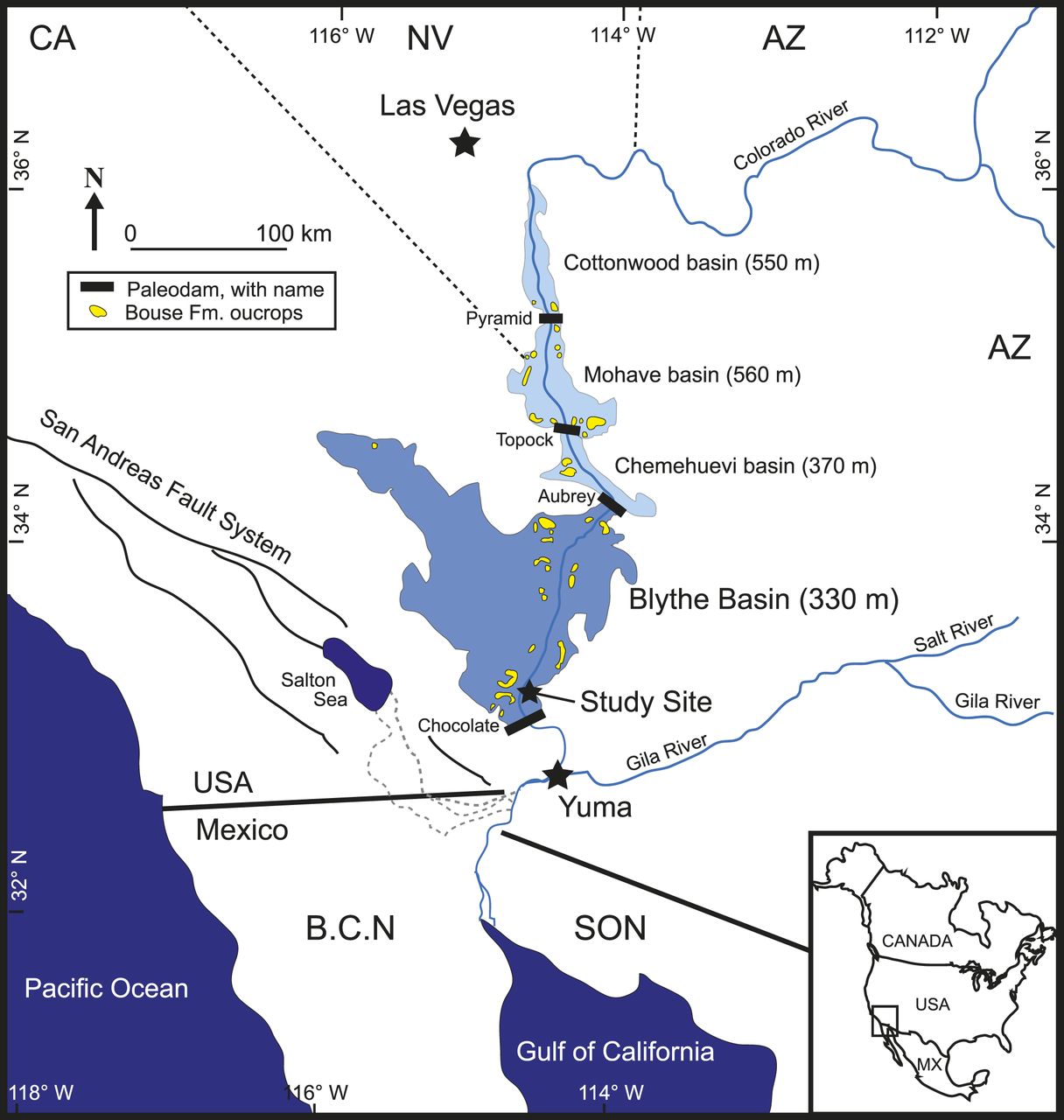
I joke that I kept trying to leave the Salton Sea out of my book, because it’s such a hairy problem that in threatened to derail me in so many ways. Of course I failed, because the Sea is a critical piece of solving the distributional problems of scarce Colorado River water. Agricultural reductions in the Imperial Valley reduce tailwater flows to the Sea, shrinking critical habitat and creating health risks for the communities that surround it. (Mike Cohen offers a good rundown of the issues here.)

Via Ian James, some modest but encouraging news this week on that front:

The federal government plans to spend $3 million this year constructing a new wetland along the Alamo River in order to rehabilitate habitats and help clean up some of the polluted water flowing into the Salton Sea.

$3m is just a fraction of what is needed, but it’s bigger than zero.

Can we talk about La Niña yet?

I don’t want to get out ahead of things, because we’re still trying to understand what the current gonzo El Niño means for global weather, but the monthly outlook from the U.S. Climate Prediction Center now has the odds at 50-50 that we’ll be in La Niña by fall:

Most models indicate that El Niño will weaken, with a transition to ENSO-neutral during the late spring or early summer 2016 (Fig. 6). Thereafter, the chance of La Niña conditions increases into the fall. While there is both model and physical support for La Niña following strong El Niño, considerable uncertainty remains.

La Niña by fall>

La Niña by fall

A reminder that El Niño tilts the odds toward wetter weather across the southern tier of U.S. states, La Niña does the opposite, and the Colorado River Basin as a whole is a coin toss.

On Bard and the language of water “markets” and “incentives”

The Pacific Institute and others have published a useful new study on “Incentive-based Instruments for Freshwater Management” which raises some interesting issues about the language we use to describe water policy instruments.

The farm district in Bard, California, is negotiating with urban water users to fallow cover crops like this and send conserved water to the city

The farm district in Bard, California, is negotiating with urban water users to fallow cover crops like this and send conserved water to the city

Deep in Abrahm Lustgarten’s excellent new piece about water markets in the West is this description of the arrangement by which the Metropolitan Water District of Southern California pays farmers in Palo Verde (the deserts east of Los Angeles) to fallow fields so that water can be transferred for municipal use in coastal Southern California:

The arrangement is anything but a free market: To ensure that most of the water stays in the valley, the agreement limits the amount of land any one farmer can fallow in a year to 35 percent of his or her holdings. Still, farmers get added income without losing their rights to the water, and the Metropolitan Water District says Los Angeles and its other cities get reliable access to water, which helps them make it through drought years.

The distinction here is between “free market” and more regulatory approaches that specify in law who gets how much and for what, but I think what’s happening in Palo Verde has important market characteristics that matter. I think we’ve been getting wrapped around our axle in trying to fit this square peg into the round “water markets” hole. These things will never be like buying and selling oil. Water, as the Pacific Institute study notes, has a lot of characteristics that make normal markety stuff impossible:

It is heavy, unwieldy, and easily contaminated; it sometimes has dramatic seasonal and year-to-year variability; and it can be easily lost through evaporation, seepage, or runoff…. Further, these externalities may be borne by disparate parties, such as the environment or future generations, challenging efforts to compensate those injured by trading.

One of the points Robert Reich makes in his new book is that markets are at root institutions created by political systems, so by design if you do build a “water market” you end up with institutional arrangements that either do or don’t take the problem stuff into account.

Institutional arrangements are among the most important factors that determine the ultimate success or failure of water trading. Successful water trading requires secure and flexible water rights that recognize and protect users and others from externalities.

When we talk about “markets” in all this, the generic language prejudices us toward a specific notion of freeness of buying and selling, but really these things are always bound up with incredible institutional constraints that make very few of them look like buying and selling hog bellies*. That’s why I really like Cohen et al.’s language of “incentives” instead. It allows for a lot of the characteristics many people like about markety stuff, but allows for a lot of the kind of boundaries and constraints that Lustgarten argues make it “anything but a free market”.

Yes. Exactly.

Which brings us to Bard, the little irrigation district across the Colorado River from Yuma, in the far southeastern corner of California.

The Metropolitan Water District of Southern California and the Bard Water District last month launched into a new arrangement in which Bard farmers can be compensated for fallowing fields during the hot late spring and summer months. Bard farmers do a lot of winter lettuce, for which they make a lot of money. Then, as is common for the winter lettuce trade, they plant the land in a cover crop – maybe cotton or sudan grass or something – that makes a lot less money. Negotiations are now underway on deals in which Met would compensate farmers $400 an acre to fallow instead during those months.

This has a lot of the characteristics of a market – willing buyers and sellers who have negotiated a price. But it is anything but a free market. There are a lot of constraints – limits on total acres involved, and it only applies to fallowing and water transfer during a few months of the year. Those are constraints intended to manage the externalities – keep agricultural land in production, protecting community of origin values.

I really like the language of “incentives” rather than “markets” here. It gets us past a hurdle that has hampered the conversation.


* I got “hog bellies” into a blog post. Achievement unlocked.