In Atlanta, another water use decoupling

Via Brett Walton at Circle of Blue:

Per capita water use declined 30 percent from 2000 to 2015, and total water consumption within the metro Atlanta area declined over 10 percent despite a 20 percent increase in population.

That’s from the Georgia Department of Natural Resources (pdf). As Brett notes, “Georgia now says it does not need a new reservoir that is going through federal permitting.”

The decline in California’s cotton acreage

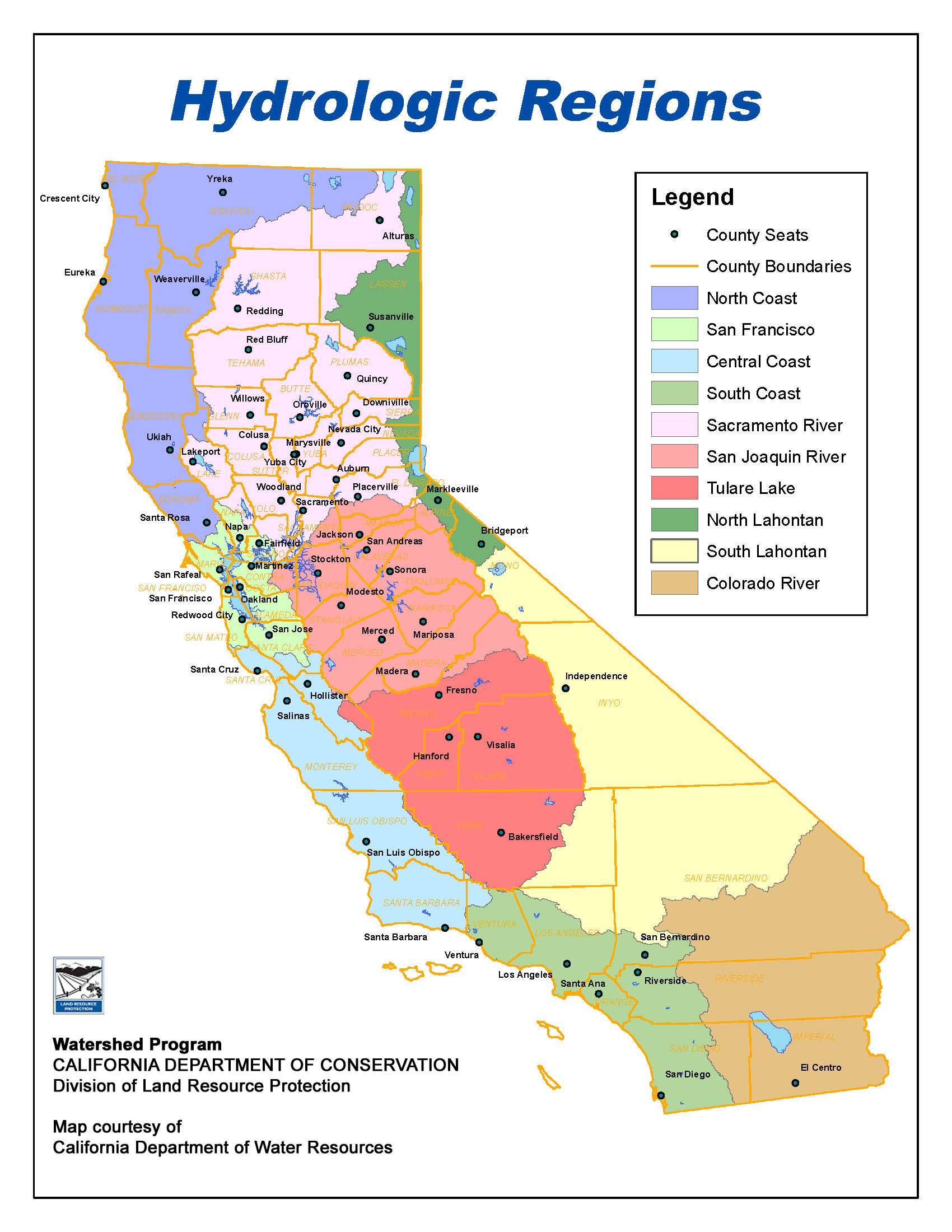
In his keynote at last week’s Law of the Colorado River conference in Las Vegas, Metropolitan Water District General Manager Jeff Kightlinger pointed out something that’s not gotten a lot of attention in discussions of California’s drought – the extraordinary decline in that state’s acreage of cotton. Cotton’s gotten a bad rap in irrigation circles, because it’s subsidized and thirsty. Despite those subsidies, as I’ve written, cotton acreage in Arizona has plummeted, which is why I don’t see the cotton subsidy as a big piece of the western water problem. But I didn’t realize the size the decline of California’s cotton industry.

Source: USDA

Source: USDA

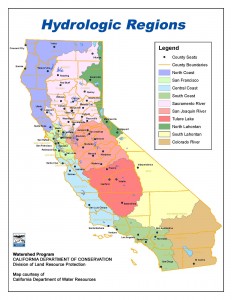
Last year there were 164,000 acres of cotton grown in California, just a tenth of the 1979 peak of 1.65 million acres. Given cotton’s thirstiness, that drop would seem like a good thing in water management terms. But Kightlinger pointed out that a big part of what we’ve seen is a shift away from a temporary field crop like cotton, which can be fallowed in a dry year, to permanent almonds. In the old days, when Met wanted to go out on the market and buy ag water during a dry year, farmers could fallow a field crop like cotton and take the money. But last year, Kightlinger explained, Met ended up having to bid against almond farmers with a lot of investment riding on keeping their orchards alive. As a result, there wasn’t a lot of ag water to be had in Met’s price range, and the agency ended up shifting the money to a turf grass buy-back program in Southern California – fallowing lawns, if you will.

It’s not been a one-for-one acreage switch. Since 1996 (that’s as far back as I could find the almond acreage to do the comparison), cotton acreage has dropped by nearly 900,000 acres, almost all of that in the San Joaquin Valley. (California alfalfa, the other high water, low value irrigated crop is down ~150,000 acres statewide during that period.) Almond acreage during that time is up about 500,000 acres. So the net in acreage of those big three irrigated crops is down a lot, with the almond increase more than offset by the cotton and alfalfa decrease. But while that means less total water use, Kightlinger’s argument points out the loss of flexibility in the shift to crops that you can’t fallow when the water runs short.

Tamarisk and its beetle are here to stay

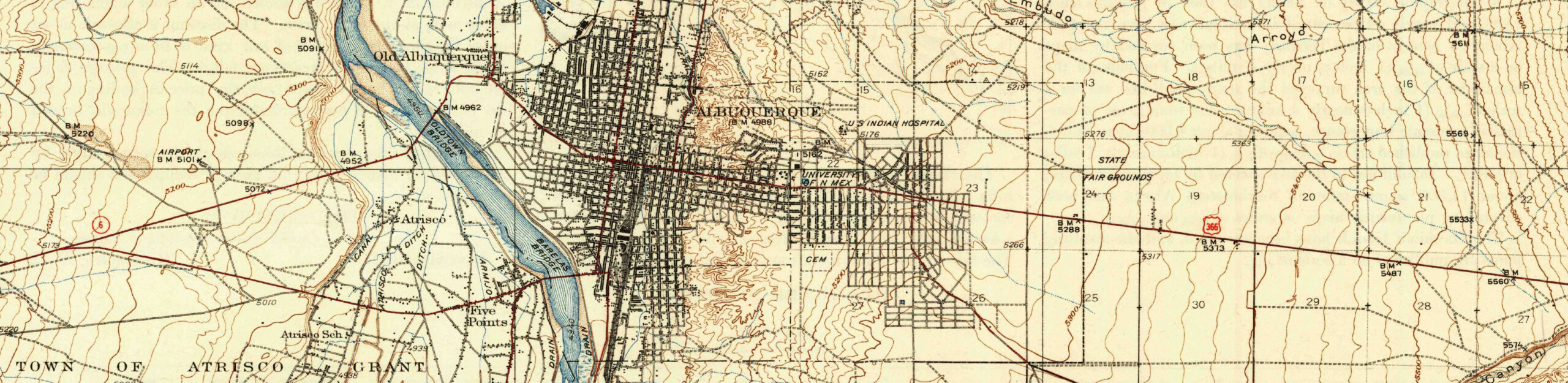
A tree hit by tamarisk beetles, Albuquerque's Rio Grande bosque, July 2015, by John Fleck

A tree hit by tamarisk beetles, Albuquerque’s Rio Grande bosque, July 2015, by John Fleck

The tamarisk beetle, introduced in 2001 as a strategy to control “invasive” tamarisk trees in the United States, is “expected to
spread throughout the entire (Colorado River Basin), and tamarisk presence, distribution and abundance will likely decline as a result,” according to a new report (pdf). “Tamarisk beetle in the Colorado River basin”, written by Ben Bloodworth of the Tamarisk Coalition, Pat Shafroth of the USGS, and colleagues, documents the findings of a major workshop last year.

The scare quotes around “invasive” are a reference to the issues raised by biologist Ken Thompson’s book Where are Camels From. Our ideas about “native” and “invasive” are in part social constructions, Thompson argues. How long has the newcomer been here? Do we “like” it or not? How do they fit into the changed environment we’ve created?

With the changed hydrology of dams and diversions on our western rivers, we’ve got a sufficiently altered system that the “native” biota we’re trying to protect are often ill suited to the new environment we’ve created. With tamarisk, that means that we now have “native” critters that do well in tamarisk because the old flood plain habitat in which they lived is gone, on account of no floods. Two key points from the report:

  • Tamarisk beetles are expected to spread throughout the entire CRB, and tamarisk presence, distribution and abundance will likely decline as a result.
  • The expected effects of this tamarisk decline on native plant species are dependent upon a number of environmental factors that may be useful in predicting outcomes. Most important is the degree to which the system has changed from historical conditions, including dynamism of the river, soil conditions, and the state of the remnant native plant community.

So for example the endangered willow flycatcher may suffer as a result. With its native habitat gone, it’s made a new life in the tamarisk, which will be harder now.

The report suggests that a more natural, spread out hydrologic system may be possible as tamarisk declines, but only in river systems that have something approximating their natural flow regime.


Book’s “done”!

I’ve begun putting scare quotes around “done”, but we just passed a major milestone deserving of the word – done – with my upcoming book on the problems facing the Colorado River Basin and what I think solutions might look like. The book is now fully edited and entering the production process at Island Press. And when I say “fully edited” I have to add the scare quotes too, there are a couple of more rounds of copy editing and proofreading as part of said production process. But It’s now largely off my desk and into the hands of the professionals.

Lake Mead at sunset, by John Fleck

Lake Mead at sunset, by John Fleck

If I was a better writer I’d have a good metaphor here for the strange time-shifting experience of writing a book. Maybe a life that spans global time zones – I’m over here on one side of the International Date Line done with it, and y’all are off there on the other side waiting until next fall to read it? (You are anxiously awaiting the chance to read it and buy copies for all your family and friends, right? Put it on the holiday shopping list now.) Maybe the metaphor is the old days when news had to travel by boat around the Horn?

It’s a weird limbo, starting to work on other projects (I’ve already written some other stuff, teaching is the most fun right now), starting to think about what a next book might look like, while the thing that sorta feels behind me (The Book) is still very much ahead of me.

The last task was the acknowledgments, and it was the hardest, because so many people helped me. But I realized in sorting through the lists of the many people who gave their time and data and insights that they shared a common characteristic – a clear-eyed view of the difficulty of the Colorado River’s problems, combined with a persistent optimism that they can be solved.

I hope the book honors that zeitgeist, which I share – that the inexorable draining of Lake Mead demonstrates a clear problem in our relationship with water in the Colorado River Basin (we use too much of it!) but the litany of success stories I chronicle suggests significant progress, both in water conservation on the user end, and in institutional frameworks needed to manage the allocation of an increasingly scarce resource.

I’m off to Las Vegas this week for the annual CLE Law of the Colorado River conference. It’s a gathering of the community, and I’m looking forward to hearing the latest and sharing some of my ideas about where we go from here.

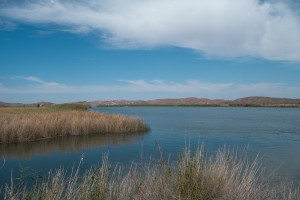
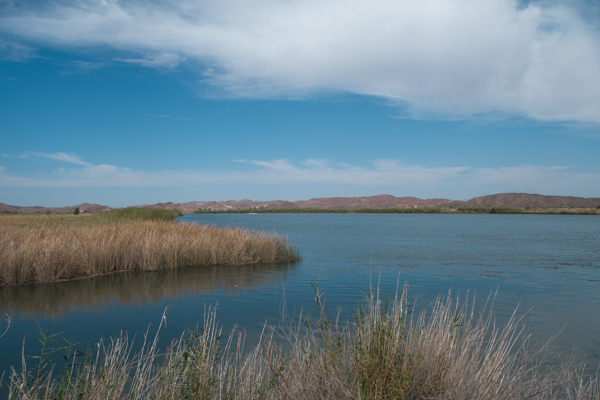
I’m driving over a day early, to spend time wandering around looking at water. It’s always been one of my great joys, getting down to the water, seeing how it moves through the system, and I’ve been in the writing tunnel and away from the water too much over the last six months. There’s a big reservoir out east of Vegas that I’ve grown fond of over the last few years, gonna pay a visit.

Pushback on the export of Palo Verde alfalfa

In freshman college physics, a common conceit to simplify the study of velocity and momentum is the air table (think air hockey), which allows you to reduce the friction on a moving object to negligible levels. “Imagine,” the professor explains, “a frictionless plane.” And then sketches out on the chalkboard the equations for velocity and momentum and such.

This is great for abstracting away that troubling friction part to understand the core phenomena. Once you actually have to do stuff in the real world, though, you best bring friction back into the discussion. It matters.

I was reminded of this as I read UC Riverside economist Christopher Thornberg’s thoughts in the Riverside Press-Enterprise about the Saudi Arabian dairy company Almarai’s purchase of Palo Verde Irrigation District farmland with senior Colorado river water rights:

One vocal critic is UC Riverside economist Christopher Thornberg, who says the practice is akin to exporting water.

“They have already destroyed their water tables, now they’re destroying ours,” he said.

The solution, according to Thornberg, is to raise prices on agricultural water and overhaul the water rights system that gave Palo Verde farmers their “first in time, first in right” claim in 1877.

Such a move would surely eliminate high-water crops like alfalfa and cotton in the valley. Those crops would then have to be purchased from other states that aren’t suffering water shortages, he said.

“If (farmers) have to pay for that water at anything remotely like a reasonable price, it wouldn’t happen because they wouldn’t make money on it,” Thornberg said.

This is, for Thornberg, not new. In 2008, he and Michael Bazdarich wrote a book chapter arguing that California’s water administration system would work better under a market. Like much of this literature, the 2008 chapter ignores a central piece of the economics – the transaction costs of building such a market. His more recent comments suggest a new twist – overhaul the property rights system under which Palo Verde farmers now have the highest priority to California’s Colorado River water rights. Perhaps he has more to say on this than was quoted in the PE, but to just blithely call for property rights reform seems to ignore one of the central findings of decades of research by economists on this issue – institutional change of this sort is accompanied by significant transaction costs.

Changing property rights and building markets doesn’t just happen by magic. Ignoring the transaction costs of institutional change is the ag water economics equivalent of “Imagine a frictionless plane.”

A further note on California alfalfa exports: California is a net importer of virtual water

While we were blathering on mindlessly in a comment thread about the water exported form California via alfalfa exports, Peter Gleick helpfully jumped in with come actual data:

California’s total water footprint is an estimated 64 million acre-feet of water. That’s more than double the amount of water that flows down both of the state’s two largest rivers, the Sacramento and San Joaquin, in an average year. An estimated 38 million acre-feet of water is used to produce goods and services within California. Half of that water is used for goods that are then exported and consumed outside the state. The remainder – about 19 million acre-feet of water – is used to produce goods that are consumed in California. An additional 44 million acre-feet of water is required to produce the goods and services that are imported into California and consumed here, making California a net importer of virtual water.

“As pressures on water resources intensify, evaluating our impact on the world’s water resources becomes increasingly important; the water footprint is one way to quantify this impact,” said Julian Fulton, lead author of the report. “Most of California’s water footprint is external, meaning that Californians are more dependent on water resources from other places than in-state.”


The struggle with municipal water rates in response to conservation

The downside to the remarkable water conservation I’ve been writing about (see yesterday’s Albuquerque numbers, for example) is revenue. Water utilities sell water. If people use less water, water utilities make less money. One option is to shift to more fixed-costs pricing, charging a flat rate for service, but then you lose the behavioral incentive of price.

Tony Davis’s latest story out of Tucson is an example:

Tucsonans conserve so well that their usage — and Tucson Water’s revenue — has plummeted over the years, and that’s something the utility’s new director wants to fix. A specific proposal is a year away, but a new rate structure likely would reduce the utility’s dependence on revenue coming from monthly charges based on how much water a home or business uses. Under a scenario outlined by newly hired Tucson Water Director Timothy Thomure, a greater portion of customers’ bills would shift to the utility’s fixed charges, which stay the same regardless of how much water people use.

There’s pushback from water conservation advocates, who think that would lead to an increase in water use. Albuquerque used a similar approach a couple of years ago (higher fixed cost on my bill) and conservation continued, so maybe not? But the details matter. There’s a lot of room here for some detailed house-by-house, neighborhood-by-neighborhood number crunching to try to get a better understanding of the elasticity of demand and how that interacts with various pricing structures. Call in The Economists!