In the Colorado River Basin, a slow start to the 2014-15 water year

We’re about 20 percent of the way into the fall-winter-spring snow accumulation season in the Colorado River Basin, and the current snowpack upstream of Lake Powell as estimated by the CBRFC is 61 percent of average:
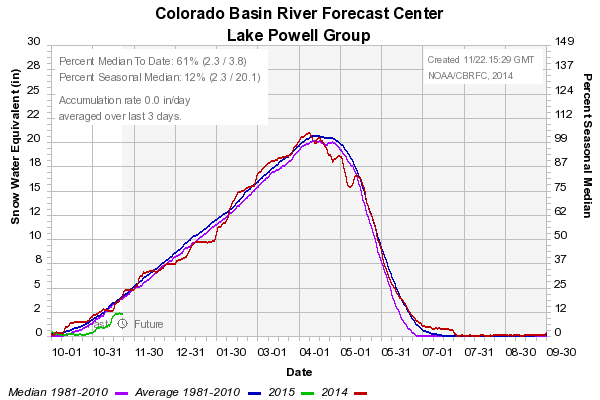
Snowpack above Lake Powell, courtesy CBRFC

Snowpack above Lake Powell, courtesy CBRFC


It is worth remembering, as the Bureau of Reclamation notes in its weekly water supply report (pdf), that “values may vary significantly from week-to-week this early in the water year.”
 

Persimmons

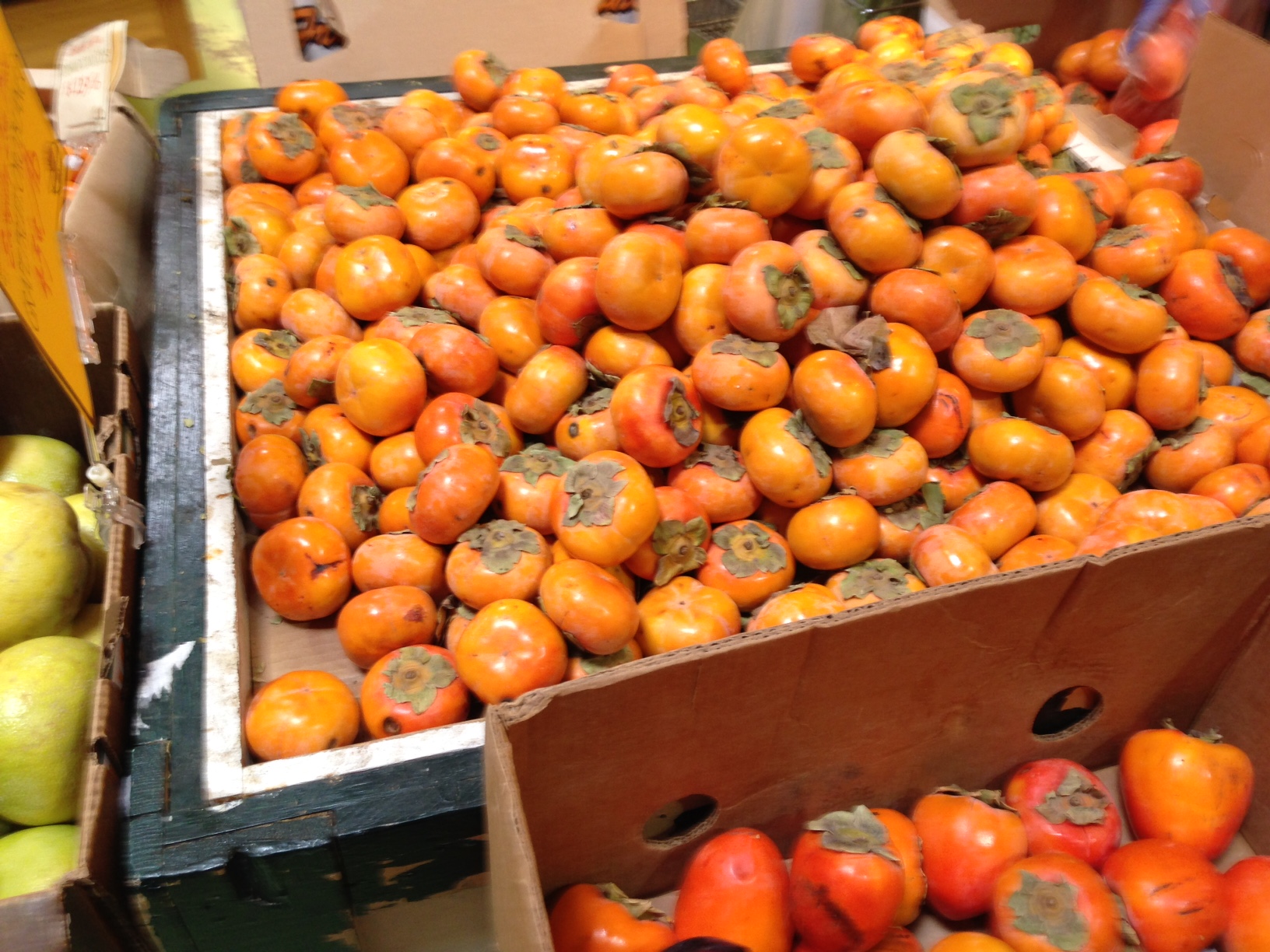
Persimmons from California's Central Valley

Persimmons from California’s Central Valley


Despite California’s epic drought, there were Central Valley persimmons this afternoon in Talin Market, Albuquerque’s international district grocer, when my sister, Lisa, and I stopped by to pick up a few things.

They were priced at $1.29 a pound, with the box label suggesting they had come all the way from Gridley, Calif., a little town midway between Yuba City and Chico in the valley’s northern stretch. It’s not a big persimmon hot spot, recording just 78 of California’s 4,091 acres of persimmons in the 2012 Census of Agriculture. (pdf here, not surprisingly Fresno County is the state’s largest persimmon producer)

It is interesting to think about how and why persimmons make their way from Gridley to my local Asian market.

New Mexico history, south to north

New Mexico has a relatively short part in the conventional story of the making of the United States from east to west. The older, longer-lasting story of a country made from south to north, or in gridwork and patches with contributions from all over the hemisphere and the world, has resumed there. It is a model of US pluralism, in which no community’s culture is fixed, but peculiar traditions can be upheld without compromising overarching political unity.

That’s Felipe Fernández-Armesto’s optimistic words about my adopted home, in Our America: A Hispanic History of the United States.

Stuff I wrote elsewhere: Drought-tolerant alfalfa

It’s a little thing, this new breed of drought-tolerant alfalfa bred on New Mexico State University research plots in the southern part of my arid state. But it provides another clue (behind a Google surveywall) about what the path forward in western water management might look like:

Adoption of a new crop takes time, so don’t expect NuMex to change agricultural water use overnight. But the crop’s evolution, and other adaptations to water scarcity by U.S. farmers in recent years, illustrates a central finding of a sweeping new federal study released last week: When less water is available, we use less water.

We’re using less water

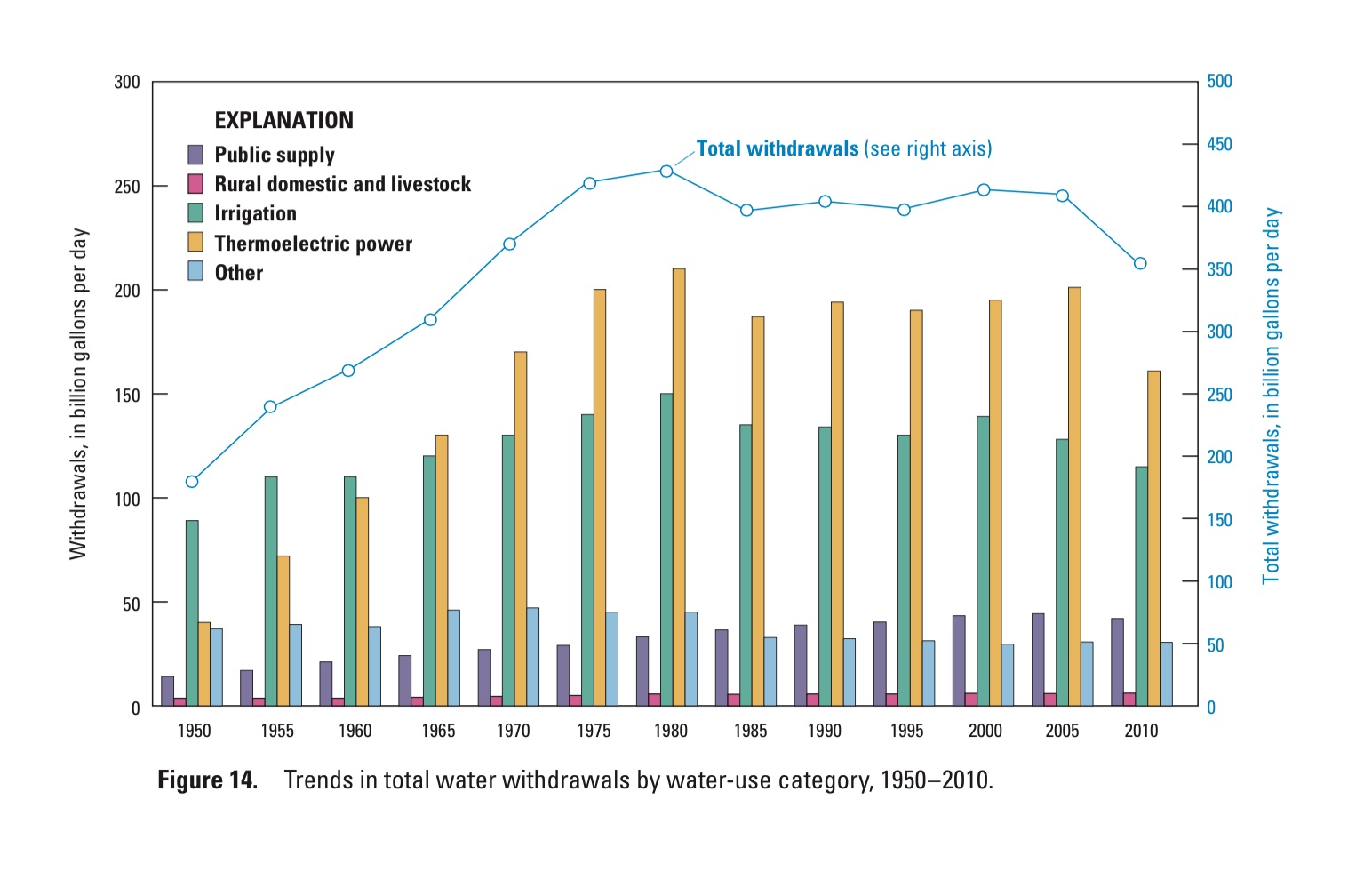
The latest USGS “Estimated Use of Water in the US” is out. It says we’re using less water. From 2005-10, a 13 percent drop. “Peak water” happened back in 1980:

Source: USGS

Source: USGS

 
There are lots of caveats. This analysis uses “withdrawals” rather than “consumptive use”. So if a power plant sucks up river water for cooling, that counts as “use” even if most of it is returned to the river. Farmers withdraw a lot, and return some via groundwater seepage and drains. The withdrawal-consumption distinction is really important for water policy, as I tried to explain here.

This big drop also spans the Economic Shitstorm of 2008. Part of the drop could be related to that.

I think a lot of work needs to be done by people smarter than I to sort out the implications of the above two caveats. But those notwithstanding, I think the new data supports the hypothesis (“slogan”?) I’ve been pushing recently: When one has less water, one uses less water. We’re pretty adaptable, we humans.

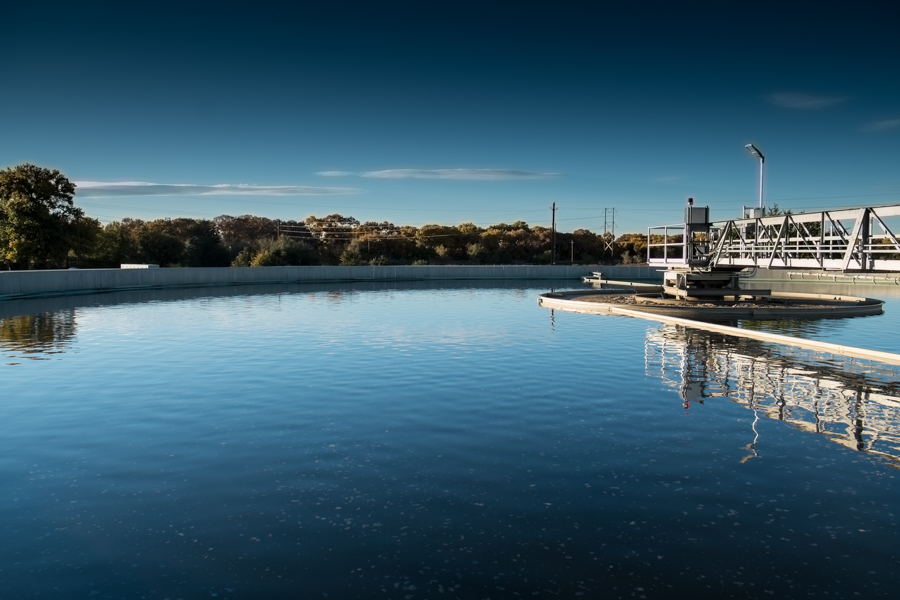
Sewage treatment plant, Albuquerque

Sewage treatment plant, Albuquerque

Sewage treatment plant, Albuquerque


Water is photogenic, even at a sewage treatment plant.

This is from a tour this afternoon of the Albuquerque Bernalillo County Water Utility Authority’s Southside Wastewater Reclamation Plant with a couple of University of New Mexico faculty colleagues and a bunch of students, including the graduate students in the Water Resources Program, where I’m an adjunct faculty member. The plant treats about 50 million gallons per day of sewage. Its discharge is the third largest tributary to the Rio Grande, after the Conejos River in Colorado and the Rio Chama in northern New Mexico.

Stuff I wrote elsewhere: ASR in New Mexico

I had a lovely afternoon yesterday walking alongside the Bear Canyon Arroyo in Albuquerque’s northeast heights, talking with fellow water nerds Katherine Yuhas and Amy Ewing, and watching water flow in New Mexico’s first operational aquifer storage and recovery project (behind a Google surveywall):

Nearly 3,000 gallons a minute of water began spurting from a pipe into Bear Canyon Arroyo in Albuquerque’s Northeast heights this week as part of New Mexico’s first operational project to store water in an underground aquifer.

“The whole goal of doing this is to store water when we have excess in the winter to build a drought reserve,” said Katherine Yuhas, water conservation officer for the Albuquerque Bernalillo County Water Utility Authority.