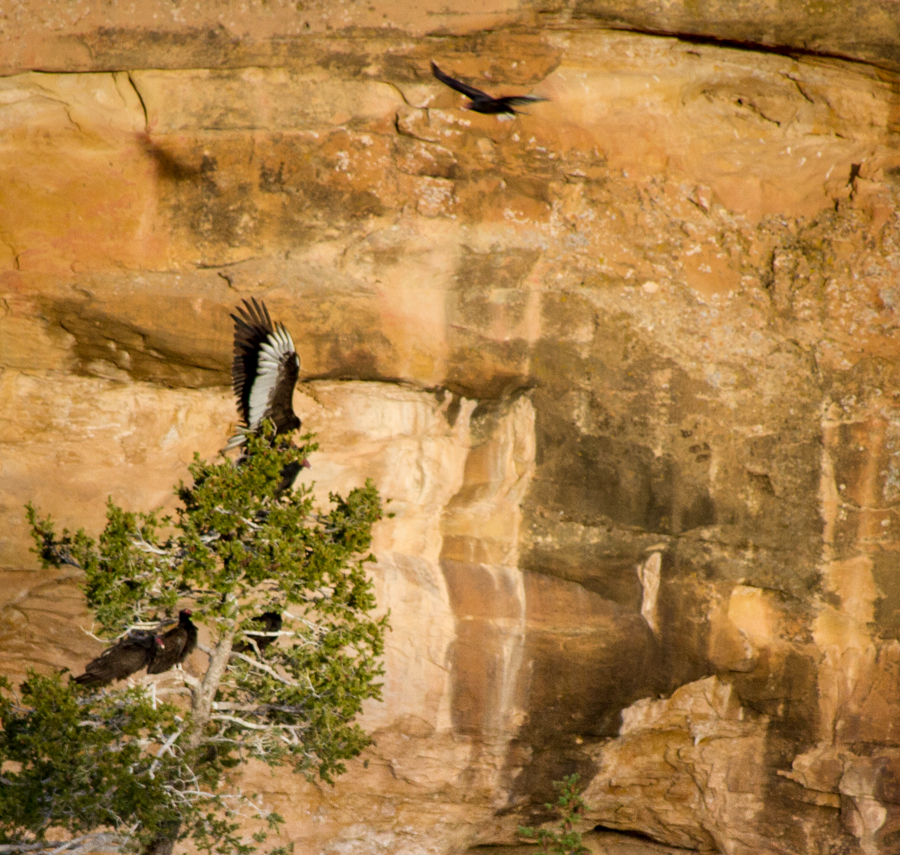
The turkey vultures of Mesa Verde

Six turkey vultures roosting at Spruce Tree House, Mesa Verde, May 2014, by John Fleck

Six turkey vultures roosting at Spruce Tree House, Mesa Verde, May 2014, by John Fleck

Five years ago, Lissa and I stopped to talk to a ranger on the Petroglyph Point Trail at Mesa Verde. We’d been admiring the turkey vultures soaring above the canyon, and the ranger clued us in. If you like turkey vultures, she told us, go to the Spruce Tree House overlook at dusk tonight and you’ll see a whole bunch of ’em coming in to roost.

We did, and Oh My. That year, I think it was in July, we counted more than a hundred at one time. They soared in a few at a time – one, two, three, four – over a period of hours. They’d sit on the cliff opposite, warming their wings in the setting sun, before settling in for the night, one at at time, in the trees in the canyon below Spruce Tree House. It was a life experience. That summer, we detoured on our return from vacation to see it again.

So this year, on vacation in the same territory earlier this month, we went back. After a dinner of Navajo tacos at the cafeteria, we perched on the porch on the back of the ranger station, overlooking Spruce Tree House, and waited.
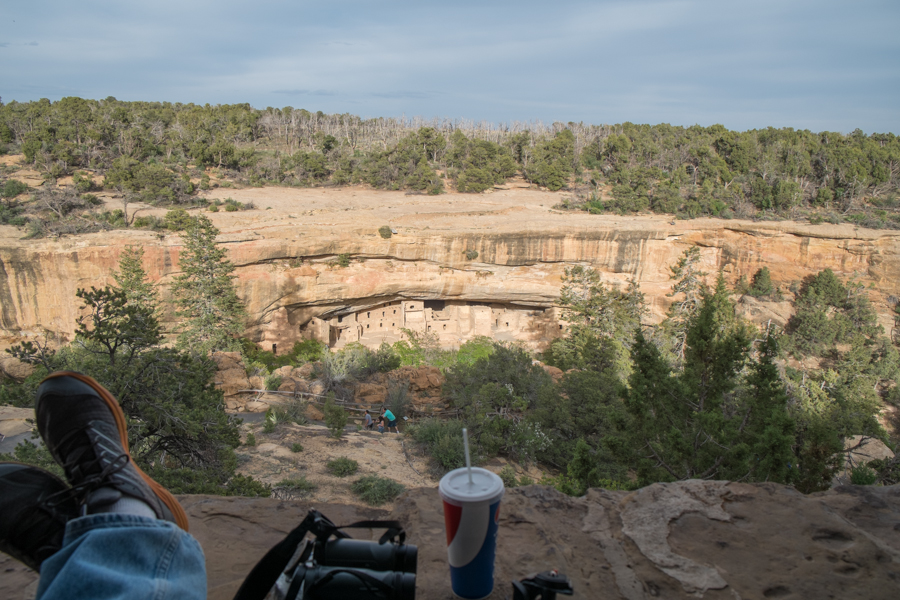
Vulture-watching perch, Spruce Tree House, Mesa Verde, May 2014

Vulture-watching perch, Spruce Tree House, Mesa Verde, May 2014

Turkey vultures or not, it’s a lovely spot. We brought all the glass we had at our disposal – two cameras, two pair of binoculars. And snacks and drinks.

This year, the rangers had a second clue for us. While it was still early in the season (only a few dozen turkey vultures had arrived, they said), the Mesa Verde birds had added a routine to their show. At dusk, the rangers explained, turkeys who lived in the woods atop the cliff would walk out, one at a time, perch on the cliff, and then fly clumsily in a downward path (these are turkeys, remember) toward the trees the vultures had staked out for them.
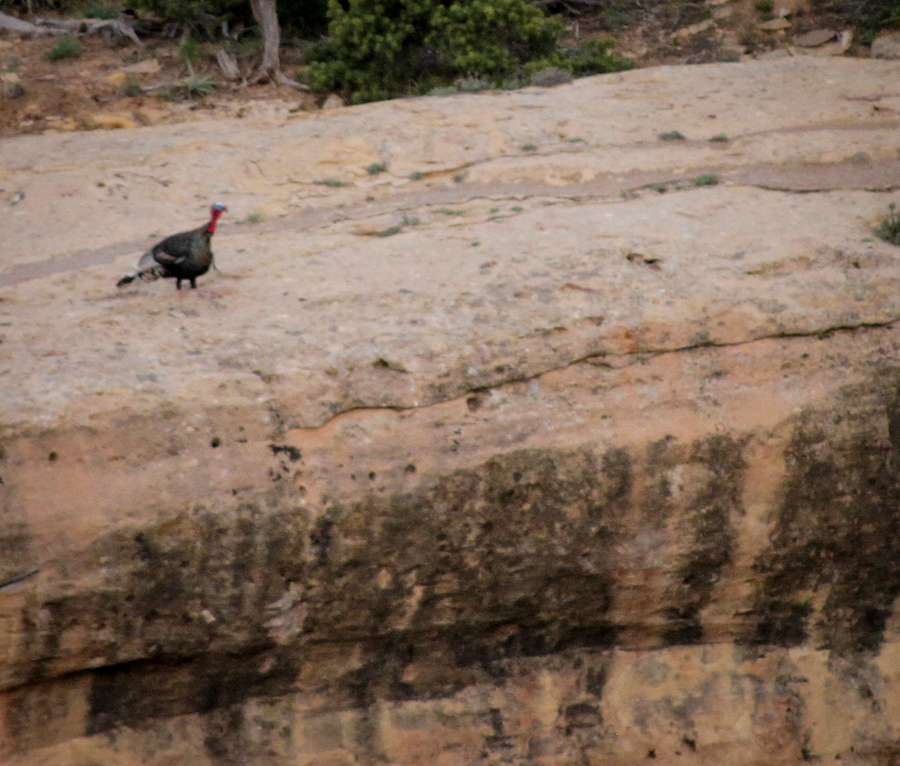
Turkey, staring into the abyss, by L. Heineman, May 2014

Turkey, staring into the abyss, by L. Heineman, May 2014

We had at least two hours of vultures coming and going in small numbers, with a few roosting in the trees, before the first turkey showed. It was hilarious. It walked out of the woods opposite along the hiking rail, where the humans go. It wandered off to the north, then a second showed, and eventually one of the turkeys walked out to the edge of the cliff.

Turkeys are not known for the ability to fly, and it showed. It was more a leap, a clumsy flapping, and then a no-turning-back landing. If there was already a vulture on the chosen tree branch, tough shit. The vultures were hip to this routine, and seemed to understand that the turkeys didn’t have a lot of maneuverability. The vultures moved.

It was dusk, and neither of us had the lenses to really capture the comically remarkable turkey vulture flight in the low light, but it was a treat. Eventually, six turkeys had joined the vultures in the trees by the time it got too dark to see any more. This one will have to do, and you’ll just have to take my word for the fact that this is a turkey, flying downhill from the top of a cliff toward a tree, and that watching them pull off this stunt added, if that is possible, to the life experience of vultures at Spruce Tree House:
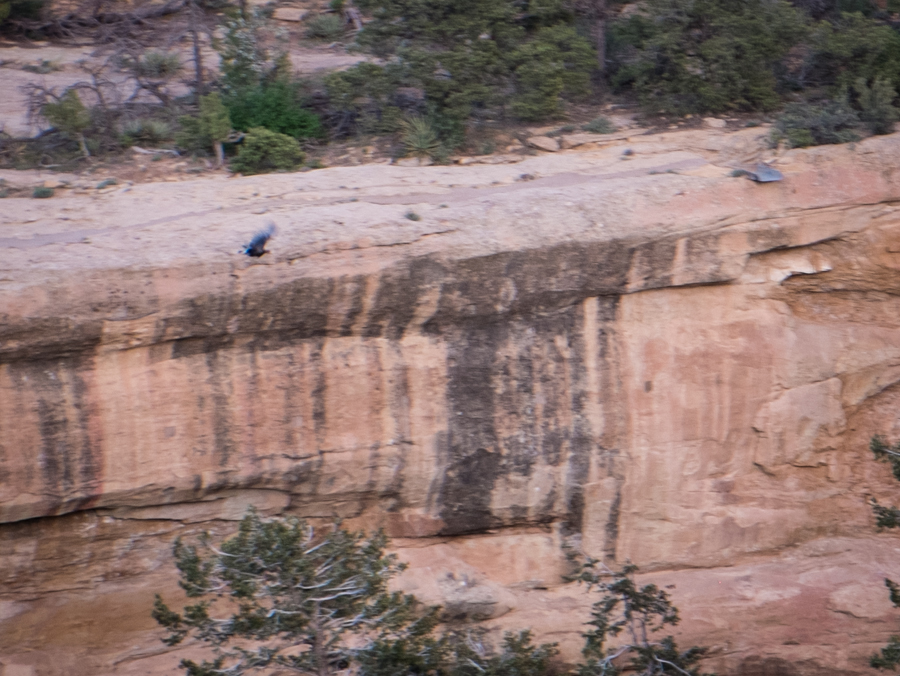
Turkey, taking flight to its Spruce Tree House roost, May 2014

Turkey, taking flight to its Spruce Tree House roost, May 2014
Lake Mead: lowest end-of-May levels in history

Unless tropical depression Amanda does something miraculous, and quickly, Lake Mead will end May at its lowest level for this point in the year since Elwood Mead and his buddies filled the reservoir in the 1930s, 20 feet in surface elevation below last year at this time.

The “tropical storm Amanda” thing was a joke. It would take enough rain to raise Mead’s surface elevation 6 feet to avoid the ignominious record. That will not happen. We are headed into new territory this year in the management of the Lower Colorado River, or “LOCO,” as my new favorite acronym would have it. But it’s not fair to call this, as I did in the first draft of this post, “uncharted territory”. We have some pretty good charts to guide us through this territory. Let’s start here, with the latest estimates presented at this week’s USBR meeting of water managers (pdf):

Lake Mead projected elevations, 2014-15, USBR

Lake Mead projected elevations, 2014-15, USBR

Based on the current projections, I’ll be able to do this cheap journalistic IT’S THE LOWEST IT’S BEEN THIS MONTH SINCE THEY FILLED IT clickbait schtick pretty much any time I want at least through the end of the water year, Sept. 30.

Why is this happening?

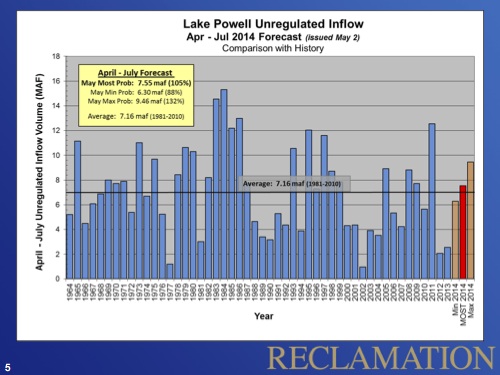
Annual inflow into Lake Powell, USBR

Annual inflow into Lake Powell, USBR

It is tempting to say “drought”, and that’s not wrong. 2014 is likely to end up as just the fifth year in the last 15 with above-average flows in the Upper Colorado River Basin, where most of the river’s water originates. This is a funky bar chart, but ignore the two brown bars, the red one is the most likely 2014 Lake Powell “unregulated inflow” – the amount of water that would flow into Lake Powell if there were no dams or water users upstream. So yes, the system as a whole has been dry.

That has resulted in a under-delivery this year of water from upstream into Lake Mead, but as I wrote last summer, the gap here is small, and more than made up for by a massive slug of bonus water delivered in 2011.

But equally important if not more important, the second reason Lake Mead is dropping is because they river’s managers release so much water each year for downstream users. The latest data (pdf) estimate this year’s inflow into Lake Mead at 8.2 million acre feet of water. Combined releases for downstream use in LA, San Diego and Imperial Valley, plus evaporation, plus the water pumped up the hill to Vegas, total 10.4 million acre feet.

The result of all that takes us into the charted territory I was talking about above. That little circle on the right of the first graph – note the dotted red line – shows a real possibility that Lake Mead could end 2015 with a surface elevation below 1,075 feet above sea level. At that point, the first ever shortage would be declared in the lower basin. We have a quite clear roadmap, laid out in the 2007 river management agreement among the basin states. Deliveries to Arizona and Nevada would be cut. (Brett Walton has done a great job of explaining the nitty gritty.)

If all goes well, this would be about the time my book comes out, which would be great for sales. I’ve got some perverse incentives as I watch this play out.

Pollution cleanup as a solution to water supply shortfalls

As Southern California looks at its next water supply steps, one of the top items on its agenda is cleaning up groundwater contamination. It’s cheaper than building more storage. So says MWD’s Jeff Kightlinger:

I think you’re going to see the next wave of investments over the next decades in Southern California focused around issues like recycled water and groundwater basin cleanup. We see that as better bang for the buck.

Our increasingly efficient use of water

Another reason for optimism about our ability to solve our water messes:

[I]n most regions, the water needed to feed one person decreased even if diets became richer, because of the increase in water use efficiency in food production during the past half-century.

Global Changes and Drivers of the Water Footprint of Food Consumption: A Historical Analysis; Chen Yang and Xuefeng Cui; Water 2014, 6(5), 1435-1452

Thanks to Linus Blomqvist for the pointer.

George Maxwell, Colorado River irrigation and the “Asiatic menace”

When I first ran across the rantings of George Maxwell as the Colorado River Compact was being developed in the 1920s, their racism seemed almost comical. Here he is in a written submission to the 14th Meeting of the Colorado River Commission, Nov. 13, 1922 (pdf from University of Colorado):

The flood menace must not be used as a ‘stalking ox’ behind which to conceal a plan to create an Asiatic Menace in Mexico more dangerous by far to the United States of America than the original flood menace.

As between the submergence of the Imperial Valley by floods and the devastation of Southern California and Arizona in an Asiatic War, the loss of the Imperial Valley would be the lesser of the two evils.

Maxwell’s fear was that any water allowed to pass into Mexico would be used in the development of an “Asiatic” irrigation colony that would be used as a beachhead for an invasion of the United States. Here’s historian Eric Boime:

By 1923 his long, meandering letters to former acquaintances at the U.S. Geological Survey, sometimes spaced only twenty-four hours apart, fretted about “Asiatic cities” at the head of the Gulf of California, capable of launching “a fleet of aeroplanes [sic] with poison gas enough to wipe out the population of southern California some morning before breakfast.”

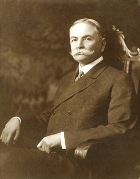
George Maxwell, picture courtesy Arizona State Library

George Maxwell, picture courtesy Arizona State Library

This is not just some crazy old racist. George Maxwell was a pioneer of the reclamation movement, one of the authors of the key legislation that brought federal policy and money to bear on the Colorado River. I’m intrigued by Maxwell because in the years after the 1922 approval of the Colorado River Compact, he was enormously influential in Arizona, persuading state officials not to ratify the compact – a stand that continues to echo in contemporary water management.

Boime, in his fascinating essay “Beating Plowshares into Swords”: The Colorado River Delta, the Yellow Peril, and the Movement for Federal Reclamation, 1901–1928 (Pacific Historical Review Vol. 78, No. 1, February 2009, paywalled) points out that Maxwell died penniless and ignored. But what I did not realize until I read Boime was the remarkable racial underpinnings of the early reclamation movement. The story of reclamation’s aspirations to social engineering has been often told – the way an empire of 160-acre farms would lure Americans from urban decay into an idyllic pastoral future, one family at a time. What I’d not previously understood was the rich, full racism of the vision.

Here, for example (as quoted in Boime) is the Imperial Board of Supervisors in a 1919 Congressional hearing:

“If we build an all-American canal, we will have [thousands of] free, prosperous Americans building homes and schoolhouses on land watered by water that has never touched a foreign soil and water that . . . Japs and Chinese have not used to bathe in.”

And here is Boime’s description of the views of no less a reclamation luminary than Elwood Mead, who headed the Bureau of Reclamation during the historic construction of the dam at Boulder Canyon (they named a big reservoir after him):

Mead perceived industrious, upwardly mobile Japanese to be the greatest menace to American rural life. If, in fact, Anglo-Saxon family farmers were the key to revitalizing the nation’s institutions, non-Anglo-Saxon family farmers would be the source of their ruin. Japanese agricultural success, Mead asserted, stemmed from “ancient, alien instincts” that would surpass the “American individualist [like] child’s play. . . . Anglo-Saxons and Mongolians cannot live side by side,” he argued, “and neither will give way to the other without a conflict.”

So yeah, George Maxwell may have been batshit crazy at the end (“aeroplanes with poison gas”) but his views on irrigation and race were not terribly far from the mainstream of his day.

Biographical background on George Maxwell from the Arizona State Library.

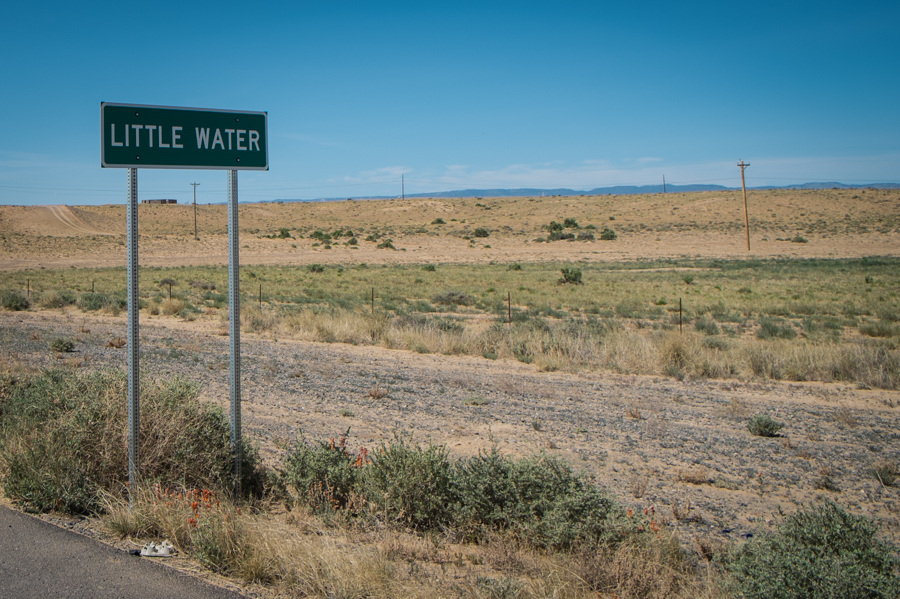
Little Water

The aptly named “Little Water,” on the Navajo Nation in northwest New Mexico.

Little Water, New Mexico, May 2014

Little Water, New Mexico, May 2014


The weather station at Canyon de Chelly, which looks like it’s about 30 miles away across the border in Arizona, has recorded 1.52 inches (3.86 cm) of rain so far in 2014, which is less than half of mean precip through May 24. It’s a desert.

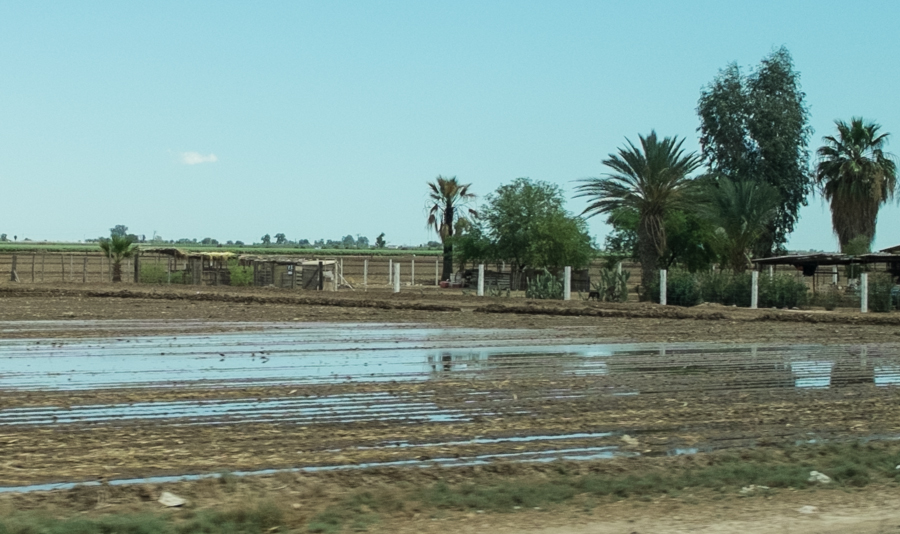
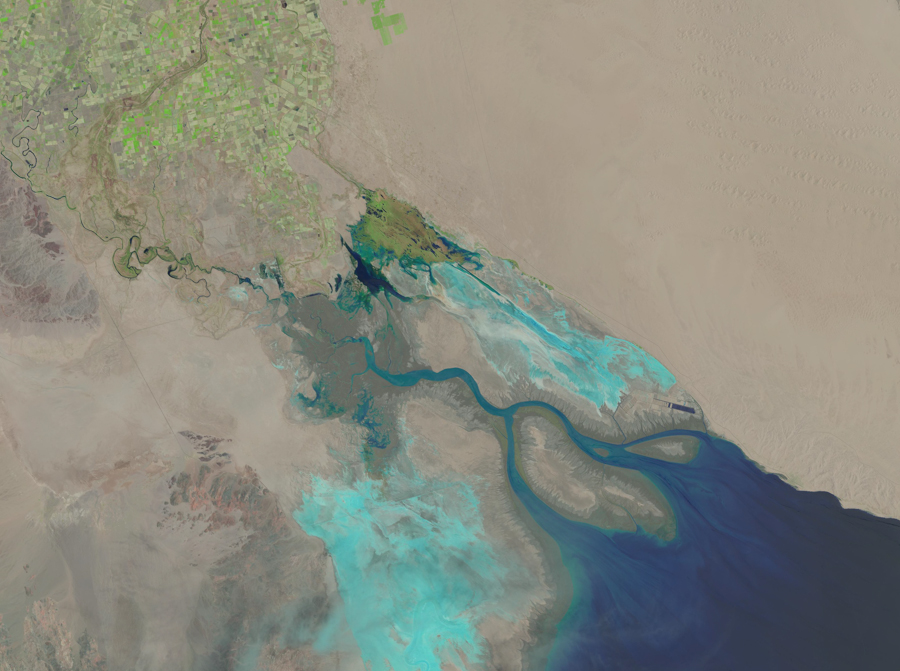
a stupendous achievement by means of irrigation

flood irrigation, Mexicali Valley, March 2014

flood irrigation, Mexicali Valley, March 2014

In no part of the wide world is there a place where Nature had provided so perfectly for a stupendous achievement by means of irrigation as in that place where the Colorado River flows uselessly past the international desert.

– William Smythe, Sunset Mangazine, 1900, quoted in Eric Boime, “Beating Plowshares into Swords”: The Colorado River Delta, the Yellow Peril, and the Movement for Federal Reclamation, 1901–1928, Pacific Historical Review, Vol. 78, No. 1 (February 2009)