For now, some breathing room on the Colorado River

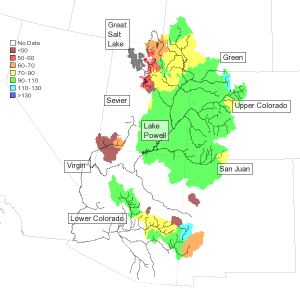
January Forecast, courtesy CBRFC

January Forecast, courtesy CBRFC

I suppose it’s a sign of the times on the Colorado River that a January forecast of 95 percent of average flow into Lake Powell counts as good news. Since green on the Colorado Basin River Forecast Center map runs from 90 to 110 percent, we get green. It’s only a little bit below average!

Last year, per the U.S. Bureau of Reclamation’s final numbers (pdf) was dismal:

The Colorado River total system storage experienced a net decline of 4.09 maf (5,040 mcm) in water year 2013. Reservoir storage in Lake Powell decreased during water year 2013 by  3.00 maf (3,700 mcm). Reservoir storage in Lake Mead decreased during water year 2013  by 0.773 maf (953 mcm). At the beginning of water year 2013 (October 1, 2012), Colorado River total system storage was 57 percent of capacity. As of September 30, 2013, total system storage was 50 percent of capacity.

The grim state of affairs on the Colorado River brought front page attention earlier this week from the New York Times which, as Jennifer Pitt pointed out yesterday, can’t hurt:

The article helped to elevate the reach and understanding of Western water issues, but for those of us in Colorado and other basin states, this reality is one we must face every day.

I mostly liked Michael Wines’ NYT piece. He went beyond the usual “there’s not enough water” teeth-gnashing to talk about some of the solution space, including examples of municipal and agricultural water conservation. That’s a step beyond what even some of the in-basin journalism (including some of my own, mea culpa) gives us. Given the way I’m currently lost in Colorado River minutia, it was instructive to see a pro come in from afar and nicely sum up the basics for an outside audience, and Wines was smart to pick up on some of solution space. Even some water nerds don’t fully grasp the importance of the whole “return flow” concept:

There may be ways to live with a permanently drier Colorado, but none of them are easy. Finding more water is possible — San Diego is already building a desalination plant on the Pacific shore — but there are too few sources to make a serious dent in a shortage.

That leaves conservation, a tack the lower-basin states already are pursuing. Arizona farmers reduce runoff, for example, by using laser technology to ensure that their fields are table flat. The state consumes essentially as much water today as in 1955, even as its population has grown nearly twelvefold.

Working to reduce water consumption by 20 percent per person from 2010 to 2020, Southern California’s Metropolitan Water District is recycling sewage effluent, giving away high-efficiency water nozzles and subsidizing items like artificial turf and zero-water urinals.

Southern Nevada’s water-saving measures are in some ways most impressive of all: Virtually all water used indoors, from home dishwashers to the toilets and bathtubs used by the 40 million tourists who visit Las Vegas each year, is treated and returned to Lake Mead.

But I agree with Pitt’s critique that Wines missed the river itself, which is an increasingly important part of the regional conversation about the basin’s future:

It is the lifeline of the American West. It is a river of legends, with awe-inspiring canyons that have for centuries seduced people to explore their depths. Citizens of the West and the rest of the globe alike love the Colorado River for the thrill of its rapids, the shade of its riverside forests that make for epic fishing, and the serene calm of a morning view from a houseboat on one of its large reservoirs.

Getting this piece right will have to be part of the grand bargain and cultural shift needed to cope with our water future.
The rich are different from you and me. They have nicer socks.

Some months ago, I found myself at a speaking engagement at a posh resort in the hills outside San Diego, the sort with beautiful eucalyptus trees, and golf carts.

I’d brought some business attire for my panel discussion (in our family we refer to them as “grownup clothes”), but realized I’d forgotten to pack socks. All I had were the white athletic socks I’d worn with my tennies for the flight. This would not do.

I’d planned to sneak away, before my appearance, and find a store at which to buy socks. But that morning, I stumbled into the resort’s pro shop, and realized they had golf wear. For $14, I picked a nice dark pair of socks. They worked perfectly with my grownup clothes, but more importantly, they may very well be the most comfortable pair of socks I’ve ever owned.

I’ve always been skeptical of the baggage carried by F. Scott Fitzgerald’s (perhaps somewhat apocryphal) observation that the rich are different from you and me. But now I realize that they are. They have nicer socks.

Before there was Wikipedia….

Pocket Guide to Science

Pocket Guide to Science

For Christmas, my friend Alison gave me the 1928 Popular Science Monthly “Pocket Guide to Science.” It’s a treasure, including things like this:

What produced the Grand Canyon of Arizona?

It was cut down, during millions of years, by the Colorado River which still flows in the bottom of it. The sand and clay cut out of the Grand Canyon was carried down into the Gulf of California. It has made the flat, muddy plain part of which is now the famous Imperial Valley of California.

The Imperial Valley was famous in 1928? Good to know.

To be fair, there were some things we understand today that hadn’t been quite worked at in 1928:

Why do we believe that the earth may be slowly shrinking?

That is one theory of how mountain ranges are formed. As the earth shrinks it wrinkles up its surface skin a little, some geologists believe, just as the skin of a prune wrinkles up when it dries and shrinks. These wrinkles on the earth are what we call mountains. It is possible, however, that mountains can be formed in other ways also.

Stuff I wrote elsewhere: real water, real people

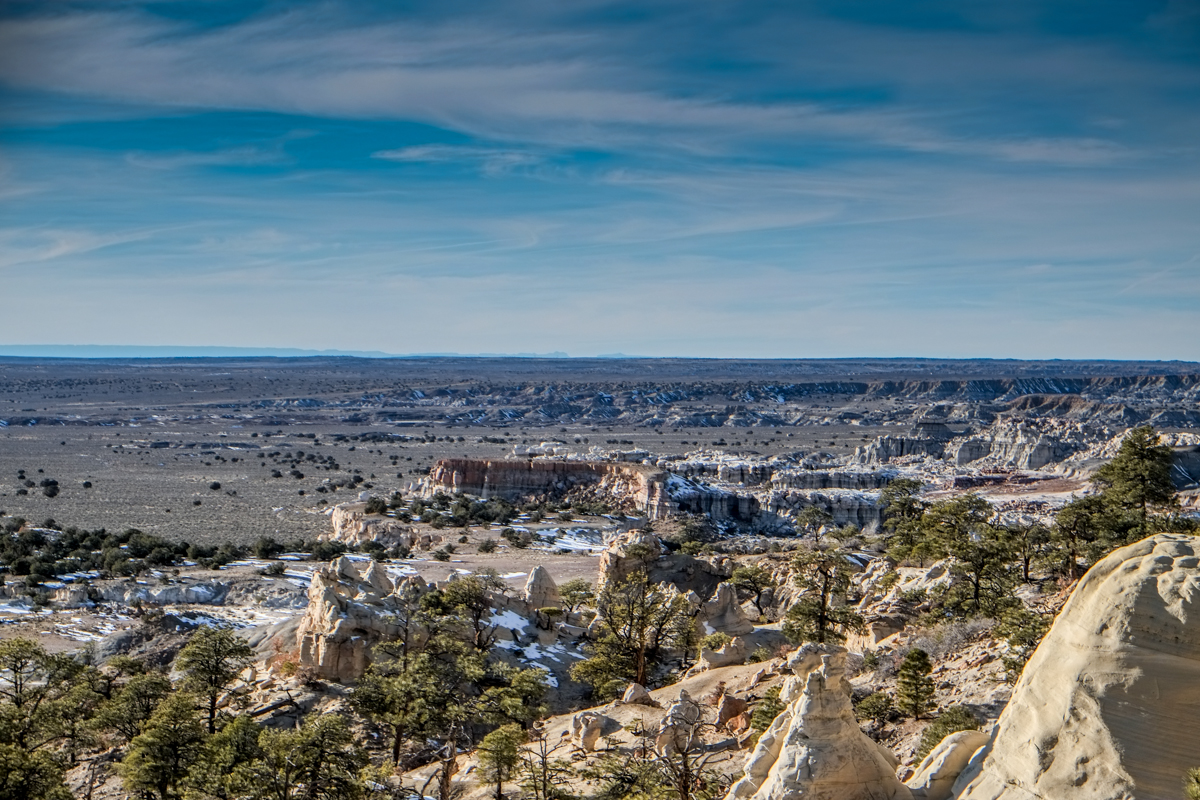
Whitehorse Lake

Whitehorse Lake

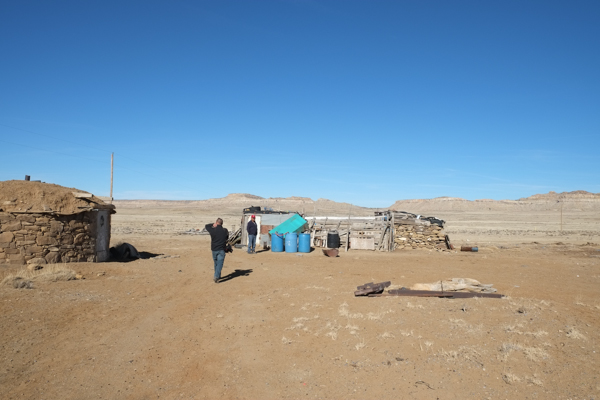
Three years ago John Leeper, then head of the Navajo Nation Department of Water Resources, told me about the importance of the deal that assigns long-neglected water rights along with the money to bring the water to arid eastern side of the reservation: “Real water to real people in real time.” Last week Roberto Rosales and I went out to Whitehorse Lake for an update:

The buckets are for the relatively short drive to the Whitehorse Lake chapter house, where they’re filled with safely drinkable water. For a dollar, community members can take a shower there, too. It’s a longer drive to one of the windmill-fed stock tanks to fill the 50-gallon barrels Smith uses to haul water for his family’s six goats and the two trees outside the house. “We haul it daily,” Smith said.

The network of blue stakes leading outward from the big new water tank at the foot of the mesa is a signal of change. In November 2012, 24 Whitehorse Lake homes were connected to the newly arriving water lines. Last month, the home Smith shares with his 87-year-old father, Chee Smith Sr., was among the next 21 homes to be connected, with the final plumbing now underway to connect the indoor plumbing to the water lines and newly dug septic systems carved into the hard desert earth behind each house.

“Once they hook up, they don’t have to haul any more,” the younger Smith said.


the China butcher

Here is an item I ran across this evening while reading old California newspapers. It appeared in the Daily Evening Bulletin of San Francisco,Tues. Feb. 15, 1876:

Last week, at Jacinto, a Chinaman got his left arm broken between the wrist and elbow. He came to Chico for assistance and called upon the China butcher, who is also a professor of surgery. He immediately proceeded to work and put the bones in place, procured a young rooster, killed it, and broke every bone in it, and with the mangled fowl bound up the arm in a firm and compressed manner. In less than twenty-four hours the man was able to move his fingers, and this butcher-surgeon says the arm will be well in a week.

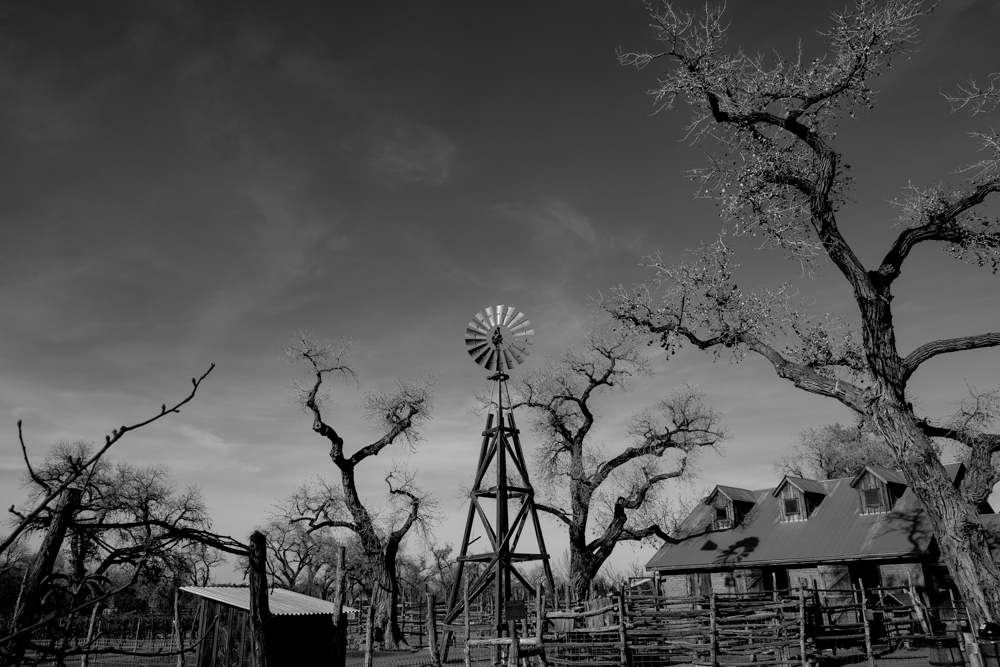
The Windmill

“For certain specific purposes, and, primarily among them, for pumping water in moderate quantities, the windmill is not only a thoroughly reliable, but at the same time the most economical prime mover, and as far as judgment can now be passed, will hold this place for many years to come.”

– Alfred R. Wolff, The Windmill as a Prime Mover, 1885

“The only water we had, we fetched from wells, and lucky indeed, was the family that could afford a windmill.”

– anonymous resident describing life in Tucson’s barrio in the 1890s

Windmill, John Fleck, 2013

Windmill, John Fleck, 2013