Great Blue Heron

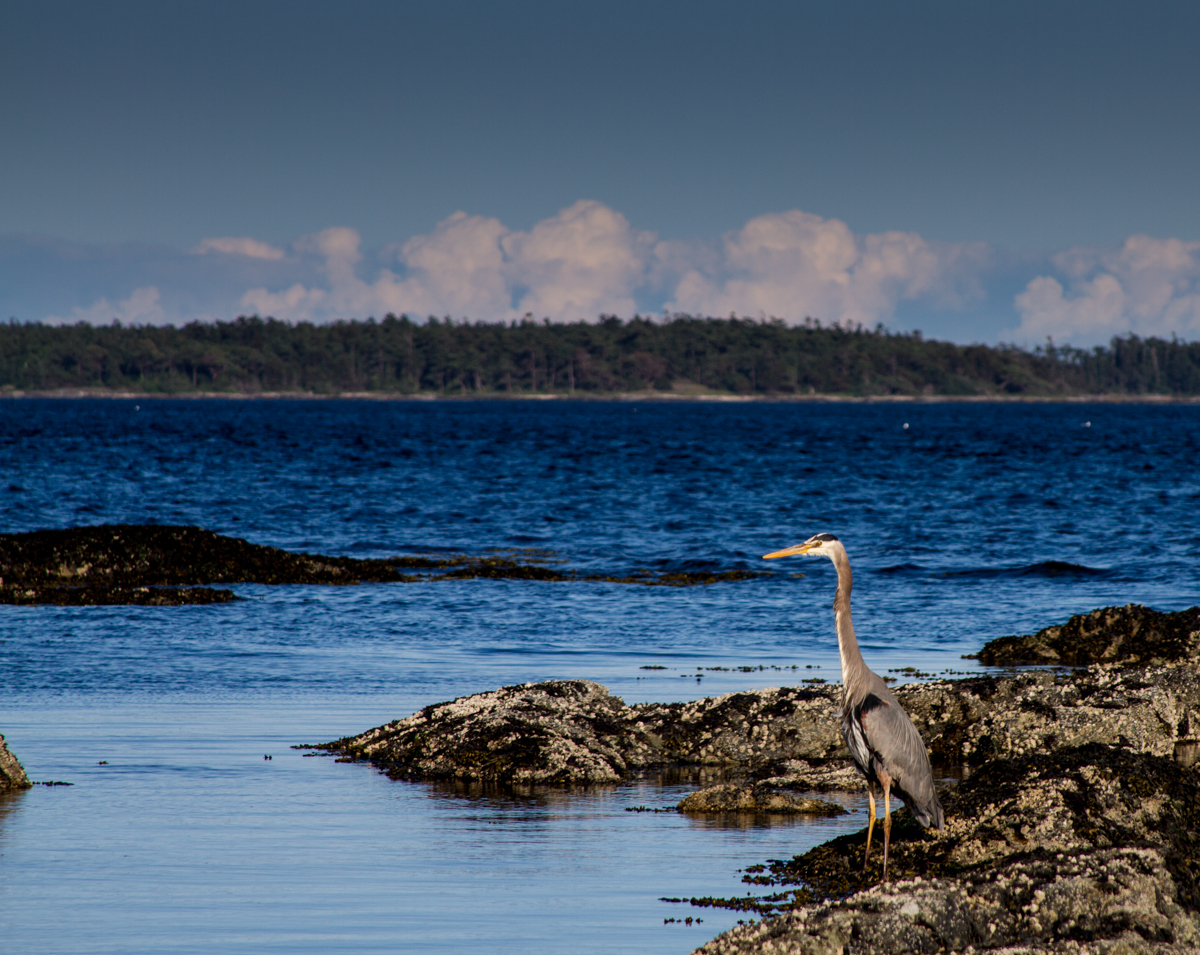
great blue heron, Victoria B.C., May 2013, by John Fleck

great blue heron, Victoria B.C., May 2013, by John Fleck

My friend Judy Liddell posted a lovely picture of a Rio Grande bosque great blue heron on her Facebook page yesterday, to which I had this comment:

I have a lot of birds for which I say “That’s my favorite bird!” But I think the great blue heron may really be my favorite, the first bird I ever got curious enough to pull out the old family bird book and figure out what it was. It was soon after Lissa and I got married, and we were in a campground on the lower Colorado River among all the RV snowbird set, and the heron was sitting on a snag in the river – seeming so regal and oblivious to the petty humans with their toys and short-term thinking. Of course that’s anthropomorphizing, but it’s my story and I’m sticking to it.

Southwest drought risk

One of the significant areas of climate research right for us in the southwestern United States involves work on modeling the large (spatially and temporally) droughts that are so significant in long term human and ecosystem dynamics. These are the ones that are not just one-year whammies, but linger for decades, like the drought of the 1950s. Such droughts drain big multi-year reservoirs and dry out the landscape in ways that are significant and lasting.

The problem, as Toby Ault and colleagues note in a new Journal of Climate paper, is that the models don’t get this right:

Instrumental and paleoclimate data indicate that natural hydroclimate fluctuations tend to be more energetic at low (multidecadal to multicentury) than at high (interannual) frequencies. State-of-the-art global climate models do not capture this characteristic of hydroclimate variability, suggesting that the models underestimate the risk of future persistent droughts.

Team Ault is developing new methodologies that integrate the model results with paleoclimate data to try to overcome this problem, and the results are not encouraging:

In the US Southwest, for instance, state-of-the-art climate model projections suggest the risk of a decade-scale megadrought in the coming century is less than 50%; our analysis suggests that the risk is at least 80%, and may be higher than 90% in certain areas. The likelihood of longer lived events (> 35 years) is between 20% and 50%, and the risk of an unprecedented 50 year megadrought is non-negligible under the most severe warming scenario (5-10%).

Stuff various people wrote elsewhere: Colorado’s ESA obligations on the Rio Grande

The status of the endangered Rio Grande silvery minnow raises some fascinating transboundary questions. As water moves across state boundaries, who bears responsibility when upstream actions affect an endangered species in a downstream state?
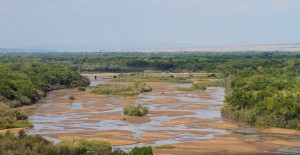
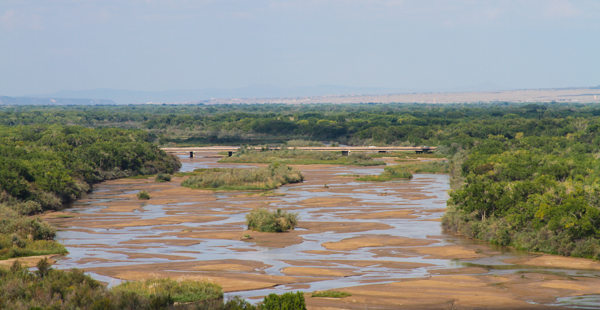
A nearly dry Rio Grande through Albuquerque, September 2013, by John Fleck

A nearly dry Rio Grande through Albuquerque, September 2013, by John Fleck

The fish, once found from the mountains of northern New Mexico to the Gulf of Mexico, is gone from all but the stretch of the Rio Grande between Cochiti Reservoir and Elephant Butte Reservoir in New Mexico (plus an experimental population in Big Bend National Park in Texas). Since the experimental population doesn’t really count for regulatory purposes, the real meat of the ESA action has always been in New Mexico. That’s where the remaining fish are, and therefore that’s where the legal responsibility for saving the fish lies.

The fish has already been extirpated from southern New Mexico and Texas, so those folks are off the hook. Because they’ve already killed off their minnows, they bear no responsibility for saving the rest. Upstream, Colorado has thus far borne no responsibility either. It could be argued that their water use, before the Rio Grande reaches the minnows’ current habitat, contributes to the stress on the little fish. But so far, all responsibility for maintaining the fish, and if necessary providing the water to do that, lies with water management agencies in central New Mexico.

But in an action filed this week, the environmental group WildEarth Guardians is pushing against that status quo:

Colorado’s use of Rio Grande water is depriving the river of spring flows needed to keep the endangered Rio Grande silvery minnow alive, an environmental group charged in a legal notice filed this week.

The notice by the Santa Fe-based group WildEarth Guardians opens a new legal front in the struggle over environmental flows in the Rio Grande, a struggle that until now had focused on tradeoffs among water interests within New Mexico.

UNM law professor Reed Benson lays out the key legal questions:

This would be an unusual case, but not a unique one. Most ESA cases involving harm to protected species are brought against federal agencies, under a different part of the law applicable only to them. There have been some similar cases to this one, however, where courts have held that state or local governments caused take. Notably, a federal court in Texas recently found that inadequate water management by the State of Texas took endangered whooping cranes by drying out their winter habitat. (That decision has been stayed and is now on appeal; watch this space for further developments.) These cases establish that state governments may violate section 9 if they allow private activities that result in take.

I encourage you to click through to Reed’s piece. My newspaper stories often rely on his analysis. Now you can just cut out the middleman and read him directly.

“running water which is salty”

In his book Border Oasis, Evan Ward tells the story of the transborder conflict between the United States and Mexico over salinity in the Colorado River. “Unfortunately,” Ward writes, “sometimes when one region solves its salinity problems, it creates new salinity problems for people downriver.” The conflict Ward describes began in 1961 when farmers on the U.S. side of the border began pumping water from their saline aquifer into the Gila River to create space to store fresh, clean imported Colorado River water. Needless to say, the Mexican farmers downstream, who began seeing their crops whither as a result, were none too pleased. Farmers on the U.S. side noted, correctly, that the treaty between the United States and Mexico merely specified the amount of Colorado River water we were required to deliver. The treaty, they noted, was silent on the question of whether it had to be actually usable water.  A fascinating international conflict ensued that ultimately resulted in the signing of Minute 242 to the Treaty for the Utilization of Waters of the Colorado and Tijuana Rivers and of the Rio Grande, which guaranteed minimum salinity standards for the water we deliver to our Mexican neighbors.
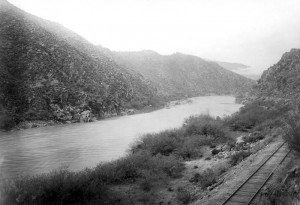
Gila River, swollen by rain, from the mouth of Mineral Creek; Photo by J.B. Umpleby. Pinal County, Arizona. 1910. courtesy USGS

Gila River, swollen by rain, from the mouth of Mineral Creek; Photo by J.B. Umpleby. Pinal County, Arizona. 1910. courtesy USGS

That’s a circuitous introduction to the point of this post, which is that the history suggests the Gila has always been a tad on the salty side. One of its main tributaries is named the “Salt River.” I’ve gotta think a river called “Salt” is up to no good.

The Gila, a desert river that rises in the mountains of southwestern New Mexico and drains a mostly desert watershed before dumping into the Colorado River just upstream from Yuma, has a longstanding reputation for icky:

What the Yumans called the stream was Hah-qua-sa-eel, with the accent on the final syllable. This can be translated as Running Water Which Is Salty.

The Spanish shortened it from the native Yuman pronunciation to Gila, pronounced “hee-la”, according to Edwin Corle’s Gila, River of the Southwest. I ran across this “running water which is salty” today in a number of references. Corle’s seems to be the earliest, and the others all seem to be quoting his words, though I’d love if anyone knows more about the origin of the name.

The snow goose problem

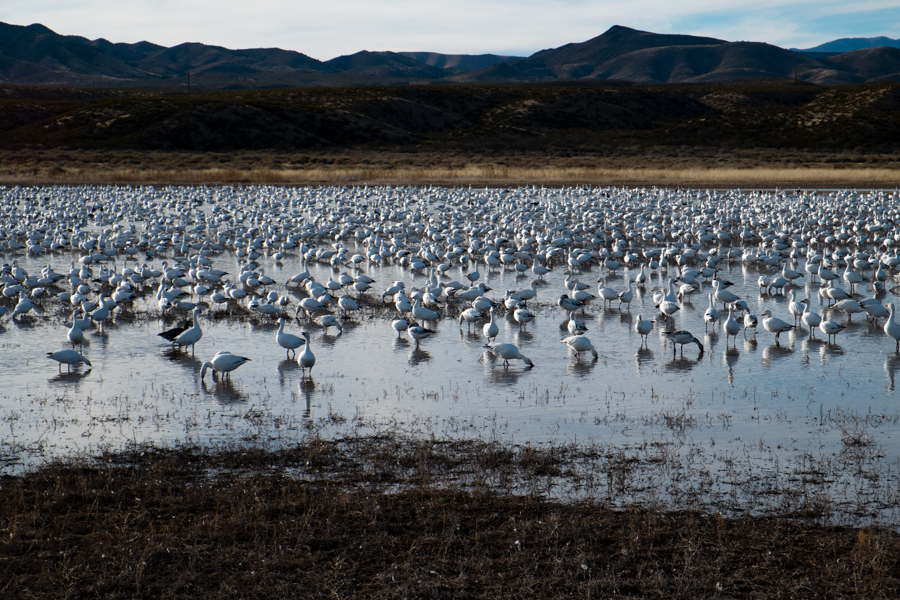
Snow geese, Bosque del Apache, New Mexico, January 2014, by John Fleck

Snow geese, Bosque del Apache, New Mexico, January 2014, by John Fleck

There’s no denying the spectacle of thousands of snow geese. The Jan. 17 Bosque del Apache bird count put the number at the central New Mexico refuge at 55,000. Lissa and I watched entranced this afternoon as some subset of that, many thousands strong, flew and landed and flew again in the north farm fields at the wildlife refuge along the Rio Grande south of Albuquerque.

The snow goose is a conservation success story that illustrates the difficulties of conservation success. In the early 20th century, population levels had dropped so far that hunting was restricted. Today, the problem is the opposite, as Felicity Barringer reported a couple of years ago:

Whether the cause of this population explosion is a warming trend in Northern breeding grounds, an increase in the food supply in their winter homes or a combination, few would dispute that there are too many birds in all five groups of snow geese that migrate along North America’s flyways. “Nationally, snow geese numbers are increasing exponentially,” said Dan Frisk, the manager of the Sacramento National Wildlife Refuge here. “They are destroying their own habitat.”

Their population explosion is causing problems on their summer tundra nesting grounds. Here in New Mexico, we see them up and down the Rio Grande, but especially at the Bosque del Apache, where they winter in numbers so large that they squeeze out other species. But when they gather, yowza it’s fun to watch:

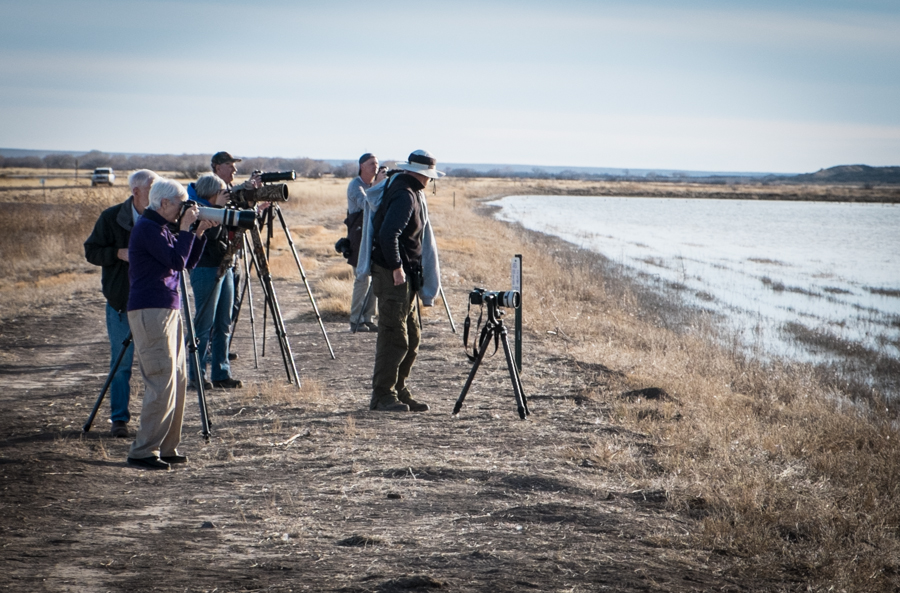
photographers at Bosque del Apache north pond, January 2014, by John Fleck

photographers at Bosque del Apache north pond, January 2014, by John Fleck

“idle imaginings of the newspaper man”

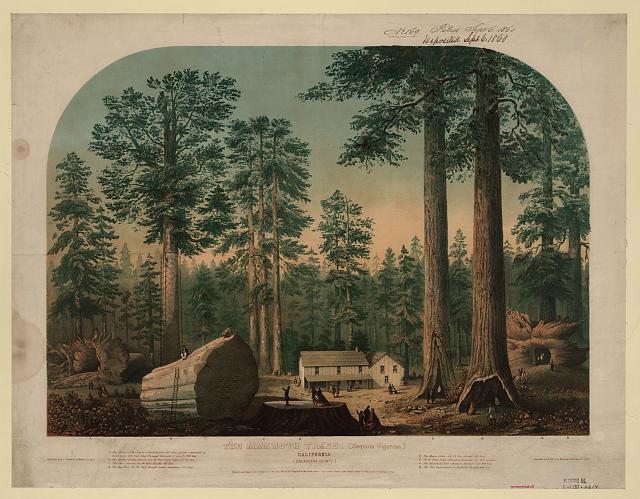
The mammoth trees (Sequoia gigantea), California (Calaveras County) / executed in oil colors by Middleton, Strobridge & Co., Cin. O., circa 1860, courtesy Library of Congress

The mammoth trees (Sequoia gigantea), California (Calaveras County) / executed in oil colors by Middleton, Strobridge & Co., Cin. O., circa 1860, courtesy Library of Congress

The tension between scientists and journalists goes back a long time:

The vaporings and idle imaginings of the newspaper man, I am compelled to believe, are more acceptable both to landlords and tourists, than any presentation of actual facts.

That’s University of California Professor C.B. Bradley, writing in Overland Monthly & Out West Magazine in 1886, trying to correct exaggerations about the age of California’s great Sequoias, which had become popular with the tourist trade. Quoted in Jared Farmer’s new book Trees in Paradise: A California History.

Water policy is no one thing

At a water conference here in Albuquerque last week, one of my water mentors Bill Hume (former editorial page editor at the newspaper, later water advisor to New Mexico Gov. Bill Richardson) made this observation (this is from Bill’s written text, which he kindly shared after the talk and gave permission to me to use):

Water Policy is like the weather: Everyone talks about it – but nobody agrees on how to modify it.

This is because Water is not itself a policy topic; it is the common denominator in a variety of policy topics. Water is a commodity issue for farmers, municipalities and industries. It is a superintending variable in most ecological discussions. It is an omnipresent factor in interstate relations in all directions.

Water to our Pueblo neighbors is all of the above – but also something sacred.

The title of the conference, sponsored by the New Mexico Water Dialogue, was “Implementing Change: Where’s the Political Will?” I didn’t really like the name or the theme, because it presumes that there’s a solution to our water management challenges out there, and we just need to buckle down and do it. But as Bill’s comments suggest, this has the characteristics of a wicked problem (pdf) – the solution depends on the problem definition. Different interests define it differently, and therefore one person’s obvious solution that simply requires political will differs from another’s, and the problem is the process of clarifying those differing viewpoints in a way that clarifies the problem and solution spaces. Once you’ve got that done, political will isn’t much of a problem.

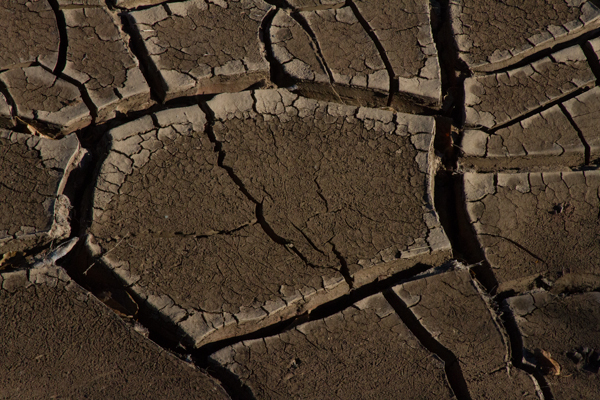
cracked mud

cracked mud, Socorro County, by John Fleck

I was reminded of Bill’s comments by this today, from OtPR, who has taken the occasion of the worst California drought since the Noachian flood receded to rejoin the conversation. The question is what sort of meat Gov. Brown will attach to the bones of a drought declaration:

It all depends on what the state is trying to achieve during this drought. Is the goal of drought management to keep native species alive? Is the goal of drought management to keep all growers in the state prepared to return to growing as soon as water returns? Is the goal of drought management to buffer urban consumers from increases to the costs of meat and dairy? Is the goal of drought management to get a water bond through the state legislature? The state could do a lot, but unless it has some specific goals, I doubt it’ll do much of anything.

It’s easy to say we must do something about the problem of drought. We nod our heads in agreement. But which “problem of drought” exactly do we mean?