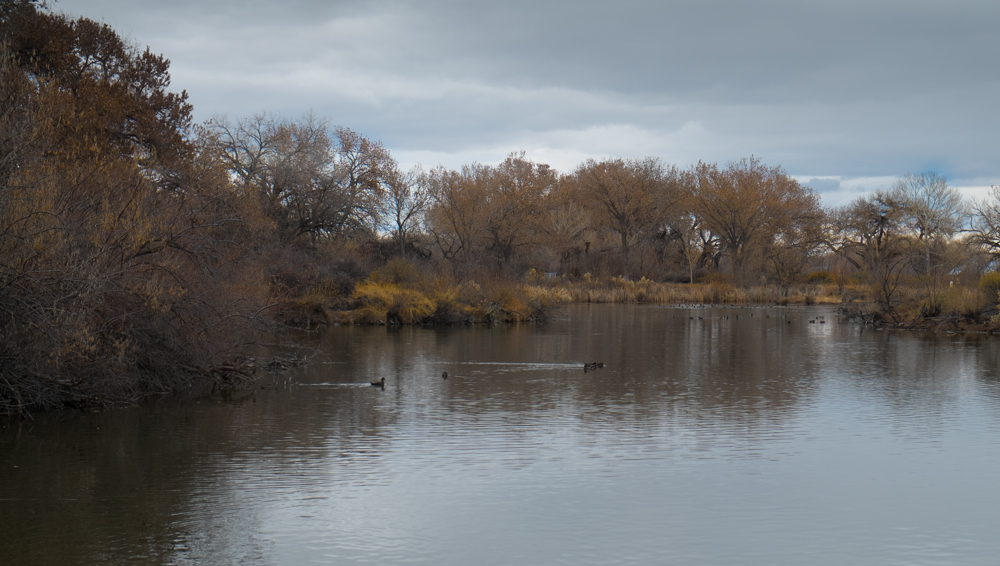
Rio Grande Nature Center, Albuquerque, John Fleck, December 2013

Rio Grande Nature Center, Albuquerque, John Fleck, December 2013
When you sell less water, you make less money selling water. It’s the modern water agency dilemma:
Albuquerque’s municipal water agency may need another rate increase to dig out of a growing financial hole left by the community’s water conservation success, agency officials acknowledged in a report this week to their board.
The Mr. T Christmas ornament is up. John Fleck, Dec. 2013
I wrote a story in this morning’s newspaper about New Mexico’s efforts to revive its moribund state water planning process:
Ten years after New Mexico officials last took a stab at developing a state water plan, they are reviving their effort to calculate the gaps between New Mexico’s finite water supplies and the needs of a growing population. The goal, officials say, is a tool to help prioritize state projects and policies to deal with the gaps.
But criticisms have plagued the project from the outset, including the charge that the state’s top-down approach is bypassing the voices of local water users. Critics also claim a failure to consider the effects of climate change on the state’s water supplies will undercut the validity of the results.
Unsurprisingly, the part about climate change has been click bait. But that’s a subset of a more subtle question that I explored in a bloggy takeout this morning – the loading dock problem. Is the state’s process of formulating the numbers to be used in water planning cutting out communities’ expression of their own needs – simply dumping the numbers on the loading dock?
Anasazi Leather Furniture truckload sale, Dec. 14 2013, John Fleck
Reed Benson, a University of New Mexico law professor whose patient explanations and deep writing have been extraordinarily helpful to my understand of things like the doctrine of prior appropriation and the Endangered Species Act, has joined the blogoworld:
It has come to my attention … that a lot of people do not read law review articles. This shocked me, of course, because who wouldn’t like reading an in-depth, 60-page analysis of water law, fortified by about 300 footnotes? I am told, however, that there are millions of otherwise decent and reasonable people who forego that pleasure.
His rationale for the choice of the blog’s name – Wester River Law – is instructive:
So why call the blog westernriverlaw, not something more familiar like westernwaterlaw? Partly because traditional “western water law” has an old-school connotation, emphasizing property rights and maximum extractive development of water resources, and this blog will take a broader view of water in the West….
I also chose to call it westernriverlaw because rivers matter for their own sake, not simply as conduits for water supplies. In the West, flowing rivers are important ecologically, economically, and recreationally. Those values have always gotten short shrift in western water law, but today they can no longer be ignored or neglected. The name westernriverlaw suggests that any discussion of water policy needs to have a focus on what it means for the river.
Worth adding to your RSS feed reader.
We’re apparently now supposed to call it “street art”.
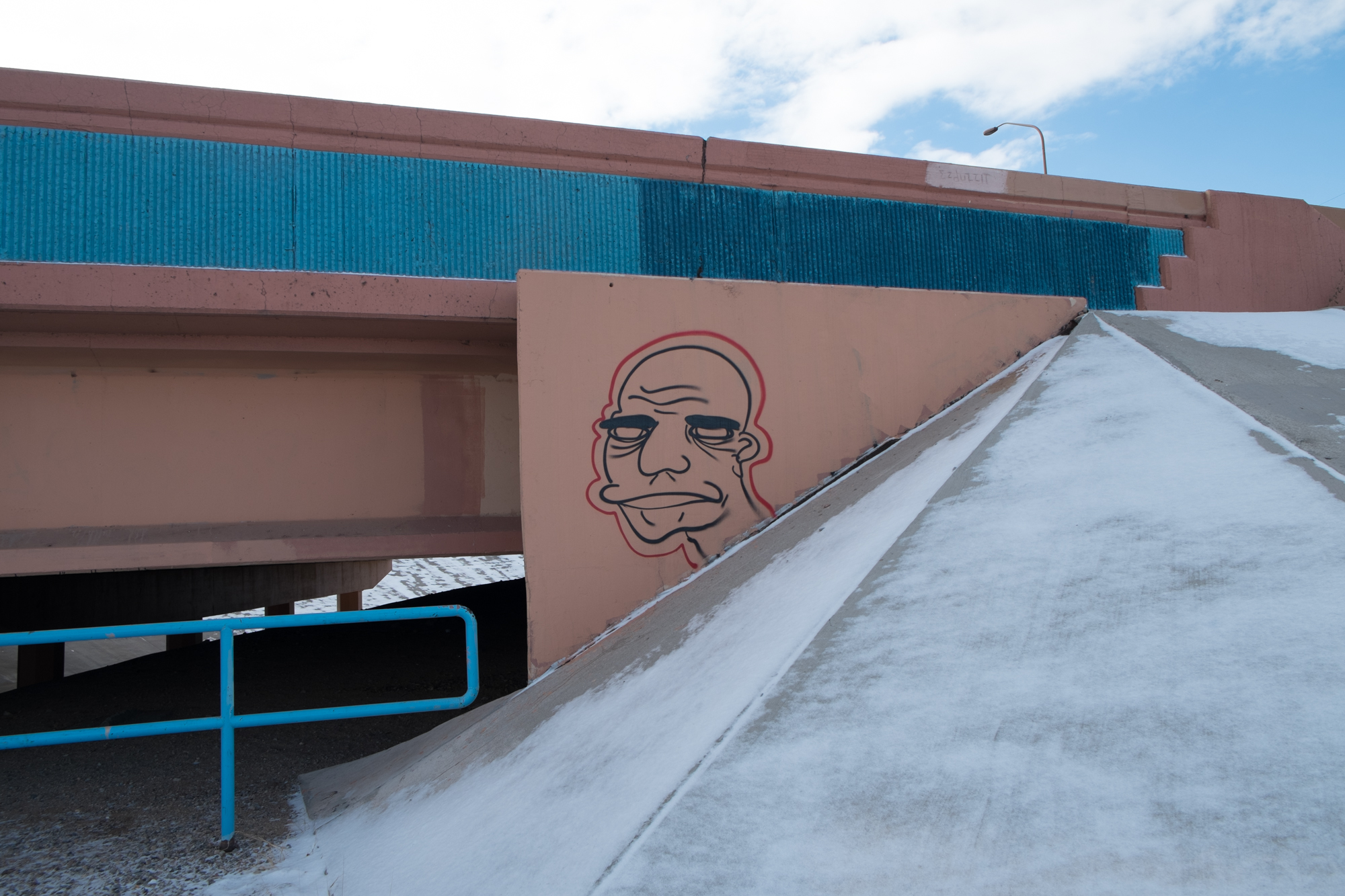
On the I40/North Diversion Channel bridge abutment. John Fleck, Dec. 8, 2013
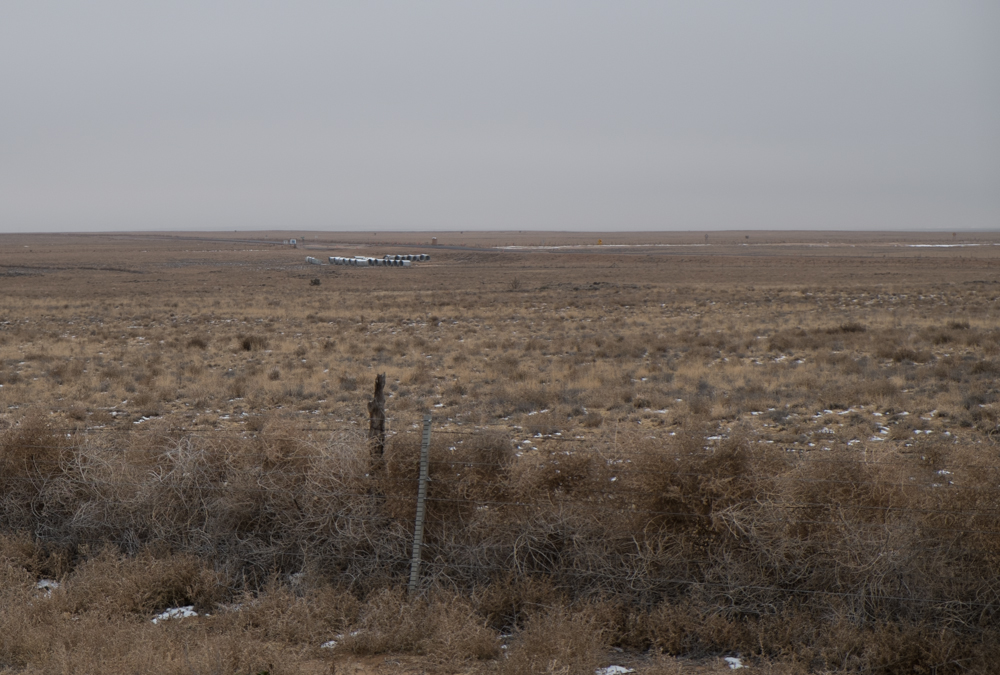
Tumbleweeds, Albuquerque’s west side, December 2013, John Fleck
This open land on Albuquerque’s west side, a 20 mile drive from downtown but probably half of that as the crow flies, is getting a newly improved four-lane road and drainage. It’s currently home to a cluster of shooting ranges, the place where we turn our post-sewage plant poop into compost, and a small airport. And beef on the hoof. If you look on the Albuquerque metro area’s long term planning maps, this chunk of land is colored a bright orange for “Developed Land, 2035”.
I’m reading Justin Hollander’s Sunburnt Cities
But when you look at graphs like this, showing Albuquerque’s post-ES employment, it’s pretty clear that Hollander’s nevertheless onto something significant in terms of the planning assumptions that lead people to color land like this a bright orange for “developed land” on their planning maps:
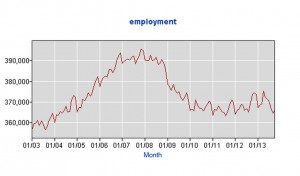
Albuquerque employment, Bureau of Labor Statistics
I got a new camera.
Lissa and I have always had a family camera, but it’s been mostly her thing. She’s the artist, I’m the word guy. She lets me use it whenever I want, so I’ve always taken a lot of pictures, but I never took it terribly seriously. At the newspaper, I work with some really talented shooters, and between Lissa’s artistic vision and the skills of my coworkers, I’m acutely aware of the modesty of my ability to use a camera to identify and then convey a thought.
But taking pictures is fun, and I’m always interested in learning different ways to tell stories, so I got a new camera. I’d been using Lissa’s big DSLR camera lately. It’s a great camera, but it’s a lot of camera, so I settled on a little one that would be easier to just slip in a bag and have with me all the time.
Going through a bunch of my old pictures last night, I came across a set I’d taken back in 2007 when we took Mom and Dad on a joyride on the Railrunner, central New Mexico’s commuter train. What had never really occurred to me until I looked at those pictures was the way Dad always had a camera. I’ve written before about my father’s life in art:
Art was intrinsic to our lives, not a thing separate.
I’ve not particularly thought about my dad as a photographer (he was a painter!), but there he was – me taking pictures of him taking pictures:
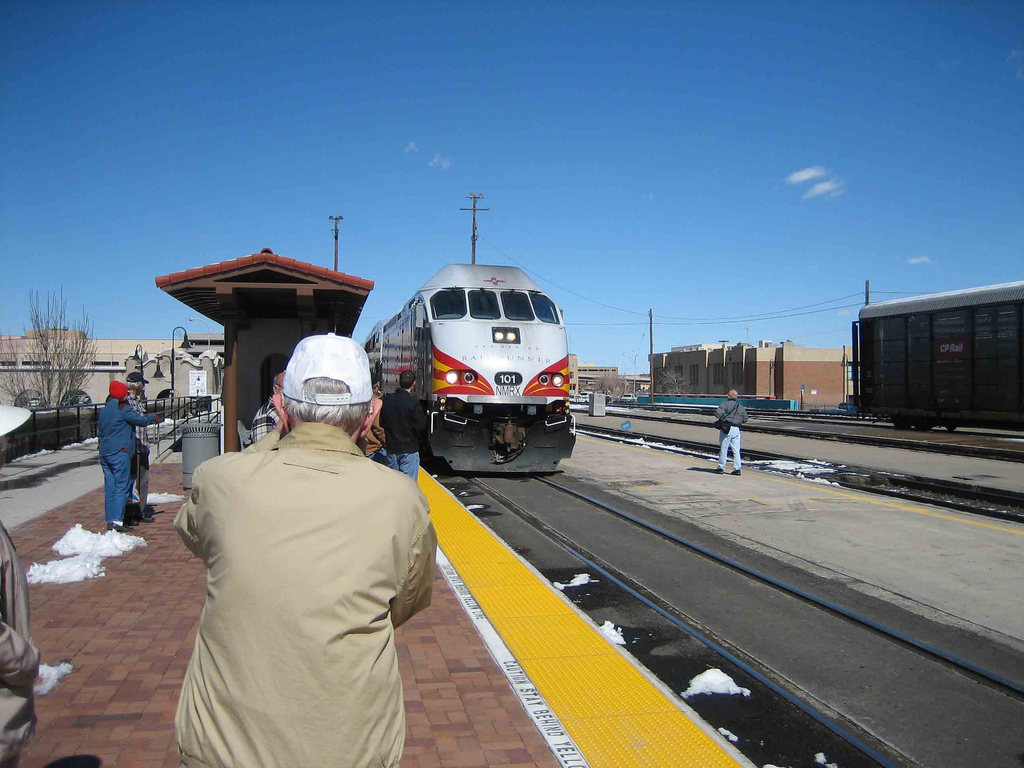
Dad taking pictures I, John Fleck, 2007
and this
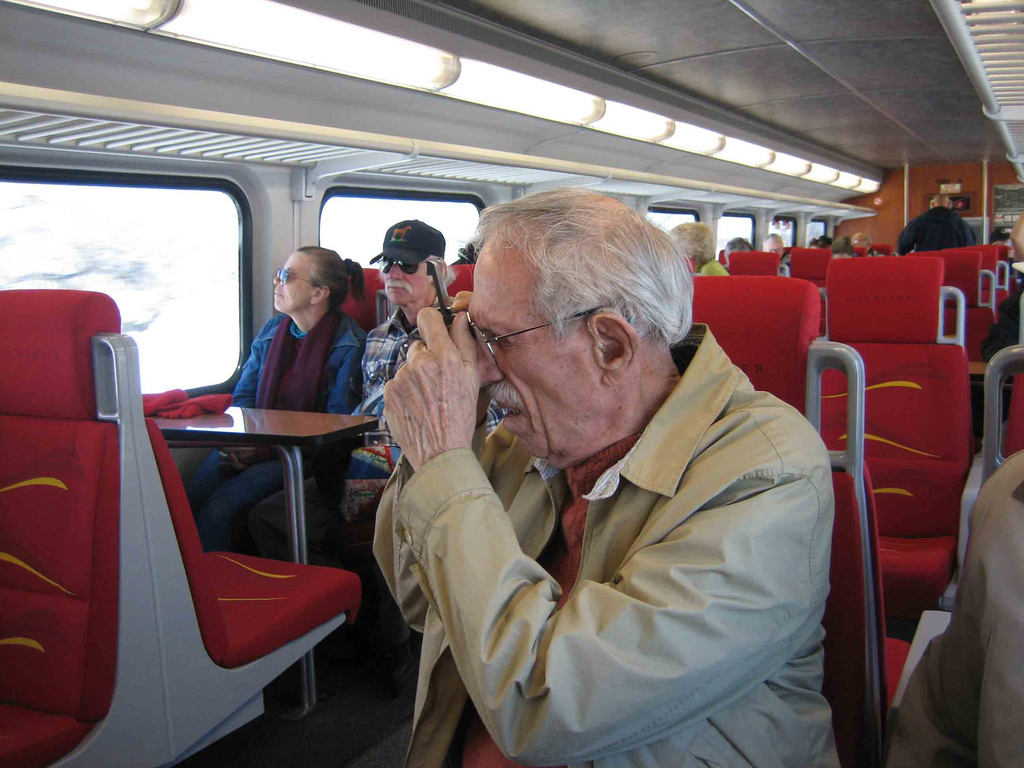
Dad taking pictures II, John Fleck, 2007
These pictures are all kinds of complicated for me. This trip was taken shortly after a doctor told us Dad had Alzheimer’s disease, that the forgetfulness we’d been learning to route around was only the beginning. I remember the trip for that reason, for a ghostly picture I also took that day of Dad’s dim reflection in the train window, a blunt metaphor that’s still painful to look at.
But for reasons I don’t remember, I also took pictures of Dad taking pictures. Dad shot slides most of his life, and had a series of serious cameras (I remember light meters), but he was never a gearhead, and in his later years he mostly just used little instamatic-type cameras that he could slip in a bag and have with him all the time. Sound familiar? So obvious in retrospect.
From the U.S. Bureau of Labor Statistics:
Yuma, Ariz., and El Centro, Calif., had the highest unemployment rates in October, 31.9 percent and 25.2 percent, respectively.
These folks are getting a lot of Colorado River water. There’s seasonality to the resulting ag work economies, but really, this is a graph of economic suckage: