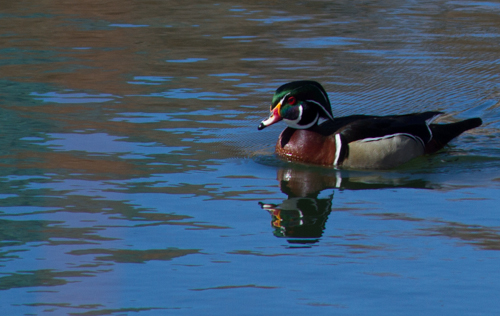
wood duck at the Albuquerque botanical garden, March 10, 2013

wood duck at the Albuquerque botanical garden, March 10, 2013
Andrew Freedman had an interesting piece last month about tree ring research that’s different than the stuff I usually write about:
The past several decades have been the wettest in nearly five centuries for the watershed serving the nation’s largest city, New York, according to a new study. But that wet period is deceiving because it is masking the city’s real drought history and may be lulling water managers into a sense of complacency, which could hurt the city when the next severe drought strikes.
OK, not that different. Because the basic message from the tree rings – see my book
Reed Benson, water law professor at the University of New Mexico, has an op-ed in this morning’s Albuquerque Journal arguing for the re-authorization of the US Bureau of Reclamation’s Drought Relief Act powers, which expired last year (adwalled):
Major droughts, including more intense ones than this, have always been a fact of life in the West. We can’t expect government to stop drought, but we do expect it to assist in planning for it and to provide a measure of relief when it strikes.
The last Congress, however, actually made the current drought a little worse for the West: It failed to reauthorize the Drought Relief Act, allowing key parts of the law to expire in 2012.
This is one of those fascinating but obscure cubbyholes of federal water law that’s worth more attention than it gets.
The question is what authority the federal water agencies have, and what purposes they’re legally authorized to pursue, in managing water. (For example, the Army Corps of Engineers regularly argues that it’s only got the statutory authority to protect against flooding. That’s the job Congress gave it. This played a role in debates this year over barge traffic on the Mississippi, and is an argument that’s currently in play in debates over who has what responsibility in managing the Rio Grande for protection of endangered species.)
The Drought Relief Act provided the US Bureau of Reclamation the authority to expand its scope of action during drought. Here’s Benson writing in the Ecology Law Quarterly:
Title I of the Drought Relief Act, however, authorizes the Secretary to take a variety of actions including drilling wells, constructing temporary facilities, acquiring water from willing sellers, making loans for various purposes, and providing temporary water supplies for a range of uses…. Thus, Title I can provide a measure of authority to act, which should allow USBR to be more effective in reducing the impacts of water shortages … including those related to climate change.
In particular, Benson argues that the Drought Relief Act might provide the Bureau with some flexibility in providing environmental flows during drought times (like now, for example). More generally, he argues the legislation might offer more general operational authority to the Bureau to help manage for what he calls the “double whammy” of climate change and drought.
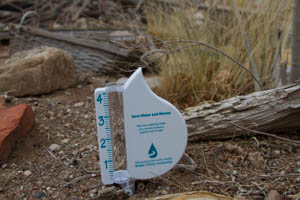
rain gauge
At the xeriscape show last week, I picked up a nifty new rain gauge, courtesy of the Albuquerque Bernalillo County Water Utility Authority, with this helpful advice:
Skip one watering when you receive at least a quarter of an inch of rain.
The last time that happened at my house? September.
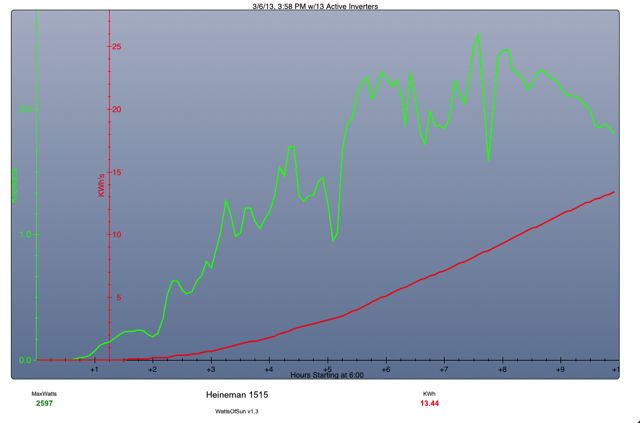
power curves
The Jevons Paradox
And yet, ever since we gathered two weeks ago with the installers and the electric company guy in the ritual of turning them on and watching the meter run backward, I have been obsessed with turning off lights, rather than willing to leave them on.
I am a living anti-Jevons anecdote.
Apart from the specific contributions which mining made to agriculture in California, farming has always resembled mining in this state. The soil is really mined, not farmed.
Carey McWilliams, California: The Great Exception
I can think of few better uses for water that growing avocados. Can you?
Escondido is planning to build a $6 million pipeline, set to debut in 2015, that would redirect water bound for an ocean outflow and convert it into recycled water for avocado farms in the eastern portion of the city.
Yum.
The interplay between human water use and natural systems has always been a ratchet, and when the environmental conversation began in earnest in this country, the ratchet was already cranked down tight.
By the time, for example, that we began having a conversation about preservation of environmental values on the Lower Colorado River, Hoover Dam was already in place and the Colorado River Delta was already getting very little of the water it once had.
Or take the Sacramento-San Joaquin Delta. California state law codifies the importance of “co-equal goals“: “providing a more reliable water supply for California and protecting, restoring, and enhancing the Delta ecosystem.”
I can’t imagine UC Davis fish biologist Peter Moyle being terribly popular among water managers for pointing out this:
The reality is that the water priorities for people and fish and have never been anything approaching equal. The environment has always gotten the short end of the stick.
So achieving coequal goals should mean greatly improving conditions for fish, first, and then figuring out how to share the water better. It means we should give far greater consideration to native and other desirable species in the way we release water from dams and move it through the Delta.
Moyle’s got a lot to say about life in the anthropocene and thinking about “nature” and California’s great delta. Highly recommended click.
In freedom-lovin’, drought hatin’ Texas, it takes state legislation to allow homeowners to rip out their lawns:
While many Texans are cutting back on their water use by switching to drought-friendly landscaping, some may find an obstacle in their way: Homeowners Associations (HOAs). A new bill in the state legislature would change that.
