Did I miss the peak?

I’m kicking myself thinking I may have already missed the Rio Grande’s runoff peak.

Earlier in the week, the river’s flow jumped up over 2,000 cfs through Albuquerque, which ain’t much as rivers go, but there’s at least a chance that’s the best we’ll see this year. The peak usually comes much later, late May-ish, but this year has been absolutely freakish with March drying out and warming up dramatically. There’s a possibility, based on some of the modeling I’ve seen, that the river could come back up in late April-early May. I hope so.

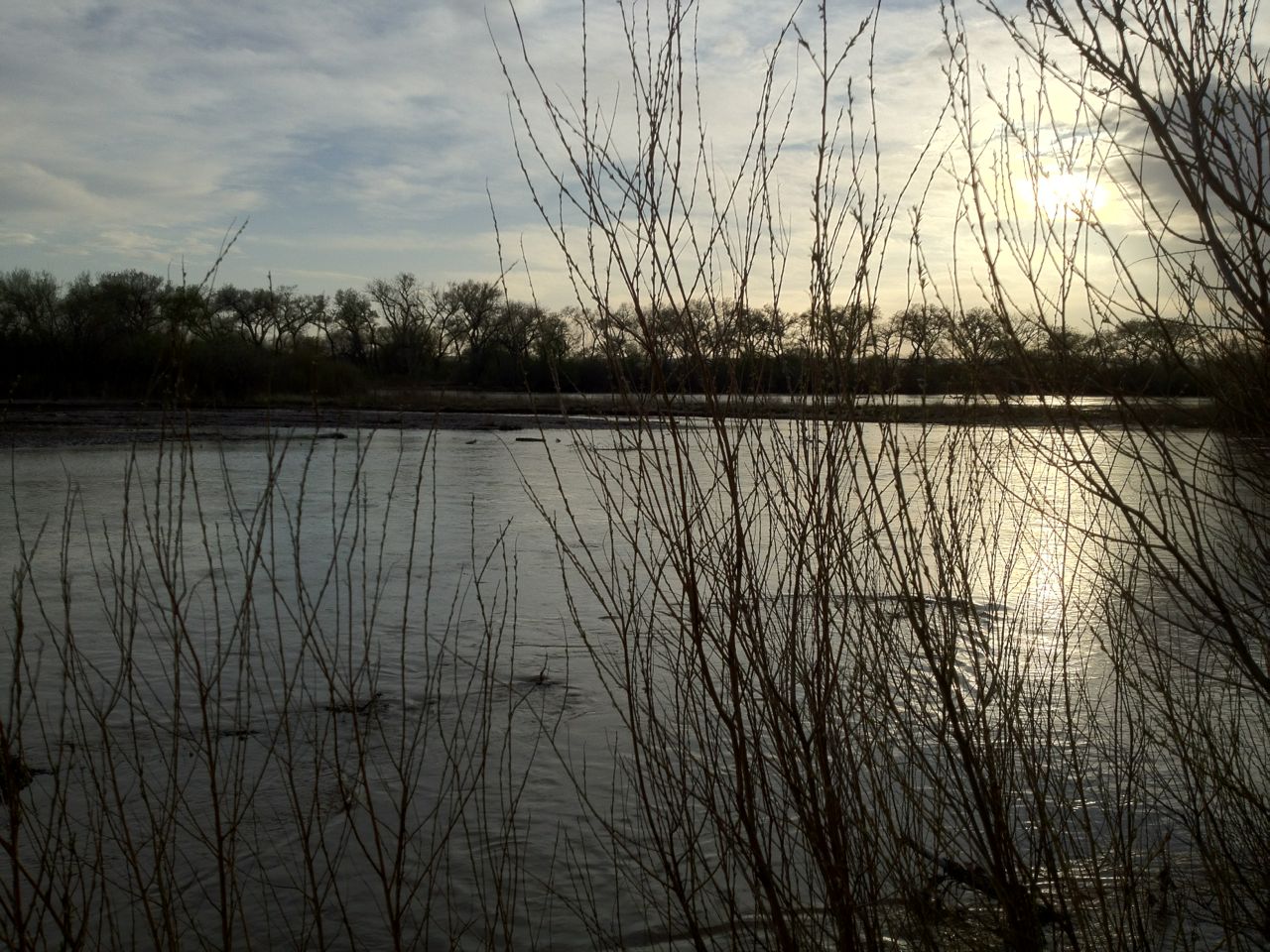
I was finally enough over this flu thing this evening to go out for a walk on my favorite riverside path, in the woods south of the Central Avenue bridge. Out on the river I saw gadwall and a cinnamon teal and got a glimpse of the massive gray back of a great blue heron flying low over the river. Up in the swampy reeds at the south end of one of the habitat restoration project ponds, a muskrat was driving a marsh wren absolutely crazy. I mostly heard the wren, which was making a racket, but got a glimpse through the still-brown reeds left over from last year. Life bird number 248.

No picture of the wren, but here’s the dusky Rio Grande:

Dusky Rio Grande

Dusky Rio Grande, by John Fleck, April 7, 2012

Stuff I wrote elsewhere: lousy runoff on the Rio Grande

From the morning paper, a report on the April Rio Grande runoff forecast plunging off a cliff:

Gary Esslinger’s chosen profession, delivering irrigation water to southern New Mexico farmers, looks like some sort of cruel joke these days.

The latest punch line came this week in the form the federal government’s April Rio Grande runoff forecast, which calls for just 29 percent of normal spring and summer runoff into Elephant Butte Reservoir.

That’s the reservoir that supplies water to farmers in the Elephant Butte Irrigation District, in the Hatch and Mesilla valleys of southern New Mexico. Esslinger, the district’s general manager, faces the unhappy task of going back to his farmers next week and telling them to expect even less than the meager allotment they had been counting on.

“The business that I’m in, of supplying surface water, is kinda like going out of business,” Esslinger said Thursday.


New Mexico rural-urban groundwater project denied

From this morning’s newspaper, my story about the New Mexico state engineer’s decision to deny a proposal to pump rural groundwater from rural western New Mexico to the Rio Grande Valley:

By failing to be specific about where the water was going, the project’s backers failed to meet the requirements of state law, Verhines ruled.

The project amounted to water speculation, which is illegal, said Bruce Frederick with the New Mexico Environmental Law Center, one of the lead attorneys for a group of rural residents who fought to block the project. It is the second recent state ruling to conclude speculation is not allowed under state water law.

“All this ruling does is confirm what anybody who knows about water law and cares about water law already knew,” Frederick said Monday.

This project, the Augustin Plains Ranch proposal, is probably the least famous of three similar western water projects. As I wrote in an overview of the project last year, it would have moved 54,000 acre feet a year of water from the ranch country near the little town of Datil for unspecified uses in the Rio Grande Valley, where the bulk of New Mexico’s population lives.

It bears a striking similarity to the Cadiz project in California (similar in size, pumping an average of 50,000 acre feet per year from the Mojave Desert east of Joshua Tree National Park to coastal cities) and the much larger Southern Nevada Water Authority proposal (185,000 acre feet per year).

The legal decision here in terms of the big picture issues being discussed in these projects is quite narrow. While much of the political discussion in the Augustin Plains case surrounded area-of-origin questions – will the ranch communities where the water originates be harmed? – the New Mexico legal process never reached the point of considering that issue.

Instead, the State Engineer ruled that those proposing the project failed to clear a more preliminary threshold by not being able to specify who would use the water, where and how. In that regard Augustin Plains is very different from Cadiz and the Southern Nevada Water Authority projects.

Given that, I’m not sure there are any strong parallels to be drawn between this week’s New Mexico ruling and Cadiz or SNWA, beyond the fact that all three projects are evidence of strong pressure to do this sort of thing and the legal issues are sufficiently different here that the issues that led to the New Mexico decision don’t really apply to the other two cases.

National Research Council on the scarcity value of water

Another tidbit from the National Research Council’s new report on the problems of the California Bay-Delta:

By assigning to water a scarcity value of zero, many current policies signal consumers that water is available without limit, even while the limits imposed by scarcity are intensifying. As a result, more water is used than would be the case if its price reflected scarcity.

the sharp edge of a knife between wet and dry

I’ve written before about John Van Dyke’s memorable description of the line between a desert river’s ribbon of green and the arid landscape that surrounds it…

the line where the one leaves off and the other begins is drawn as with the sharp edge of a knife.

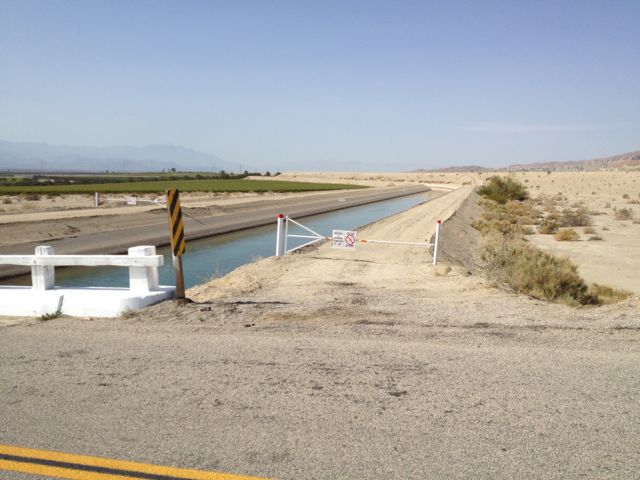
This holds true when the knife’s edge is drawn by a canal rather than a river. I took this last month in the Coachella Valley east of Mecca, Calif. The canal’s delivering water to irrigate the farmlands to the west, both metaphorically and also quite literally holding off the desert to the east:

Desert's Edge, Coachella Valley, February 2012, by John Fleck

Desert's Edge, Coachella Valley, February 2012, by John Fleck


Great moments in western water law: drowning gophers

In 1935, the California Supreme Court ruled in the case of Tulare v. Lindsay-Strathmore that drowning gophers was, self-evidently, not a “beneficial use” of the state’s precious water resources. Also squirrels:

Another gave it as his reason for irrigating in winter that “every time we irrigate we kill gophers … the best season of the year to kill gophers is with cold water, irrigate in cold weather and kill them. The same thing with squirrels. You irrigate the squirrels in cold weather, in February, he gets wet and comes out and freezes to death.” Many other quotations could be made to the same effect. A great many of respondents’ witnesses seemed to be of the opinion that the only reason they irrigated during the winter season was to exterminate these pests. It seems quite clear to us that in such an area of need as the Kaweah delta the use of an appreciable quantity of water for such a purpose cannot be held to be a reasonable beneficial use. This seems to us so self-evident that no further discussion of the point is necessary.

Halfway through the water year: fear and the attention economy

What we call here the “water year” runs from October to the end of September. It’s a useful tool, capturing the fall-winter-early spring water collection season, in which snow builds up in the mountains for later use by humans and ecosystem, followed by the water use season. So the end of March is a nice point at which to take stock.

At my house, I’ve received 3.9 inches (9.9 cm) of precip since Oct. 1, which is dead on the long term average to within the measurement error on my backyard gauge. My precip has largely come in two wet spells, one in October and a two week stretch in December when the storm track inexplicably dropped down on top of us. For a La Niña year, when odds favor dry, I’d say an average first six months counts as excellent news.

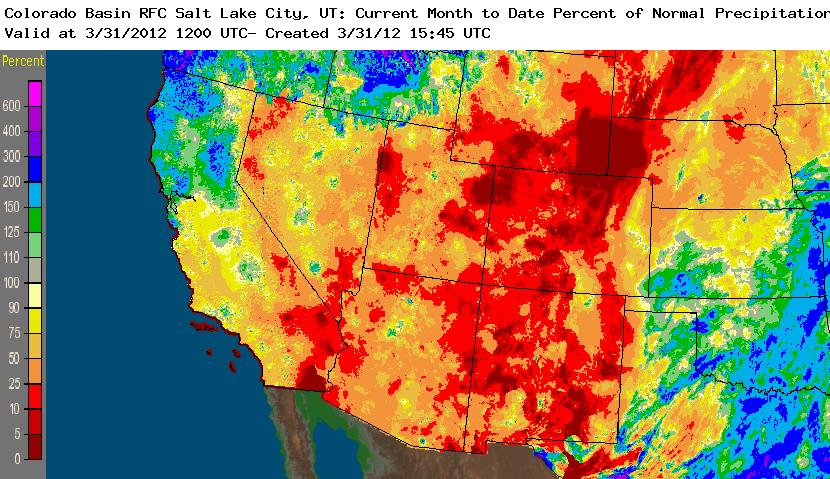
But it’s clear that won’t sell. Luis Villa last night pointed to an excellent talk by the ‘net scholar danah boyd about fear and the attention economy. The “attention economy” is the notion that all these ideas are flying about the ‘net in tremendous volume, with eyeballs as the currency, and fear sells. So if I were to try to get your attention using fear attention economy tactics, I might show you something like this:

March 2012 precip, percent of average

March 2012 precip, percent of average

That’s percent of normal March precip via the Weather Service’s Advanced Hydrologic Prediction Service. Check out the color scheme. These folks get the fear economy.

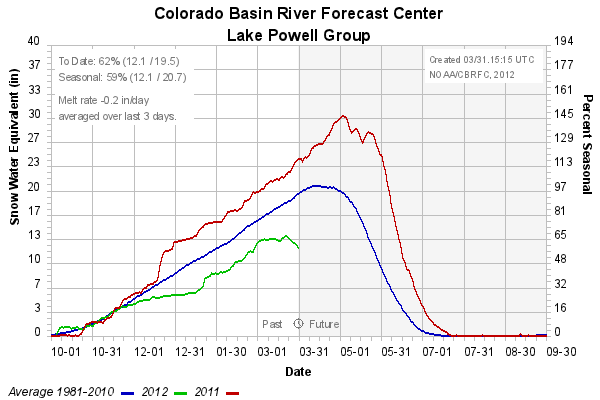
Or this, which is NRCS snowpack data above Lake Powell (essentially the whole Upper Colorado Basin) as assembled and shared by the NWS Colorado Basin River Forecast Center. The fear economy tactics are a bit more subtle, but see that diving green line? That’s snowpack dropping a month early. Normally during March it goes up. This year it has not. I check this every day and it scares me and makes we want to check it again tomorrow. The fear attention economy in action.

Colorado Basin Snow group

Colorado Basin Snow group

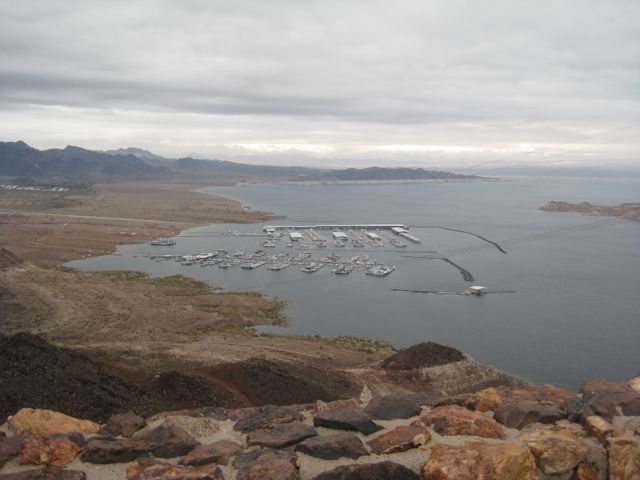
Or less fearfully, Lake Mead’s currently up 33 feet from last year at this time, because some years are wet while others are dry, and during those wet years we spend some of our water filling the reservoirs so we have water to use when it gets dry. (Note that I had a hard time finding a non-fearful picture here, because even those from my latest visit to Lake Mead last December still show a big bathtub ring despite the rising levels.)

Lake Mead, December 2011

Lake Mead, December 2011


A fevered first reading of the National Research Council’s Bay-Delta Report

I’ve been addled by influenza for the better part of a week, tortured by feverish dreams of men in dark robes (were there robed women too?) in a great white-fronted building holding solemn rituals to try determine whether I might be healed. But it was like Plato’s cave – you couldn’t see the robed tribal elders directly, only hear attempts by other mostly white men on television, divining and interpreting their meaning like so many shadows on the cave wall. But one of the people on TV was a nice lady named Rachel, I think. I liked her the best because she told me what I wanted to hear.

It was only fever dreams, I think.

I emerged from the fog today with enough energy to begin perusing the new National Research Council Bay-Delta report. Michael Campana’s posted the whole thing over at his blog, (update: also available straight from the NAS) and it’s worth a few days’ digestion, but the report makes it bang-you-over-the-head obvious even on quick first reading the panel thinks current efforts to wrestle with California’s central water problems are unserious in their unwillingness to get into the hard stuff.

I’ll cite two central reasons from the report. The first is a widespread reluctance in California to acknowledge the central fact of scarcity:

The challenges of managing water and achieving ecological rehabilitation in the Delta are numerous, including the reluctance of many participants to confront the reality that water is scarce.

The second problem flows from this first. The central underpinning of current efforts to deal with the Sacramento-San Joaquin Delta water policy and politics mess is the principal, ensconced in California law, of “co-equal goals” – water supply reliability alongside environmental protection for the Delta ecosystem.

[I]n practice, it is not clear what co-equal means. Does it mean that any additional water will be allocated half and half to support each goal? Or does co-equal imply some proportional allocation? Or does it mean that water for support of one goal should not be available at the expense of water to support attainment of the other? Yet if the attainment of either or both goals requires more water than is currently available, and additional water is unavailable because of scarcity, then the co-equal goals cannot be attained.

The idea of the co-equal goals, as the panel notes, had some political merit. Any solution that prejudged the answers in favor of one or the other would never have gotten out of the starting gate. Yet the planners have not taken the room the legislature left them and done anything with it, the NRC panel concluded:

By positing the co-equal goals without specifically defining them, the legislature has given planners the opportunity to create the necessary balance. Yet, this has not been the focus of planning so far.

“So far.” Such optimistic language.

It appears to be assumed that additional water will have to be found to serve the co-equal goals. When water is scarce, it is not possible to allocate water to support one without reducing the allocation for the other. Of course additional water can always be found by reallocating water from some other use that is independent of the uses envisioned by the co-equal goals, but in California, that simply moves the problem of scarcity to another locus.

And so far, as the Panel’s report notes, the planning documents have just kicked this can down the road. Here’s the money quote:

[T]he future will require planning and management that specifically acknowledge and take into account that there is not enough water to meet all desired uses in California with the required degree of reliability everywhere and all the time.

Thank goodness it looks like it’ll snow this weekend in the Sierra Nevada. Maybe they can get some extra water from there.
Could Whiskey Spring be fer fightin’ over?

In my continuing effort to milk the not-Twain quote for all it’s worth, there is this – in the mountains north of the well fields of the proposed Cadiz California groundwater project is Whiskey Spring. And of course, one of the big areas of fightin’ in Cadiz is the question of whether the project’s groundwater pumping will reduce natural spring flows. (see Figure 3-4 in this pdf)

Capillaries and the cost of desal

Pulled up from the comments on yesterday’s Cadiz post, the Aquafornia Maven shares a marvelous metaphor regarding the costs of coastal desal:

I was on a tour through the Lower Colorado River last week, and we stopped at the Gene Pumping Plant and were being briefed on SoCal water issues. Some one asked Bill Hasencamp (MWD’s Colorado River guy) about desal.

Hasencamp said that besides the problems with getting desal plants permitted along the coast which is proving very difficult and several (at least) would be needed, Met’s system delivers by gravity to the service area, with the pipes getting progressively smaller as they deliver water to the inland areas and approach the coast. To input a large amount of desalinated water from the coastal areas would be akin to getting an entire blood transfusion through your little toe.

Interesting analogy.