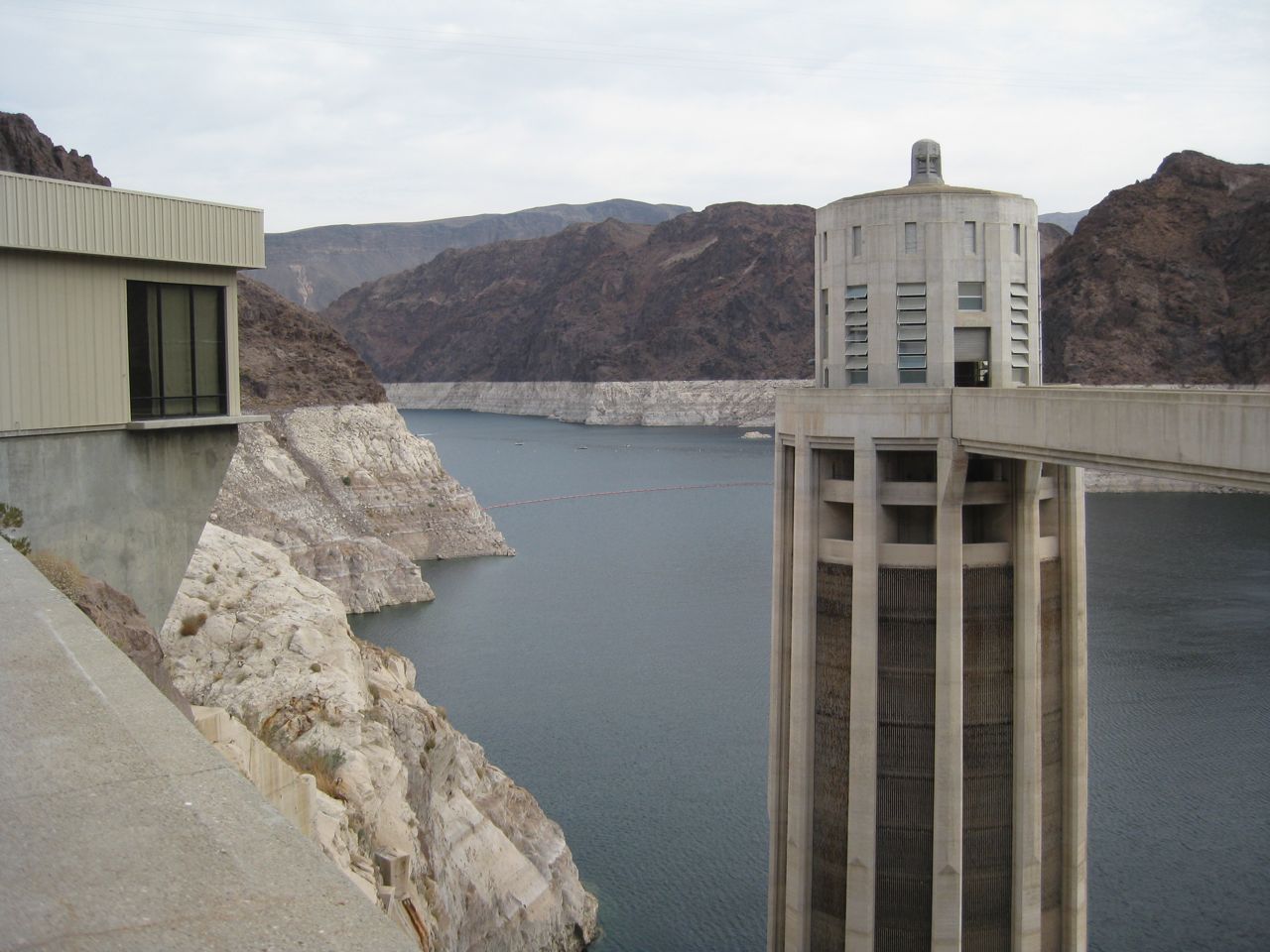
Hoover Dam, Oct. 17, 2010
If you blow this picture up enough, you can probably see pixels of rock that have not been exposed since the 1930s. Or maybe not.
The surface elevation of Lake Mead hit 1083.18 feet above sea level today between 11 a.m. and noon Pacific time today, when this picture was taken. That is below the previous low – 1083.19 – on April 26, 1956. We can now unequivocally say that the drought of the ’00s and continued water consumption by downstream users has lowered the mighty reservoir to the lowest level it has seen since it was filled in the 1930s.
I tried this morning to explain to one of the tourists visiting Lake Mead the historic significance of the bathtub ring. He had jumped out of his car on an overlook on the Arizona side of Hoover Dam, and he was doing that thing where you hold your digital camera out at arms length to get yourself in the picture.
I told him it was a historic picture – that today Lake Mead had dropped to its lowest level since they built Hoover Dam in the 1930s. He looked puzzled.
Him: “Why’s it so low?”
Me: “Drought upstream. Water use downstream.”
Him: “It’ll fill up some day.”
And he jumped back in his car, headed for Vegas. This is how we do drought, American style.
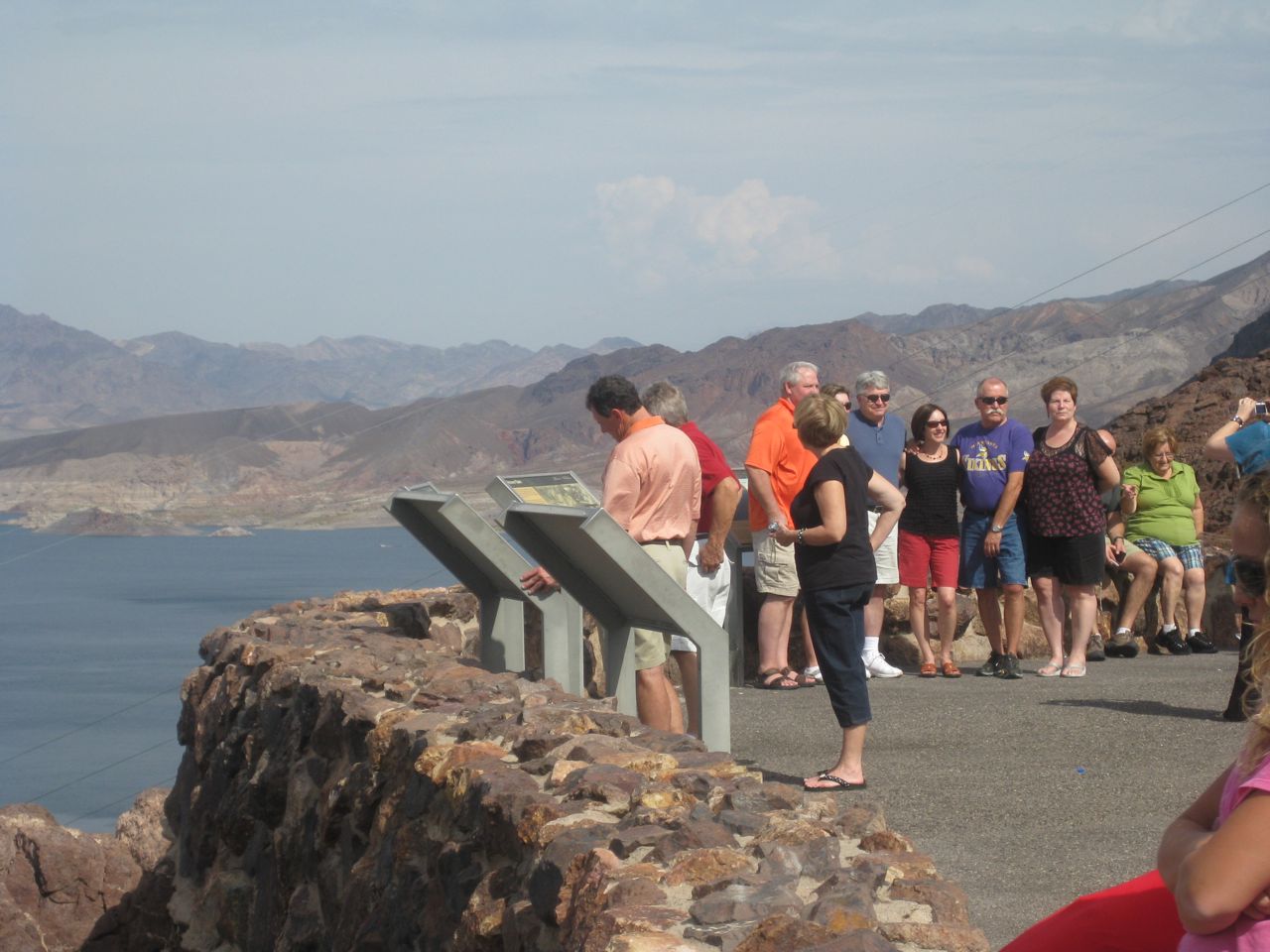
Lake Mead, Oct. 17, 2010
I tried various explanations of what was going on this morning, from the quick to the complex, sort of testing my message as I wandered among the tourists visiting the dam, oblivious to the history I was trying to document.
It was hard to get across the drama. So far, the people suffering the most from Lake Mead’s decline seem to be the recreational boaters, who keep having to move their floating docks to chase the dropping water. I guess we can count that as a good thing. I mean, no one dies here in a drought, right?
We are sufficiently buffered by affluence that almost no one I talked to today had any inkling of what was going on. Just another tourist Sunday on Hoover Dam. The best I got was from one the folks in this picture, who were on a Sunday drive at one of the Lake Mead overlooks. One of them, a Las Vegas resident, knew the lake was way low, and said the solution was simple – somebody needs to have the political courage to make them release more water from Lake Powell, upstream.
I decided against explaining the Colorado River Compact, and the complex reservoir equalization rules in the 2007 shortage sharing agreement, that upper basin states are using less than their share of the river anyway, that Powell is low too, that it’s not that easy. But ultimately, I guess that’s what I have to figure out how to explain.
 and
and  ) calls water conservation “a hoax, or at best a waste of time.”