So this guy in a bar sez….

mushroom cloudSome stuff I wrote elsewhere, on the fate of the U.S. nuclear weapons budget:

I say “it appears” because I don’t have any paper out of the committee yet, just a guy in a bar (I swear, this is how it happened) reading the statement to me over a bad cell phone connection. More later, as I get the paper.

Thanks heavens it’s just a blog, and that my editor never reads it. 🙂

update: So another guy who was also in the bar emails me, so the blog post now has the full quote from the committee statement. (Really, folks, this is how journalism is done. Guys in bars with Blackberrys.)

Peak Jerusalem Artichokes

Rossler spiritsI’ve been picking up and putting down Daniel Yergin’s The Prize for the last few months. It’s both a delight and infuriating, for the same reason. Yergin clearly loves what he’s writing about, so he writes about it a lot. I keep wishing he’d get on with things, but his side trips are not without merit.

Given the current global situation, I was fascinated by his discussion of the situation in the 1920s:

A fear of imminent depletion of oil resources – indeed, a virtual obsession – gripped the American oil industry and many in government at the end of World War I and well into the early 1920s.

There was, at the time, much discussion of the promise of oil shales in Colorado (has it ever been thus, right around the corner?) And then there is this:

[T]he British government had given over two acres in Dorset to the cultivation of Jerusalem artichokes in the hope that this plant could produce alcohol in commercial quantities to be used as automobile fuel.

Apparently the Jerusalem artichoke has extremely high carbohydrate content, which makes it a good for making ethanol.

Pride summed up

Aaron sums up the importance of the ordinary at a pride day barbecue for his friends Ron and David:

The real story there, the real victory, is that Ron’s parents are there at his cookout, chatting about lawn care and paint chips with their son-in-law in a way that you’d never ever have imagined fifty years ago.

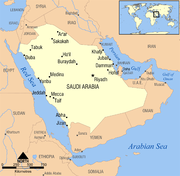
Saudi Arabia to increase oil output

Jad Mouawad reports in the New York Times this morning that Saudi Arabia is planning to bump up its oil production half a million barrels a day in an attempt to do something that doesn’t entirely make intuitive sense, but then I am not an economist:

While they are reaping record profits, the Saudis are concerned that today’s record prices might eventually damp economic growth and lead to lower oil demand, as is already happening in the United States and other developed countries. The current prices are also making alternative fuels more viable, threatening the long-term prospects of the oil-based economy.

Apparently this is some sort of super-duper double reverse psychology here. Psyche!

Backstory: Global supply and demand are precariously balanced right now. Supply was at 86.6 million barrels per day in May, according to the International Energy Agency. IEA puts international demand for the year at 86.6 mbd.

In April, Saudi Arabia pumped 9.05 mbd, according to IEA (see p. 20). IEA says its capacity is 10.9 mbd – the only country in the world with enough spare capacity to add significant oil to the market in the near term. (Others are not so sanguine about Saudi capacity, though it’s not clear to me what time scales matter here.)

(no) water in the desert

Rudolfo Carillo elaborates (delightfully) on the lack of water in the desert:

By the time we finally moved to Burque, I remember standing at the edge of the Rio Grande, staring.

When I asked my father about this utterly strange phenomenon, a river that flowed, he would say that the world was a watery place, that my confusion was contrary to the way of the earth. Water was a precious substance and magical too, he warned.

It Takes Energy To Make Energy

I spent some time yesterday on a story that encapsulates a lot of energy issues here in New Mexico.

Southeastern New Mexico is oil patch country, sitting atop the Permian Basin. Oil production there has long been in decline, but we’re seeing a bit of a boomlet there. $135 a barrel oil will do that. Meanwhile, there also is a uranium enrichment plant under construction down there as well. All that economic activity means increased electricity demand – both the direct electricity needs of the projects, but simply all those people watching TV at night and eating out at the new microbrewery and such.

As a bonus power demand issue, apparently farmers have switched a lot of their irrigation pumps over to electricity from other fuel sources, especially natural gas, as those sources got more expensive.

Xcel, the power company, has a new natural gas plant about to come on line to help meet all of this need. But the plant’s not quite done, which means there is a non-zero chance of rolling blackout this summer:

Xcel Energy, which supplies electricity across a swath from Tucumcari to Carlsbad, is warning customers that they might see hour-long electricity shutoffs during peak air conditioning season because there is not enough electricity to go around.


Rapid electricity demand growth in the region, both because of the booming oil and gas industry and a shift by farmers to electricity to power their irrigation pumps, is the core of the problem, said Wes Reeves, a spokesman for Xcel.

“The supply has just not kept up,” Reeves said.

More reading:
