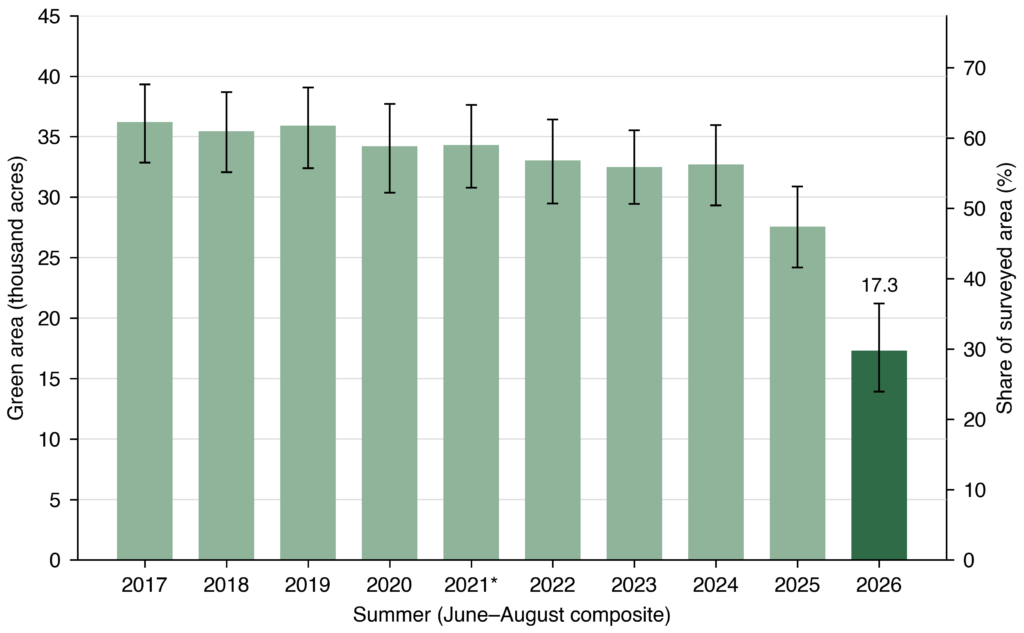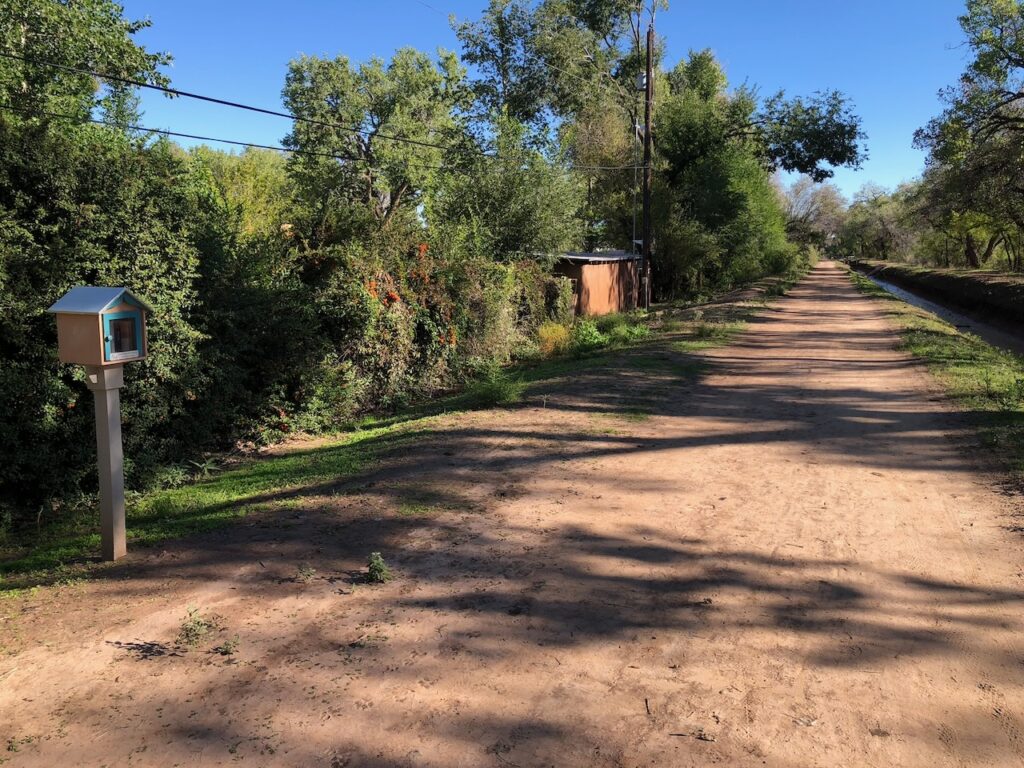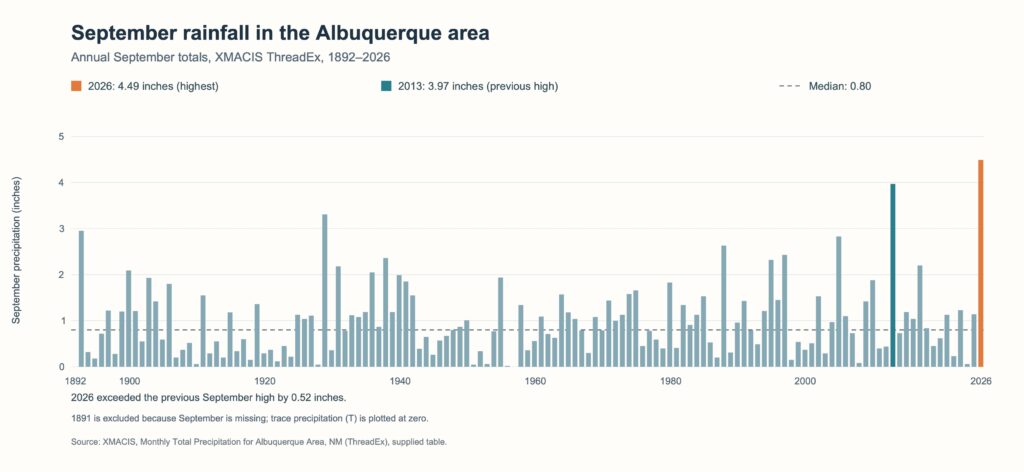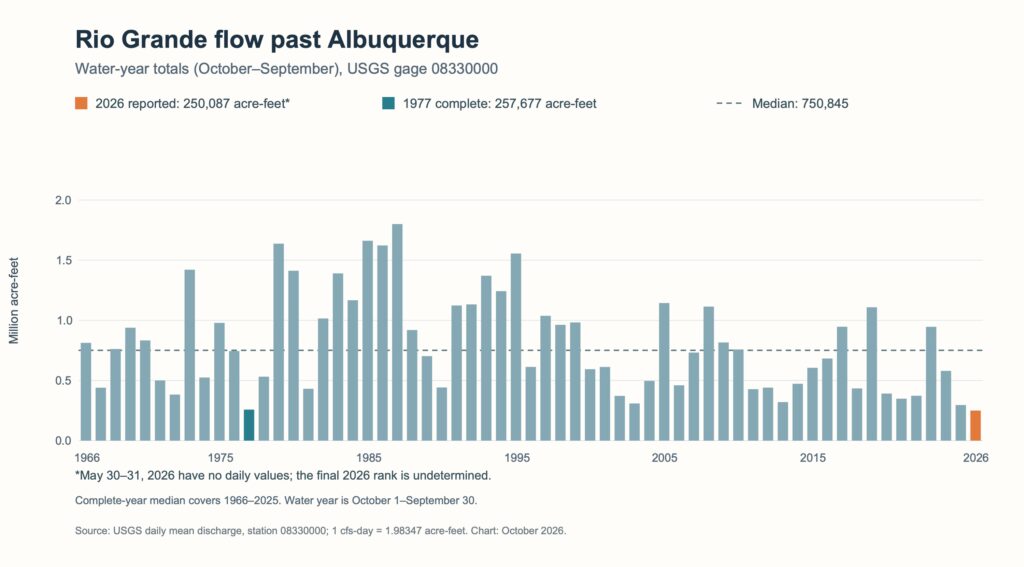
The Bard

Neil Innes’s bard in Holy Grail is one of my favorite film characters.

Bravely Bold Sir Robin, rode forth from Camelot

He was not afraid to die, O’ Brave Sir Robin!

He was not at all afraid to be killed in nasty ways

Brave, Brave, Brave, Brave Sir Robin

He was not the least bit scared to be mashed into a pulp,

Or to have his eyes gouged out, and his elbows broken!

To have his knee caps split, and his body burned away!

Innes, who wrote the song, goes on, but you get the point. Sir Robin was brave. It’s a little over the top, but that’s the point! To be fair, “over the top” is the point of the whole film, but in this particular case Innes’s bard is playing a role – to not only document, but to support and encourage Sir Robin’s bravery.

But then, you know, three-headed giant knight stuff happens. The bard keeps trying to sing hero stuff – the “ought” in moral philosophy’s “is/ought” dichotomy – and Robin glares nervously and tries to shut him down.

And then Sir Robin – we’ll let Innes tell it:

Bard: Brave Sir Robin Ran Away!

Sir Robin: “NO!”

Bard: Bravely Ran Away Away!

Sir Robin: “I didn’t!”

Bard: When danger reared its ugly head, he bravely turned his tail and fled!

Sir Robin: “I never!”

Bard: Yes, brave Sir Robin turned about, And gallantly, he chickened out!

Whether Sir Robin should have stayed and fought the three-headed giant knight is beside the point. I never wanted to be Sir Robin. I wanted to be the bard. But the “is/ought” dichotomy is tough terrain. There is danger when the bard thinks they know what ought to be done.

A Freakish Heat Wave – A Statistical Wonder

Graph showing distribution of seven-day heat waves in Albuquerque, with the current one, at 26F, far greater than anything in history.

A freakish heat wave across

Words fall short as we watch the West’s snowpack disappear under the glare of a heat wave so off-the-charts, so freakish, that I had to resort to some pretty extreme math to try to understand how freakishly off-the-charts this is.

We’ve got more than a century of weather records in Albuquerque, with really good ones going back to the 1930s, and no seven day period, anywhere in the year, has come anywhere close to what we’re in the middle of. Based on the National Weather Service’s current forecast, the seven days from March 19 to 25 will be ~28F above average. In statistics nerd terms, that is more than 4 standard deviations outside the norm.

I’m on statistical thin ice here because we’re so far out on the tail of the distribution that we don’t really know what the statistical distribution of events like this is, but maybe once every 300 years – not for March, but for any time of the year. Maybe once in a very a lot more than that years.

The graph above, based on NWS data going back to the 1930s, is the most useful visualization I could come up with.

A note on methods

When I worked at the newspaper, I had a practice of hunting out weird weather data to turn into a story – the hottest this, the coldest that, the wettest, the driest. Weather data is so rich that you can slice it up a million different ways to come up with some extreme that was easy to sell to an editor.

This practice started with hanging around with National Weather Service forecasters in the pre-everything-is-on-the-Internet days, and then evolved with a bunch of crude tools for looking stuff up myself. It was a happy day for me when xmACIS moved from behind the Weather Service’s firewalls and into public view. I would use spreadsheets and learned to write R code and use government agency APIs to fuel my curiosity.

The tools available now for data access and analysis are amazing, and leaping ahead fast. My old pal Luis Villa from my Linux hacker days, now a lawyer and member of the OpenET board, has been talking a lot lately (I couldn’t find a blog post, a lot of this happens on Mastodon, which is the only social media I spend much time on any more) about the ways in which LLM coding tools can help unlock the power of open data.

I can sit there with my laptop in the evening and code up a tool to look at OpenET data on water use in New Mexico’s Middle Rio Grande Valley in a way that simply wouldn’t have been tractable in the before times. I have a decent understanding of the data, but I’m a lousy programmer, and the friction of writing code left a bunch of problems that I clearly understood – I know where the data lives, I know the kind of analysis I’d like to see done – out of reach. Now, I upload the job to Google Earth Engine (free for academics!), cook dinner, download the results, and stare mesmerized at the maps. The epistemological ice is thin under me as I look at the results, but that’s the way I’ve always worked. Out where the ice is thin is where things are interesting.

The Colorado River and the Tragedy of the Anti-Commons

Some notes on the current state of the Colorado River…

I’m preparing for a panel discussion this evening in Albuquerque. I promised – three-finger promise, Scout’s honor, which still means something to me – that I wouldn’t use any swear words., either in the blog post or the panel discussion.

The state of the water

  • Per the latest numbers from my colleague/collaborator/friend Jack Schmidt, Lake Powell currently holds 1.57 million acre feet of water above the protect-the-infrastructure no-go line of elevation 3,500.
  • Storage at this point in the year is similar to 2022, when we began a hair-about-to-be-on-fire drill as Interior raced to figure out how to protect Glen Canyon Dam because of newly understood (or newly publicly understood) risks of dropping below minimum power pool and using the dam’s outlook works. That constraint still holds.
  • The forecast this year is a catastrophe compared to 2022: 1.75 million acre feet for the 2026 runoff season, compared to 3.8 maf in the 2022 runoff season.
  • The result, according to the most probable forecast from Reclamation, is that absent some sort of action (see governance below) Powell will drop below 3,500 in September, and stay that way until the spring runoff in 2027.
  • According to the min probable forecast, which is realistic given the looming heat-pocalypse, we hit 3,500 by July and stay there forever (by which I mean as far as the current 24-month forecast runs – as the late Jim Morison wrote, the future’s uncertain and the end is always near).

The state of the governance

The state of the governance nests two separate by closely linked problems: near term actions and long term rules.

Near term actions

Protecting Glen Canyon Dam from that 3,500 no-go line requires coming up with a least 2 million acre feet of water over the next two years – to get us past that spring 2027 problem described above. There are two ways to do this. The first is to release a bunch of water from upstream, primarily Flaming Gorge Reservoir. How much? Dunno. The second is to cut releases from Glen Canyon Dam, reducing flows through the Grand Canyon and into Lake Mead. How much? Dunno, though we may find out soon.

The current rules, adopted in response to the challenges of 2022-23, allows releases from Glen Canyon Dam to drop this year to 6 million acre feet, which effectively gets 1.5 million of the needed 2 million feet from Lake Mead by reducing releases thereto. Another 500,000 in releases from upstream reservoir gets you 2 million acre feet, with room to do more if the hydrology gets even worse – which it might.

Longer term actions

The longer term stuff is where, as a student of governance, this gets really interesting for me. As a citizen of the basin, I am inclined to swear words at the dysfunction that has left us with no long term plan beyond the end of this year. But I Scout’s honor promised, so shifting to the “student of governance” schtick gives me a view from nowhere way to approach this dispassionately, without the, y’know, words that would have made Mr. Vinatieri, my Scoutmaster, disappointed in me.

Others have chronicled the failure of the seven U.S. Colorado River Basin states to come to a consensus agreement on a set of river operating rules, we need not repeat that here, other than to note that what we have here is a classic case of what has been called the tragedy of the anticommons. This is a situation where many people or entities – in this case the states of the Colorado River Basin – each have the power to block a solution that might be to the benefit of the community as a whole. In this case, each of the seven states of the Colorado River Basin have blocking power over solutions that would prevent the reservoirs from crashing.

See above: the reservoirs are crashing and we have no plan to prevent it because any proposal that might prevent it has been blocked by one or more states that object.

The reason behind this is a set of rules written beginning in the 1920s governing the river – the Colorado River Compact and a series of ad hoc additions that followed – that attempted to lay out rules for managing the river but failed to include functional processes for modifying the rules when they proved inadequate to changing the situation. We’re now stuck with a system under which each of the seven basin states has blocking power over any attempt to change the rules.

This violates one of the fundamental institutional design principles identified by the late Elinor Ostrom, who taught us so much about how we succeed or fail in overcoming the tragedy of the commons: “How will the rules … be changed over time with changes in the performance of the resource system, the strategies of participants, and external opportunities and constraints?” We have to have rules about how we rewrite the rules. We lack that.

Despite this, we have succeeded in the past, in a series of rule-writing exercises that began in the late 1990s, by depending on principled actors at the state level recognizing that they needed to balance their need to protect their own community’s water supplies against the need to solve problems at the scale of the basin as a whole.

My personal values on this question are both instrumental (things that I think are in the best interests of myself and my community) and deontological (things that I think are fundamental moral principles). The second first: I think we have ethical obligations to those upstream and downstream of us in shared river basins. This is, for me, fundamental. The second is instrumental – I think compromise is in the best interests of my community’s water supply and therefore its future, because if we end up in litigation and the system crashes, we stand to lose a lot more than if we compromise, are willing to act on our obligations to our downstream neighbors by using less ourselves.

The last two years of increasingly hostile negotiations among the states make clear that behavior that recognizes those principles is gone, replaced by interpersonal bickering and a game of chicken driving the basin toward litigation (effectively hoping to manage the basin by convincing a judge of our preferred interpretation of ambiguous rules written a century ago) and reservoir collapse.

Thar be dragons.

“It is as dry as it has ever been.”

Update: Apologies to Norm Gaume and the Water Advocates for screwing up the link to the original quoted piece, which is shared here via Creative Commons copyright [CC BY SA].

Original post:

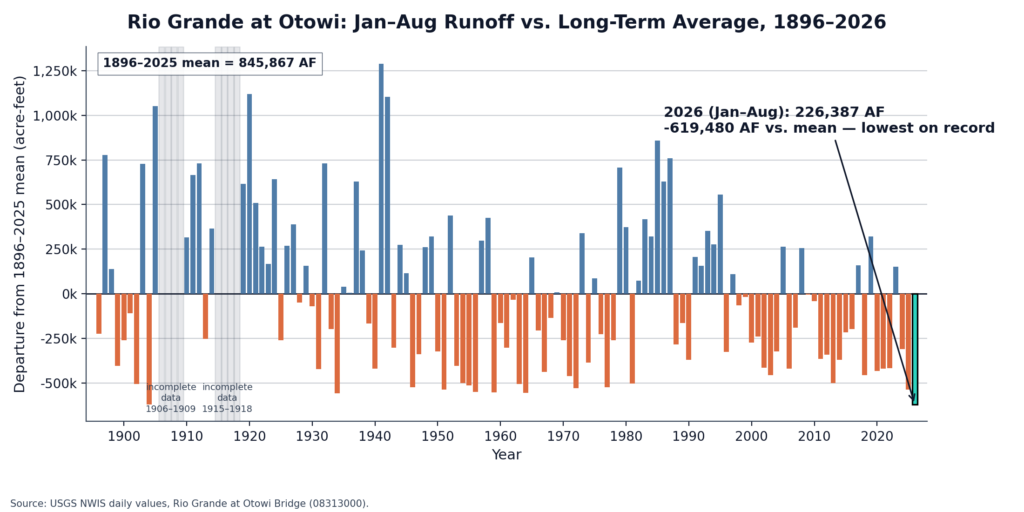
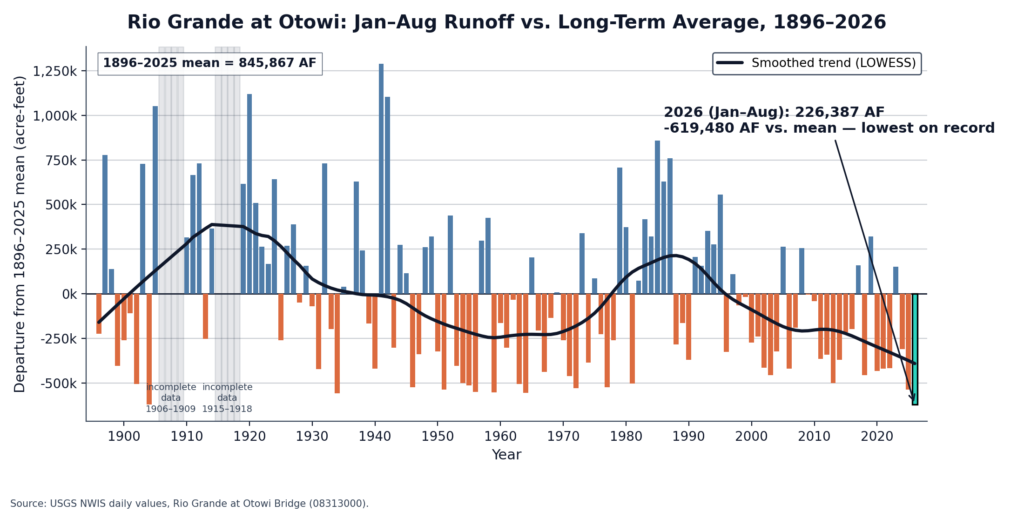
Terrific visualizations from the Water Advocates of the state of New Mexico’s Middle Rio Grande:

Graph showing declining Rio Grande flows at Otowi over the last half century

Screenshot

Water Demands and the Effective Water Supply Stress Are Now Far Greater

Groundwater pumping from aquifers hydraulically connected to the Rio Grande exerts a persistent depletive effect on surface flows that was much lower during the 1948–1964 drought — making the effective water-supply stress today far greater than the raw Otowi flow numbers suggest. During 1948–1964, the Middle Rio Grande corridor had far fewer people and cities were much smaller: Albuquerque’s population in 1950 was roughly 97,000; today the metropolitan area exceeds 900,000. Municipal, industrial, agricultural, and riparian water demand is dramatically greater today. Decades of heavy withdrawals from both the alluvial aquifer and the underlying Santa Fe Group aquifer have drawn down water tables throughout the Middle Rio Grande Valley.

Full post.

Quoting Jeff Kightlinger and Jim Lochhead

As the former CEOs of two of the largest water utilities using water from the Colorado River, we have been deeply engaged in interstate and federal negotiations on the river for over 30 years. Those negotiations were tough, but the basin states ultimately reached agreement, including reducing California’s use of water by 800,000 acre-feet and adopting the current set of operating rules for the federal reservoirs.

Although we fought hard to protect our individual interests, we understood that the public interest is not always served by “winner-take-all” negotiating tactics. Agreements benefiting the river as a whole also benefit every individual water user, and the environment. We recognized the responsibility of the states, tribal nations, water users and conservation organizations in the basin to determine our own future, and not to have it dictated by interstate litigation or federally mandated solutions.

The clock is running out. Unfortunately, the current negotiations remain stuck, characterized by brinksmanship and talking points.

Jeff Kightlinger, former head of the Metropolitan Water District of Southern California, and Jim Lochhead, for head of Colorado Department of Natural Resources and Denver Water

In which my colleagues and I share thoughts on the future of Colorado River governance

It is hard to know where to begin. The Department of the Interior’s Post-2026 Colorado River draft environmental impact statement, and the deep questions it raises, is an “everything including the kitchen sink” sort of process.

But at its root, the question it raises is simple: Tell us what you’re going to do.

It is easiest to quote the Draft EIS itself on the central question: “In critically dry periods, all alternatives have unacceptable performance.” Roger that. Tell us what you’re going to do.

In the short run, with a meager snowpack and no clear explanation of how federal and state managers are going to operate the reservoir system, the basin’s dams and diversions now, we have no clear picture of what will happen in 2026. Tell us what you’re going to do.

Some specifics

The ad-hoc collective that Allen Best dubbed “the Traveling Wilburys of the Colorado River” – Anne Castle, Eric Kuhn, Jack Schmidt, Kathryn Sorensen, Rin Tara, and me – took yet another stab at offering our suggestions in comments we submitted yesterday to Interior’s P26 EIS process.

I’ve been mentally largely elsewhere lately, finishing up the book and managing my health (I’m doing great! Thanks for asking!), so I mostly show up at the last minute on these things to dub my vocals, but my friends are very kind and inclusive, and they do good work. In particular, stuff like this full of both useful NEPA-speak and also substance:

The analyzed alternatives do not meet the purpose and need of the proposed federal action. “In critically dry periods, all alternatives have unacceptable performance.” Therefore, the alternatives analyzed do not meet the purpose and need for the federal action as described in the DEIS. It is incumbent on Reclamation and Interior to provide at least one alternative that meets the purpose and need.

As I said: Tell us what you’re going to do.

The Final EIS and Record of Decision must specify how short-term operations will address the current vulnerability of the system and its critical infrastructure. The new operating regime for the Colorado River will be implemented at a time of unusually low storage volumes and unprecedented low flows. The vulnerability of the system in providing an adequate water supply is unprecedented. Regardless of the duration of the next set of guidelines, it is imperative that Reclamation provide a clear picture of what actions will be implemented in the near term (i.e., next year, next 3 years, next 5 years) to protect critical infrastructure, and to protect public health and safety.

As I said: Tell us what you’re going to do.

The preferred alternative should be based on the broadest possible interpretation of federal authority to ensure a sustainable water supply provided by the river. The DEIS states that, “The Basic Coordination Alternative is designed to be implementable without agreements among Basin water users regarding distributions of lower Colorado River mainstream shortages, storage and delivery of conserved water from system reservoirs, or other voluntary agreements….” Because the Basic Coordination alternative does not meet key performance objectives for a large percentage of the Dry and Critically Dry futures, it is incumbent on the Agency to explore and propose using the outer limits of their authority to achieve a system that provides a sustainable water supply. Reclamation and Interior should not default to a “safe” legal approach when those operations are insufficient to balance supply and demand and provide a prudent operating regime. Lawsuits over the operating guidelines adopted by the Department of the Interior are inevitable, regardless of which alternative is adopted, even a theoretically “safe” one. Therefore, the preferred alternative should utilize the broadest possible interpretation of Reclamation’s and Interior’s authority to provide a predictable and resilient Colorado River so that the system can continue to operate in a reasonable manner while the lawsuits proceed.

This one’s on you, Secretary Burgum. We do offer suggestions, but if you don’t like ours, then tell us your alternative: Tell us what you’re going to do.

This one has seemed for a long time like a no-brainer to me:

The Upper Basin demand scenarios utilized in the modeling are unrealistically high.… [T]he Upper Basin demand scenario utilized in modeling the impacts of the various alternatives is much higher than historical use and does not reflect likely future actual use. The 2016 UCRC demand scenario embedded in the DEIS modeling is approximately 40% to 50% higher than recent average demand. Public statements by representatives of the Upper Division states emphasize the limitations imposed on Upper Basin water users by annual hydrology, but the UCRC demand scenario fails to take those hydrologic limits into account.

Graph comparing Upper Colorado River demand projections with reality, showing they are unrealistically higher.

Really?

This one’s on my Upper Basin leaders: Really?

Reclamation should specifically identify what additional authority is needed to implement an operating regime that meets the purpose and need for the EIS over the long term. There are no alternatives identified in the DEIS that meet the purpose and need and that Reclamation can implement without additional legal authority. This creates significant uncertainty around river management, despite the intended purpose of providing water users a greater degree of predictability about water availability in the future. Reclamation should describe specifically what additional legal authorities it believes would be required to implement desired operating provisions. Furthermore, Reclamation has indicated the intention to “seek additional authorities” to protect critical reservoir infrastructure. These additional authorities should be explained.

Again, Secretary Burgum: Tell us what you’re going to do.

The colossal failure of the Colorado River Basin leadership is on display in this simple sentence from the draft EIS: “In critically dry periods, all alternatives have unacceptable performance.”

You’ve spent the last few years telling us what you can’t do. It’s on you now: Tell us what you’re going to do.

(Lots more in the full comments, it’s a useful primer on the current state of play.)

Pitchers and catchers report

A black and white picture of the outside of a stadium with the sign "Tingley Field" and a man throwing a baseball

Tingley Field, courtesy Albuquerque Museum

The best Albuquerque baseball stories I heard are both about Willie Mays.

The first is that time at the old Tingley Field where, as a friend put it, “Willie Mays once broke a lady’s car windshield with a foul ball.” We’ll have to take my friend’s word for this, but he says he straight up heard it from a guy who was there.

The likely date was a spring exhibition game April 2, 1956, the New York Giants against the Cleveland Indians. The Giants won 7-6; Mays went 0-for-4 (we know from the Albuquerque Journal’s story that he drove in a run on a ground ball, RBI’s weren’t standard in box scores back then). There is no mention of the foul ball incident in the newspaper accounts, but why would there be? My friend straight up heard it from a guy who was there, which is good enough for me.

Tingley Field

Fence around baseball field with sign reading "No dogs on field, no kids in dugout".

No dogs on the field. Tingley Field circa 2026, Albuquerque, New Mexico

The inspiration for today’s bike ride was the start of major league spring training – pitchers and catchers reported to their Cactus League and Grapefruit League camps in Florida and Arizona.

We started the tour at the site of the old Tingley Field, home of the minor league Albuquerque Dukes from 1946 to 1968. The old stadium is long gone, replaced by a nice new stadium up the hill, then another nice newer stadium up the hill (another Willie Mays story there, hold on) now home to a team named after a joke from The Simpsons. (I guess all baseball history is storied, I sure like ours.)

Tingley Field today is a city park with a couple of softball fields, set below grade so it can double as a flood control retention basin, with a big drain in one corner out beyond the right field fence.

From there, we just hopscotched around town from ballfield to ballfield – some high school, some little league. We finally found an actual game of baseball being played at the UNM Lobos’ field, but it had that annoying metal bat sound, so we didn’t stay long. I’d tried to make a map of ballfields. It was a pretty lazy effort, both on my part, and on the part of the technology I was using, but it didn’t really matter. As we wandered the city, we realized there are ballfields everywhere, necessary urban infrastructure I suppose.

The other Willie Mays story

Bicycle parked next to large lopsided baseball sculpture in front of modern baseball stadium.

Sometimes we also call it “The Lab.”

The final stop was the big lopsided baseball in front of what we insist on calling “Duke Stadium,” despite the best efforts of the municipal and corporate overlords who would prefer we call it “Rio Grande Credit Union Field at Isotopes Park.” The Isotopes , the minor league team that plays here, were named after a joke in the Simpsons.

Sometimes we call the ballpark “The Lab,” which I’m pretty sure one of my other friends came up with, but like the earlier Willie Mays incident, this is not well documented, so you’ll have to take my word for it. Epistemology – your choice about whether to believe me.

But the final Willie Mays story is well documented. And how.

It was March 31, 1969, when once again the Giants and the Indians barnstormed through Albuquerque on a late spring training tour. And it was Mays himself who was the first player to bat at the newly completed Duke Stadium. It is said that Mays called it “the greatest minor league ball park I’ve ever played in.”

There’s another foul ball story, though it revolves around a kid who rode his Schwinn Stingray to the ballpark, got hit in the head with said line drive foul ball, but he was OK and ended up with a Willie Mays autographed ball. The Stingray is the best part, sweet rides. The game ended in a 5-5 tie, called because of darkness. The stadium has lights now. The novelist Don DeLillo wrote that, at a night baseball game, under the lights, “the players seem completely separate from the night around them.” I have always loved this about night games.

Mays went 0-for-3, which by my count makes him 0-for-7 lifetime in Albuquerque. Likely the altitude, though they used to say that Duke Stadium was a hitter’s park because of the thin air.

My career as an energy economics journalist in two figures

Newspaper with headline reading "End of the oil is coming, prof warns"

Hubbert’s peak

But the peak will inevitably come, perhaps later this decade, perhaps now. The signs Gerth wrote about Feb. 24 may be the first signal that it is starting. “We simply don’t know,” Goodstein said. This is a problem New Mexico oil and gas producers have thought about a lot. Here, production peaked in 1969 and has been generally declining ever since, according to data from the American Petroleum Institute

– John Fleck, Albuquerque Journal, November 2004

Graph showing steadily rising New Mexico oil production

Hubbert’s steady continuing climb

Colorado River news isn’t all bad!

I’ve been pretty successfully checked out of Colorado River work while I put the finishing touches on the new book (pre-order now!) but my colleagues are on it with a new post looking at the over-winter storage at the big reservoirs behind Hoover and Glen Canyon dams:

Key Points

  • The rules that control releases from Lake Powell and Lake Mead are very different. Lake Powell’s releases are determined by an Annual Operating Plan that has little flexibility during the year. Lake Mead’s releases change each month in response to changing delivery requirements to Lower Basin users. The impact of these different release rules on each reservoir’s storage was illustrated this autumn and early winter when Lake Powell steadily declined and Lake Mead steadily increased. The magnitude of Powell’s decline and Mead’s increase compensated for one another, and the total combined storage in Lake Powell and Lake Mead did not change.
  • During the four months between October 1 and February 1, Lake Mead’s releases were reduced in response to decreasing Lower Basin demands, but Lake Powell’s releases were not similarly reduced. Lake Powell lost 615,000 af during the four-month study period, and Lake Mead gained the same amount.
  • On February 1, Lake Mead had 2,714,000 af more water than Lake Powell, the largest difference between the two reservoirs since April 2022.
  • Modest flood inflows in early October delayed drawdown of Lake Powell by six weeks. Releases during the four-month study period were the second smallest since at least 2010[1]. Releases from Lake Mead were the smallest since at least 2010. Despite the small inflows to Lake Mead, the increase in storage in Lake Mead during the study period was the largest since 2019.
  • The four-month delay in depletion of the combined storage in Lake Powell and Lake Mead saved between 400,000 to 900,000 af.
  • Forecasts for spring snowmelt inflow to Lake Powell are not encouraging and have been declining all winter, because Rocky Mountain snowpack remains meager.

[1]We compared the inflows, outflows, changes in storage, and Lower Basin consumptive uses between 2010 and 2026.

This feels like good news, or least not bad news, except for that last bullet. The Upper Basin median forecast is just 40 percent of the median.