Corn, cotton, hay, rice all down: how California farmers are responding to drought

California farmers by now have a pretty clear picture of what their water supply situation is going to be this year, whether it’s reservoir and irrigation system surface delivery, or groundwater pumping. The U.S. Department of Agriculture today released projected acreage for the state’s major field crops (pdf) that reflects farmers’ resulting choices:

  • corn: 430,000 acres,down 17 percent
  • cotton: 155,000 acres, down 27 percent
  • hay: 1.23 million acres, down 11 percent
  • oats: 120,000 acres, up 9 percent
  • rice: 408,000 acres, down 6 percent
  • winter wheat: 430,000 acres, down 7 percent

Keep breathing, California. You can do this.

A year ago, I wrote a piece urging calm in the face of California’s extreme drought:

The thing to remember – and this’ll help you get through the tough year ahead – is that drought is no one big thing. It’s a series of little things – one water user, one water system at a time. That’s how you’re going to get through this. If you focus on “zero” you’re screwed. Think about who’s actually going to be short of water, and what they’re going to do about it.

It wasn’t easy, some real tough times, especially for Central Valley farmers, but Californians showed their resourcefulness and adaptability with what I think I will call Fleck’s Law: “When people have less water, they use less water.”

I’ve been meaning to write an update, but Jay Lund has done far better than I could.

This year, with another dreadful snowpack, the hair-on-fire rhetoric has amped up a notch, but Lund (way smarter, with way more standing and history in California water management than I) has done a great service with this calm explanation of what is really happening, and what needs to be done:

There is need for concern, preparation and prudence, but little cause for panic, despite some locally urgent conditions….

California will not run out of water this year, or next, if we are careful. We will respond mostly as we did last year, with some modest changes.

In rough order of importance, California will make up most of this year’s water shortage by:

Additional groundwater withdrawals of perhaps 5 million or more acre-feet

  • Reductions in urban and environmental water uses and agricultural fallowing — totaling perhaps 4 million acre-feet
  • Shifting perhaps 1 millon acre-feet of water use from lower to higher economic values through water markets
  • Depleting reservoir storage by perhaps 1-2 million acre-feet
  • Increasing wastewater reuse and other conservation efforts

If you are concerned about California’s drought, Jay’s piece is a good dose of realism in the midst of the crazy talk we’re hearing right now. You can do this, California.

San Juan-Chama forecast: looks like a second year of shortfall

According to the U.S. Bureau of Reclamation, warm February weather meant the earliest runoff in the 40-plus year history of the San Juan-Chama Project, which brings water from southern Colorado to the Rio Grande Valley of New Mexico. But “early” does not translate to “a lot of water”.

San Juan-Chama Project contractors, the largest of which is Albuquerque, got a preliminary allocation Jan. 1 of “zero”, because storage was exhausted. The next allocation milestone comes in mid April, and with just a bit over 10,000 acre feet of SJC’s typical “firm yield” of 96,200 in storage at this point and a forecast of about 50 percent of average, it looks like another skimpy year.

It’s important to note what this does not mean. It does not mean Albuquerque goes dry. Albuquerque has more than two years’ worth of previously banked SJC water sitting in Abiquiu Reservoir on the Chama, and groundwater to fall back on. The availability of such a robust backstop is a testament to community conservation efforts. Average per capita usage is just a bit over half of what it was two decades ago. But after seeing the first year in history with a less-than-full SJC delivery last year, it’s a reminder that this effort by Albuquerque and other Rio Grande Valley communities to diversify their sources of water supply and augment the Rio Grande’s flows are not a sure bet.

update: Writing from Durango, Jonathan Thompson explains what this all looks like up in the snow-bearing region from whence this water comes:

We had a December thaw; I saw a dandelion blooming in Durango on Dec. 8. We had a February thaw, during which six 60+ degree days closed the nordic center at 9,000 feet and brought golfers onto the greens at 6,600 feet. And we had a March thaw, more like a scorcher, which coaxed apricot and even apple blossoms out, surely to be killed by an April frost.

Exaggerated Impacts of Unrealistic Water Shortages

A guest post of sorts* from a group of prominent economists here in the western United States questioning the findings in a widely quoted report (pdf here) by a group from Arizona State about the potential economic impact if the Colorado River went dry:

***********

A January 14th article in the Wall Street Journal reported results of a study that estimated economic losses to the seven Colorado River Basin States should the Colorado River dry, and, with it, a loss of critical water supply to the regional economies. The study tallies the annual contribution of the Colorado to the combined Gross State Product of the Basin at about one twelfth of the total U.S. GDP. The regional losses cited in the study range from $43,000 to $394,000 per acre-foot, our usual measure of water quantity. Anyone familiar with market water values in the region that typically range from $100 to $300 per acre foot will be skeptical of the loss estimates.

Values in California during its current drought have reached $2000 per acre foot. It is unrealistic to assume that the Colorado will dry up, although it is well known that recent flows have been falling and that storage in the Basin’s reservoirs is at an historic low. Further, ways of mitigating such huge losses are ignored in the study: (1) increased water use efficiency by urban and (especially) agricultural users; (2) use of groundwater in the short term; (3) desalination of plentiful brackish waters priced around $1000 per acre-foot; (4) imports from other regions. The study’s approach ignores these possibilities and assumes that historical ratios of water use to output must continue unchanged. It ignores the contribution of other inputs such as power, land, and capital.

Study statements that 65.8% of New Mexico’s annual state output would be lost are, prima facie, not credible since only 15% of New Mexico’s irrigation water comes from the Colorado and only 60% for urban uses according to the study.

Good policy needs to be based on sound economic analysis. Distorted analyses serve no interests well.

Frank Ward, Professor of Agricultural Economics, New Mexico State University; R. Garth Taylor, Associate Professor of Agricultural Economics, University of Idaho; Charles W. Howe, Emeritus Professor of Economics, University of Colorado; George Frisvold; Professor of Agricultural Economics, University of Arizona

* Originally written as a letter to the editor to the Wall Street Journal, not published there, published here by permission of the authors
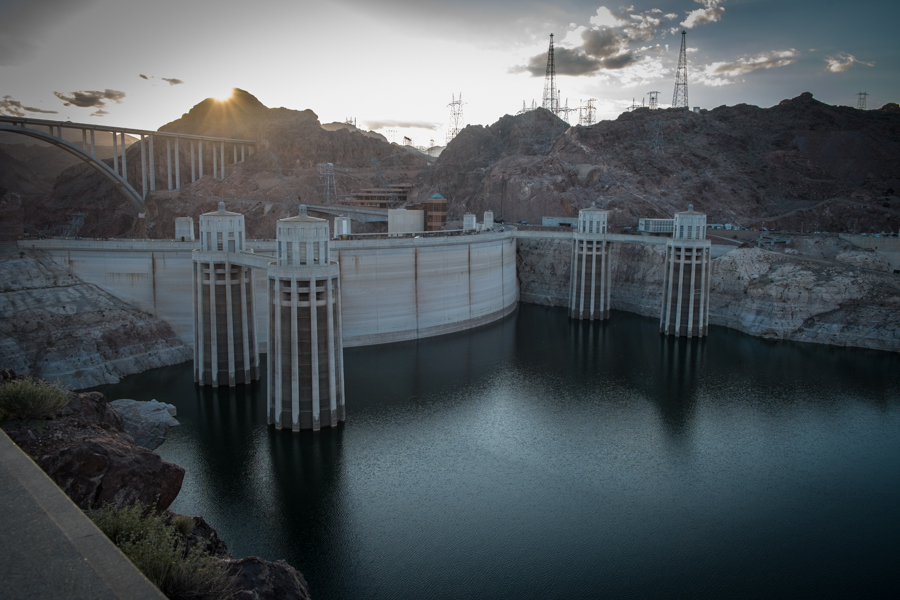
How Southern California quietly doubled its 2014 supply of Colorado River water

Resilience is a system’s ability to absorb a shock and still retain its basic structure and function.

Here, in one complicated table, is an example of the sort of institutional plumbing valves we need to build to increase resilience in the face of drought. It’s a table accounting for the Metropolitan Water District of Southern California’s diversions of Colorado River Water in 2014, water that provided a buffer against California’s extraordinary drought, and it shows how Met essentially doubled the amount of water it was able to take from the Colorado River in 2014 to meet the needs of coastal cities:


The key point to understand is that under the basic Colorado River water allocation rules, Met is entitled to 550,000 acre feet of water per year in a “normal”, non-surplus year, but last year it took more than twice that: 1.18 million acre feet. It did that by invoking a long list of policy widgets that allowed it to either pay for conservation in other places, or to conserve water in previous years that was banked in Lake Mead for later use.

  • 113,400 acre feet of water saved by lining canals in the Imperial and Coachella, the region’s two big ag water districts
  • 100,000 af saved by fallowing land in Imperial
  • 67,700 af saved by lining the All-American Canal
  • 338,500 af that had been saved through conservation efforts and banked in Lake Mead

Each one of these widgets is the result of the unglamorous work of building personal and institutional relationships among water users and agencies, many of them across the difficult ag-urban interface. They were built over time, and are now available when they’re needed. They have added resilience to the system.

Rhees to head USBR Upper Colorado office

The Bureau of Reclamation today named Brent Rhees to head its Salt Lake City-based Upper Colorado office:

As deputy regional director, Rhees managed several complex and high profile issues, including the Middle Rio Grande Endangered Species Collaborative Program, dam safety modifications, implementation of the Navajo-Gallup Water Supply Project, the Colorado River Salinity Control Program and completion of the Animas La-Plata Project.

The Colorado – as human construct, and face to flow

Water journalist Brett Walton wrote a lovely piece about finally meeting the Colorado River for the first time:

I have reported on the Colorado River for five years. I know it as a legal argument, as a topographic feature, as an obstacle, and as a matrix of charts, calculations, and grim projections. I’ve read its case law. I’ve driven across its two monumental dams, and I’ve admired its curves through an airplane window. Its history — legal, political, environmental — is as vivid to me as any river’s. Yet, until this week, I had never touched its waters.

Feet swollen from the 4,460-foot descent and body breathless but euphoric, I removed my shoes and walked across the soft sand of Pipe Creek beach. The water appeared emerald or olivine depending on the angle of the sun. I bent low, bringing my lips to the river and took a drink.

The Colorado River’s Parker valley – “the illusion of plenty”

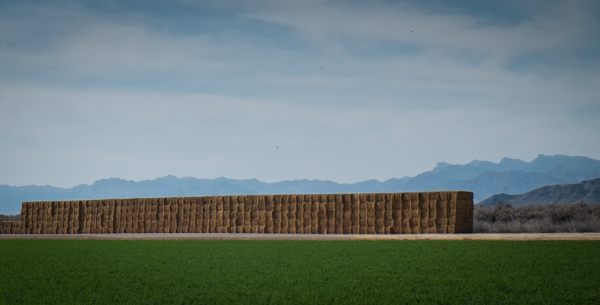
Alfalfa in the Parker Valley, Arizona, February 2015, by John Fleck

Alfalfa in the Parker Valley, Arizona, February 2015, by John Fleck

Parker Live, a news web site based in Parker, Arizona, seems to be engaging in a little bit of what Kathryn Sorensen calls “drought schadenfreude” here. Parker sits on the Colorado, at the head of a rich farming valley with some of the most senior rights on the river and big farming that has thus far been unfazed by drought. But there is a nervous tone to the thing, as if everybody’s looking over their shoulder:

It’s easy to forget that there’s a drought when Lake Havasu and Lake Moovalya are full of beautiful, crystal clear water and the bigger cities around us are lush with green lawns and landscaping. But that may begin to change soon….

The Parker valley, a rich agricultural area made possible by irrigation, is theoretically safe because it is part of the Colorado River Indian Tribes reservation and utilizes water rights owned by CRIT. But CRIT officials, speaking at the recent 150th year commemoration of the establishment of the reservation, are warning that their water rights will be under attack in the coming months and years. With water becoming a more precious resource, municipalities will be turning their attention anywhere they can get it. “The fight over our water lies ahead of us,” said CRIT Council Chairman Dennis Patch.

If you look at the picture, you’ll see that the desert here is never very far away.