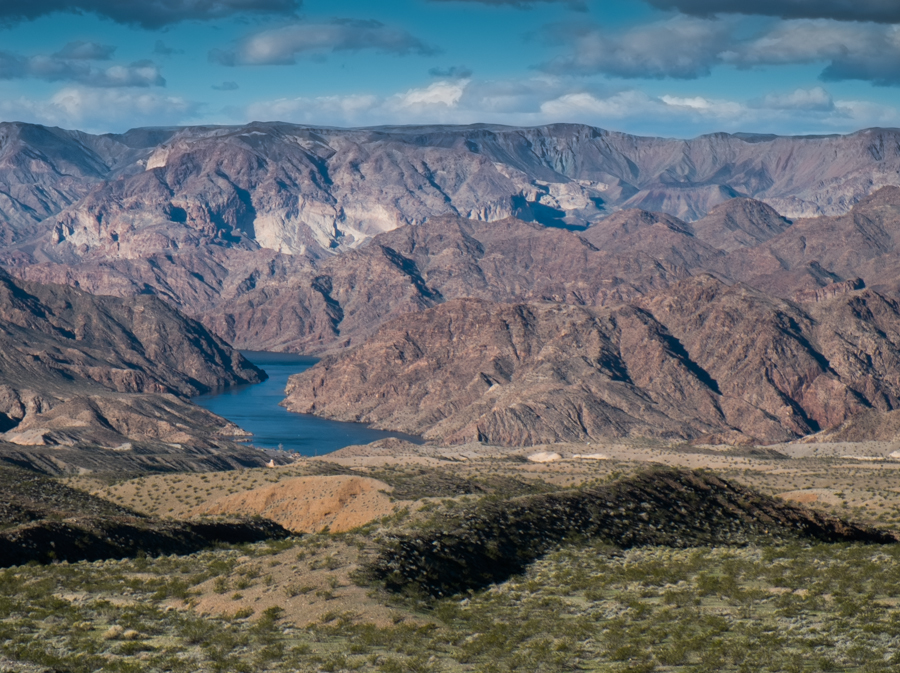
Sacramento Delta 101, and sharing water

Emily Green has written a great primer for Southern Californians on the Sacramento-San Joaquin Delta, the distant geography from which a big chunk of their water emerges:

[W]hat makes the Delta the Delta is water. After winter rain and snow, roughly half of California’s fresh water arrives in this quirkily engineered, mis-named place. Twenty five million Californians depend to some degree or another on freshwater from the Delta. Roughly a third of Southern California’s supplies originate here.

Emily is sneaky good. This is great geography and hydrology, but as she notes in the introduction, this is at heart about sharing water.

An economist’s view of California’s water problems

David Zetland:

[W]e see a total lack of vision or action to address the REAL drivers of scarcity — retail prices too low to notice, permissive overuse of groundwater, failing water-as-charity policies, and the blinders of a historic pretension that water rights are properly allocated (nope) in the correct volumes (NOPE).

Taken together, the excess of demand over supply and failure to address that fact means that California is heading the way of Sao Paolo, with twice the population at risk.

Much more, worth clicking and reading in full.

The economics of California’s drought

Jeff Michael at the University of the Pacific’s Center for Business and Policy Research summarizes data on economic recovery in California suggesting that the impact of the drought has not, at least to date, been as significant as some might suggest:

Focusing just on the Central Valley, there is a geographical pattern from north to south. The worst recovering areas are in the Sacramento Valley, while the strongest growth has been in the drought-stricken areas of the south Valley.


How much water does California have left? The other Jay disagrees

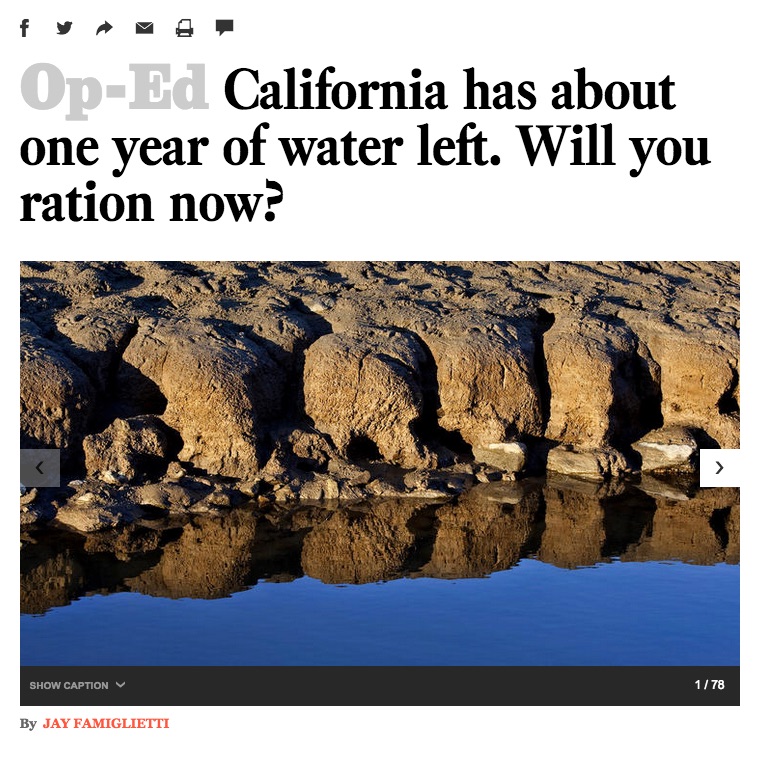
UC Davis’s Jay Lund responding to the flurry of news coverage surrounding Jay Famiglietti’s Los Angeles Times op ed:

While the drought is serious, a UC Davis scientist is casting doubt on Famiglietti’s dire prediction.

“It’s not the right impression that one more year of this and we’re toast,” UC Davis Center for Watershed Sciences Director Jay Lund said.

Lund studies the short and long term impacts of the drought on California’s water supply. He said Famiglietti’s forecast is the wrong one.

“There’s quite a bit more left in groundwater,” Lund said. “A little bit less every year because we’re pumping, trying to make up for the drought.”

On headlines

L.A. Times headline

L.A. Times headline

Here’s a reader quiz. Which headline would be more like to draw your click?

  1. “California has about one year of water left.”
  2. “California has about one year of reservoir storage and then we must rely even more on groundwater”

The first is the headline the Los Angeles Times put atop a Jay Famiglietti op-ed last Friday. It was a scary as hell, a click-generating machine. OMG, California’s gonna run out of water! Why aren’t we talking more about this?


Sunday evening, Jay seems to have grasped the misunderstanding the headline had caused. The body of the piece has a bit more nuance, noting that it’s talking about surface storage, and that this as a result placing growing pressure on groundwater, and Jay’s rightly concerned that overpumping of groundwater is a thing we ought to worry about:

That’s an OMG too, but the first version – “OMG, California’s about to run out!” is the one that has run amok, clickbait style, and it’s terribly misleading.

Not blaming Jay here. Many’s the time I’ve been bitten by a headline written by someone else atop my work. But it’s a reminder that communicating about water policy is hard.

The problem with Victor Davis Hanson’s case for California’s water policy failures

In a twitter discussion this morning, Brian Jordan shared a telling graphic that exposes the problems with Victor Davis Hanson’s recent City Journal essay about California’s water problems. Hanson’s argument is that California abandoned a dam-building program that, had it been pursued, would have provided the necessary storage to meet needs in this year of drought:

Had the gigantic Klamath River diversion project not likewise been canceled in the 1970s, the resulting Aw Paw reservoir would have been the state’s largest man-made reservoir. At two-thirds the size of Lake Mead, it might have stored 15 million acre-feet of water, enough to supply San Francisco for 30 years. California’s water-storage capacity would be nearly double what it is today had these plans come to fruition.

Hanson’s reflexive culture wars rhetoric makes him painful to read (“All the while, the Green activists remained blissfully unconcerned about the vast immigration into California from Latin America and Mexico that would help double the state’s population in just four decades”, capitalization in the original), but if you peel back what he’s saying, he’s really making an unexamined argument for the use of what David Zetland (pdf) calls “other people’s money” in providing water for his beloved agricultural communities in California’s Central Valley.

What he doesn’t say (and he really can’t, given the free market values that are central to his world) is that the dams whose lack he bemoans would have to have been built with “other people’s money” – the taxpayers of the state of California or the federal government. This is really expensive capacity, far beyond the financial reach of the farmers who would be using the water. And once you ask for other people’s money, their values come into play. (This would be the point, if I were adopting Hanson’s culture wars rhetoric, for the obligatory “welfare farmer” reference, but I don’t think that’s right, and I think neither that nor his “Green” and nativism frame are useful or correct – better to assume good faith on all sides.)

Jordan’s graphic of expanding storage capacity in Southern California’s Metropolitan Water District exposes the hole in Hanson’s argument:


Hanson notes Southern California’s substantial water storage reserves, but is blind to the reason they exist.

Met recognized the need for storage to provide, in drought, a more reliable supply of water for Southern California. Met spent its own money – billions over the years, according to Jordan, including hundreds of millions per year recently – to built the storage buffer that has enabled it to weather the current drought.

There are two important points here.

First, it wasn’t “other people’s money”. Metropolitan Southern California largely ponied up the cash to meet its own water security needs. This goes back to the construction of the Colorado River Aqueduct, which L.A. paid for itself.

Second, municipal users can afford to pay a lot more for water security. This is very expensive stuff, and I don’t think we’ll every see ag communities able to afford that level of reliability on their own. To get it, they need other people’s money, and at that point other people’s values come into play.
Overheard on the bus: Beowulf

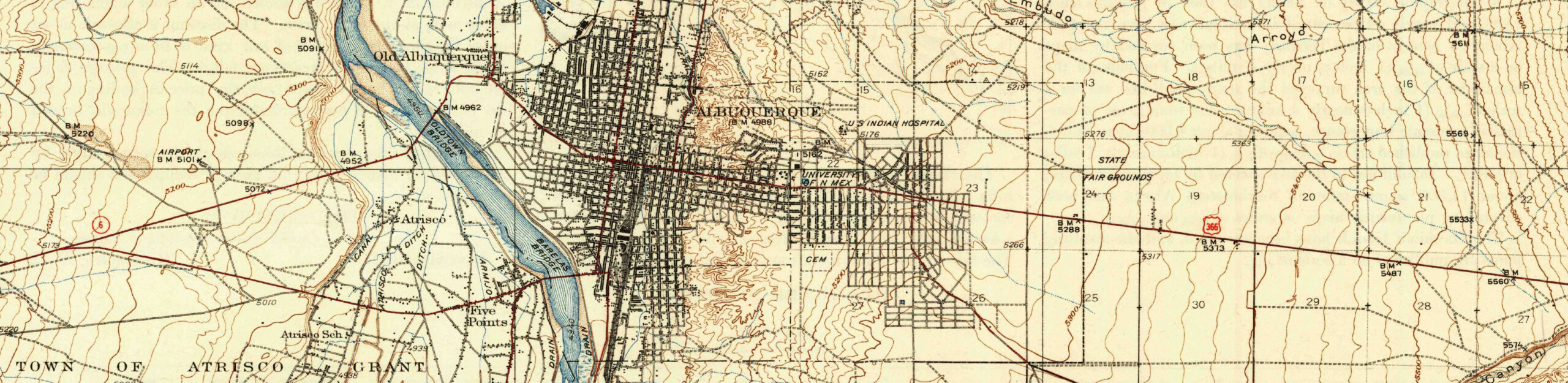
Overheard on the 766 Rapid Ride bus as it pulled into downtown Albuquerque….

Guy standing in the aisle: “Is that a good book?”

Guy seated: “I don’t know, I haven’t read it yet.” Pause. “It’s as old as fuck, though.”

I look over to see the guy sitting across the aisle from me has a beat up paperback Beowulf. “It’s a poem,” the guy says, opening it randomly, pointing to text. “Old English” – he points to the left page, then to the right, adds – “translation”.

They both got off the bus.

Tree rings in the Rolling Stone

Would I be right to guess that this is the first time tree rings have been in the Rolling Stone?

“It was like looking through a telescope into the future to see how forests would respond, and it felt awful,” Williams says. “The result was totally unimaginable: wildfires, bark beetles, a huge reduction in forest growth, massive mortality. In the afternoons, I’d go on jogs on the trails outside my office and take mental inventory of who was dying and who was living. All over New Mexico, trees keeled over. It was like they’d been transported onto a new planet where climate is entirely different than what they were evolved for.”

Except I realize on second reading that, despite being essential to the story of Park Williams’ groundbreaking work on climate and our future forests, tree rings didn’t get a direct mention.

So you should probably still click on this link and buy my book.

In California, a new face of water conservation?

One way to conserve water is to pay people to not use it.

That’s not the normal way of talking about water markets, but that’s one way of framing what’s going on right now between Southern California urban water users and rice farmers up north:

With the drought stretching into its fourth year, a heavyweight water agency from Los Angeles has come calling on Sacramento Valley rice farmers, offering up to $71 million for some of their water.

The price being offered is so high, some farmers can make more from selling water than from growing their rice.

Users (in this case rice farmers) conserve in a dry year and are compensated. Overall system water use (by “system” I’m talking about the state’s interlinked artificial watershed) is reduced. The shock that might otherwise happen if the shortage happened arbitrarily (one or the other parties to this transaction simply running out of water) is avoided.

Potential uncaptured externalities: the people who sell farm equipment to the rice farmers, and their employees. This is not without negative spillovers.