water in the desert

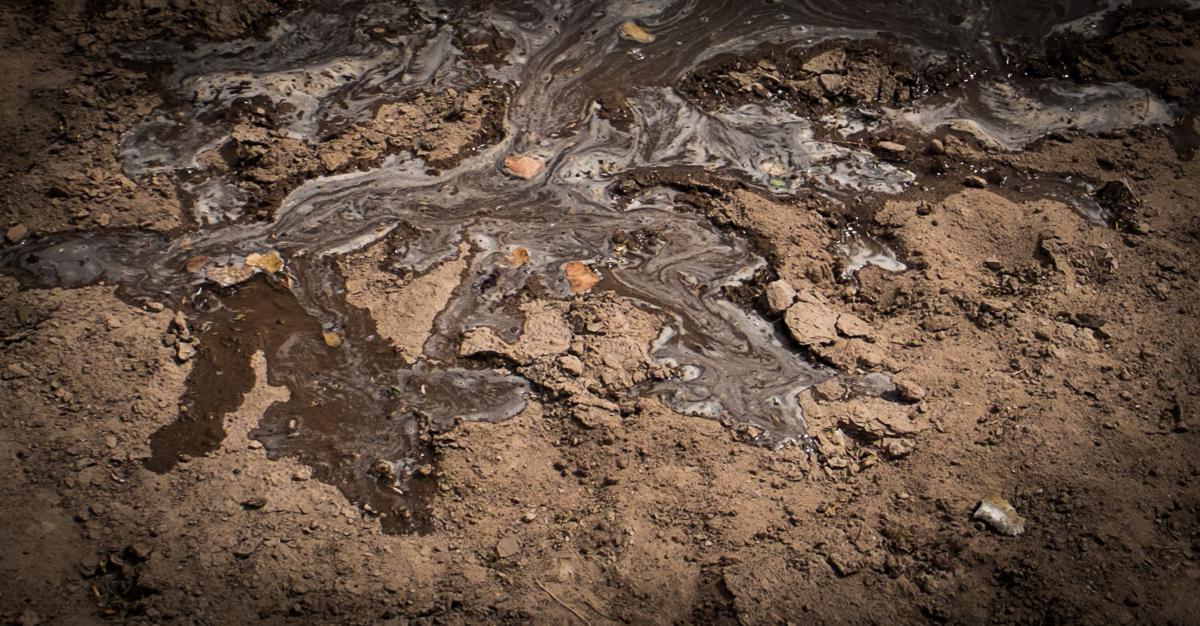
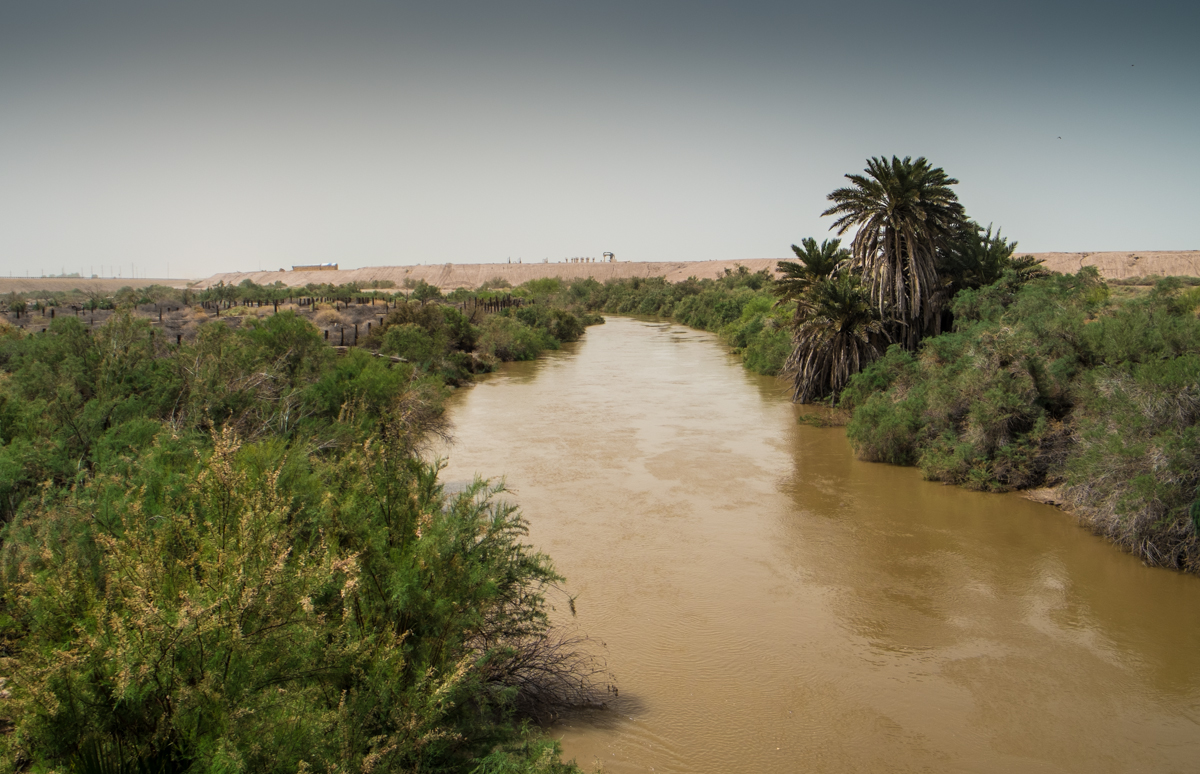
New River outside Brawley, Calif., March 2014, by John Fleck

New River outside Brawley, Calif., March 2014, by John Fleck

But man has in measure changed the desert conditions by storing the waste waters of the mountains and reclaiming the valleys by irrigation. His success has been phenomenal. Out of the wilderness there have sprung farms, houses, towns, cities with their wealth and luxury. But the cultivated conditions are maintained only at the price of eternal vigilance. Nature is compelled to reap where she has not sown and at times she seems almost human in the way she rebels and recurs to former conditions. Two, three; yes, at times, four years in succession she gives little rain. A great drouth follows. Then the desert breaks in upon the valley ranches, upon the fields of barley, the orchards of prunes and peaches and apricots. Then abandoned farms are quite as plentiful as in New England and once abandoned but a few years elapse before the desert has them for its own.

John Van Dyke, The Desert, 1901

Canoeing the Rio Grande pulse flow

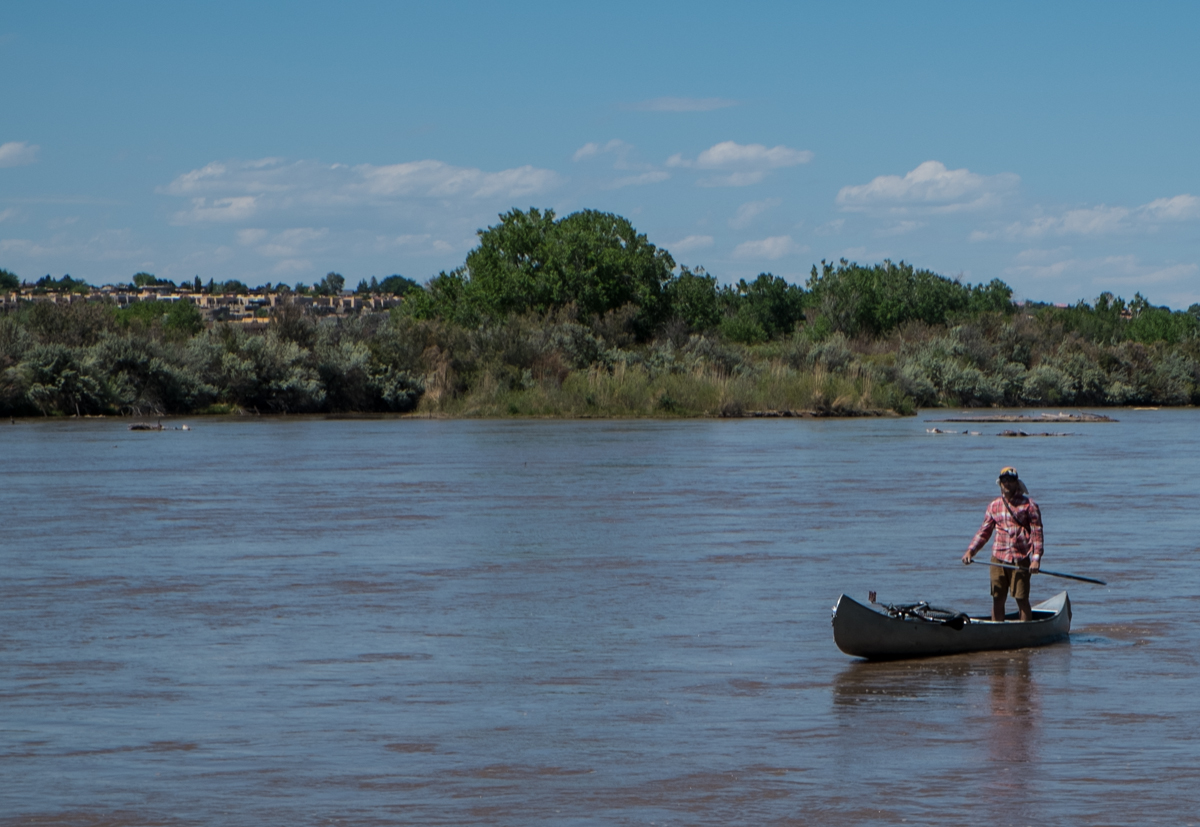
This guy paddled past today as I was standing with friends on the bank of the Rio Grande, watching the high flows of this week’s environmental pulse flow through central New Mexico.

Guy with canoe, bicycle,  trailer, on the high flow of the Rio Grande, May 10, 2014

Guy with canoe, bicycle, trailer, on the high flow of the Rio Grande, May 10, 2014


If you look closely, you can see a bicycle in the front of his canoe. As he rode by, he explained that when he gets to the takeout, he puts the canoe on a trailer behind the bike and tows it back up to where he left his car.

There’s a bike trail along the river the whole way. This seems quite clever.

Rio Grande pulse flow

I had work to do this morning, but this happened and I couldn’t very well not go watch:
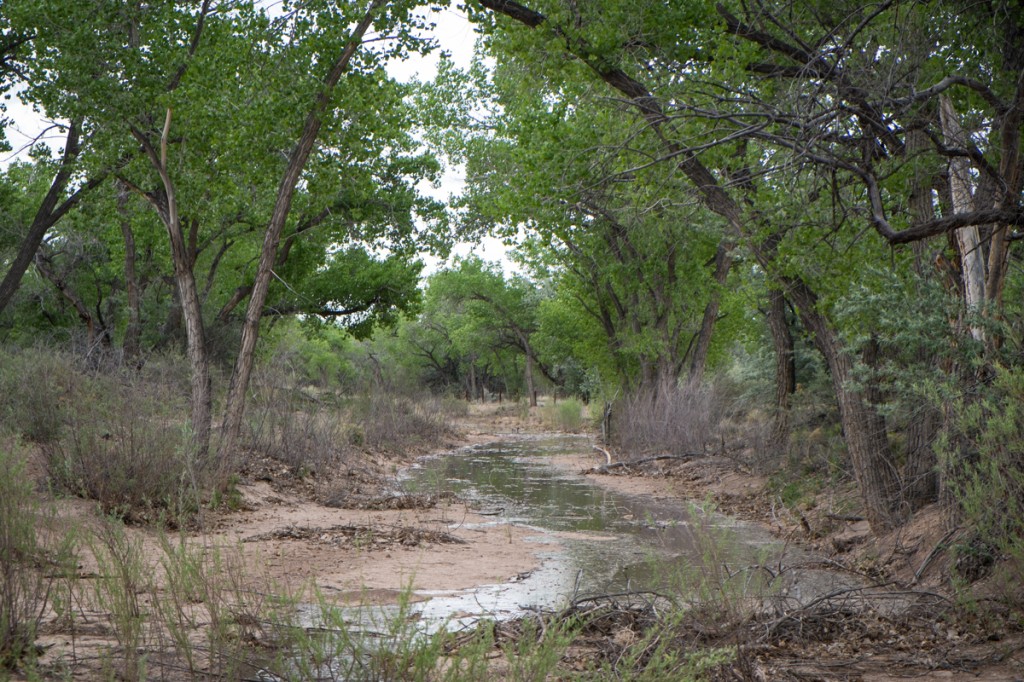
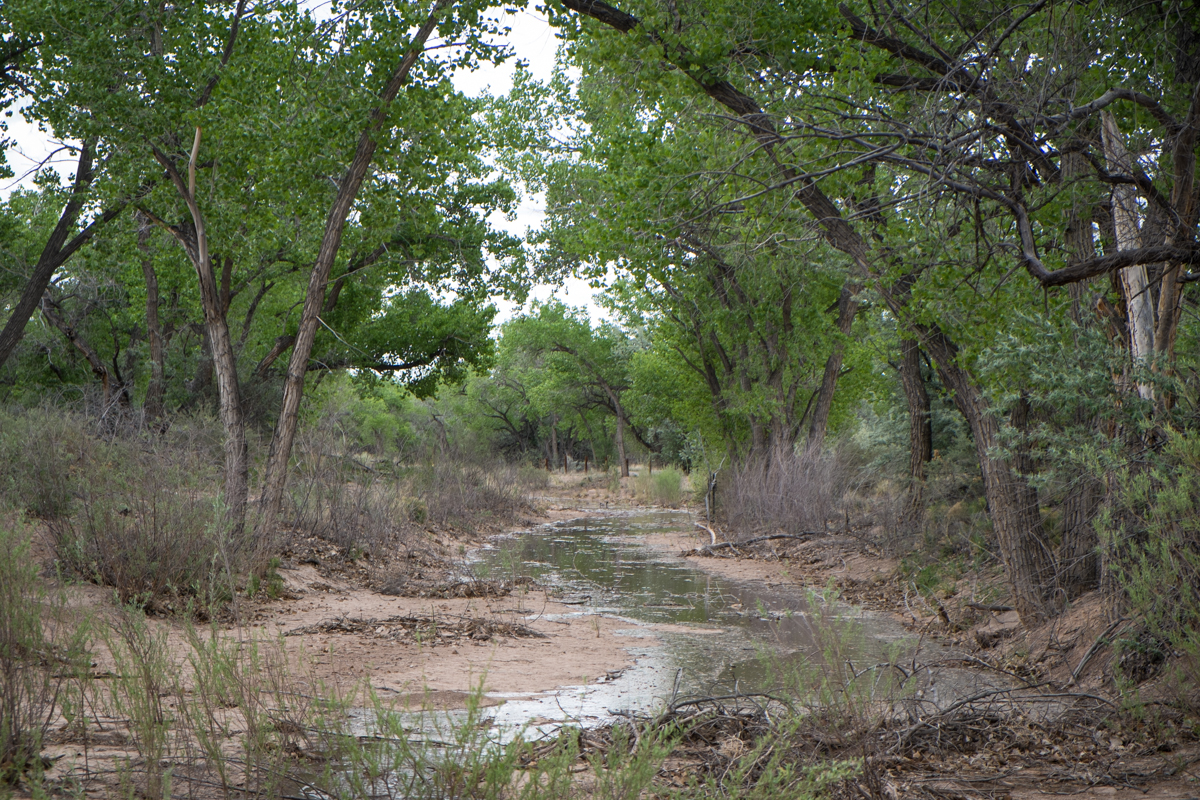
Rio Grande pulse flow water in silvery minnow channel, Albuquerque, May 2014, by John Fleck

Rio Grande pulse flow water in silvery minnow channel, Albuquerque, May 2014, by John Fleck

It’s an environmental pulse flow on the Rio Grande through Albuquerque, creeping down a channel built in 2008 to provide spawning habitat for the endangered Rio Grande silvery minnow.

This is the fourth consecutive very dry year on the Rio Grande here, with March-July runoff at Otowi, the gauge that measures flow into the central New Mexico Rio Grande Valley, forecast at just 29 percent of the 1981-2010 average. One of the keys to spawning and therefore survival of the silvery minnow (our key endangered critter) is a spring pulse of runoff, so water managers pulled off some clever accounting tricks to conjure up 18,000 acre feet of water to give the minnows an extra boost.

It’s not a huge amount of water, but it’s nearly a 10 percent boost, so it’s not nothing, either.

The release from Cochiti Dam, the flood control structure at the head of the middle valley, started at 10 a.m. yesterday, and the water hit the Albuquerque reach of the river after midnight. I went out this morning only intending to give the flows a quick look, because I had work to do. But, oh my, a river.

There’s an old farm channel in the woods along the river near our Rio Grande Nature Center that’s been widened and adapted to take on water with moderate spring flows, and when I arrived this morning the water was just beginning to creep down its sandy bed. It was very dry – as near as I can tell from the gauges, it likely hasn’t flowed since mid-September.

I ran into Mickey Porter, a fish biologist with the Army Corps of Engineers, who was setting out temperature sensors. (More on the work blog.) He and his colleagues will be out monitoring over the next few days, and he told me he thinks we could see spawning by tomorrow afternoon or Saturday.

This has a lot of similarities to the Minute 319 Colorado River pulse I’ve written so much about – a small amount of water but a very rich and complex deal to pull it off. Similar to the Colorado deal, we won’t know until later, but I suspect that the institutional piece – representatives of all the agencies involved collectively figure out how to pull this off – that may be the more important result of the effort. Another similarity – how absolutely mesmerizing it is to watch water creep slowly across dry land. One more picture:
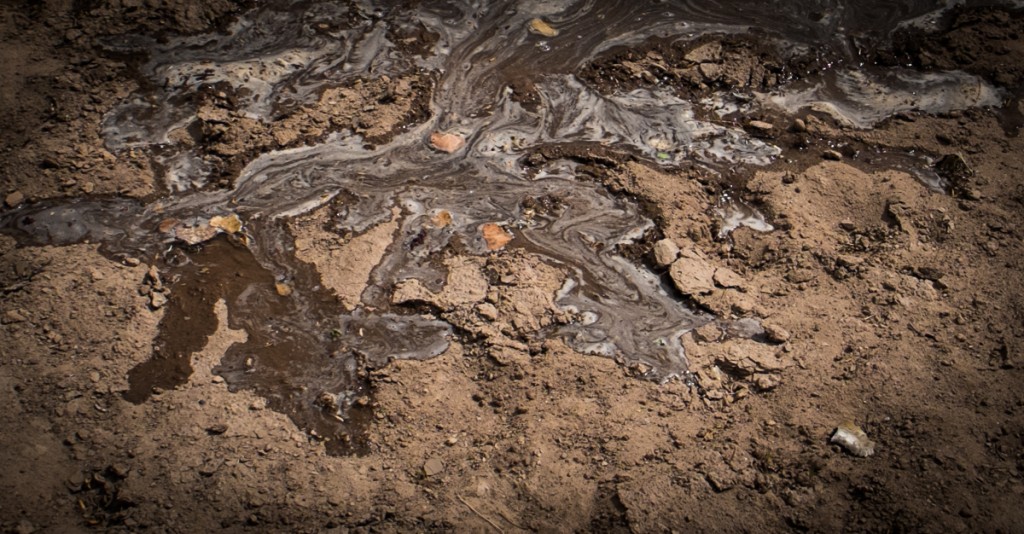
Water, creeping down the silvery minnow channel, Albuquerque, May 2014, by John Fleck
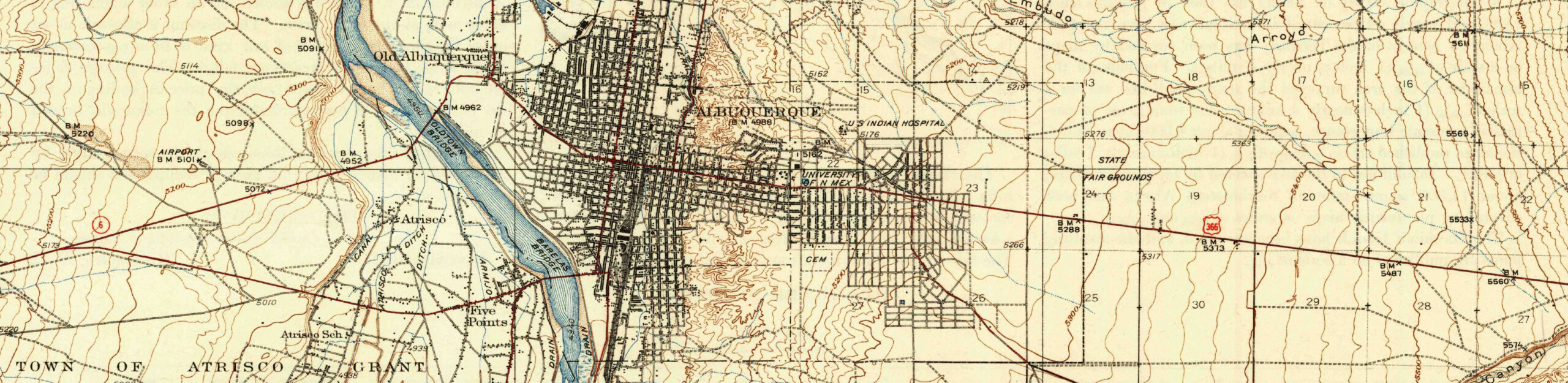
Water, creeping down the silvery minnow channel, Albuquerque, May 2014, by John Fleck

Sandra Postel on new Colorado River initiative

Sandra Postel has some interesting insights regarding the proposed Colorado River System Conservation Program:

$11 million is a drop in the bucket of what is needed to achieve meaningful conservation savings in the Colorado River Basin.  And each of the four cities has substantially more conservation they can do within their own borders.  But what is unique about this program is its “we’re in this together” approach….

By collaboratively creating an incentive for basin-wide conservation, the big four urban water users and the Bureau of Reclamation have an opportunity to bring more resilience and adaptability to the drought-stricken, overtapped Colorado River.

Stuff I wrote elsewhere: the National Climate Assessment

From the morning paper:

New Mexico’s current drought, with dwindling water supplies and increasing wildfire risk, is a taste of our future under climate change, according to a sweeping new federal report released Tuesday.

While climate’s natural ups and downs are playing a major role in our current drought, rising greenhouse gases increase the odds of conditions like New Mexico is now experiencing, according to the National Climate Assessment.

Getting my own little pulse flow

It’s lacking the drama of the March Minute 319 pulse flow on the Colorado River, but I’m getting my own little pulse flow on the Rio Grande here in Albuquerque beginning later this week:

Beginning Wednesday, central New Mexico will get its river back – for a week.

The anemic Rio Grande, parched by drought, will get a shot of extra water, a simulated spring runoff peak, to try to nurse along the dwindling population of endangered Rio Grande silvery minnows.


JR’s garden

I like my friend JR’s attitude toward gardening in the desert:

I water almost nothing here. I do throw yesterday’s left over water from Cooper’s bowl on the autumn sage. It keeps the red blossoms coming and the hummingbirds like that. Some days the birds get the left over water. The New Mexico locust gets dishwater. That’s it. They grow slowly, but the Arizona ash, the New Mexico olive, the Apache plume, the Mongolian whatever it is, the lilac and the rest seem to do fine on their own.

With Colorado River water, growing Brussels sprouts

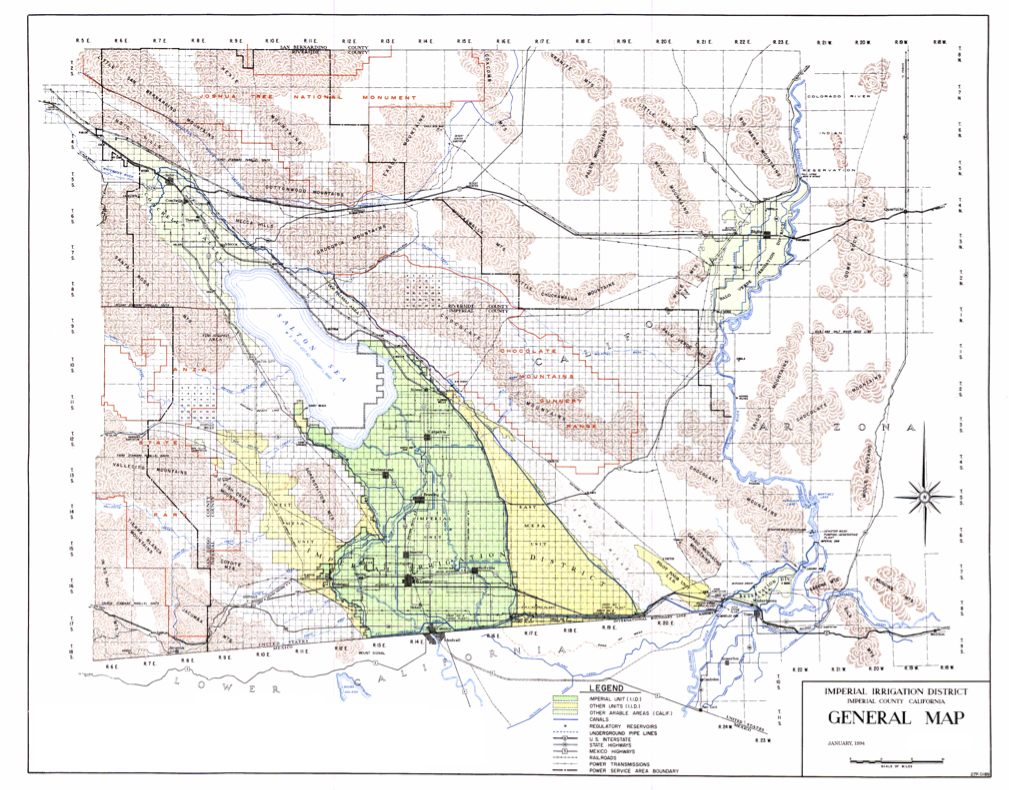
Imperial Irrigation District map

Imperial Irrigation District

Imperial County in the desert of southeastern California is the nation’s leading producer of Brussels sprouts.

According to the newly released U.S. Department of Agriculture Census of Agriculture, there were 2,237 acres of Brussels sprouts in Imperial in 2012, growing on 6 farms. For reasons unknown to me (c’mon, you’ve tried ’em, right?) Brussels sprouts are growing in popularity, with total U.S. acreage up from 3,874 in 2007 to 7,586 in 2012, most of them shipped direct to market. In 2007, Brussels sprouts acreage in Imperial on just two farms was so small that it wasn’t disclosed. Lissa points out that Trader Joe’s sells Brussels sprouts on the stalk as a decorative item. Maybe that explains the Brussels sprouts boom?

I say this not because of a particular fascination with Brussels sprouts (c’mon, you’ve tried ’em, right?), but rather because if I want to understand water in the Colorado River Basin, I have to understand farm water use in the Colorado River Basin. If I want to understand farm water use in the Colorado River Basin, I have to understand the Imperial Valley. In 2012, Imperial’s consumptive use of Colorado River water was 2.9 million acre feet (source – pdf). By comparison, agriculture’s consumptive use in the entire Upper Colorado River Basin in 2012 was 2.9 million acre feet (source – pdf).

Some other interesting Imperial County data points from the Census of Agriculture:

  • Total land in farms – 515,783 acres
  • Total irrigated land – 455,033 (interestingly, that’s up from 376,535 in 2007, a 21 percent increase – what’s up with that?)
  • Total market value of agricultural production: $1.9 billion, up from $1.3 billion in 2007
  • Net cash farm income, after expenses: $262 million, up from $195 million in 2007, a 34 percent increase
  • Total vegetable acreage (including Brussels sprouts): 126,183 acres, up from 83,486 in 2007
  • Total forage acreage (alfalfa and related munchies for cows and such): 246,400, up from 229,569 in 2007, a 7 percent increase.

You can see that Brussels sprouts was a bit of misdirection here. The real lead, if I were to write a news story about this data, is that in the midst of a deep drought gripping the Colorado River Basin, the farming region that uses the biggest chunk of the river’s water has expanded its production.

Maybe that’s the lead. But here’s another data point, from the U.S. Census Bureau’s 2012 American Community Survey: in 2012, per capita income in Imperial County was $14,833, just a hair above half the California statewide number of $28,341 and the poorest county in the state by a significant margin. And while farm income and irrigated acreage and Brussels sprouts are up, Imperial County per capita income is down from $14,996 in 2007. This isn’t a simple story.