Climate change in the West: it’s not just about more or less rain

Ben Cook at NASA’s Goddard Institute for Space Studies has a new paper that offers a reminder of why the impact of climate change on our ecosystems and water supplies involves more than “will it rain less”?

In some sense this is an old and obvious point, which I link here just to repeat said old and obvious point. Drought is a combination of how much rain and snow falls from the sky and then what happens once it hits the ground. If it’s warmer, more evaporates, and it’s the net left behind after the puts and takes that defines our available water supply and drought or lack thereof. Here’s Cook:

For many regions, focusing on the precipitation response alone will be insufficient to fully capture changes in regional water resources such as soil moisture, runoff, or reservoir storage. Instead, increased evaporative demand will play a critical role in spreading drought beyond the sub-tropics and into the Northern Hemisphere mid-latitudes, regions of globally important agricultural production.

But Ben’s a smart scientist who is doing more than what I usually do here, which is simply restate the obvious. The new in the paper is the use of the latest round of models, known as CMIP5, along with a couple of different measures of dryness, to better flesh out the picture.

There’s been some argument over whether the Palmer Drought Severity Index (the most common measure for this sort of thing) is the best way to analyze future drought scenarios, so Cook and colleagues offer up alternatives, including the Standardized Precipitation Index and a look at “vapor pressure deficit” (a critical measure for thinking about the future of our forest – see Park Williams on this):

PDSI and SPEI projections using precipitation and Penman-Monteith based PET changes from the GCMs generally agree, showing robust cross-model drying in western North America….

update: Dr. Cook kindly shared this link to an ungated copy of the paper (extremely large pdf)

Drought means we should do that thing I already knew we should do

Mark Lubell at U.C. Davis has a fascinating post about the history and politics of drought:

[N]early every scientist, commentator, and politician is using drought to make some call for their preferred political change. Regulate groundwater. More storage. Build the twin tunnels. Pass the long-delayed water bond.

So given that we’ve been here before (click through for useful historical examples), did the hair-on-fire response to previous drought create water systems in California that are more resilient and able to handle the current one?

Therefore, the second key question is whether or not the policy changes stimulated by past droughts have actually improved water management in California. Have we learned anything from our past experiences? Stated more precisely, the question is how much damage will California suffer, given the same level of drought?

I would argue that Southern California’s relative stable situation supports a “yes” answer to the question, but I’d defer to people in the midst of the California drought for a more informed response.

Here’s an upside to the decline of Lake Mead I never thought of

While Lake Mead’s drawdown might be viewed negatively from a perspective of maintaining full-pool water storage, it has re-exposed a vast area of new terrestrial habitat increasingly colonized by native species as invasive species abundance declines through time.

That’s from “Plant colonization and soil properties on newly exposed shoreline during drawdown of Lake Mead, Mojave Desert,” by Engel et al., in the latest issue of Lake and Reservoir Management

The origins of the “practicably irrigable acreage” standard, part II

tl;dr – It wasn’t the U.S. government “reserving” water rights on behalf of the Indians. It was the Indians keeping the rights they already had.

Longer version: After I last took a stab at writing about the “practicably irrigable acreage” standard that sort of underpins U.S. Native American water rights in the west, a member of the brain trust sent me a fascinating law review article by Dana Smith that showed me I haven’t been thinking about this quite right.

Interestingly, my confusion about the underlying issue seems to be the same as that held by Simon Rifkind, the U.S. Special Master in the famous Colorado River case of Arizona v. California – the place the PIA standard was first made explicit. (Can I blame Rifkind?)

The PIA standard is rooted in the U.S. Supreme Court’s decision in the case of Winters v. United States, which basically said that Indian communities are entitled to the water rights necessary to make a living on their land. Importantly, the entitlement comes with a priority date (critical under the doctrine of prior appropriation used to allocate water in the West) equal to the date their reservation was created. The term for this is “reserved rights.” Here’s how Rifkind put it:

I have concluded that the United States effectuated the intention to provide for the future needs of the Indians by reserving sufficient water to irrigate all of the practicably irrigable lands in a Reservation and to supply related stock and domestic uses.

Smith argues that Rifkind is not quite getting this right. It’s not the U.S. government doing the reserving, Smith argues:

[T]ribes have a right to water not because it was given to them when they were put on reservations, but because the tribes kept their right to use water when they ceded parts of their land.

Smith points out that in the Winters case, the U.S. Supreme Court relied for this bit of jurisprudence on a case three years earlier, that of the United States v. Winans. Winans involved not water but fishing – in particular fishing rights under the 1859 treaty between the Yakima Nation and the United States:

Winans involved the interpretation of an 1859 treaty between the Yakima Nation and the United States in which the Yakima tribe ceded their interest in a specified parcel of land, while reserving the right to fish “at all usual and accustomed places,” even off of their new reservation land. The United States brought the action on behalf of the Yakima Nation to enjoin non-Indians from obstructing the Yakima’s off-reservation fishing rights. In holding that the State of Washington had no authority to regulate Indian fishing rights, the Court relied heavily on the canon of construction applied to Indian treaties that treaties are to be construed as the Indians would have understood them. Since the right to fish was one “not much less necessary to the existence of the Indians than the atmosphere they breathed,” the treaty could not have been understood by the Indians as limiting their right to fish. Instead, the treaty was to be interpreted “not [as] a grant of rights to the Indians, but a grant of rights from them–a reservation of those not granted.”

In Winters, the court concluded the same principle applied to water. Here’s how the great western water law scholar David Getches put it (pdf):

(Winters) preserves tribal water rights that were not expressly ceded by the Indians or extinguished by the government…. [T]he Indians’ right to sufficient water to fulfill the intent of their agreement survived the cession of land.

This question of who’s doing the reserving seems a critical distinction. If it’s the U.S. government doing the reserving, then there’s an argument that one needs to look at the purpose for which the “reservation” (by “reservation” I here mean the land set aside for the Indians to live on) was created, which Rifkind did. If the purpose was to turn the Indians into an agrarian people, then an “irrigable acreage” standard might make sense. But if it’s the Native American community simply reserving their own previously existing right to water, then shouldn’t it be up to them to decided what to do with that water? Smith writes (the embedded quotes are from an Arizona court decision that concluded PIA is too narrow):

(PIA) forces tribes to pretend to be farmers, which is especially counterproductive in an era where large agricultural projects are risky, and according to some, no longer economically feasible in the West. Additionally, “a permanent homeland requires water for multiple uses, which may or may not include agriculture.” The PIA standard encourages tribes to create unrealistic irrigation projects and deters consideration of the actual water needs of the reservation.
Twain Whiskey-Water Quote Watch, Arizona Supreme Court edition

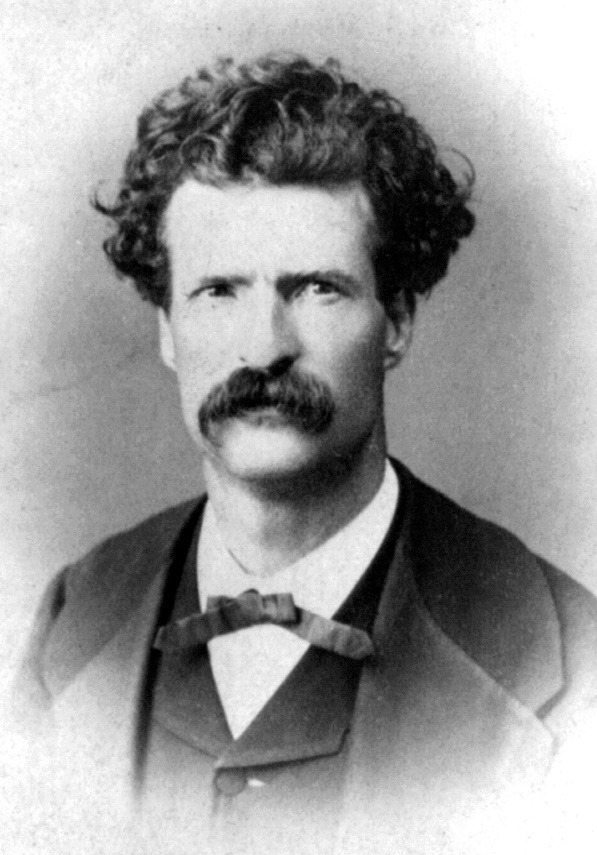
Mark Twain, alleged to have known what whiskey was for, water not so much

Mark Twain, alleged to have known what whiskey was for, water not so much

In 2001, the Arizona Supreme Court at least had the wisdom to acknowledge that Mark Twain might never have said the thing about whiskey and water and drinkin’ and fightin’. But the court used it anyway:

We wish it were possible to dispose of this matter by establishing a bright line standard, easily applied, in order to relieve the lower court and the parties of having to engage in the difficult, time-consuming process that certainly lies ahead. Unfortunately, we cannot.

In a quote attributed to Mark Twain, it is said that “in the west, whiskey is for drinkin’ and water is for fightin’.“Nicholas Targ, Water Law on the Public Lands: Facing a Fork in the River, 12 Nat. Resources & Env’t 14 (Summer 1997). While this remains true in parts of Arizona, it is our hope that interested parties will work together in a spirit of cooperation, not antagonism. “Water is far too ecologically valuable to be used as a political pawn in the effort to resolve the centuries-old conflict between Native Americans and those who followed them in settling the West.” Rusinek, supra, at 412. This is especially so now, when the welfare and progress of our indigenous population is inextricably tied to and inseparable from the welfare and progress of the entire state. (emphasis added)

Alex Breitler’s backstory

Stuff I wrote elsewhere: decision-making under scientific uncertainty

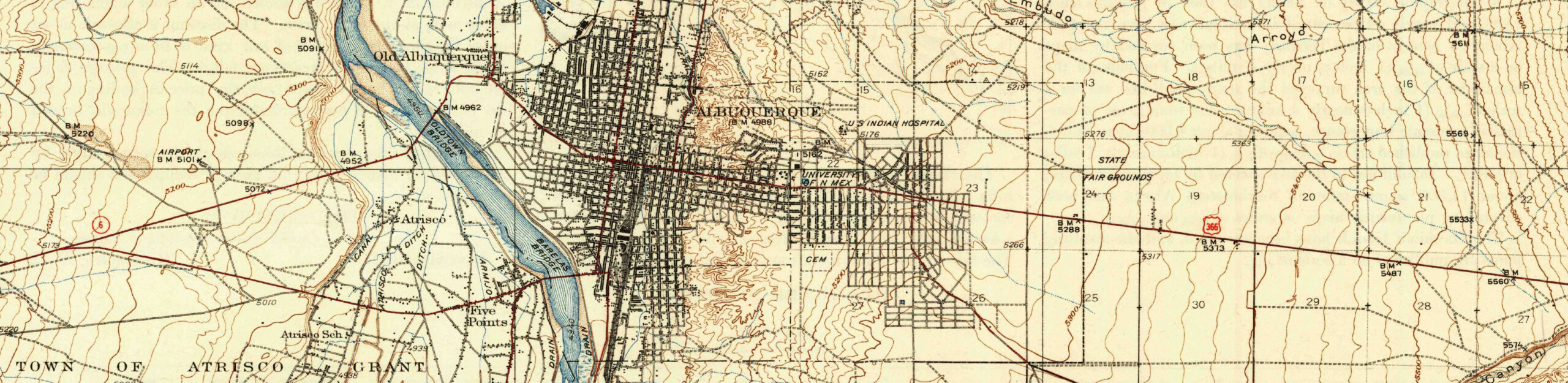
Here in Albuquerque, we have a really big groundwater contamination problem under and adjacent to the Air Force base on the city’s south side. It is a textbook model of decision-making under scientific uncertainty: how long will it take to reach the nearest drinking water wells?

I’ve seen an increasing confusion among the public, politicians and policymakers as detailed modeling efforts come up with different answers to the question. In a story for this morning’s newspaper, I turned to Dan Sarewitz for help:

The public and decision-makers need to realize that the uncertainties are real, involving questions to which science cannot give crisp answers, said Daniel Sarewitz, an Arizona State University researcher who studies the use of science in political and public policy decision-making. “What they have to ask themselves is how much risk they are willing to put up with,” Sarewitz said.

the fruit frost report

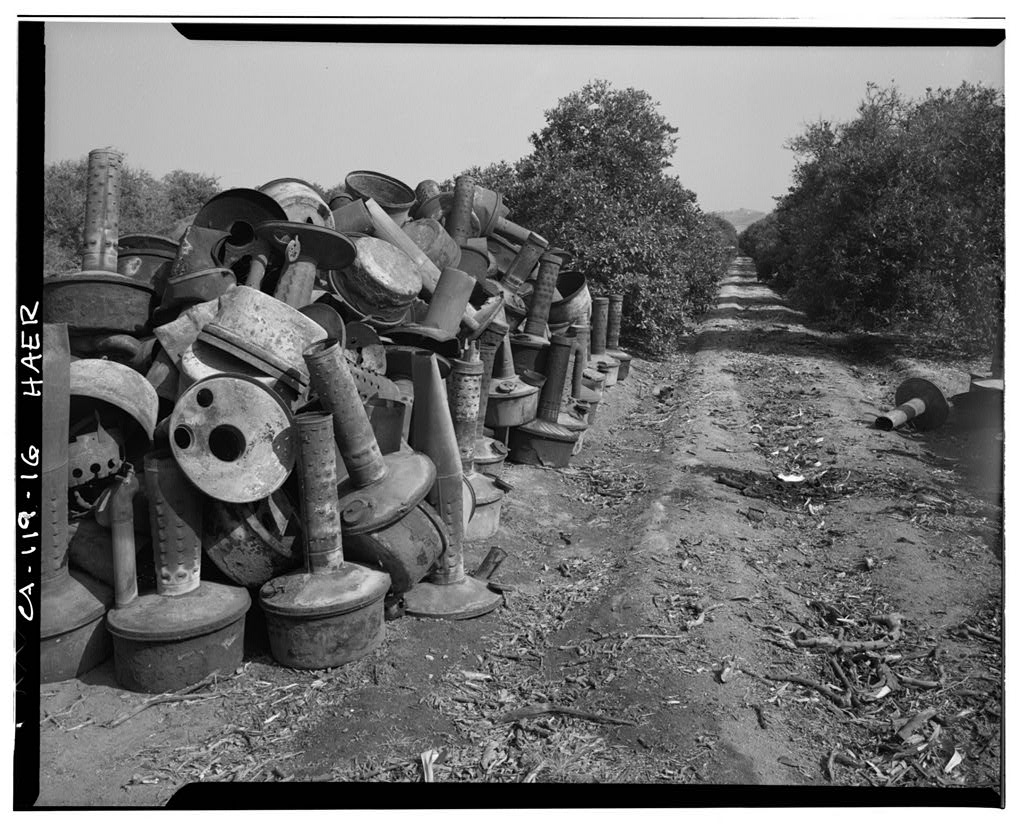
 Smudge pots in orange grove on Victoria Avenue, Arlington Heights Citrus Landscape, Southwestern portion of city of Riverside, Riverside, Riverside County, CA, photo by Brian Grogan, courtesy Library of Congress

Smudge pots in orange grove on Victoria Avenue, Arlington Heights Citrus Landscape, Southwestern portion of city of Riverside, Riverside, Riverside County, CA, photo by Brian Grogan, courtesy Library of Congress

My first memory of weather is the fruit frost report.

I’m not sure how old I was, certainly younger than five. It was the early ’60s, in the big living room of Dick and Elizabeth Fleming’s, a grand old farmhouse in the middle of an orange grove in Riverside, in southern California. The Flemings were my father’s first and oldest California friends. We’d go over for dinner, and then Dick and Elizabeth Fleming and Bob and Elizabeth Fleck would play bridge, but everything would stop for the fruit frost report.

I think it was at 6 p.m., and I think it was on KFI 640, the big 50,000-watt AM radio station out of Los Angeles. We’d stop, and Dick would listen carefully to a voice that was very distant and important, and I didn’t fully understand the details, only the importance. Freezing is bad for citrus, but the farmer is armed with tools to fight it off – smudgepots and wind machines. I don’t think we were ever there on the night of an actual freeze, but the quiet importance of the ritual left an impression on my young mind.

I wish my modern self had a chance to sit down with Dick, so he could explain his life in citrus.

How much should Rio Rancho charge for this water?

Rio Rancho, New Mexico, has a dilemma.

My colleague Rosalie Rayburn has been writing about the trials and tribulations of the privately owned Chamisa Hills Golf and Country Club, which has had a lot of both.

In her latest story, Rosalie describes

… a recent request by potential Chamisa Hills buyers Bob Gallagher and Jhett Browne to consider a proposal to set the rate at 20 percent of the potable irrigation rate, or $1.09 per 1,000 gallons, effective July 1.

They asked that the rate remain at 20 percent of the potable rate as those rates increase.

At present, Chamisa pays 47 cents per 1,000 gallons and faces an increase to $3.28 per 1,000 on July 1 when its contract expires, under a rate schedule councilors approved last year.

Gallagher and Browne say they can’t operate the golf course economically at that rate.

By way of background, Rio Rancho currently faces a long term need to buy agricultural water rights as offsets for the groundwater it pumps, because of the way groundwater pumping (which is a junior right) impacts flows in the river (which provide water to senior rights holders).

The opportunity cost associated with the golf course water is therefore the loss of the chance to use the golf course water as an offset, either through aquifer storage and recovery or direct discharge to the Rio Grande.

How should Rio Rancho determine what price to charge the golf course for its water?