If the plagiarism is inaccurate, is it still plagiarism?

A fresh-looking piece of Colorado River journalism made the rounds this week, by Frances Weaver at The Week, about the Colorado River’s current decadal-scale drought. But some of the language had a familiar ring to it. Here’s Weaver:

The most immediate cause is 14 years of drought unrivaled in 1,250 years.

Here’s Michael Wines in the New York Times from January:

The sinuous Colorado River and its slew of man-made reservoirs from the Rockies to southern Arizona are being sapped by 14 years of drought nearly unrivaled in 1,250 years.

So if you drop the “nearly”, is it no longer plagiarism?

Here’s Weaver:

Arizona farmers have started using laser technology to keep their fields table flat and reduce runoff.

And Wines:

Arizona farmers reduce runoff, for example, by using laser technology to ensure that their fields are table flat.

It’s not just Wines. Here again is Weaver:

For 6 million years, the Colorado River flowed southwest from the snowy Rocky Mountains to a sodden, 2-million-acre-wide delta in Mexico, finally emptying its 14 million acre-feet of freshwater into the Sea of Cortez.

The eerily similar doppleganger here, by Rachel Nuwer in the New York Times:

For six million years, the Colorado River ran its course from its soaring origins in the Rockies to a once-teeming two-million-acre delta, finally emptying 14 million acre-feet of fresh water into the Sea of Cortez.

But here’s my favorite. First Weaver:

“I’ve got corn plants that are as brown as you could imagine,” said Weld County, Colo., farmer Dave Eckhardt last summer, after losing more than 400 acres of his 1,400-acre crop.

OK, maybe “last summer” isn’t quite right. Here’s Steve Raabe in the Denver Post in the summer of 2012. “Last summer” is a year off.

“I’ve got corn plants that are as brown as you could imagine. There’s nothing there,” said Weld County farmer Dave Eckhardt, who estimates that 400 acres of his 1,400-acre corn crop is a total loss.

So let’s tally up the sins here in just that sentence. Weaver stole from the Denver Post, but got the year wrong and, more importantly, Weld County is east of the continental divide. It’s not even in the Colorado River Basin! Holy fuck, if you’re going to steal other people’s work, the least you can do is get shit like this right.

There’s more, but you get the idea.

Update: Frances Weaver explains:


When there’s a drought, you pump groundwater, until you can’t

Best line about water management I ever wrote:

Wet years have a way of covering up a multitude of water management sins. Drought exposes them for all to see.

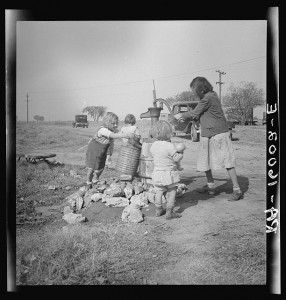
Water supply. Migratory camp for cotton pickers. San Joaquin Valley, California. American River camp. by Dorothea Lange, Farm Security Administration, 1936

Water supply. Migratory camp for cotton pickers. San Joaquin Valley, California. American River camp. by Dorothea Lange, Farm Security Administration, 1936

It also helps to expose those sins, apparently, if you have satellites. Here’s Jay Famiglietti, talking about what the GRACE satellites show about groundwater depletion in California’s Central Valley:

During the drought of 2006-2010, state and federal surface water allocations were drastically reduced, forcing farmers to tap groundwater reserves far more heavily than in ‘normal,’ wetter years. The resulting volume of depleted groundwater was so great that it was registered by a satellite ‘scale’ that orbits about 400 km above Earth’s surface.

It gets worse:

[T]he combined Sacramento and San Joaquin River basins have already lost 10 cubic kilometers of fresh water each year in 2012 and 2013.

That’s nearly a Lake Mead a year. Clearly, in a variable climate, farmers in the Central Valley have planted far more acreage than the system’s water supply can support on  some time scales we can now clearly see. They will plant less. That’s inevitable.

It’s Stein’s law, in action: “If something cannot go on forever, it will stop.” But Stein’s law, glib as it is, masks an important set of policy questions. In its basic form, it’s an argument for the lack of need to do anything. Water conservation will come to California when the surface supply is short and the groundwater has run out and some significant portion of the farms are permanently fallowed. The water management sin being exposed here is the failure to pursue a more graceful exit strategy for the communities that will suffer as a result.

Puzzling over water and agricultural economics

I do not understand this. Not being rhetorical or coy. I really do not understand this.

I’ve observed before that Yuma and Imperial counties, the two farm regions that have benefitted from enormous allocations of Colorado River water and the support of the federal government that goes with it, have some of the highest unemployment rates in the country.

Yesterday Bruce Ross pointed to a study that found that, if Central California (a similar water beneficiary) were its own state, it would be the poorest in the country. Bruce observes:

What does it say about America’s farm system that the vital source of most of America’s fruits, nuts and vegetables is poorer than Mississippi?

Getting a lot of water seems more like a curse than a benefit?

Mulroy on growth, supply and water pricing

There’s so much rich material in Henry Brean’s exit interview of Pat Mulroy, the outgoing head of the Southern Nevada Water Authority, that I barely know where to begin, but let’s start with water pricing.

Mulroy makes clear (as she always has) that she viewed it as her responsibility to deliver the water the community said it needed, at the cheapest price possible, and she described her legacy as this:

Nobody ever was slowed down, hampered or in anyway obstructed from building wherever they wanted to build in the valley, and that was a Herculean effort. We kept this valley going during its most phenomenal growth spurt. I mean when I started, the valley had less than 600,000 people in it. Today it has 2 million.

As Brean noted in the interview, there are people who don’t view this as a particularly good thing, to which Mulroy responded:

You can’t control growth through your utilities….

Why me? Go talk to the governor. Go talk to the elected officials. You know? I’m willing to be the bad guy on any number of things, but there are some things I’m not willing to be the bad guy on.

We’ve always come at it from, “OK, if this is where you want to be, this is what you’re going to have to do to get there.” That’s our job. You want this community to grow and you want it to prosper. All right, then you’re going to have to pay to build facilities to bring in additional water, you’re going to have to start using less per capita to stretch what you have and you’re going to have to actively get into long-term resource planning. If you’re willing to do those things, then you can have what you want.

And what is the role of water pricing in all this?

I am a big believer that when you pay your water bill, you’re not paying for the resource. What you’re paying for is having it treated and pumped to your home so that it’s readily available to you. You’re paying for the facilities. And I will always believe that you should never charge more than you actually have to in order to deliver safe, reliable water to your customers when they need it.

To which Peter Gleick responded:


Water in the desert, Bosque del Apache plumbing edition

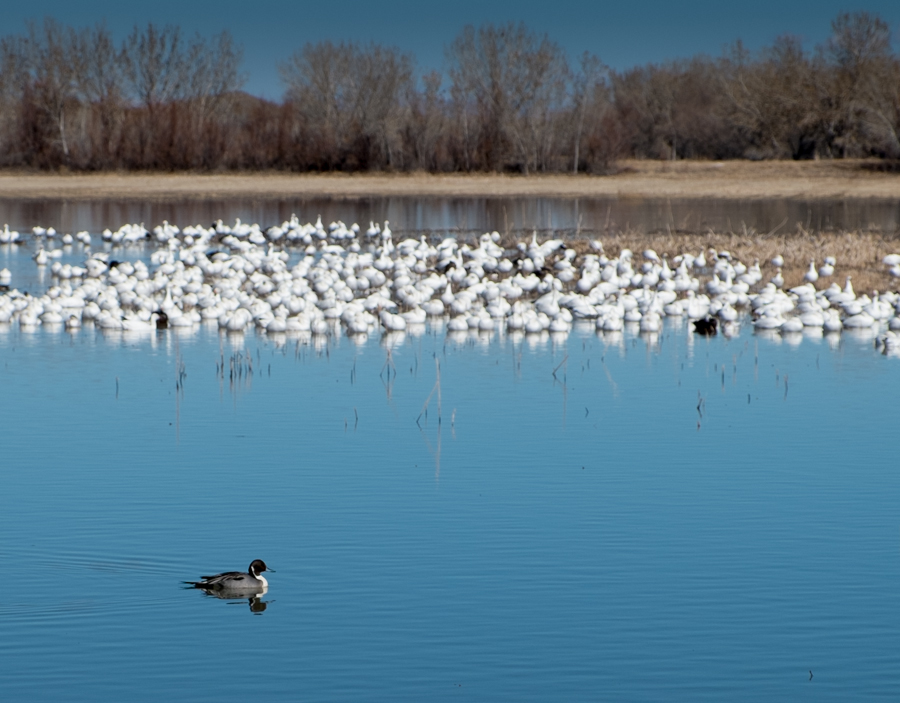
Northern pintail and some snow geese, Bosque del Apache, February 2014, by John Fleck

Northern pintail and some snow geese, Bosque del Apache, February 2014, by John Fleck

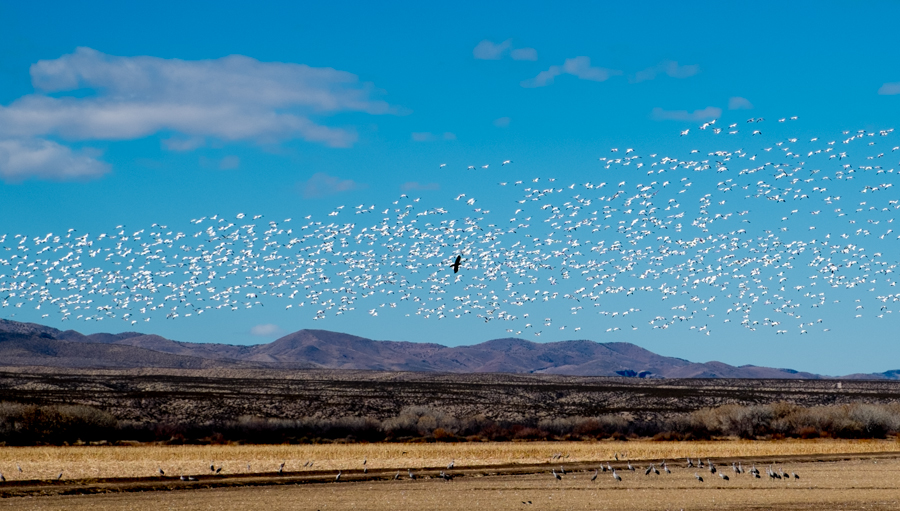
Lunch today sitting in the car at the Bosque del Apache National Wildlife Refuge, with a pond of snow geese, pintails and assorted other water fowl wintering here in one of the few broad wet spots in the Middle Rio Grande Valley of central New Mexico. A birder friend explained once that the car makes a great bird blind, because they’re used to cars driving by on the dirt roads that thread the refuge.

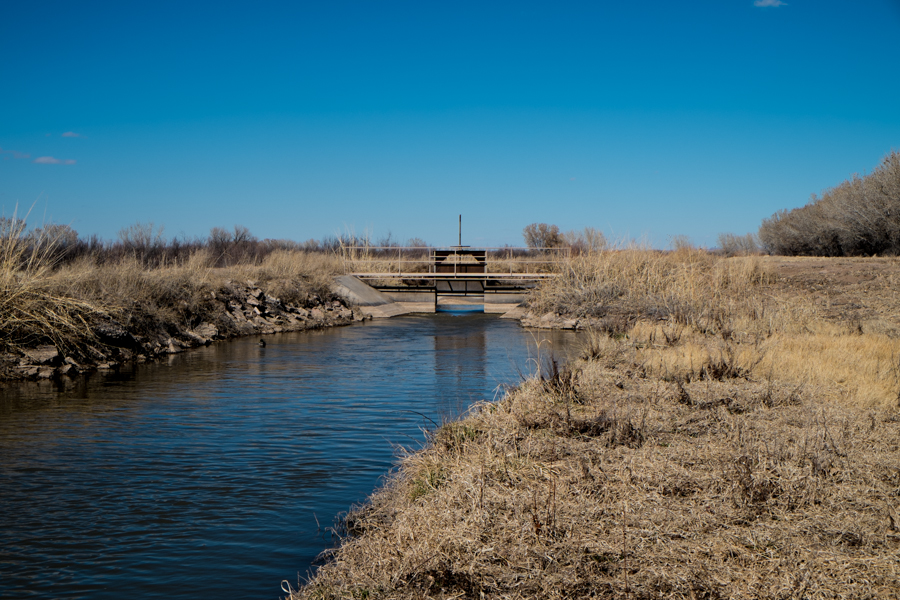
A couple of weeks ago, in response to my last road trip picture blog, Chris Brooks asked where the water’s coming from – whether it’s groundwater or surface water. My answer was that it’s sorta both. This is one of those places where the groundwater-surface water connection means it’s all coming from the same place. There is a network of drains (ditches) dug to intercept the shallow water table, which is quite closely connected to the river. The drains were used to lower the water table in the swampy areas and reclaim the land for farming. This was done, I think, in the 1930s. Then a large main drain was dug in the 1950s. Those drains are used as the source of supply to the refuge. So it’s surface water, because it’s flowing in drains on the surface, but the drains are drawing from the shallow aquifer, so it’s groundwater, but ultimately that aquifer is tightly coupled with the river, so it’s sorta surface water in the end. Here’s some of the plumbing:

Bosque del Apache plumbing, February 2014, by John Fleck

Bosque del Apache plumbing, February 2014, by John Fleck


Breathe, California. Keep it together. You can do this.

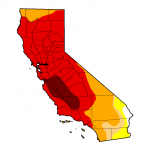
Jan. 28, 2014 California Drought Monitor

Jan. 28, 2014 Drought Monitor

California, listen to me. (Grabs home state firmly by the shoulders, stares into California’s face intensely.) You can do this. It’s going to be OK.

I know, I know. “Zero” sounds bad. But you go into a drought with the water supply and water system you have, not the one you might want or wish to have at a later time. You’ve got too many people for a year like this, and too large farms and too few water meters and too little groundwater regulation, and it’d be great if we could go back in time and fix that stuff. But those mistakes have already been made – crazy big ones, frankly, but that’s what you’re stuck with.

The thing to remember – and this’ll help you get through the tough year ahead – is that drought is no one big thing. It’s a series of little things – one water user, one water system at a time. That’s how you’re going to get through this. If you focus on “zero” you’re screwed. Think about who’s actually going to be short of water, and what they’re going to do about it.

Let’s start with Matt Weiser’s excellent piece in yesterday’s Sacramento Bee, in which he wisely put scare quotes around the word “zero” after the California Department of Water Resources announced a zero allocation for the State Water Project. As Matt explains, “zero” doesn’t necessarily mean “zero”. First of all, it’s a starting point, and could rise if it rains and snows. Second, the State Water Project is only one source among a number for most water users. Some of those other sources are stressed, but “zero” doesn’t mean taps going dry:

The “zero” forecast affects urban and agricultural areas from San Jose to San Diego that depend in part on water diverted from the Sacramento-San Joaquin Delta. Most of these areas have other water sources to draw from, including local reservoirs and groundwater wells. (emphasis added)

If you’re a farmer who depends on SWP water, this is a deep bummer. Farmers and the communities around them are going to suffer economically:

The State Water Project serves about 750,000 acres of farmland. Most farmers have access to surface water and groundwater, including private wells, and it’s common for them to be given short allotments in drought years. Before Friday’s announcement, the State Water Project delivery forecast was only 5 percent of the maximum amount allotted in its contracts with water agencies.

Even so, the announcement assures further conservation measures will be required, and may press some farmers to fallow land. (emphasis again added)
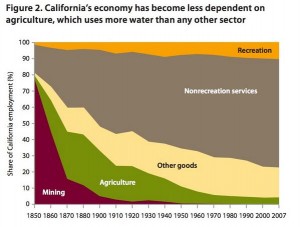
California's Economy and Water Use. Source: PPIC

California’s Economy and Water Use. Source: PPIC

If that’s you, this really sucks. But for most of California, that’s not you. From Ellen Hanak and colleagues at the Public Policy Institute of California:

[A]griculture and related manufacturing account for nearly four-fifths of all business and residential water use—but make up just 2 percent of state GDP and 4 percent of all jobs.

But what about the core necessities – water for our sinks and showers and toilets? If you depend on the Shaver Lake Heights Mutual Water Company in Fresno County or 16 other mostly rural water systems around the state identified by the state as facing “severe water shortages in the next 60 to 100 days”, look out. But in a state with 38,332,521 residents, give or take a few, the fact that only 17 relatively small communities have so far been identified as being at risk of running out of water means that the vast majority of the state’s population is currently not at risk of running out of water in the next 60 to 100 days. In a drought this badassed, it so far looks like most of California’s residents will be able to flush their toilets and brush their teeth for the foreseeable future.

OtPR, who is much smarter than I am about such things, thinks I’m being overly optimistic when I make this argument:

Oh no. There are about 4000 water districts in CA (if you count thirty-dwelling mutual water companies in the middle of nowhere). I’d bet a good third of them will be in a bad way this year. We’re just hearing from the earliest and direst ones.

So I’m probably saying something really dumb here. But having watched Texas go through this, and having covered and lived through New Mexico’s tough times last year, I’m going to boldly predict that most water providers will limp through to the finish line. In Texas, the national press repeatedly descended on Spicewood Beach to tell the story of drought because nobody else was actually out of water. People deal with this by using less water. Somewhere in the dangerous future, conservation may lead to demand hardening that will make this a much more difficult problem. But for now, there are a whole lot of you using more than 200 gallons of water per person per day. You’ve got plenty of room to move.

Years ago, the great Kelly Redmond offered this helpful definition of drought – “insufficient water to meet needs.” The key here is that needs can change, and this year, my beloved California, they are going to have to.

You can do this.
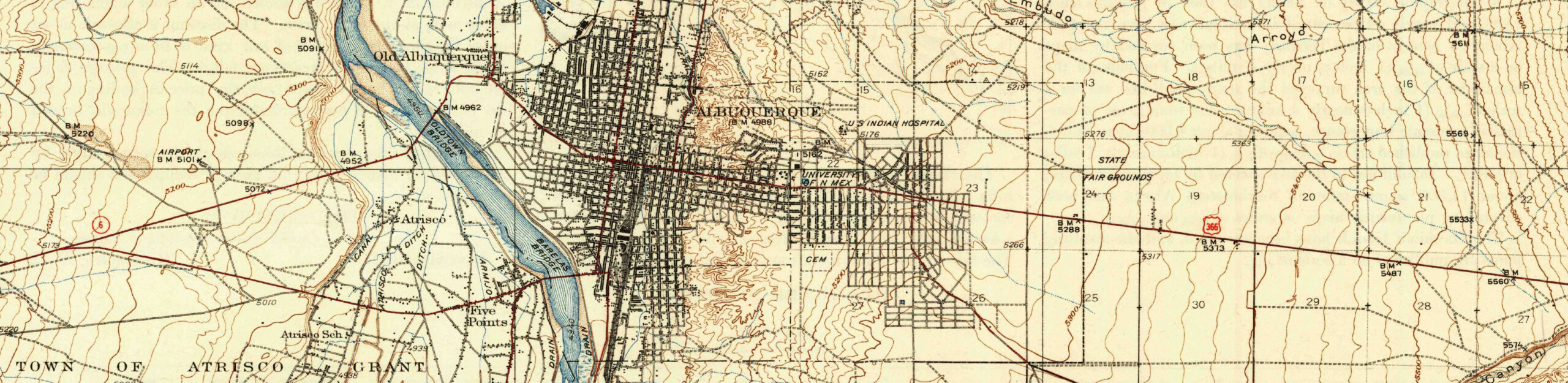


How tumbleweeds got to the Americas

The question of how tumbleweeds got to America keeps coming up in conversation, but I can never quite remember the details, so I’m typing this up here so I can Google it later as needed. Here’s the version from Tim Egan’s terrific book The Worst Hard Time, a gripping narrative history of the Dust Bowl.
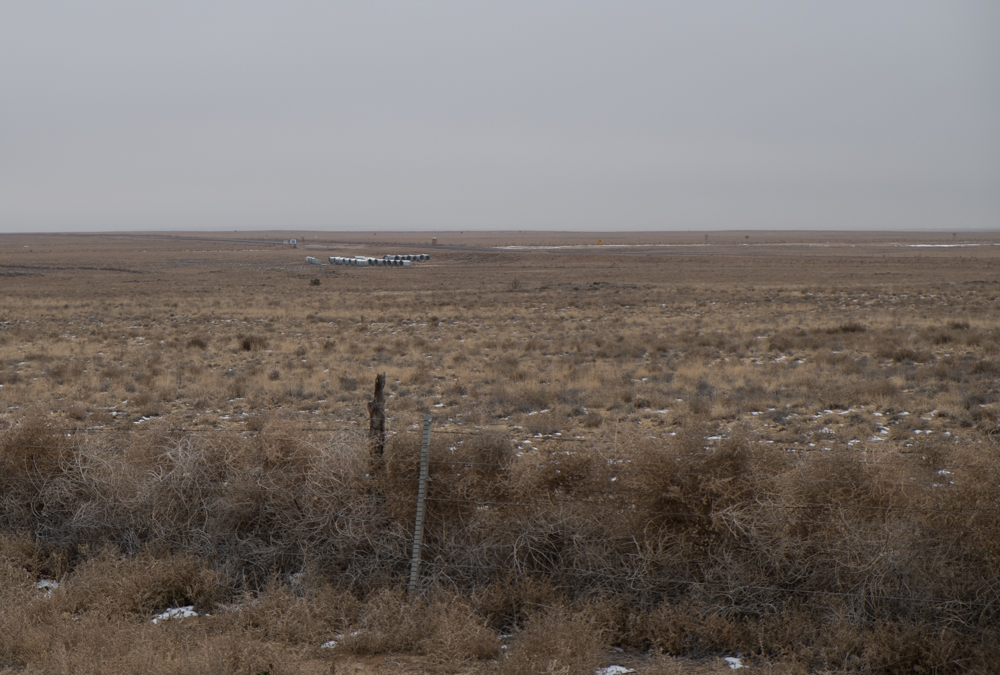
Tumbleweeds, Albuquerque's west side, December 2013, John Fleck

Tumbleweeds, Albuquerque’s west side, December 2013, John Fleck

The seeds of the Russian thistle came to the Americas sewn into the vest pockets of the Russlanddeutschen, immigrants who had left Germany for Russia, thence on to the High Plains along the Oklahoma-Texas border:

The Russlanddeutschen were not Russian, nor were they fully German. Hardened by long exile, state cruelty, and official ridicule, they wanted only to be left alone. The treeless expanse of the southern plains was one of the few places in the United States that looked like home.

They brought with them the seeds of a hardy red wheat without which, Egan argues, “it is possible that wheat never would have been planted on the dry side of the plains.”

The turkey red, short-stemmed and resistant to cold and drought, took so well to the land beyond the ninety-eighth meridian that agronomists were forced to rethink the predominant view that the Great American Desert was unsuited for agriculture.

And in the seed packets, sewn into those vest pockets, were stray seeds of a thistle the Russlanddeutschen called perekati-pole, which translates roughly, Egan explains, as ‘”roll-across-the-field.”