Carl Hayden: “water as cheaply as it can be served”

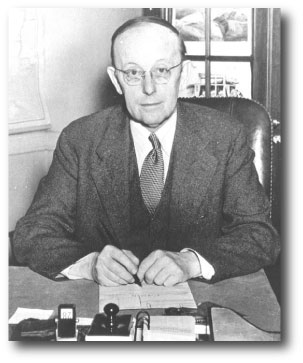
Carl Hayden, 1916, courtesy Library of Congress

Carl Hayden, 1916, courtesy Library of Congress

Here’s a great quote from Carl Hayden. It was June, 1922, still in the early days of the jockeying for development of the Colorado River’s water. Hayden was at the time a relatively junior member of the House, having not yet ascended to the political heights from which decades later, as Arizona’s senior senator, he engineered the construction of the Central Arizona Project:

It seems to me that the irrigator under a reclamation project is entitled to receive his water as cheaply as it can be served to him. I think that is in the public interest.

That’s from the 1922 hearings before the House Committee on Committee on Irrigation of Arid Lands on HR 11449, A Bill to Provide for the Protection and Development of the Lower Colorado River Basin. Hayden didn’t get his way on the provision of irrigation water for Arizona until 46 years later, when Lyndon Johnson finally signed the Colorado River Basin Project Act of 1968. But on this central point – cheap irrigation water to underpin the “public interest” in the West, there seems to have been little disagreement.

That Hayden kept plugging away for the whole 46 years is, in and of itself, a remarkable thing.

(h/t Jack August’s Vision in the Desert for its discussion of Hayden’s comments, though the transcript I found differs in some respects from the version August included in his book.)

Eucalyptus

It was dark when I got out of my rental car yesterday evening in Rancho Bernardo, north of San Diego. I couldn’t really see the place, but I could smell the tell-tale scent of eucalyptus. I slept with the window open. There was a eucalyptus outside my window. I slept well.

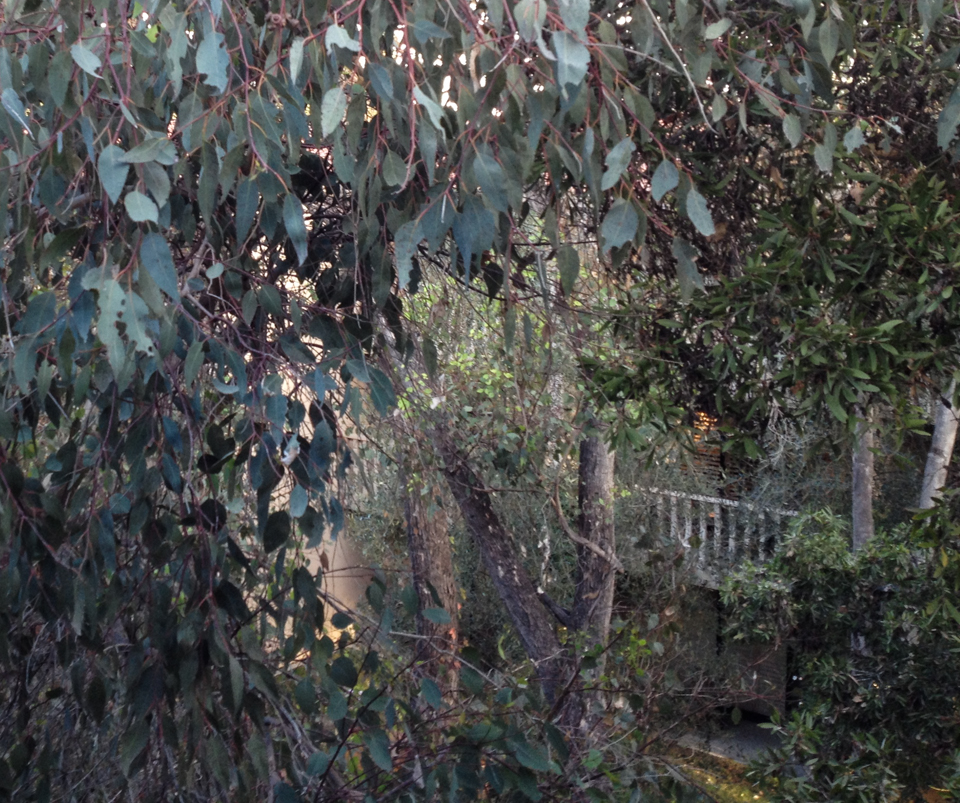
The eucalyptus outside my window, Rancho Bernardo, CA, October 2013, by John Fleck

The eucalyptus outside my window, Rancho Bernardo, CA, October 2013, by John Fleck

When I grew up in Upland, in the eastern suburbs of Los Angeles, the eucalyptus was ubiquitous, planted as windbreaks along the edges of orange groves. That smell, the mix of eucalyptus and citrus, is my youth. It turns out the story we learned as children – that the tree’s presence was the result of a failed attempt by the railroads to grow a fast-growing tree for use as railroad ties –  is close to bunk. As Nathan Masters wrote earlier this year, the railroad thing played only a minor role. The real story is much richer and more in keeping with Southern Californians’ peculiar penchant for self-invention. Here’s Abbot Kinney (as quoted by Masters), a 19th-century booster extolling the virtues of the fast-growing tree (also known as the “blue gum”):

The introduction of this tree has done more to change radically the appearance of wide ranges of country in California than any other one thing. In the reclamation of many arid plains of the central and southern parts of California the blue gum has worked almost like magic. It modifies the winds, breaks the lines of view all so quickly that one can scarcely realize that a valley of clustered woods and lines of trees was but a year or two before a brown parched expanse of shadeless summer dust.

On the grounds of the conference center/hotel place that I’m staying, there also are pepper trees, which lined Euclid Avenue in Upland when I was growing up, which were another signature tree of my childhood, and which Masters points out are also an import. So this trip is tinged with nostalgia for my youth. But it was fascinating when I snuck away this afternoon for a couple of hours from the conference I’m attending (beach trip, absolute necessity) to also see the chaparral hillsides as the freeway cut through the San Diego hills. They were dry, with no trees, and they also felt like old home week to me, like the foothills above our houses that my chums and I used to clamber up to get a better view.

The conference is about water, and my 54-year-old self can’t help but ponder the water needed to carry out Kinney’s vision of “the reclamation of many arid plains”, and the natural dry of those chaparral hillsides, notions of sustainability, that sort of thing. I’ve written before about my fascination with California’s great invention of itself, and about the sustainability of the results. The grand expanses of tile-roofed homes sprawling up San Diego’s hillsides, far above the high water mark the last time I was here, gives me pause.

But damn those eucalyptus smell good. I’ll leave the window open again tonight.

A reminder that the Endangered Species Act is a really lousy water management tool

Chris Austin reminds us why California’s Bay Delta Conservation Plan may look like a water management plan, but isn’t:

The Bay Delta Conservation Plan (BDCP) is often criticized for not being comprehensive enough because it doesn’t consider other actions that could be taken such as desalination, or other statewide or regional needs such as water storage. Perhaps it’s the huge price tag or the over 40,000 pages that makes it seem like it should be more; however, the Bay Delta Conservation Plan is not supposed to be statewide water plan – it is, after all, a permit application for an incidental take permit that is being submitted under federal and state endangered species regulations.

One can imagine a water management plan for ensuring supply reliability for San Joaquin valley farms and Southern California lawns, developed as a water management plan rather than a plan for avoiding jeopardy to endangered species, that might look much the same. Or one could imagine a whole bunch of different possible solutions cropping up if this wasn’t an ESA-driven planning effort. But we have to imagine, because Chris is right here in pointing out what I think is one of the BDCP’s great shortcomings. It’s not a water management plan.

Drought and Despair: “these enemies of mankind”

Working on a book chapter about the genesis and importance of the Arizona v. California litigation over the Colorado River, I ran across this priceless little bit of business from 1944.

Harry Bashore, Commissioner, Bureau of Reclamation, 1943-1945, courtesy USBR

Harry Bashore, Commissioner, Bureau of Reclamation, 1943-1945, courtesy USBR

It is Harry Bashore, Comissioner of the U.S. Bureau of Reclamation, testifying in Phoenix in July of that year, before the a subcommittee of the U.S. Senate Committee on Irrigation and Reclamation, regarding the great work that lay ahead:

Since the time of Alexander the Great, men have complained that they could find no more lands to conquer. We of the Reclamation Service know that there are still lands of the great Southwest where our two weapons – water and power – can conquer drought and despair. And as these enemies of mankind are routed, we can build a greater Southwest with the help of those who will seek employment here in our public works.

See what he just did there?

Following in the footsteps of Alexander the Great! Reclamation rhetoric doesn’t get much better than that. But Bashore is doing so much more. The hearing is part of a clever little game going on between Reclamation and Arizona Sen. Carl Hayden, two arms of wester water’s “iron triangle“. Hayden had set this up the year before, with a measure pushed through a subcommittee of the Senate Committee on Post-War Economic Planning and Policy. The need to transition the economy from war to peace, and to find jobs for returning warriors, was a political opportunity not to be missed. The rhetoric of victory over the Axis Powers became transformed to the rhetoric of victory of those twin enemies of all mankind, “drought and despair”.

The full testimony is here.

Annals of fucked up metaphors

As a group of U.S. politicians prepared to vote on a measure intended to delay implementation of a federal effort to extend health care to uninsured Americans, one of them, a Republican Texas congressman named John Culberson, was quoted thus:

“I said, like 9/11, ‘let’s roll!’”

It is a reference to the words attributed to Todd Beamer, a passenger on the hijacked United Airlines Flight 93 on Sept. 11, 2001, as a group of passengers tried to overpower the hijackers and prevent the use of the aircraft in a suicide attack.

In discussing U.S. health care policy in a column back in 2009, I employed a different use of the 9/11 metaphor in an effort to help readers make sense of the 18,000 people who, according to an Institute of Medicine study, die each year in the United States because of a lack of health insurance:

I’ve struggled with ways of getting across 18,000 preventable deaths per year. It is a 9/11 attack every two months, year in and year out.

I’ve often found it useful to push metaphors to the breaking point. Thinking through their failure mode provides useful information. So I’d invite you, in considering Culberson’s words and mine, to think about who represents Al-Qaeda here – the people attempting to extend health care coverage to the uninsured, or the people attempting to stop them.

Or maybe we should all just stop with the 9/11 references.


On health care policy, a personal story

I’m not watching C-Span today:

Consider this, published by a team of U.S. health care researchers in 2004: “Lack of health insurance causes roughly 18,000 unnecessary deaths every year in the United States.”

That was five years ago. The quiet tragedy associated with a lack of health insurance has continued, the numbers growing in the half-decade since a team from the Institute of Medicine, our leading national health care think tank, published that statistic.

Perhaps 18,000 is too abstract to get your head around. To make this more concrete, let me introduce you to Virginia Heineman.

Severely asthmatic, chronically ill, and as a result chronically underemployed, Virginia — “Ginnie” to those of us who loved her — lived on society’s margins.

She was my wife Lissa’s beloved younger sister. She was one of 2002’s 18,000 unnecessary deaths.


Reduced releases from Lake Powell: no going back

It rained kind of a lot in the intermountain west this month, which raises a fascinating question about the tools we use for Colorado River management, and the tendency of water managers and management institutions to base significant actions on median flow forecasts rather than managing with a flexibility that considers the probabilistic nature of the information forecasters are giving us.
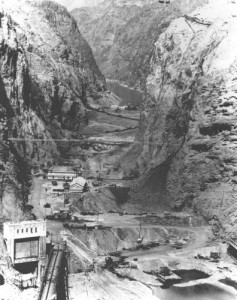
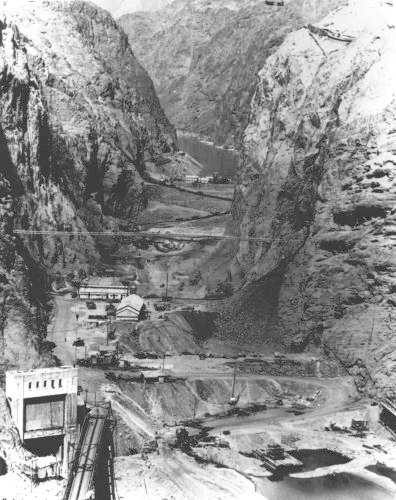
Black Canyon during construction of Hoover Dam, courtesy USBR

Black Canyon during construction of Hoover Dam, courtesy USBR

In August, the Bureau of Reclamation announced that, for the first time ever it would curtail releases from Lake Powell on the Colorado River, reducing flows downstream through the Grand Canyon to Lake Mead and thence to the fountains of Las Vegas and Phoenix and the alfalfa fields of the Imperial Valley. Now it’s rained a whole bunch, and Lake Powell has a lot more water in it than we expected – enough, under a more flexible policy, to erase the need for curtailment. But it appears there’s no going back. In water supply terms, the Upper Basin appears to be the winner in the execution of this forecast-policy-weather edge case.

In water volume, the difference between a full release and a curtailed release was marginal, but the symbolic and therefore political implications are huge.

The decision was based on a rigid, cookbook-like formula contained in the 2007 interim guidelines for operating Mead and Powell. Once a month, the U.S. Bureau of Reclamation takes the information giving to the agency by NOAA’s Colorado Basin River Forecast Center and updates its “24-Month Study“, which is basically a bunch of tables estimating inflows and reservoir levels for  12 Colorado River Basin reservoirs. Four times a year, in addition to the 24-Month Study, Reclamation also produces two additional reports, parallel “what if” sets of tables showing what would happen under the “wet” and “dry” ends of the probabilistic forecast issued by the CBRFC. But it’s important to note that, for purposes of the legally mandated interim guidelines, those wet and dry scenarios are not incorporated into the decision-making. The decisions are, by law, made based on the median forecast, without any flexibility to respond to what the forecasters might say about wet and dry.

These guidelines set decisions related to interstate water allocation and reservoir operations to the median forecasted inflow volumes. Unfortunately this approach does not consider the range represented by the forecast distribution, which leads to large uncertainties when a forecast distribution straddles important threshold values.

That’s from “River Forecast Application for Water Management: Oil and Water?“, an interesting new paper by the CBRFC’s Kevin Werner and colleagues looking at how forecast information is used by the water management community.

The operating guidelines also lock in a decision in August, based on median forecasts of the system’s behavior at the end of December:

The August 24-Month Study projections of the January 1 system storage and reservoir  water surface elevations, for the following Water Year, shall be used to determine the applicable operational tier for the coordinated operation of Lake Powell and Lake Mead as specified in the table below. (emphasis added)

This is one of those edge cases, ” “straddl(ing) important threshold values,” that Werner was talking about. In August, the median forecast’s projected level of Lake Powell was straddling the crucial elevation level of 3,575 feet come Jan. 1. If it’s above, that mark, the guidelines call for a full release from Powell in 2013-14. If it’s below, curtailment happens. The August 24-Month Study (pdf) found that, with a full release, Lake Powell would be 1′ 4″ below the crucial 3,575 foot elevation level. So curtailment it is.

As I read the Interim Guidelines (and please, Bureau people and others in the audience, correct me if I’m getting this wrong) the “shall” in the guidelines means that we’ve made our decision based on the August 24-Month Study, and there’s no going back now.

Even though, as a result of what one of my water management friends has dubbed “the September to Remember,” Lake Powell is now five feet higher than the median forecast on which the curtailment decision was based. That would seem to put us safely above 3,575, meaning a policy that didn’t lock us into a decision each August might mean a bigger release this year.

To be fair, even the forecast at the high end of the CBRFC’s probabilistic range (pdf) wouldn’t have put us above 3,575 come Jan. 1. This storm was an outlier. So maybe I’ve just wasted a lot of your time on an argument that’s too clever by half. But it’s an interesting exercise for looking at the gaps between forecast, weather and policy.


Federally subsidized California farm water

I loved this boldly written line in Bettina Boxall’s Los Angeles Times story last Sunday on the question of who will pay, and how much, for a proposed multi-billion dollar pair of water supply tunnels beneath the Sacramento Delta:

Much of California agriculture is accustomed to vast amounts of cheap, federally subsidized water in the form of deliveries from the Central Valley Project, the nation’s largest water supply program.

No need for backup or detail, right? We all know that’s true. But should you be curious about the details, here’s some grist for the mill, via the Department of Interior’s Office of Inspector General earlier this year (pdf):

We found that USBR’s water ratesetting policies do not ensure that an appropriate share of capital costs and prior-year funding deficits are repaid annually. Water deliveries to the CVP contractors have been highly variable from year to year. When actual water deliveries are less than projected deliveries, revenues are insufficient to recover the Federal investment in the project. When actual water deliveries exceed projected deliveries, however, existing contract provisions stipulate that excess revenues collected by USBR must be refunded to the contractors. As a result, USBR has not demonstrated steady progress toward recovery of Federal investments in the CVP.