On water supply importation

Water Scarcity: Impacts on Western Agriculture

Water Scarcity: Impacts on Western Agriculture

Given the findings of the recent federal-state Colorado River Basin Water Supply and Demand Study, it’s useful to look back at what other efforts at sussing out the region’s water problems and solutions have found. It’s especially interesting given the (to me) striking assertion in the Basin Study that building a pipeline from the Missouri, or towing icebergs down from Alaska, is not the answer.

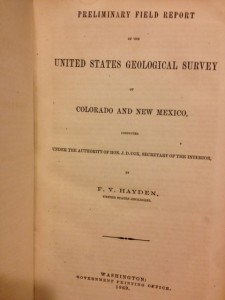
In September 1982, Harvey Banks*, one of the fathers of the great plumbing system that moves water around California, was among a group of water experts who gathered in Monterey to take stock of the water problems in the western United States. Banks was lead author of the chapter in the resulting conference proceedings** on “Developing New Water Supplies”. The study looked, among other things, at the possibility of importing water from the Missouri River. Banks’ conclusion:

[T]he probabilities for large-scale new water supplies or developments for the region in the foreseeable future are not great. The potentials for significant breakthroughs in local water supply enhancement or any large-scale water importation for the semiarid West are limited.

That was 30 years ago. Though, to be fair, Banks and his colleagues didn’t give the iceberg thing a serious look.

* Harvey Banks in Wikipedia

** Water Scarcity: Impacts on Western Agriculture, edited by Ernest A. Engelbert, University of California Press, 1984


Stuff I wrote elsewhere: trouble on the Rio Grande

From this morning’s newspaper, a look at the coming trouble among farming, fish, cities and water in the Rio Grande:

[W]ith farms and cities diverting water from the river to meet their needs, leaving enough for the fish and the ecosystem on which it depends while at the same time meeting human needs has become an increasingly contentious issue.

“Water drives the economy,” explained Estevan López, head of the New Mexico Interstate Stream Commission.

How to strike the balance is the subject of discussions under way, largely behind closed doors, among the Fish and Wildlife Service, the Bureau of Reclamation and the Army Corps of Engineers. The agencies are working against a March 1 deadline, when the current 10-year plan for managing the river under the federal Endangered Species Act expires.

The water agencies appear intent on finding a way to keep the species alive and encourage its recovery even during periods with lower flows in the river than we see today. Critics contend that is unrealistic – that the Rio Grande’s human water users need to learn to do with less, so that more water can be left for the river.

Farmers vs. fish, pot-growing edition

From the Joe Mozingo at the LA Times:

The marijuana boom that came with the sudden rise of medical cannabis in California has wreaked havoc on the fragile habitats of the North Coast and other parts of California. With little or no oversight, farmers have illegally mowed down timber, graded mountaintops flat for sprawling greenhouses, dispersed poisons and pesticides, drained streams and polluted watersheds.

Water: contamination v. consumption

If one allows mining of a nonrenewable source, it is disingenuous to argue that the source should never be polluted if the economic activity causing the pollution is necessary to sustain employment. Suppose that two individuals proposed to extract water from a nonrenewable aquifer. The first agreed he would farm and by doing so dry up the aquifer. This use would generate 100 jobs over 45 years. Suppose the latter agreed he would utilize the water for industrial purposes, consume none of it, and reinject it into the ground after he was done. This use of the water would generate 4,500 jobs over 45 years. When reinjected into the aquifer, however, the water would be mildly toxic and, given current technology, unusable for other purposes. In which case is the public welfare best served? The debate over nondegradation versus measured rates of degradation rages on….

From DuMars and Minnis, New Mexico Water Law: Determining Public Welfare Values in Water Rights Allocation, 31 Ariz. L. Rev. 817 (1989).

The power of atmospheric rivers, as seen from space

California had one of its memorable (and important for water supply) “atmospheric river” storms earlier this month. The folks at NASA have posted a particularly beautiful image of one of the results:

Sediment from the Eel River, courtesy NASA

Sediment from the Eel River, courtesy NASA

That’s a huge blast of sediment flowing out the mouth of the Eel River in northern California following the storm.

Is the Upper Basin more vulnerable than I thought?

A couple of years ago, I wrote about University of Colorado law school professor Doug Kenney’s argument that the states of the Colorado River’s Upper Basin (UB) faced a very real risk under climate change – that to the extent the river shrinks across the 21st century, the Upper Basin states will have the eat the shortfall:

If there are shortages on the river, New Mexico and the other states of the upper basin could be forced to curtail their water use, passing the water downstream for Las Vegas, Phoenix and Los Angeles.

“For a state like New Mexico, it means that satisfying current uses might be impractical, let alone thinking about new uses,” Kenney told me.

After I argued in a post yesterday that the new Colorado River Basin Water Supply and Demand Study suggests the real vulnerability to shortfalls is in the Lower Basin, Doug sent me this (posted with permission):

Even if the UB is able to meet its delivery obligation, that is very different from suggesting the UB is not experiencing any sort of shortage. Rather, making the delivery obligation ensures the UB is in a state of perpetual shortage (to the extent they never get their “half”). Thus, to the extent that the flow of the river is somehow enhanced, that could have UB benefits. In the short term, thus, this is a Lower Basin problem, but long term (especially under a severe climate change scenario), it is primarily an Upper Basin problem. The Lower Basin has some belt tightening to do, but it is a modest, predictable, and stable amount of belt tightening, whereas the problem for the UB just grows and grows.


“Climate change is water change”

One of the points Steven Solomon’s book Water: The Epic Struggle for Wealth, Power, and Civilization hammered home for me is water’s importance in providing transportation routes. Here in the western United States, it’s not something I’ve had to think of too much (see rivers without water to understand the cognitive dissonance).

So I’ve been watching and trying to learn from the drought in the upper midwest, with its implications for shipping on the Missouri and Mississippi rivers. I get water for farms cities and the rivers themselves for environmental purposes. Adding transportation adds an additional layer of complexity that’s fascinating. Here’s Alan Bjerga at Bloomberg:

Shippers and carriers still want Missouri River water. “There is the real chance that navigation could at best be severely impaired, and at worst effectively shut down, for an extended period of time if necessary actions are not taken immediately,” American Waterways Operators President Tom Allegretti said in a statement on Dec. 7. A closing would imperil farm exports and fertilizer shipments needed by February for U.S. spring planting, he said.

The setback for shipping interests is a shift from river- management priorities that dominated the 20th century, said Robert Kelley Schneiders, an environmental consultant at EcoInTheKnow in Boulder, Colorado, who has written books about the Missouri.

As far back as the 1800s, the barge industry has always held powerful sway over river use, he said. The current dam system itself was created to promote shipping along the lower Missouri, which has never been realized, Schneiders said.

The full article is worth reading.

With the Basin Study done, we can get back to draining Lake Mead

Last week’s release of the Colorado River Basin Water Supply and Demand Study was a headline-grabbing event – “Colorado River water supply to fall short of demand, study says“, to cite but one of a zillion examples of the core message getting big play. Barry Nelson argued the study “has the potential to mark a new era in the management of the West’s largest river basin.”

Lee's Ferry

Lee’s Ferry

We will see. As with most massive undertakings of this nature, the angels and devils are in the Basin Study’s details. And a separate, routine little US Bureau of Reclamation report that came out last week helps illustrate the point.

There were two big talking points. The first, the supply-demand gap, comes as no surprise to anyone involved in Colorado River management. To the extent this a big deal, its importance is the way the Basin Study loudly points out something that’s been painfully obvious for some time.

The second point, a bit more surprising to some (and also worth loudly pointing out), is that plain old water conservation is far more cost-effective, and quicker to implement, than big engineering solutions like building a pipeline to the Missouri. I chose to highlight these two points with the precious few words available for my newspaper story about the study.

But there’s something deeper in the Basin Study that’s worth exploring. (click through for wonky details) Continue reading ‘With the Basin Study done, we can get back to draining Lake Mead’ »

Augmentation – the central question

As I’ve written previously, the Colorado Basin Study suggests that augmenting water supply in the region is the most expensive and least quick approach to closing the supply-demand gap. But if folks do want to pursue augmentation, Juliet McKenna is asking the right questions:

The consequences of implementing any water supply augmentation plan need to be considered in terms of not only economics, but also in terms of where and how the water would be used. For example:

1. An additional 600,000 AF/year of water in the basin could support 1 million people. Will this supply be used to plug a supply gap or will it double the population living in eastern Colorado? Which outcome is desirable?

2. Would the cost (billions of dollars) be shared by all uses – people, industry, and agriculture? Or would only a subset of users, or new users have to pay?

So, as I think the authors of the Colorado River Basin Water Supply and Demand Study would agree, its time to start talking.

If you’re not already following Juliet, a water professional down in Tucson, I recommend bookmarking/RSSing.