From this morning’s newspaper, an attempt to frame (in my own mind) the coming “gnarly struggle over the federal Endangered Species Act’s requirement that we try to keep the Rio Grande silvery minnow alive“:
The reason for the river’s November-December surge was a small stockpile of water the U.S. Bureau of Reclamation had stashed during the depth of last year’s drought in El Vado Reservoir, up on the Rio Chama. Its purpose was ensure there was enough to complete the irrigation season for the pueblos on the Rio Grande, which have the most senior water rights on the river. With the irrigation season over, the bureau in November began releasing the leftovers, moving the water downstream to Elephant Butte Reservoir north of Las Cruces to meet New Mexico’s obligations under the Rio Grande compact to deliver water to southern New Mexico and Texas.
Drought all year had kept the river through Albuquerque well below normal levels. But suddenly it was flirting with normal levels at the U.S. Geological Survey’s Central Avenue gauge.
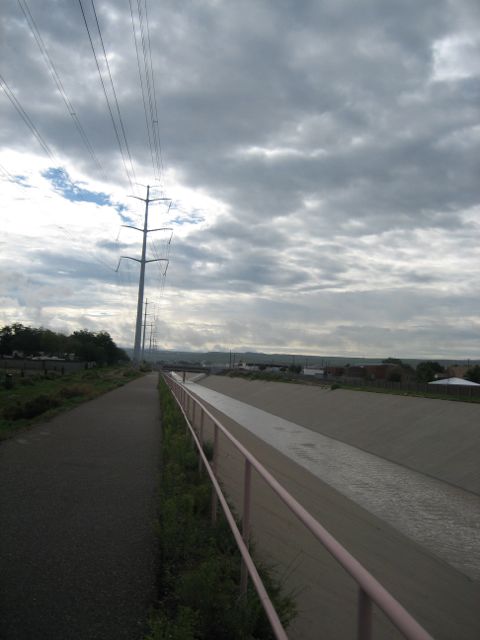
It looked nice, but the Rio Grande was simply plumbing at this point, a big earthen canal being used to move water from one dam to another. And yet, for a month, it looked not like plumbing, but like a river.