A story worth telling

Spending a weekend (mostly) unplugged (I’m writing this on my iPod), Lissa and I ended up this afternoon at the Georgia O’Keeffe in Santa Fe.

In one alcove, photos of O’Keeffe on the Colorado River in Glen Canyon, circa 1964 – the year they closed the dam and began flooding it.

Apparently her friend Eliot Porter, the photographer, took her down the river. Note to self: There’s a hell of a story there worth telling.

Stuff I Wrote Elsewhere: latest on the jet fuel plume

From the morning paper (sub/ad req):

Groundwater contamination from a Kirtland Air Force Base jet fuel spill has spread farther than previously believed, according to a report presented to municipal water officials Wednesday.

A new test well drilled by the Air Force last year beneath a southeast Albuquerque neighborhood shows evidence of contamination, two blocks north of what was previously believed to be the spill’s northern-most reach, according to a consultant for the Albuquerque Bernalillo County Water Utility Authority.

The tests, done by the Air Force on water collected last October, show the contamination is “much farther along than we had anticipated,” David Jordan of INTERA Inc. told the water utility’s board of directors.


Stuff I Wrote Elsewhere: In Uncertainty Lies Risk

This week’s column, in which I play the national security card (sub/ad req):

These are the same folks responsible for maintaining our nuclear deterrent. They are thinking this way because the language of risk and uncertainty is familiar to people in the national security community, and it is their job to think about and help us prepare for bad things that might hurt our nation.

Theirs is a world in which thinking about “high-consequence, low-probability” events, things such as accidental nuclear explosions or potential enemies bent on our destruction, is a way of life.

And it is a world that is increasingly taking climate change seriously, not because of what we know about it, but rather because of what we don’t.


Never Mind

About that whole Colorado River shortage thing? Chill.

From a Central Arizona Project statement sent ’round to reporters today:

According to the Bureau of Reclamation, current conditions on the Colorado River indicate a 97 percent probability that more than 2.5 million acre-feet (more than 850 billion gallons) of additional river water will flow from Lake Powell into Lake Mead in 2011. The higher than normal release from Powell would raise water levels in Lake Mead about 25 feet, and delay a potential shortage for several years.

“Compared to where we were a few months ago,” stated CAP General Manager David Modeer, “this is really welcome news. We were looking at the possibility of a shortage as early as 2012, which would have caused CAP to lose access to nearly 20 percent of our Colorado River supply. With the larger projected release in 2011, it is highly unlikely we would see a shortage before at least 2016.”

So waddy’all think I should write about instead? Baseball season’s about to start. Maybe I could try my hand at sportswriting?


The Longest, Straightest Roads

Out on assignment yesterday we found ourselves on the stretch of New Mexico Highway 60 that crosses the Plains of San Agustin, out by the Very Large Array, I got to thinking about long straight roads. Between Magdalena and Datil, 60 runs 23 miles of absolute straight, not a single bend or deviation:


It’s the longest such stretch of road I could think of, but when I thought about it this morning, 23 miles doesn’t seem nearly as long in words as it did looking out across the plains from one edge to the other. Other examples, anyone?

Water in the Desert

Via the work blog, a hilarious tidbit from this morning’s New Mexico Drought Monitoring Working Group meeting – a Special Weather Statement sent out Saturday by the El Paso office of the National Weather Service:

For the last several weeks parts of the Rio Grande have gone completely dry…especially on El Paso’s west side. Many people have taken advantage of this and have been using the river bed as a place to ride all-terrain vehicles or horses. But on Friday the USBR began to release water from Caballo Dam. This water is slowly making its way down the sandy and dry Rio Grande. The water is expected to arrive in El Paso late on Monday. People who have been using the Rio Grande for recreational purposes should be aware that water will once again be flowing in the river late on Monday.

You know it’s a desert when you have to warn people ahead of time when there’s going to be water in their river. (Hat tip to Ed Polasko, the Albuquerque NWS hydrologist, who a well-developed sense of the ironies of the task of tracking water in the desert.)


“the largest artificial watershed in the world”

I sat in the audience dumbfounded last month listening to Pat Mulroy speak at the 16th Annual Water Conservation/Xeriscape Expo here in Albuquerque. Mulroy is the head of the Southern Nevada Water Authority, the agency that wholesales water to the Las Vegas, Nev., area, and is arguably the most prominent figure in western water politics and policy right now.

Powell on the Colorado

Powell on the Colorado, USGS

I’d arranged for an interview after her talk, and I’d stayed up late the night before re-reading some ancient history that I wanted to talk to her about – John Wesley Powell’s ideas about organizing government in the West around watershed boundaries. There’s a theme I’ve been kicking around – the notion that, in building the system of dams and diversions we now use to manage western water, we’ve created in effect one uber-watershed that extends from San Francisco to Albuquerque, but that our systems of governance haven’t caught up.

I was hoping to get Mulroy to talk in our interview about some of the implications. So I sat there slightly dumbfounded when, in the talk itself, she invoked Powell’s ideas about watershed government and then said this (sub/ad req):

“We created the largest artificial watershed in the world,” said Mulroy… “That has created an environment of extreme interdependence.”

The problem, according to Mulroy, is that we do not have the political institutions and policies in place to manage the vast plumbing system we’ve created, leaving a risk of shortages and litigation.

OK, guess I can check that interview question off my list. 🙂

But in really diving into the details of what Powell was talking about this weekend, I’m beginning to wonder whether I’m not quite thinking correctly about this – or whether the differences between Powell’s formulation and the “artificial watershed” governance idea Mulroy and I are talking about exposes a problem in my thinking.

Powell apparently first sketched this out testifying before a congressional group, the Committee on Irrigation, in March 1890. There’s a lot I haven’t read yet, but the first reference I can locate (hat tip to Bill DeBuys’ Powell reader Seeing Things Whole, which has a nice discussion of this with references) is a discussion of the Rio Grande. And the watershed concepts he’s describing involve very small, self-contained units.

Here’s his elaboration, in Institutions for the Arid Lands, published in Century Magazine later that year:

[T]here is a body of interdependent and unified interests and values, all collected in one hydrographic basin and all segregated by well-defined boundary lines from the rest of the world. The people in such a district have common interests, common rights, and common duties, and must necessarily work together for common purposes. Let such a people organize, under national and state laws, a great irrigation district, including an entire hydrographic basin; and let them make their own laws for the division of the waters, for the protection and use of the forests, for the protection of the pasturage on the hills, and for the use of the powers. This, then, is the proposition I make: that the entire arid region be organized into natural hydrographic districts, each one to be a commonwealth within itself for the purpose of controlling and using the great values which have been pointed out. There are some great rivers where the larger trunks would have to be divided into two or more districts, but the majority would be of the character described. Each such community should possess its own irrigation works; it would have to erect diverting dams, dig canals, and construct reservoirs; and such works would have to be maintained from year to year. The plan is to establish local self-government by hydrographic basins.

Clearly “local” is a critical piece of Powell’s formulation that I haven’t been giving sufficient attention in my thinking.

I’m musing out loud here for two reasons. The first is journalistic. For the same reason Mulroy invoked Powell’s ideas in her talk, I like to invoke them as a story-telling device, a way to help make people make sense of this idea I’ve been working on that people all across the West are interlinked by common water systems in a web of interdependencies that are very real in a physical sense, but which our governance can’t quite handle.

But I’m also in that dangerous journalism no-man’s land, where I’m actually trying to advocate a policy approach. If I use it that way, it’s incumbent on me to get the history right.
$12 buys a lot these days

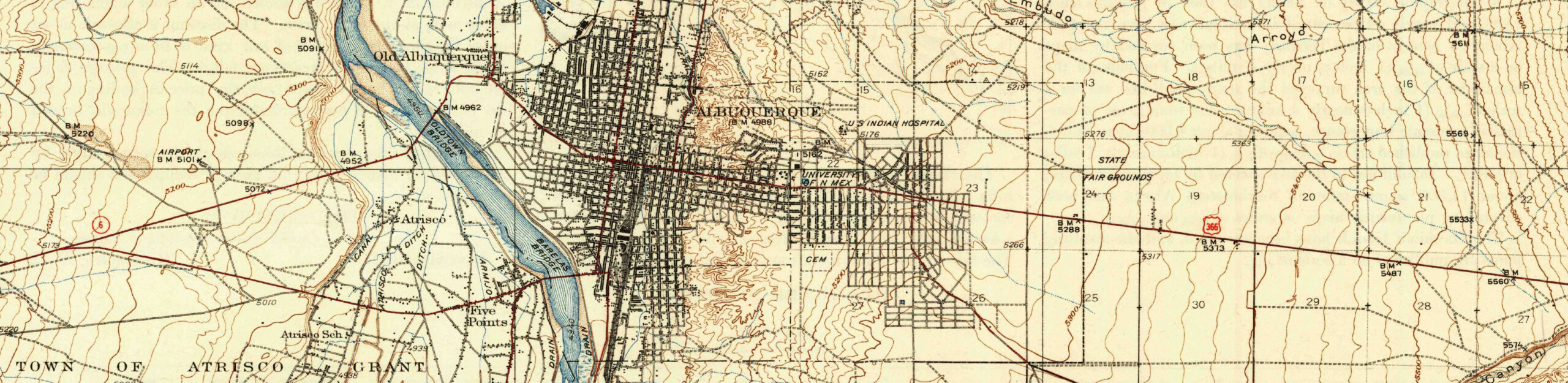
In the elevator at Mazano del Sol, the retirement apartments where Mom and Dad live. Lady gets in with a fabulous cane – wooden, lightly carved and lovely bright paint job.

Me: That’s a great cane? Does it have a story?

Her: Got it in Old Town. Twelve bucks. It works.

And she spryly strode out onto the third floor.