Stuff I Wrote Elsewhere: My Fascination With Flood Control

Most of my water journalism involves the supply side, but this week I indulged my fascination with the back end of the problem – moving it away from the places we don’t want it (sub/ad req):

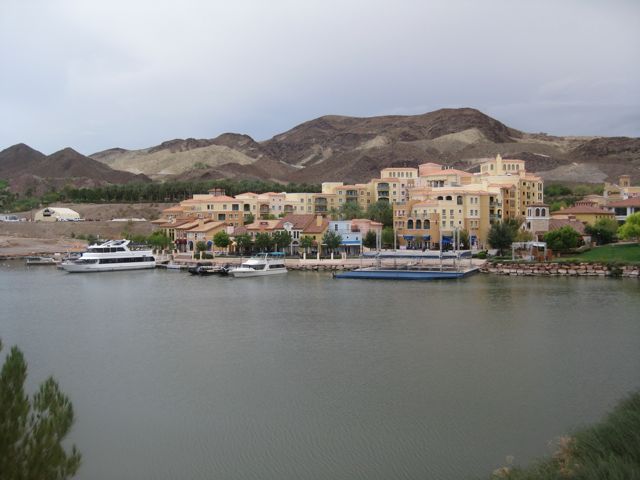
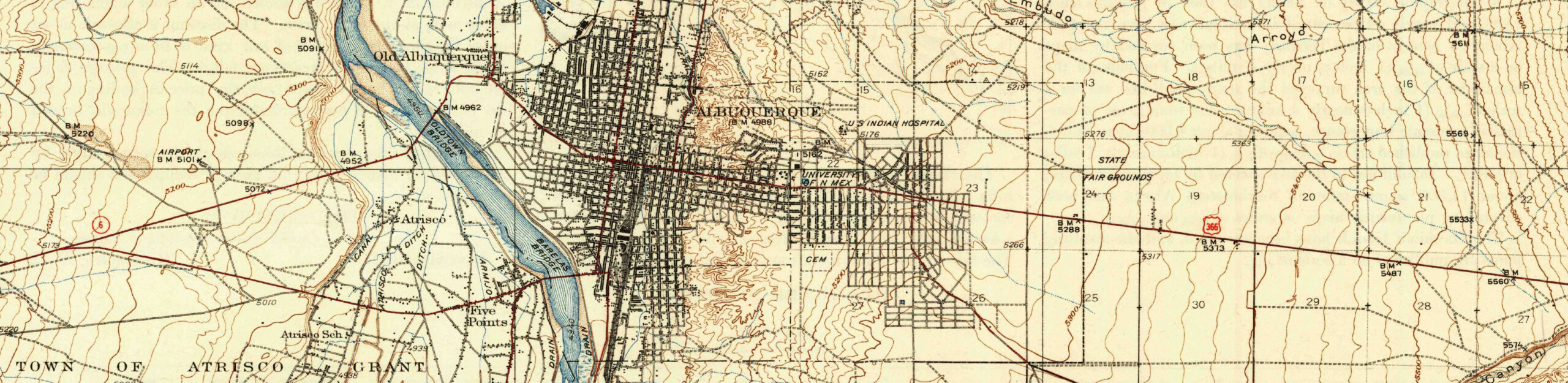
The southwest valley is one of three large areas in the Albuquerque metro area where government agencies working on flood control problems continue to grapple with storm water risks.

The problems do not come from the Rio Grande itself, which is largely confined by levees and earthen banks through the metro area. While officials do have some concerns about risks in some areas from a massive river flood, they say the chances of such an event are small.

But areas of the valley floor outside the river levees have the opposite problem. Much of the area lies below the river itself in elevation. Rainfall, especially during summer thunderstorms, tends to pool in low areas because it has no place to go. Such flooding is much more common.

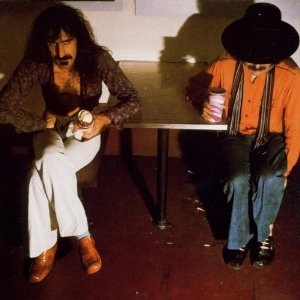
“So this was a drive-in restaurant in Hollywood”

The seminal influences on my aesthetic/writerly self are an eclectic bunch, a function more than anything else of who I was at the time I read them (or listened to them, or stared at their art). But thinking this afternoon about the death of Captain Beefheart (who I count as an odd member of my happy troupe), I realized they all shared a certain irreverence that must be their common thread.

When I was a young 20-something imagining becoming a writer, I read the Norman Mailer canon with a depressive zest, trying hard to make him a seminal influence. That didn’t work out so well. Oh my god, what a pretentious dick. I went through Picasso, Frank Lloyd Wright and Miles Davis phases, too, trying hard to understand the nature of the fundamental aesthetic and intellectual innovation they seemed to me to have in common. (Do you notice a “pretentious dick” thread here?)

But always, there were a bunch of writers lurking in the corner, cracking wise.

I’ve written before about Vonnegut, who arrived on the cusp of my own teenage wisecracking years. There’s Mark Twain, too, (the Ode to Stephen Dowling Botts never fails to crack me up). And the Pythons (the Holy Hand Grenade of Antioch never fails to crack me up).

I’m not sure this hangs together in any entirely consistent way, because there was a whole noir influence as well, which is mostly not hilarious. But I always had the feeling that Raymond Chandler was winking as he wrote those richly bare-boned lines he put in Marlowe’s mouth.

Which somehow brings me to Don Van Vliet, whose death today brought me to ponder some of his wonderful turns of phrase, things that drew me to him in my 20s and which passed the survival-of-the-fittest test in my chaotic and easily distracted brain:

I could just make out Ace as he carried the tray and mouthed,
“You cheap son of a bitch”
as a straw fell out of a Coke, cartwheeled into the gutter.
So this was a drive-in restaurant in Hollywood,
So this was a drive-in restaurant in Hollywood.

It’s not like I devoted a lot of time to him, nothing like the effort I spent wrestling with Picasso and the dawn of the modern. But the influences that have mattered the most to me have always been easy that way.

California Water Tunnel Gains Support

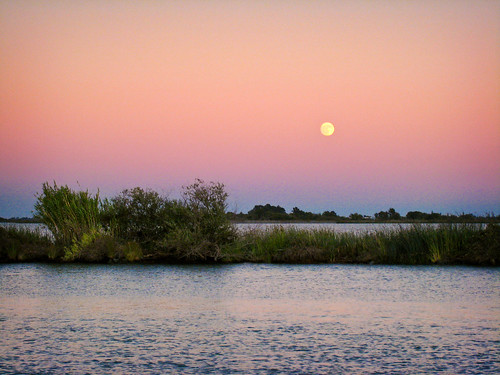
Sacramento Delta

Sacramento Delta, courtesy Greg Balzer

I must admit that when I first heard the idea of a tunnel beneath the Sacramento-San Joaquin Delta in California to carry water from the Sacramento River to users to the south, I thought it wacky, on purely engineering grounds. With no evidence or expertise, I thought the whole idea was just batshit crazy. But smarter minds than I seem to think otherwise, and the idea is gaining traction in California. From Bettina Boxall’s story in today’s LA Times:

State officials Wednesday recommended construction of a $13-billion tunnel system that would carry water under the troubled Sacramento-San Joaquin River Delta to southbound aqueducts, a project that would replumb a perpetual bottleneck in California’s vast water delivery network.

But Boxall’s story suggests that, even if it passes the not-batshit-crazy test on technical grounds, it faces serious risks of failing to meet the not-batshit-crazy test on political grounds. It doesn’t look, at least so far, as though it’s satisfying the myriad interests that will have to be satisfied for a compromise solution to the delta’s problems to stick:

Environmental groups assailed the planning report as “flawed, incomplete and disappointing.” And the largest irrigation district in California already pulled its support of the plan, suspecting that it would not restore its water supplies.

Western Water – the Persistent Roadblock

The roadblock to solving western water problems:

[T]he understandable tendency of state, local, and federal interests to defer painful concessions in water resource allocation. Indecision persists as long as there is no absolute requirement that problems be solved.

Paul L. Bloom, Law of the River: A Critique of an Extraordinary Legal System, in New Courses for the Colorado River: Major Issues for the Next Century.

Climate Change and Southwest Drought – Is It Happening Now?

Does it matter whether the current southwestern US drought is caused by anthropogenic climate change? Or, to be slightly more precise, in what ways does it or does it not matter? This isn’t a rhetorical question. Let me know what you think in the comments below.

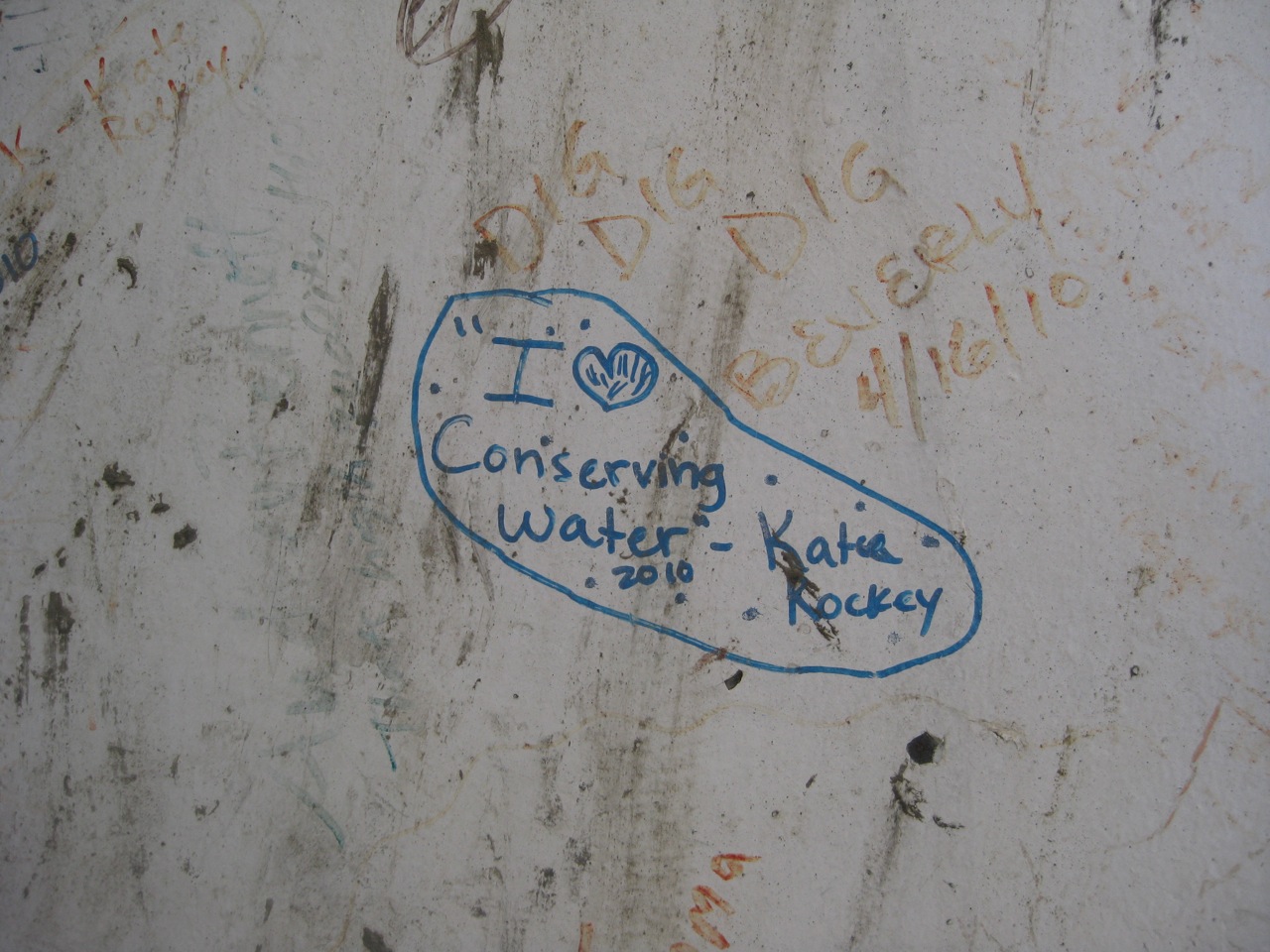
Las Vegas Wash

Las Vegas Wash: perpetual water in the desert, courtesy Las Vegas, Nevada, urban sewage treatment systems. October 2010

The question arises anew in the context of the package of climate change and drought papers in PNAS this week. One of the most interesting of the bunch is by Richard Seager and Gabriel Vecchi, looking at greenhouse warming and the climate now and in the future here in the southwest.

Drawing on the IPCC AR4 model runs, Seager and Vecchi repeat a well-made point – that the poleward expansion of the planet’s arid regions is a well-understood feature of expected greenhouse climate change, and that we here in the southwest are likely to be swept up:

Among the 24 models participating in AR4, the broad agreement that SWNA (southwestern North America) will dry in the current century arises because subtropical drying and expansion are fundamental features of a warming climate. Indeed, it occurs even in idealized global atmosphere models with no surface inhomogeneities whatsoever when the opacity to longwave radiation is increased.

So is that what we already see happening? Has the shift to a new greenhouse-induced drier normal already begun?

The problem in answering that question, they argue, is that natural variability on interannual to decadal scales is large, as a result of the influence of large scale sea surface temperature patterns , and teasing out the climate change signal from that natural variability is not yet possible:

Due to the presence of large amplitude decadal variations of presumed natural origin, observations to date cannot confirm that this transition to a drier climate is already underway.

In answer to my own introductory question, I would argue that, for purposes of societal response to the drought over the 21st century here in the southwest, it does not matter. The steps we need to take as a society to adapt to a greenhouse-forced change in climate are largely the same as those we need to take to adjust to our longstanding misunderstanding of the range and depth of natural variability. Either way, we’re forced to make decisions in the face of fundamental and irreducible uncertainty with a big downside risk of a lot less water. Societal systems robust to decadal-scale droughts of the type seen in the tree ring record will also be robust to greenhouse-induced climate change.

Stuff I Wrote Elsewhere: Navajo Settlement

From the morning paper, a look at money for the a Navajo Nation water project in the Indian water rights settlement bill the president signed last week:

A century of federal investment in dams and canals was built to serve cities and farms — “a long tradition in water politics in which states receive federal largess to help them solve local water problems,” in the words of University of Utah political scientist Dan McCool.

But the nation’s federally subsidized water development projects over the last century frequently bypassed Indian Country.

Over the 20th century, the United States Supreme Court in a series of decisions ruled that Indians were legally entitled to some of the highest priority water rights, enough to irrigate agricultural lands on their reservations, essentially first in line for scarce water ahead of the non-Indian farm and cities that came later.

But, as McCool documented in his book “Commanding the Waters,” native communities lacked political clout, and non-Indians ended up with the majority of the west’s water development money.

Indians were left behind. “They were just left without any means to use their water supply,” said Mike Connor, head of the U.S. Bureau of Reclamation.

Cadillac Desert Revisited

Update: The papers are all on line here, and seem to be freely available.

It stands as a cliché in western water circles to say that John Wesley Powell was right. But yeah, he pretty much was.

“Powell’s conclusion in 1876,” John Sabo and his colleagues write this week in the Proceedings of the National Academy of Sciences, “was that water scarcity would place limits on the growth of a new civilization in the region.”

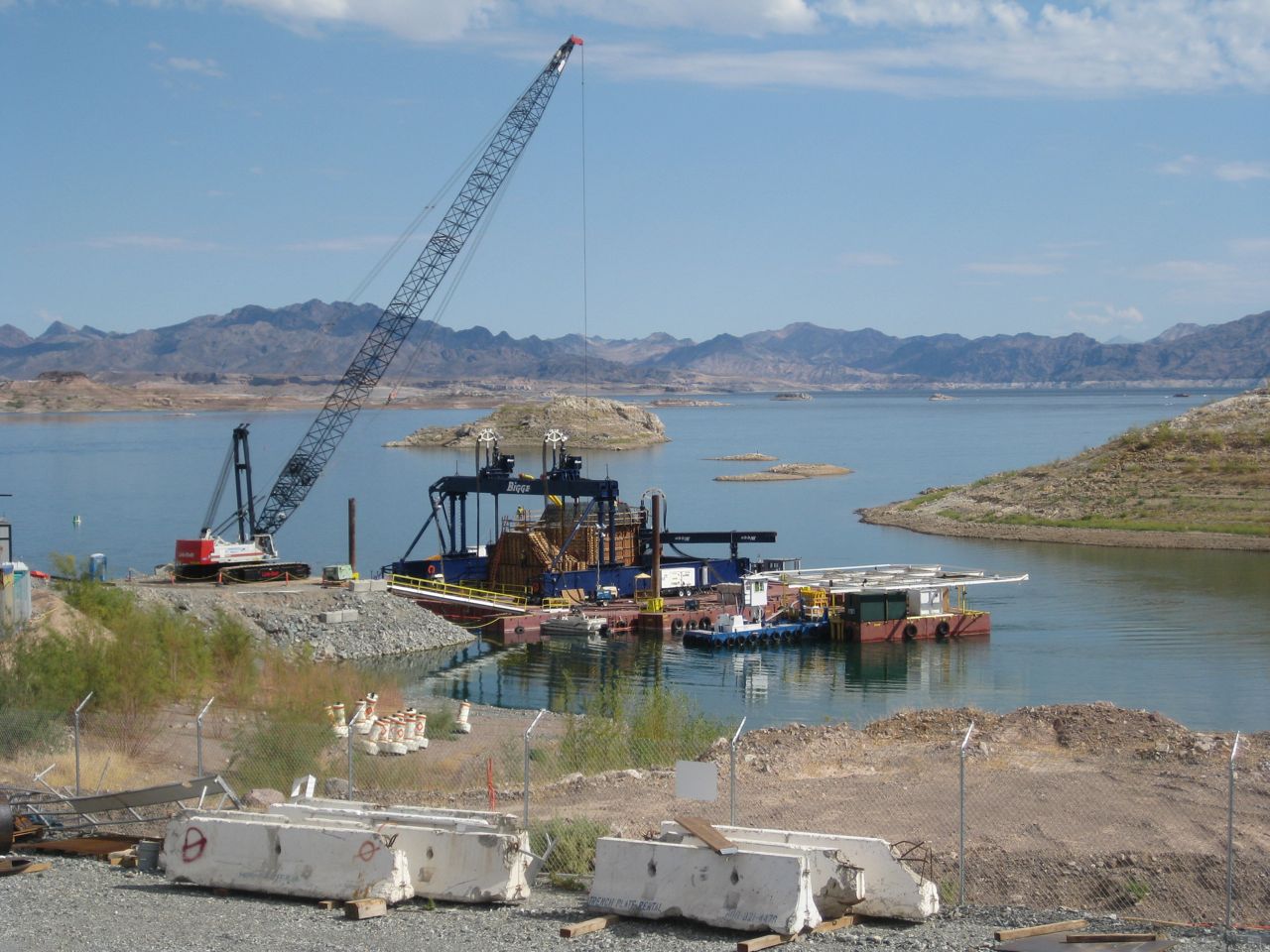
Las Vegas's "third straw"

Construction site of the Southern Nevada Water Authority's new Lake Mead intake, being built so Las Vegas can still get water as the reservoir drops. Taken October 2010

The Sabo piece is part of a fascinating package of PNAS papers organized by Glen MacDonald from UCLA assembling the latest science on water, climate and the arid west.

It’s an incredible array, touching on the paleo record, ecosystem issues, water supply questions, attribution of current drought and projection of future conditions. I’ve got a short piece trying to hit a few high points in tomorrow’s newspaper, but it was an absolutely maddening journalistic exercise because the range assembled by MacDonald is so topic rich.

I’d like to take some more time and space here to explore the package in more detail over the next however many days this takes, starting with the most clever paper of the bunch, by a team led by Sabo from Arizona State University: Reclaiming freshwater sustainability in the Cadillac Desert (Note: as of this writing, the papers don’t seem to be up on the PNAS site, though the embargo is off. As that changes, I’ll come back and add links.)

Continue reading ‘Cadillac Desert Revisited’ »

River Beat Weekly Report: What’s 169,000 Acre Feet Among Friends?

A month of warm, dry weather left Lakes Mead and Powell with 24.8 million acre feet of water at the end of November, 169,000 acre feet less than had been forecast a month earlier.
Lake Las Vegas

Lake Las Vegas, October 2010

The crux of the Colorado River Compact lies in Article III (d):

The States of the Upper Division will not cause the flow of the river at Lee Ferry to be depleted below an aggregate of 75,000,000 acre-feet for any period of ten consecutive years reckoned in continuing progressive series beginning with the first day of October next succeeding the ratification of this compact.

With Glen Canyon Dam to regulate flow, that translates to 7.5 million acre feet per year delivered past Lee’s Ferry from Upper to Lower Basin. Add in the Upper Basin’s share of water for Mexico, and you have an average annual release of 8.23maf.

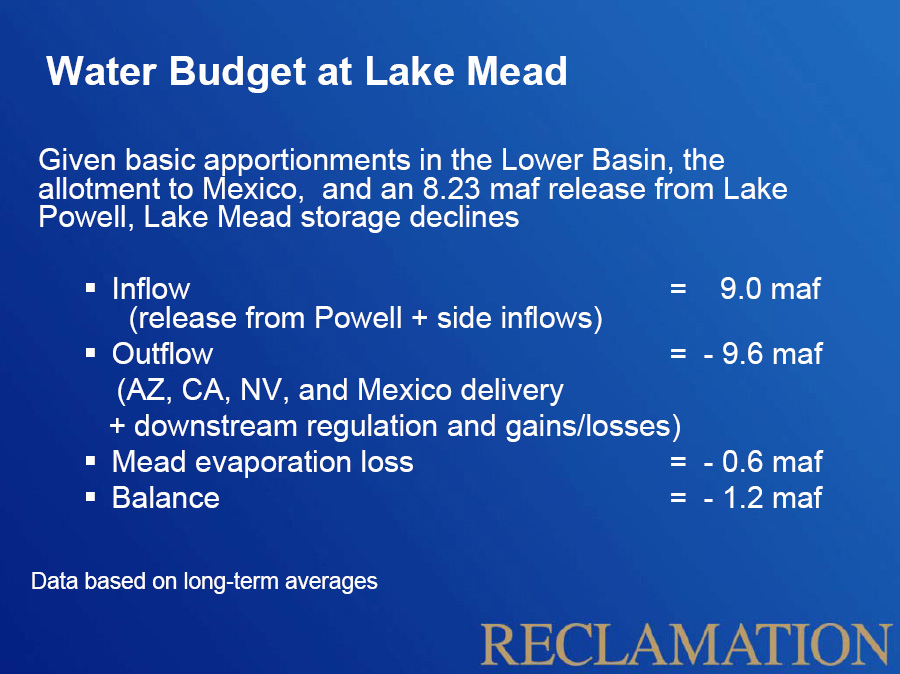
If things are “good” (a relative term in the arid western United States), there might be a little bit of extra water, which looks like it might be the case this year. The complex of reservoir operating rules call for “balancing”, using a Byzantine set of formulas. This year, the rules suggest a likely release of 9 million acre feet – an extra 730,000 acre feet above and beyond the Lower Basin’s Compact-guaranteed share.

And yet if you look at the latest “24-month study”, the monthly Bureau of Reclamation reservoir operating forecast, you’ll see that Lake Mead, despite getting a shot of bonus water, is forecast to drop another 7 feet in elevation in the 2010-11 water year.
Lower Basin Budget

Lower Basin Budget, Courtesy Paul Miller, USBR

Here is a reminder of why:

Unless the Upper Basin states deliver additional water above and beyond that guaranteed under the Colorado River Compact, Lake Mead will keep declining unless and until Lower Basin states reduce their consumption.

With numbers like that, 60,000 acre feet seems chump change. That’s the shortfall in Lake Powell at the end of November, with reservoir levels 6 inches below the month-ago forecast:

The November 24-Month Study projected that Lake Powell would end November at an elevation of 3630.85 feet above sea level. The elevation of Lake Powell at the end of the day on November 30, 2010 was 3630.31 feet above sea level. This 0.54 foot difference is equivalent to about 60,000 acre-feet of storage in Lake Powell.

Lake Mead ended the month with a surface elevation of 1081.94, down from a month-ago forecast of 1083.25. That translates to 109,000 acre feet less water.

References:
Who Was “Winters”?

Lake Sherburne, Montana, on the Milk River

Working today on a piece for the newspaper on Indian water rights, I followed a trail of Google crumbs trying to figure out who was the “Winters” in what’s called “the Winters doctrine”.

The doctrine is a pillar of U.S. water law, which grows out of a 1908 decision by the U.S. Supreme Court in a case known as “Winters V. United States“. It essentially says that Indian water rights are based on the date the reservations were formed, which means they’re entitled to some of the best, most senior water rights in the region. (updated based on Chris’s comment regarding the details of the Winters decision)

The case originated on the Milk River in Montana in the early 1900s, in a legal battle between folks on the Fort Belknap Reservation and non-Indian irrigators upstream. The argument was that the non-Indians were depleting the river, leaving the Indians without the water they needed.

It’s an often-told tale, but I’d never seen a narrative that explains who the named plaintiff was.

A little Googling led me to Indian Reserved Water Rights, a history of the Winters case and the resulting legal issues. The author, John Shurts, says that the great western water historian Norris Hundley actually tracked down “Winters” in old Census records, and found that he name was really “Henry Winter” (no “s”), though even in life he was improperly tagged with that extra letter.

The best bit is this piece of trivia Shurts tracked down from the Jan. 17, 1906 edition of the Milk River Valley News:

Foreclosure proceedings have been instituted in Choteau county to recover about $27,000 from Henry Winters and wife. Winters has left the country, it is said, as a result of disclosures regarding his scheme to kill Stock Inspector Hall and Judge Tattan.

Ah, the Wild West.