Water and Energy on the Colorado River

David O. Williams highlights what’s likely to be one of the central struggles in managing our twin energy and water problems – the water needed if oil shale is going to be tapped to head off peak oil. Peak water, in other words, collides with peak oil:

But numerous studies have indicated full-scale commercial oil shale production could suck the river dry. Even industry officials have acknowledged the thirsty nature of the extraction process, which at minimum will require two to three barrels of water per barrel of oil produced.

Science Communication: Understanding Audience

One of the most difficult parts of science communication is understanding what your audience knows and doesn’t know going in. Mark Justice Hinton recently steered me to a great blog that solves that problem with extraordinary grace. It’s Gambler’s House, a blog about Chaco Canyon, written by Teofilo, a seasonal employee at the park.
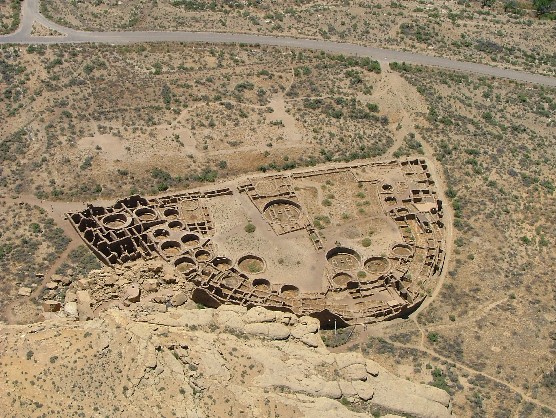
Pueblo Bonito

Pueblo Bonito

Teofilo knows a great deal about Chaco. In addition to that knowledge, by virtue of working there with the public, Teofilo’s work is informed by the things people know and don’t know when they visit the park, the questions they ask, the skepticisms they express, the things they want to know. An example, from a great piece about water at Chaco:

Looking at the remains of the great houses in the canyon today, it’s hardly a surprise that many of the most common questions visitors ask are about water.  Where did they get it?  How did they store it?  Was it wetter then than it is now?

It’s a terrific blog for a lot of reasons. The incredible insight born of listening to people’s questions is one big one.

(picture of Pueblo Bonito courtesy National Park Service)

New Mexico Gasoline Consumption Down

I haven’t had enough brainshare lately to track energy issues the way I was last spring and summer when thinking about $4 gasoline was such a teachable moment, but on popping in over at the EIA this evening, I note that we New Mexicans are continuing our frugal ways:

New Mexico Monthly Gasoline Consumption

New Mexico Monthly Gasoline Consumption

By my quick calculation, consumption in the 12 months ending in May (the most recent month for which data is available) was the lowest since 2001. Year over year, it’s down 10 percent. That seems like a lot, and I can’t vouch for the data without doing some due diligence, but maybe wow.

Disjointed Water Management

Kelly Zito has an intriguing look at California water managemente in today’s San Francisco Chronicle, looking at the incredibly disjointed way urban-suburban Northern California’s system is managed as compared to the relatively centralized role of the Metropolitan Water District in Southern California:

Ana Sarver jogs 5 miles along the Contra Costa Canal every day. But water from the 10-foot-wide channel, just a few steps from Sarver’s front door in Pleasant Hill, doesn’t flow through her taps.

Her water comes from the Mokelumne River basin – 100 miles away in the Sierra Nevada.

Confused?

Unlike Southern California, where one giant agency – the Metropolitan Water District – oversees the distribution of water from a few sources across 26 cities from San Diego to Santa Monica, the nine-county Bay Area landscape is a broad patchwork of local, state and federal water systems – with various jurisdictions controlling each.

This line of argument has interesting parallels here in New Mexico, and in particular the Middle Rio Grande. Nominally, the Office of State Engineer and Interstate Stream Commission offer centralized institutional management over the state’s waters. But because the basin isn’t adjudicated, we instead have this strange patchwork of institutional relationships with which the various individual entities sort of muddle through.

Stuff I Wrote Elsewhere: What I Did On My Summer Vacation

Hite, Utah

Hite, Utah

My friend Andrew told me the story of Hite, Utah, left high and dry as Lake Powell’s levels dropped. Lissa and I went through there on our recent vacation, and I was so struck by the place that I scraped together the details of Hite’s abandonement and turned it into a newspaper story:

HITE, UTAH – The ghostly silence at what used to be Hite Marina, on the shore of Lake Powell, must be what permanent drought sounds like.

Today, a single boat sits behind a fence in a storage lot against the hot red cliffs. A few ramshackle remnants of the marina’s old floating docks sit stranded far above the current water line.

The National Park Service, which runs Glen Canyon Recreation Area, abandoned Hite Marina in 2003 as Lake Powell’s levels dropped. The floating store and gas station that used to sit at the center of a bustling little community were towed down the lake to Bullfrog Marina, leaving behind a boat ramp that, in dry years, is stranded above the water line.

Any more, “dry” seems to be the new normal here where the Colorado River slips past Moab and through the canyon country that leads to Glen Canyon Dam. Flow on the Colorado River system, which supplies water to New Mexico and six other Western states, has been below average seven of the last 10 years.

Three Weeks Without Rain?

Drought’s a funny thing.

Take North Carolina (hi Dave!), which in general averages about 50 inches (125 cm) of rain per year. To a hardened desert dweller like me, it’s inconceivable that a 40 inch year (the great drought of ’07) could be anything other than a mild inconvenience. But drought is really all about what you’re used to, which is why I’m trying not to laugh too hard at this, from the Citizen-Times in Asheville:

Record rainfall in May pulled Western North Carolina out of years of drought, but a scarcity of precipitation since threatens to again parch portions of the region.

The National Weather Service says most of the western Carolinas and northeast Georgia have received only light rain for at least the third straight week, pushing some areas back into the category of abnormally dry.

I could go all weather data wonk on y’all and point to the latest soil moisture anomaly maps, but really, what’s the point? Drought is what you say it is when you’re in it, I guess.