
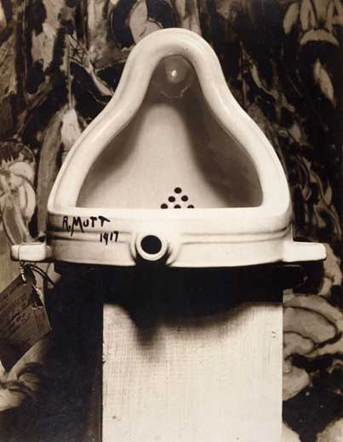
Insert Poop Joke Here

The water wonks have been all over the story about Tucson’s problems with low-flow toilets: not enough water to get the, umm, solids to the sewage treatment plant. I’ll go with Shaun McKinnon:

Tucson’s sewer pipes may have a case of the feeble flushes, suffering from cramps brought on by too little water in the system.

You Don’t Need Carbon to Commute

Michael Tobis had a post today about Lance Armstrong’s plans for an 18,000-square-foot bike shop in Austin that seems, at least in part, to be marketed at the bike commuter:

“This city is exploding downtown. Are all these people in high rises going to drive everywhere? We have to promote (bike) commuting…”

The thing is, as I mentioned on Michael’s blog, you don’t really need an expensive bike shop (and expensive bike gear) for bike commuting. But you do need it to promote a consumer culture surrounding bike commuting. And it may be that, in order to make bike commuting work for those same upscale people who drive expensive cars when cheap cars would do just as well, you need to create an upscale consumer culture around bike commuting to make the whole thing work.

So I guess this is a good thing.

Comment of the Day

John Mashey, in the bowels of an old thread, had this to say on the incentives and disincentives to rational transit economics:

Think about the logical effects of local statutes that a certain amount of parking spaces be provided per resident, worker, or customer. In effect, parking spaces are required, thus spreading buildings further apart, and *incenting* people to use cars more, because now, the spots are there.

John suggests Donald Shoup’s The High Cost of Free Parking.

Betty the White

party closeupA reader raises an interesting question about the Easy-Do Parties lady: Why is she alone in the kitchen, and why do the party guests in the background appear to be on fire?

Nora, an expert in electricity and people being on fire (or, perhaps, the magical arts) suggests that the Easy-Do Parties lady (her name is Betty) is a “elemental mage” with a specialty in electricity. This allows her to harness the power of Thor to set her party guests aflame. (Note the electrical sparks being emitted from her wooden spoon. Imagine her power were she to use a metal spoon.)

Our reader suggests another possibility: “Perhaps it’s actually the late sixties, and this liberated woman has laced her goose liver fondue with acid.”

Pat Mulroy and the Problem of Western Water

Pat Mulroy is one of the most interesting people in Western Water right now. As the General Manager of the Southern Nevada Water Authority, she’s the one responsible for getting Las Vegas the water it needs. Or, more precisely, the water it says it thinks it needs. Michael Campana had an interesting comment recently, though, about the fundamental disconnect that lies at the heart of Mulroy’s job:

Many people demonize Pat Mulroy. The fact is, she does her job extremely well – too well for some. Land use ultimately drives water use, and she does not make land-use policy; the politicians do. But as long as the elected officials in southern Nevada buy into growth and more growth, she will find the water.

You see this disconnect over and over across the West – water managers bound and determined to get the water their growing communities need, without a mechanism for feedback in the system. There eventually will, of course, be a mechanism for feedback (let’s call it the Barnett Feedback Loop), it’s just a question of how ugly it will be be.

Is The “Global Warming” Really A Secret US Military Project?

From Danger Room:

“Weather modification was used successfully in Viet Nam to (among other things) hinder and impede the movement of personnel and material from North Viet Nam to South Viet Nam,” notes a Naval Air Warfare Weapons Division – China Lake research proposal, released last month through the Freedom of Information Act.  But “since that time military research on Weather Modification has dwindled in the United States.”

Yeah, “dwindled.” That’s what they want you to believe, isn’t it?

The Prerogatives of the Yellow Jersey

A friend was riding up Albuquerque’s long Tramway Hill Sunday when he was passed by a lone rider on a time trial bike in full Team Astana kit. Astana, current home of last year’s Tour de France winner Alberto Contador, had been training in Albuquerque. We thought they had gone, but Contador was apparently still in town Sunday.
Tramway is a great training ride, a long sustained climb, not terribly steep. It has big wide shoulders, which is where we ride, leaving plenty of room for the cars. But not Contador. He was out in the lane, my friend noted, making the cars go around him.

The yellow jersey carries with it certain prerogatives.

Congestion Costs

An interesting post from last month on those hidden costs and benefits of higher gas prices. Turns out, according to some smarty-pants economists, that if the price of gasoline goes up (if, for example, we impose a gas tax), people carpool and ride the bus more, resulting in less congestion and therefore net time savings for the people on the highway. But ah, for the poor slobs who switched to the bus?

Note that while the time-savings compensates those who continue to drive, those who switch transit modes may have reduced welfare.

(Note that I quote here because I love the smarty-pants economists’ way of talking. Reduced welfare. I just love that turn of phrase. It disguises so much.)

Water Wars

We here in the West tend to think parochially about our water wars, as if we’re all six guns throwing down at the OK corral over whether the humble sheepherders or the evil cattle barons control the creek – as if no one knows water fights like us grizzled Westerners. But right now it looks like we’ve got nothin’ on the good ol’ boys down south:

Georgia lost a major court fight in the Southern battle over water rights on Tuesday when a federal appellate-court panel said the state could not withdraw as much water as it had planned from an Atlanta-area reservoir.

The victory went to Alabama and Florida, which had contended that Georgia’s plan would siphon off water that should flow downstream to their consumers. The two states had brought the appellate suit to undo an agreement between Georgia and the Army Corps of Engineers that would have given Georgia rights to use nearly a quarter of the water in Lake Sidney Lanier, which supplies drinking water to much of northern Georgia.

The reality is that we started with the idea of scarcity, and all of the fights (lawyerly and otherwise) have left us with a much more well-developed set of institutional structures for handling water fights. Down south, they seem to be newer to this Wild West water scarcity idea.

(Hat tip Belshaw)