

Inkstain Yard Sign Survey

I conducted the latest edition of my heralded Inkstain Yard Sign Survey this afternoon. The survey area this year is the two neighborhoods I happened to wander through on the last leg of my bicycle ride, shortly after the thought occurred to me. Actually, the idea occurred to me early in the ride, when I rode past the big Obama sign on Indian School Rd. near the golf course, but I didn’t count that one because it didn’t fit into my rigorous methodology, as described below. Plus, I forgot to look for more signs until later.

First, the demographics. Neighborhood one is sorta lower middle class. Neighborhood two is sorta upper middle class. The total length of neighborhood streets ridden is a mile, or maybe two. I counted every yard sign I happened to notice, and occasionally looked down side streets. The results:

  • two people want me to vote for Hillary Clinton
  • one person wants me to vote for Barack Obama
  • six people want me to buy their house*

From this data set, I conclude two things

  1. The turnout for Tuesday’s New Mexico primary/caucus thing will be extremely low.
  2. The housing market is an important issue.

* This does not include the two “open house” signs attempting to lure me off of my carefully chosen route to see houses for sale elsewhere. But I do find their presence significance. I mean, who holds an open house on Super Bowl Sunday? These people are desperate to sell.

Alfalfa

The inimitable Coco weighs in on the problem of agriculture in the desert:

Just how ill-suited desert communities are to agriculture in general depends entirely on the location of the desert community. The short view prevails. It says agriculture isn’t profitable on a small scale. We don’t have enough of it to matter anymore. And besides, this is a desert.

But the long view is useful. Agriculture has been practiced in the Middle Rio Grande for around a thousand years. The pueblo people built small dams and irrigation ditches on the valley floor before the Spanish. They also terraced the mesa to capture the intermittent stream flows for crops planted along modern day Coors Boulevard. Pumping an aquifer for pivot irrigation in west Texas is qualitatively different than gravity fed irrigated agriculture in this valley.


Global Warming and Football

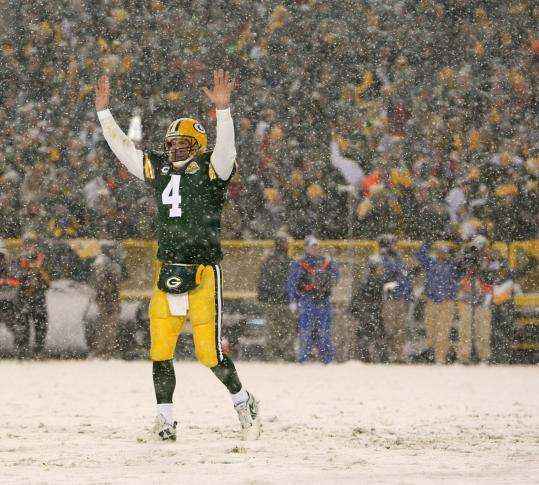
Environment America is raising serious and important questions about the elephant in the room – the impact of global warming no one wants to talk about:

National trends from recent seasons suggest that a home field advantage for cold weather teams over their warm weather rivals may truly exist.  Environment America pointed to the National Football League’s 14 cold weather teams having won 65 percent of their home games played after Halloween against warm weather teams from 1998 through 2005.

Unfortunately for the fans of these cold weather teams, winter temperatures are on the rise in cold weather teams’ cities across the country, potentially threatening the home field advantage that these teams have historically enjoyed.  Specifically, Environment America compared the average temperatures in 14 cold weather teams’ cities for the last seven football seasons to the average temperatures measured in those cities from 1971-2000.  In just the last seven years, the cities’ average temperatures from November through January have risen significantly.

Have you heard anyone ask the presidential candidates about this? No. Is it, perhaps, because the television networks broadcasting the presidential debates have a vested interest in the lucrative football franchise? Why is no one talking about this?

But the problem is far more serious than even Environment America is willing to admit. Given the global warming already in the pipeline, even if we rapidly reduce our greenhouse gas emissions, football as we know it may be doomed. Like much of the global warming debate, I fear that Environment America is afraid to tackle the serious question of adaptation. Football teams in our northern climes must adapt to the inevitable. This is not an argument for sidestepping the hard challenge of reducing our greenhouse gas emissions. American football (the kind with the pointy ball that bounces funny) is far too important for that. But we must recognize that no matter how much we reduce our Sunday driving to the in-laws’ house to watch the big game, adaptation will be critical if American football as we know it is to survive.

I recommend a Manhattan Project-style effort to develop giant air conditioning units. The model is already there among those facing the difficult challenge of playing baseball in the summer in the desert southwest. But this challenge is far greater. These air conditioning units need to be really, really big.

We must act now, before it is too late.

(HT Environmental Capital)

Bitter Fruit

I am frankly one of those who has celebrated higher oil prices, getting a quiet smile as I see the sign at the corner gas station hit $3 a gallon. Perhaps I wasn’t thinking this through, as Keith Johnson suggests:

What’s most striking is the bitter irony. Many proponents of alternative energy have long cheered for high oil prices. The more expensive oil is, the theory goes, the more incentive there is to move to other energy sources. The Anything But Oil mantra assumed the Anything has got to be cleaner than burning hydrocarbons.

And what happened? High oil prices made hard-to-recover fossil fuels—not just cleaner alternatives—an economic possibility. And the hard-to-recover fossil fuels are even dirtier than Middle East sweet crude.

Drinking Pee

Eilene Zimmerman on efforts in Southern California to do that which seems both obvious but somehow icky: treat our sewage and then reuse it:

We don’t have enough water where we need it; if we don’t learn to deal with drinking toilet water, we’re going to be mighty thirsty.

Water in the Desert: Main Break Edition

It’s sort of an infrastructure triple junction. Below, you’ve got a big open concrete channel that substitutes for what used to be arroyos carrying water off of what is now a city. Adjacent to it, you’ve got a buried water main, carrying drinking water to the residents of that city. Above it, you have one of the city’s main automobile arterials – importantly, one of the few big streets that cross the Rio Grande.

Water main breaks, undermining street. Hilarity ensues.

Stuff I Wrote Elsewhere: Forecast Edition

On the current status of our snowpack:

Much of New Mexico is just like the forecasters said we should expect it to be: dry. With La Niña’s cool Pacific waters pushing storms away from us this year, Albuquerque and most points to the south and east have been drier than average since Oct. 1.
The federal government’s weekly Drought Monitor has raised warnings for much of New Mexico’s eastern plains, with the state’s far northeast corner in “moderate drought.”
But the key exception may be the one that matters most: New Mexico’s mountains, the source of our river runoff.
As of Friday, snowpack in the high country that feeds the Rio Grande headwaters was 59 percent above normal, according to the Natural Resources Conservation Service. Snow in the headwaters of the San Juan is 50 percent above normal, and snowpack in the mountains that feed the Pecos is 25 percent above normal.