Carbon Capture

I just got around to reading Wally Broecker’s interesting piece in the March 9 Science about “the carbon pie.” One of Broecker’s arguments is that market carbon emissions trading will be insufficient to meet atmospheric carbon goals, and that carbon capture will inevitably be required:

Because CO2 sales would serve only as a temporary stopgap, capture of CO2 from the atmosphere would be necessary. CO2 capture from the atmosphere is feasible, but has yet to be implemented, and faces several technological challenges.

A Great Blog You Should All Read

Steve Aftergood’s Secrecy News is off my normal blog topics, but it’s a blog worth a read. Steve’s been toiling in the trenches for years, documenting government secrecy issues and publishing about them long before there were blogs. Today’s entry is particularly relevant to my professional duties:

In what is being characterized by subordinates as an act of “managerial dementia,” the Director of the Congressional Research Service this week prohibited all public distribution of CRS products without prior approval from senior agency officials.

“I have concluded that prior approval should now be required at the division or office level before products are distributed to members of the public,” wrote CRS Director Daniel P. Mullohan in a memo to all CRS staff (pdf). “This policy is effective immediately.”

As a regular user of CRS reports, I find this troubling.

Stuff I Wrote Elsewhere

We’re seeing some extraordinary snowmelt right now. Coming a month early, it’s setting this-date-in-history records up in the Rio Grande Gorge:

Never, in more than a century of record keeping, have we seen a March snowmelt like that flowing down the Rio Grande Gorge in northern New Mexico right now.


Record warmth across the mountains of northern New Mexico and Colorado is rapidly turning a middling snowpack into soup. The question is how much of that soup ends up in New Mexico’s rivers and reservoirs and how much evaporates before it gets to water users in New Mexico and points south.

So far, according to National Weather Service hydrologist Ed Polasko, it looks like the rivers are winning.

“Even though the snowpack is coming down like a rock, the rivers are coming up like crazy,” Polasko said Wednesday.

It’s worth revisiting Tom Pagano’s EOS paper on the 2004 March melt, which was a memorable epic early spring. Also Dan Cayan’s paper from 2001 using phenological data to look patterns of early spring onset. And Phil Mote’s work on declining mountain snowpack in the West.

I don’t want to misstate the importance of what’s going on here. In terms of water supply, there is some argument to be made that a big part of what’s happen is merely earlier melt – that it all ends up in the reservoirs anyway, just at a different time. With the enormous buffer of the big southwestern reservoirs, timing is irrelevant. (Different story in the Pacific Northwest, but I’m less familiar with the issues there.) But to the extent that part of what goes on in these early springs is increased evaporation/transpiration, this signals an interesting regime change for those of us living here in arid country.

Update: Down in the comments, Dano makes a good point worth pulling out:

A slower snowmelt generally means slower percolation thru the soil, making soil moisture last longer. Not always, but a good rule of thumb. Native grasses are adapted to that moisture being there in April-May. Just because it ends up in the reservoir anyway doesn’t do the biota adapted to a different regime any good. We’re conducting an experiment with no control.

He’s absolutely right, and I didn’t mean to give the ecosystem issue short shrift. I’m real focused on water supply issues right now, but we shouldn’t ignore the various other systems influenced by the changes underway.

Desalination

This is a fascinating harbinger of things to come on the Colorado River, as the dry side of the natural range of variability collides with rapidly growing water demands:

A plant built to remove salt from highly saline irrigation runoff has sat idle in this southwestern Arizona community for more than 14 years after only a nine-month run.

But worries over a potential water shortage in the Colorado River stemming from continued drought and surging regional growth have prompted officials to restart the plant, and federal officials are now putting it through a 90-day trial run. The intent: to have the plant ready if it’s needed to help provide water that could be used by Arizonans or others who rely on the river.

If the plant is put into use, it could provide about 82,000 acre-feet of water annually that could be included in a 1.5 million acre-feet allotment the U.S. is obligated to deliver to Mexico under a treaty between the two countries.

The forecast flow into Lake Powell on the Colorado this year is 59 percent of average. Lake Powell is currently at 63 percent of average.

No Palms

Australia’s drought means no palms for Palm Sunday in New South Wales:

Up to 300 NSW churches could have no palms for Palm Sunday with suppliers blaming the drought and logging for the shortage.

Instead, churches will be supplied with paper replicas for the religious day, observed on April 1 this year as precursor to Easter Sunday.

A Problem With “Average Temperature”

A new paper by David Lobell and his colleagues at Lawrence Livermore illustrates one of the problems with the whole “average temperature” notion ensconced in our discussions of climate change. The researchers compared outputs from 12 climate models, looking at the differences between daytime highs and overnight lows. The lows went up a little bit more than the highs but they were similar. The difference shows up in the variability. Clouds, as we know, are one area of uncertainty in climate models, and clouds play a big role in the summer daytime high. But they do not play as much of a role in overnight lows. As a result, the modelers found much greater variability in the daytime highs than in the overnight lows:

These results highlight the importance of considering separately projections for Tmax and Tmin when assessing climate change impacts, even in cases where average projected changes are similar. In addition, impacts that are most sensitive to summertime Tmin or wintertime Tmax may be more predictable than suggested by analyses using only projections of daily average temperatures.

Water in the Desert


Rio Grande at Alameda

Originally uploaded by heinemanfleck.

We’ve had a burst of warm weather over the last two weeks, and you can see it in the river. Up at Alameda, it’s running at about 1,700 cubic feet per second (cfs) well above the average of 1,100 for this time of year. I realize for people who live with real rivers this might not seem like much water (the Mississippi is currently flowing at 271,000 cfs past St. Louis), but you live in the desert with the river you’ve got, not the river you might want or wish to have at a later time.

This picture is taken from the Alameda Bridge, and I’ve picked a spot I can find and return to ever time I’m up there, lining up the camera on the bridge railing so I can capture the change over time. You can see the cottonwoods – the large trees on the bank to the right – aren’t close to leafing out yet. What looks like the left bank in this picture is actually a sandbar island in the middle of the stream. Before the river was hemmed in by levees and controlled by Cochiti Dam upstream, islands like this did not exist. Rather than one central channel like we have now, the river was braided and meandering – far more shallow, far wider, with patches of cottonwoods, marshy wetlands, and bare sandbars scraped clean by the spring flood every year.

With no high spring flood, the sandbar islands have become “armored” with plants, mostly willows. Up at the head of this island, though, the Interstate Stream Commission has been doing some terraforming, scraping off the brush and scraping down the sandbar a bit so the island can be easily overtopped with water. That creates habitat for the endangered Rio Grande silvery minnow, which used to spawn in the slow-moving meandering braids. From the bridge, it looks like the overtopping is already happening at 1,700 cfs, which is exciting to see. There were geese today flopping around in the shallows created by the ISC project.

Meanwhile, Closer to Home

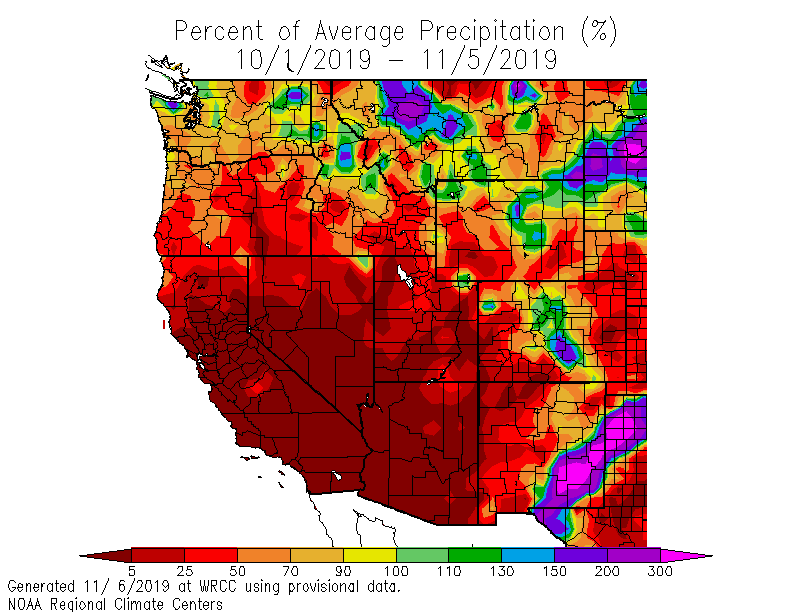
western US drought map

Folks in Tucson are gearing up for drought restrictions:

A plan that would force homeowners and businesses to conserve water if southern Arizona’s drought worsens is expected to go into effect Tuesday.
The City Council approved the plan in November, but the panel is scheduled to vote Tuesday on the code change that puts the new rules into effect. The rules would become effective immediately if passed.

Drought News

A bunch of interesting drought news:

  • From Australia, camels mad with thirst: “They helped to build the Australian nation and had a cross-continental railway named after their handlers. But now the camel population here is wreaking havoc in the desert and remote communities because of a desperate lack of water.”
  • Things are so bad in the Black Hills of South Dakota that junior water rights holders are being cut off: “Drought conditions in western South Dakota have forced the state Department of Environment and Natural Resources (DENR) to issue shutoff orders today to 46 junior water right holders along the Cheyenne River and tributaries upstream of Angostura Reservoir.”
  • water restrictions in South Florida: “Water managers voted today to impose three-day-a-week limits for sprinklers from Palm Beach County to the Keys, saying it’s time for residents and businesses throughout the region to share the pain of a drought that shows no signs of ending.”