Drought in the Models

Drought is almost surely the most important piece of climate change/variability in terms of its impacts on human society (sorry, hurricane fans – I’ll defend this if needed). And sub-Saharan Africa is ground zero, the Gulf Coast of drought risk. So this should give pause – evidence that the models aren’t getting African drought right:

We find that only eight CGCMs (hit models) produce a reasonable Sahel drought signal, while seven CGCMs (miss models) produce excessive rainfall over the Sahel during the observed drought period. Even the model with the highest prediction skill of the Sahel drought could only predict the increasing trend of severe drought events but not the beginning and duration of the events.

Lau, K. M., S. S. P. Shen, K.-M. Kim, and H. Wang (2006), A multimodel study of the twentieth-century simulations of Sahel drought from the 1970s to 1990s, J. Geophys. Res., 111, D07111, doi:10.1029/2005JD006281
More on My Newest Obsession

Robert Lee Hotz had a great piece over the weekend in the LA Times about phenology as a climate change detector:

By analyzing decades of records kept by regional maple sugar producers, climate researchers are finding clear evidence here of what Rex Marsh can feel in his bones.

The weather just isn’t what it used to be.

In Ohio and New York, through New England and into Canada, the maple sugaring season starts and ends earlier than a generation ago, University of Vermont researchers and other experts say.

Moreover, the daily temperature cycle of frost and thaw on which sap production depends also has been disrupted.

While officials argue over carbon emission controls and global warming treaties, tree farmers such as the Marsh family, along with gardeners, anglers and bird-watchers, sense the change in the air.

Ride to Health

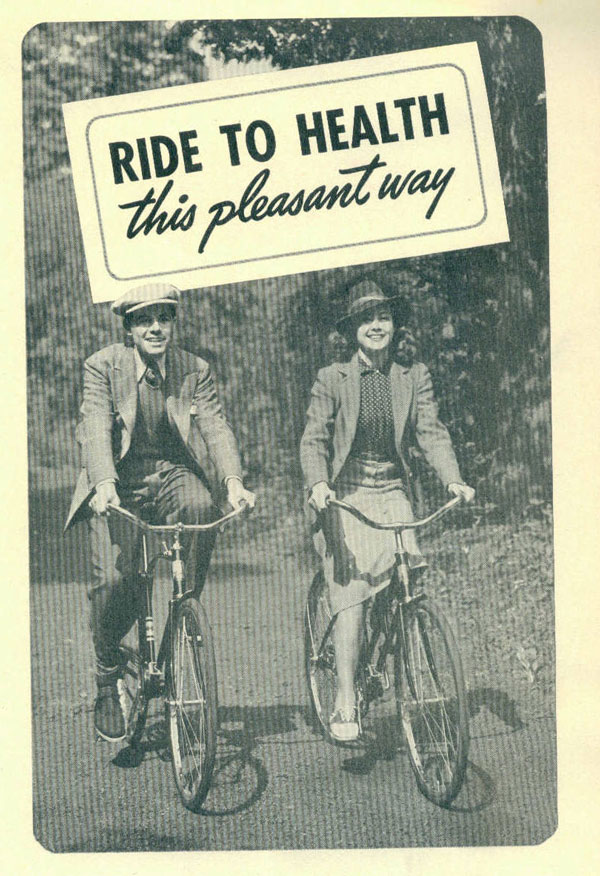
From the Sept. 25, 1939, Life magazine:

life magazine ad

Ride the New Light-Weight Bike

Bicycling is winning new thousands of devotees because it’s one of the most exhilarating sports in the world. It brings a tingle to the blood, a glow to the cheeks, a sparkle to the eyes. Beyond all that – it’s fun!

And now this new light-weight makes bike riding more fun than ever. For this new model is pounds lighter. It handles more easily, runs more smoothly. The merest pressure on the pedal – and presto – you’re turning invigorating exercise into play.

Why not decide now to stay young and keep healthy in this glorious, carefree way? Visit your nearest dealer in American-made bikes at once. Ask for the light-weight!

BBC on the Overselling of Climate Science

Via James Annan, a BBC piece on the “cry wolf” problem:

Hardly a day goes by without a new dire warning about climate change. But some claims are more extreme than others, giving rise to fears that the problem is being oversold and damaging the issue.

I’ve written narrowly about this problem before from a media point of view – the seizing upon a small and suggestive result to suggest a large and conclusive problem. But the BBC piece is much more comprehensive.

James links to Roger Pielke Jr.’s post on the issue that covers the most important base well: the BBC’s decision not to quote your garden-variety skeptics, who are in a tiny minority and are therefore easily dismissed in the tribal climate wars tussle. Instead, the producers chose people who believe in the scientific consensus, and believe climate change is a problem. By shifting the debate off of the usual tribal terrain, the producers force the discussion into a much more useful territory.

My New Favorite Ball Cap

It’s hard to pick a good ball cap. I don’t wanna sound all touchyfreaky, but it’s like they pick you.

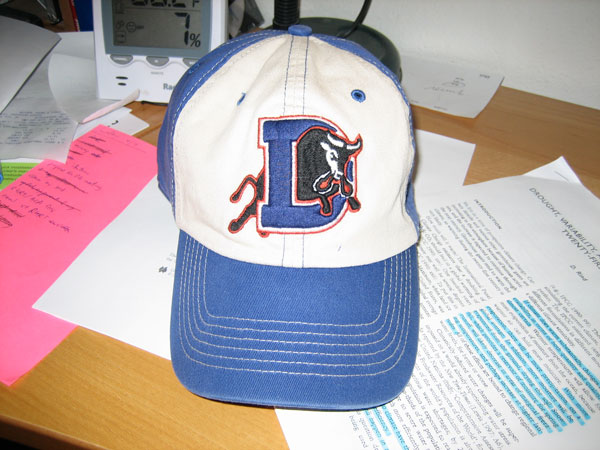
Durham Bulls

At any given time, I’ve always got a favorite ball cap, the one I want to grab when I go for a walk on a sunny day, or when my hair’s all bad hair day and I need to go out in public. The classic, which set the standard, was an old green cap from McPheely’s Tavern in Walla Walla. “Relax Freely at McPheely,” it said, and had an inscription in pen from Nietzsche (you know the one) under the bill. It was lost after a particularly memorable game of Ultimate, and all attempts to replace it came up short.

Most recently it’s a cap from the Philadelphia Museum of Art with Paul Cezanne’s signature as a logo. I was in need of a new ball cap, and the Cezanne called out at me from the museum gift shop: “Hey, if you’re gonna shill for someone with a logo cap, shill for someone good!”

The baseball fairy heard that in May, my path will cross that of the Durham Bulls, and bade me be properly prepared. The fairy also sent a program. You can’t tell the players without a program.

Stuff I Wrote Elsewhere

Any day you get to quote Charles Darwin is a good day indeed. (OK, I actually had to paraphrase, but still.)

Pity the poor Galapagos tortoise. An icon of evolution, he also apparently makes a nice dinner. When Charles Darwin visited the Galapagos in 1835, he noted that tortoises differed from island to island. It was one of the key pieces of evidence that later shaped his ideas about evolution.

He also noted something that in hindsight looks particularly prescient: The islanders found some of the tortoises particularly tasty.

So while the Galapagos tortoise is an icon of scientific history, its numbers are dwindling as the human population in the Galapagos continues to grow.

Blogs as a Phenological Tool

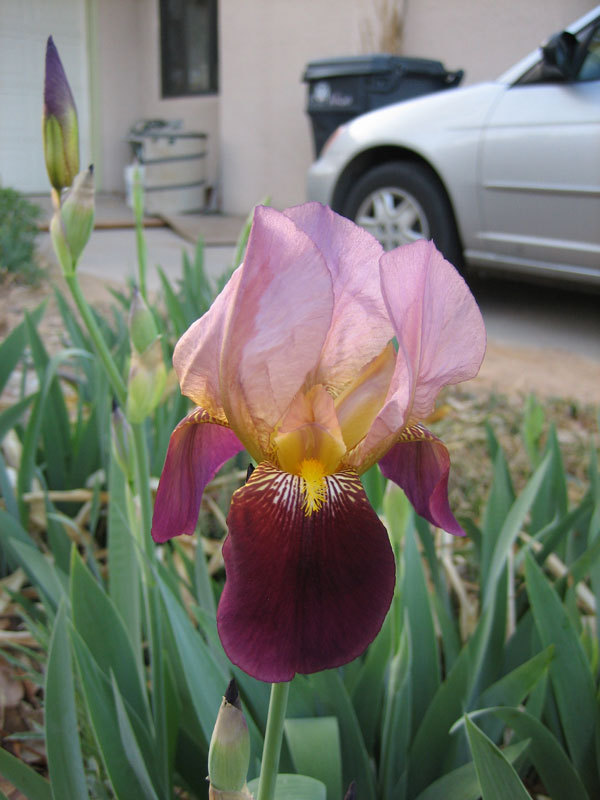
So I had this idea that I’d be able to look back through old blog posts and find out when the iris bloomed in our front yard each year, and that I’d be able to offer this slightly tongue-in-cheek riff on how bloggers writing about their gardens could create a sort of informal phenological network, as we documented in odd but useful detail the comings and goings of the things in our gardens.

iris
(L. Heineman photo)

Phenology is one of those things you think is already figured out – when things leaf out and flower, how natural systems respond on an annual cycle to the vagaries of climate. But, as I’ve written before, there’s not a whole lot of good data on this subject. So I’s thinkin’ I’d just look through my blog for posts about the first blooms in the big bed of purple iris in our front yard, and then run off a riff along the lines of, “Is there any problem bloggers can’t solve?” Only it turns out I’d been really bad about this, disorganized here just like in every area of my life. So I’ve no idea when the purple iris first bloomed. This year, it was April 19.

As my friend Annette used to say, “Expectations are a funny thing.”