Eric Kuhn’s been calling this a “sneaky drought”:
Another forecast predicting a dry warm spring for the Colorado River basin – The official CRBFC May runoff forecasts will be out next week. Look for a big drop in the A-J unregulated inflow to Lake Powell. https://t.co/5GkozLVHim
— Richard Eric Kuhn (@R_EricKuhn) May 1, 2020
It’s been particularly sneaky in part because the forecast seemed OK back in March, and then we all got distracted by a global pandemic and the collapse of our economy. While our eyes were averted from mundane things like how much snow there was in the mountains and how much we could expect to melt and flow into our rivers, the forecast has been tanking. I honestly hadn’t been paying close attention.
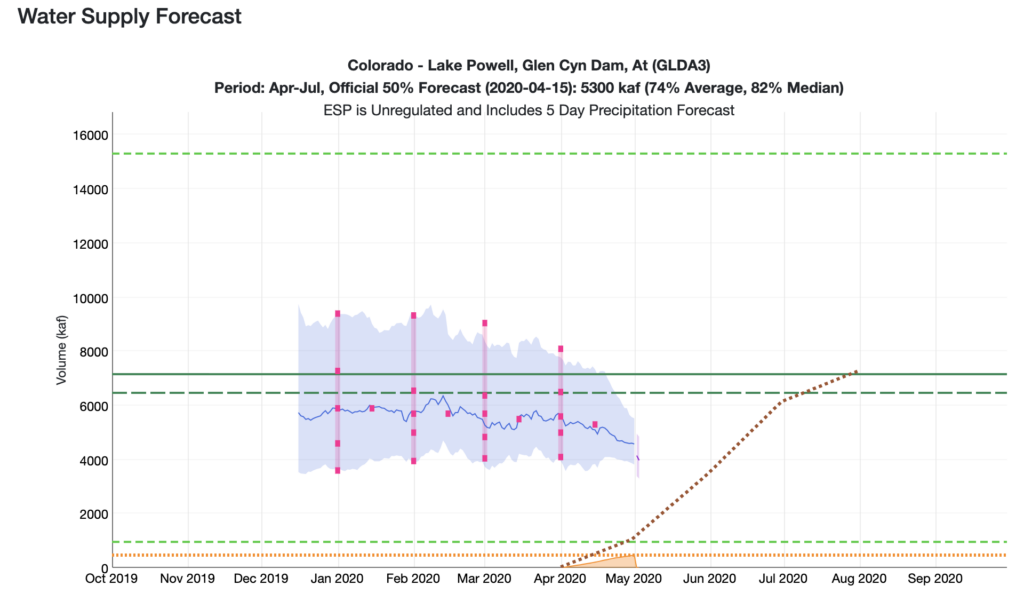
The official forecast won’t be out until early next week, but the preliminary numbers suggest inflow into Lake Powell, the upper of the Colorado River’s two primary storage reservoirs, will be a million acre feet less than we thought it would be a month ago. “We’re talking about 4.5maf,” Eric said when he and I were talking this afternoon. “That’s low. That’s ugly.”
Courtesy Colorado Basin River Forecast Center
An April-July inflow of 4.6 million acre feet, which is what the preliminary modeling suggests, would be just 58 percent of the long term mean.
Courtesy Colorado Basin River Forecast Center
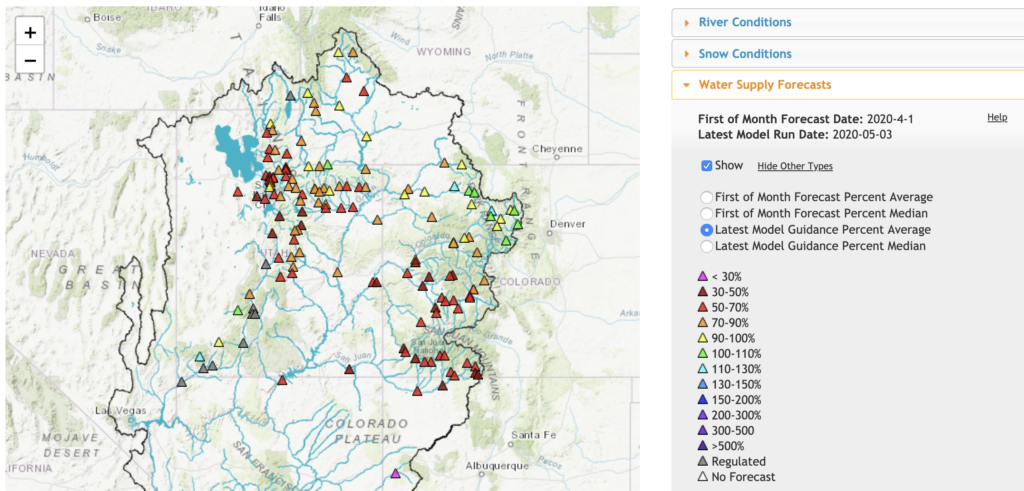
It’s been a particularly vicious year in the southern Rockies, which feed the San Juan River.
Huge thanks the crew at NOAA’s Colorado Basin River Forecast Center, who do a great job of forecasting, and also a phenomenal job of communicating that forecast information. They’re having a webinar Thursday at 10 a.m. MT if you’d like to distract yourself from all the epidemiological bad news with some hydrologic bad news.