Tarrant: much ado about nothing

So what’s up with that full court PR madness from the folks in the Tarrant Regional Water District in Texas? Is the future of the many interstate water management compacts that govern water distribution among the western states really under threat. This may seem obscure, but if you follow water, you can’t help but have stumbled over the argument that, if the Supreme Court takes up the case in question, all the compacts will be out the window.

Not so much, writes Stephanie Ogburn after doing a bit of digging on the question:

According to Harris, of Western Resource Advocates, the Texas water district is looking for allies. Oliver’s strategy is to get Western water mavens worried enough to take up his cause.

“He’s going after again the water districts, states, anybody else that he thinks might be interested in siding with them if the Court picks up the case.”

Those groups could file friend of the court briefs on Tarrant’s behalf, says Harris.

“But honestly I think he’s making a mountain out of a molehill here.”

So there you go. Are we on the verge of water anarchy? Probably not.

(This thing’s been bouncing around out there, via Tarrant’s PR, and I haven’t had time to do the leg work. Journalistically, it’s a weak payoff to do the work to conclude something’s not really a story, and we owe Stephanie gratitude.)

Pat Mulroy on the value of water

From a great Circle of Blue interview, Pat Mulroy of the Southern Nevada Water Authority has some great insights into how we value water, but also how we think about paying the resulting costs:

[W]e in the water business stand back, and we become amazed that somebody is willing to pay $US 80, $US 90, $US 100 for their cable bill, to pay that much for their cell phone bill, but they’re not willing to pay $14.90 for their water bill.

I recommend the full interview.


Oh Vegas: Ponzi Scheme at the Las Vegas Mob Experience?

One might expect the Las Vegas mob experience to involve criminal activity. But the Las Vegas Mob Experience, a tourist trap?

Financing for the Las Vegas Mob Experience tourist attraction likely involved a “fraudulent transaction” and “the earmarks of a Ponzi scheme,” a court-appointed accountant has determined.

(With a hat tip to Tampa Bay Times reporter Craig Pittman’s Oh #Florida series. I’m thinking Vegas can compete.)


Saguaro, Ponderosa and regional climate

Intriguing paper by Pierson and colleagues, looking at a big demographic survey of the great saguaro cactus:

Averaged across the region, saguaro regeneration rates were highest from 1780 to 1860, coincident with wet conditions and high Pinus ponderosa recruitment in the highlands. Milder and wetter winters and protection from livestock grazing likely promoted late 20th century regeneration surges at some sites. Predictions of saguaro population dynamics in the 21st century likely will be confounded by the saguaro’s episodic and asynchronous regeneration, continued urbanization, ongoing grass invasions and associated wildfires, and changing climate.

a sketchy winter forecast

In the midst of reading Nate Silver’s book, I felt like I ought to say something nuanced about the seasonal forecast that came out this morning:

In this morning’s briefing, the forecasters were careful to explain that they’re not making predictions here, but rather forecasting odds – “probabilistic” in the jargon: “These impacts are not guaranteed,” Halpert said. But the forecasts do provide useful information that we can combine here in New Mexico with what we know with certainty about the conditions on the ground to begin to get a clearer picture of the drought risk we face.

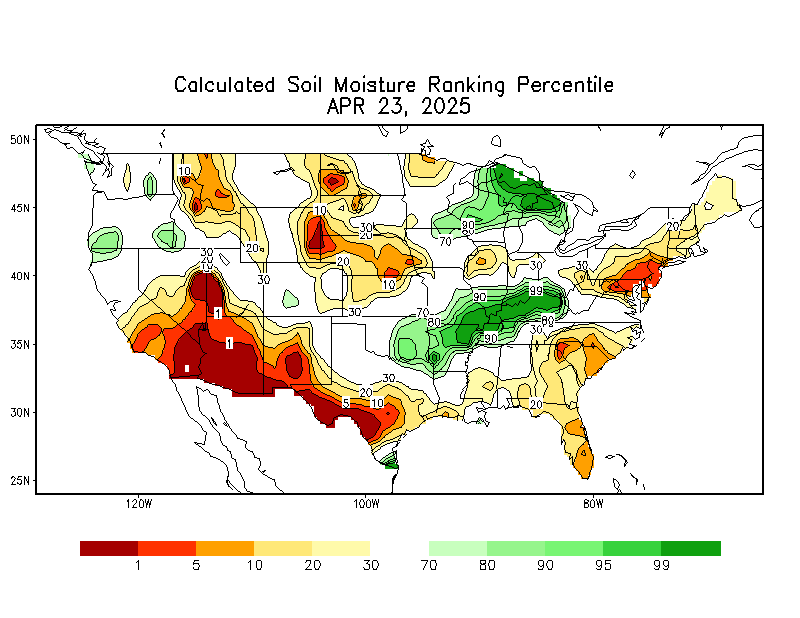
And those things we know include the fact that our reservoirs are mostly empty (pdf) and the soil moisture is not very moist. So, if I may indulge in a bit of value-laden reportage, a pretty crappy forecast indeed.

A longstanding tradition in western water – getting someone else to pick up the tab

Here in the arid West, land of the pioneer spirit and the rugged individual, we have a longstanding tradition of sticking someone else with the bill for our water projects.

The carefully constructed edifice that is Law of the (Colorado) River is complex set of legal and institutional deals among the basin’s water users built on a foundation of US taxpayers picking up the tab for the big water projects that make the whole thing work. In California, the histories of the Central Valley Project and the State Water Project are a rich tale of figuring out how to spread costs thinly across the largest possible base of taxpayers.

So it was with interest that I read the stories over the last few days about the way the parties warring over the Sacramento Delta have scratched out a deal on a package of projects everyone can agree on. Here’s Matt Weiser:

The Coalition to Support Near Term Delta Projects has met quietly for six months. Its three dozen members cover the range of animosity and accusation in the long-running water wars that have bedeviled the Delta, from environmentalists and levee managers to Delta farmers and Los Angeles water exporters.

Yet somehow, they have agreed to support 43 projects, including levee upgrades, habitat improvements, wildlife research and a proposal to recycle the Sacramento region’s sewage.

And Alex Breitler:

In one case, a group of about 80 farmers, environmentalists and water providers recently voiced support for more than 40 Delta projects totaling $770 million. Those projects will be discussed in a Senate committee hearing Monday.

Ah, but how to pay for all this? The California Legislative Analysts’ report for Monday’s hearing (pdf) suggests this effort is in keeping with the aforementioned longstanding tradition.


The hidden dangers of water planning

Regional water planning, it turns out, is the first step toward One World Government:

The Integrated Regional Water Management Plan may sound harmless, but it is part of this “regionalization” program. Control of water on rural lands will transfer from landowners to government control agents or “water masters,” who will begin their work imposing limits on individual water use (20 percent by 2020). If you control the water, you control the people.

Be very afraid:

Many rural areas are being “cleansed” of people using the regionalization process.

Chapter 8.5 of Agenda 21. Look it up. (Oh wait. I did look it up. It doesn’t say that. But never mind. Very afraid! Other!)

Another look at increasing aridity under climate change in the West

Salt-Verde watershed

Salt-Verde watershed

At the risk of a “dog bits man” blog post, yet another analysis has concluded that droughts in the southwestern United States are likely to be worse, and rivers drier, as a result of rising greenhouse gases. This time, it’s the Verde in Arizona, part of the watershed that feeds the greater Phoenix area:

Results show that under all scenarios, the distribution functions of hydrologic states will shift towards lower values and droughts will progressively become more frequent, longer and more intense.

Lather, rinse, repeat.