In New Mexico, we make our snowmen out of the materials at hand:
(updated with a link to the video because I can’t figure out how to embed it right)
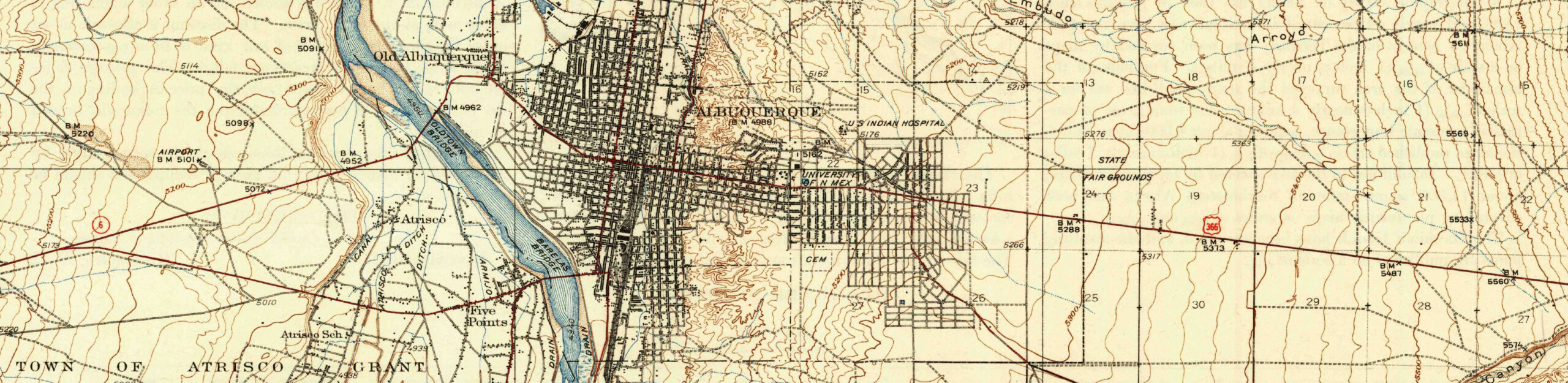
In New Mexico, we make our snowmen out of the materials at hand:
(updated with a link to the video because I can’t figure out how to embed it right)
It might seem obvious that the more water you have available, the less vulnerable you are to drought. Or not so obvious?
Comparing counties over the Ogallala with nearby similar counties, groundwater access increased irrigation intensity and initially reduced the impact of droughts. Over time, land-use adjusted toward water-intensive crops and drought-sensitivity increased; conversely, farmers in water-scarce counties maintained drought-resistant practices that fully mitigated higher drought-sensitivity.
That’s from Hornbeck and Keskin, The Evolving Impact of the Ogallala Aquifer: Agricultural Adaptation to Groundwater and Climate.
I don’t know who “qbertplaya” is, but I am eternally thankful to him or her for this:
It’s Patti Smith closing CBGB, the last song played there, a moment in history captured by someone wise and generous enough to hold up some sort of mobile recording device. I was struck by that act when I first ran across the recording years ago – the difference between being in a moment and recording it for others.
It is a long and important tradition that includes the strange story of Abraham Zapruder. But like qbertplaya, we are all Abraham Zapruders now. In the now-famous picture of a University of California Davis police officer pepper-spraying peaceful seated demonstrators, I counted 15 people taking pictures, outnumbering those who were not filming.
There’s an odd sort of detachment in the act of bearing witness for posterity instead of simply being in the moment. I know it professionally. I’m not a photographer, but I’ve been rethinking this because I’ve started taking pictures in my newspaper work recently. That fundamentally changes what has always been, for me, the act of bearing witness. Being at a “thing” when I’m working is different, the way I try to see more, remember and annotate and prepare for the retelling even as I’m experiencing. Instead of just being there and enjoying.
I thought of this anew yesterday when I reread, on the news of his death, Tom Wicker’s remarkable first-day story on the assassination of John F. Kennedy. As an example of tradecraft, it is a thing to behold – richly detailed yet unadorned, famously dictated from a pay phone “from notes scribbled on a White House itinerary sheet.” It is impossible as a practitioner for me to read the work of others without pondering the “how did they do that” question. It is impossible for me to watch Wicker bear witness that day and not be in awe:
Standing beside the new President as Mr. Johnson took the oath of office was Mrs. John F. Kennedy. Her stockings were spattered with her husband’s blood.
This isn’t the blog post you’ve been looking for.
The Arizona Republic had a very smart editorial today about the Colorado River. The premise: what happens in California matters a great deal to Arizona. The back story is a struggle in California about how to meet the terms of a deal in the early ’00s to cut back to its 4.4 million acre foot share of the Colorado River after years of overuse. Californians are in court now fighting over the details of how to do that. It would be easy for the other Colorado River states, especially Arizona, with its long history of fighting with Californians, to watch from a smug distance, maybe even take quiet pleasure in California’s discomfort. But the Republic wisely notes this:
[A] California in turmoil, unable to manage a limited supply of water efficiently and perhaps casting about for other sources, will be a poor partner in future water planning.
And we need a lot of planning. The Colorado basin is in a decade-long drought, with predictions for a hotter, drier future. A study is under way to figure out how to supplement the river’s water supply, maybe through desalination or importing water or cloud seeding.
We need California to be focused, not fighting.
A tip of the Inkstain hat to the unmissable Aquafornia for the link.
When it comes to water, we westerners seem to be a distrustful lot:
Water politics in Colorado and in western Wyoming have long been driven by this one, nagging fear: that California was getting something to which it was not entitled – and might get accustomed to it. Squatter rights, if you will, bolstered by a huge population advantage. Million still plays that card. “If the water users of Wyoming decide they don’t want to access their water, then that’s their decision – and California, Arizona and Nevada will continue to benefit,” he says.
Stacy Tellinghuisen, water and energy analyst for Western Resource Advocates, says she believes proposals for pipelines at Flaming Gorge, Lake Powell and Las Vegas are all driven by a new realization of limits. “The thinking is that if we develop this now, if there is a shortage in the future, we will still have this water,” she says.
That’s from Allen Best’s sweeping look at proposals by entrepreneur Aaron Million and others to siphon off some more water from Flaming Gorge. Beyond the narrow point I’ve selected, the piece richly rewards. If you’re interested in western water, I recommend giving it a click and a few minutes of your time.
Corey Pieper, a National Weather Service meteorologist in Texas, linked this evening to some excellent (if grim) maps showing what it would take to bring Texas, New Mexico and the rest of the southern tier of states out of drought. The first is the percent of normal precipitation required over the winter to end drought:
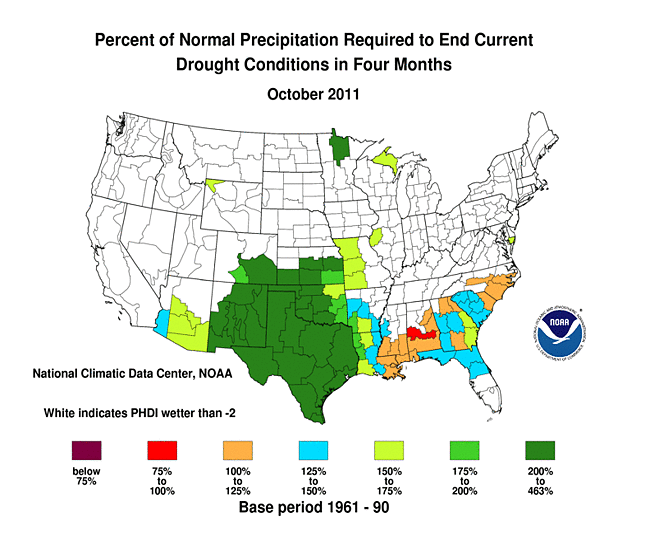
Percent of normal precipitation required to end drought in the next four months
The second is the probably probability of getting that much precip:
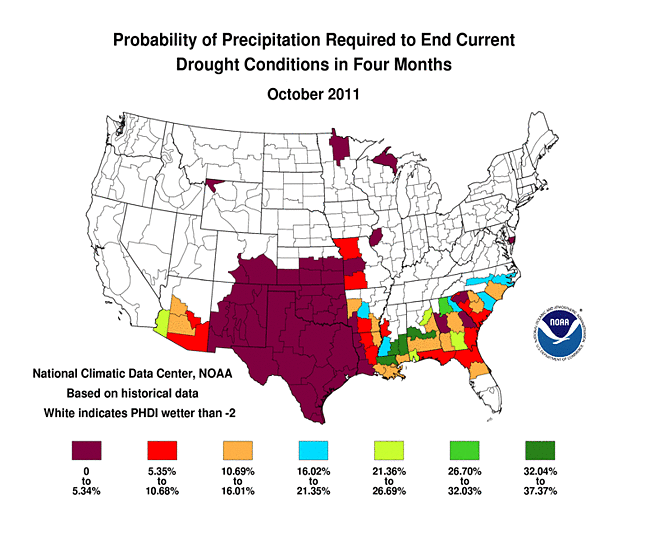
Probability of receiving enough precipitation to end drought in the next four months
From the morning paper, a riff on getting acquainted with our river:
The question of what we know about our river, and how we care for it, has been on my mind since I finished reading Cynthia Barnett’s new book, “Blue Revolution.”
Barnett, a Florida journalist, writes about the need for a water ethic. She was in town this month to speak at the annual meeting of the American Water Resources Association, and while she was here I offered to show her our river. We spent a delightful Sunday afternoon working our way up the Rio Grande from Isleta to Alameda — the ditches that spread the water over the valley, the old neighborhoods that grew up around them, and the river corridor itself, the great strip of golden fall cottonwoods and brown water down the middle of our city. But I found myself apologizing (and complaining) as we followed a tortuous path to reach the relatively few places where I could actually get her down to see the river itself.
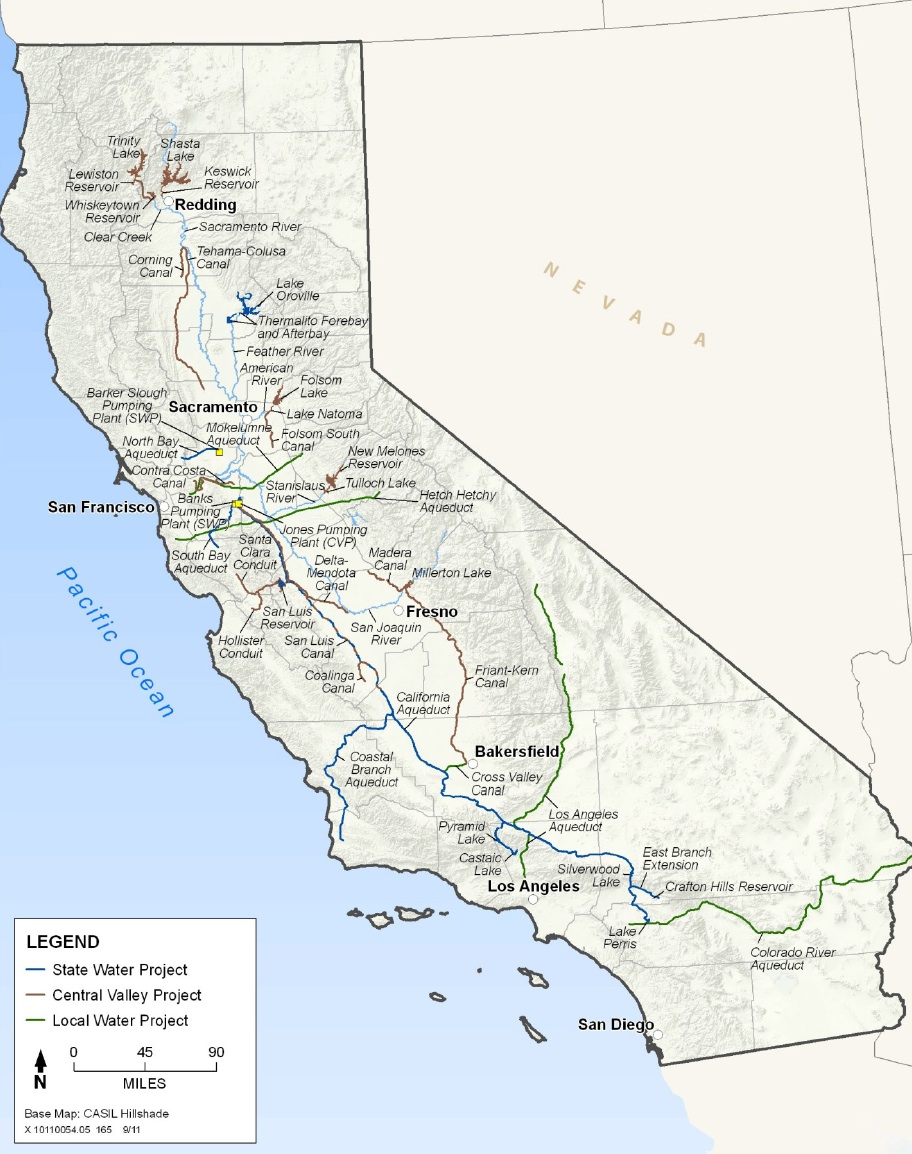
California's interconnected plumbing, courtesy Delta Stewardship Council
Via Doug Obegi at NRDC’s San Francisco office, more evidence today of the interconnection of water management across the western United States.
Obegi, in a post outlining the history of diversions from the Sacramento-San Joaquin Delta, pointed out the way water allotments to the Westlands Water District in the San Joaquin Valley decreased as the Metropolitan Water District of Southern California increased use of its share of delta water in the early ’00s:
Admittedly, several decades ago, the water allocation for the 600 farmers served by Westlands was typically 100%, But back then, the 19 million people served by the Metropolitan Water District of Southern California took a lot less water from the Delta. For instance, the initial 2011 allocation for Metropolitan is more than 1.146 million acre feet, and this amount is likely to increase substantially if 2011 is an average or wet year; however Metropolitan’s 1996 allocation was just over 738,000 acre feet.
And why did Met increase its diversions from the Delta? From the Bureau of Reclamation (pdf – see p. 77):
The Quantification Settlement Agreement (QSA) signed in 2003 resulted in a decrease in the amount of Colorado River water available to California.
Or, as I wrote back in May by way of explaining my fascination with California water:
As the Central Arizona Project fully came on line, California had to bring its usage down to reflect that reality. One thing that happened is that the Metropolitan Water District’s use of Colorado River water went down, and its use of State Water Project water, pumped from the delta, went up.
Click on the map for a bigger view of California’s interconnected plumbing, and to see how we’re all in this together, for better or worse.
is this, from Robert Hass:
Life, I found myself thinking as a line of Alameda County deputy sheriffs in Darth Vader riot gear formed a cordon in front of me on a recent night on the campus of the University of California, Berkeley, is full of strange contingencies.