
Wave goodbye to La Niña

Today’s Climate Prediction Center monthly ENSO forecast discussion bids a fond farewell to La Niña, and illustrates the difficulty of figuring out what will happen next:

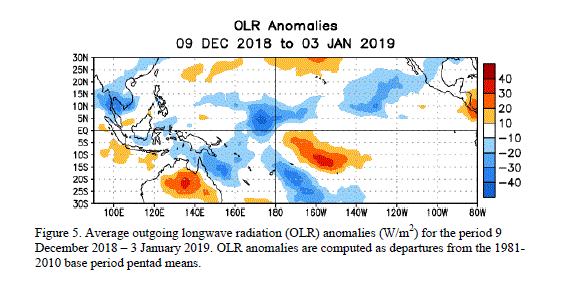
A majority of the recent dynamical and statistical SST forecasts for the Niño 3.4 region indicate a transition to ENSO-neutral conditions during June – August 2008 (Fig. 5). During the second half of the year, the majority of models reflect ENSO-neutral conditions (-0.5 to 0.5 in the Niño-3.4 region). However, there is considerable uncertainty during this period as some models suggest the possible development of El Niño while others show a re-development of La Niña.

Energy Tips

My friend Al Zelicoff is a maestro of energy conservation. It seems like a no-brainer to Al, because of the money he saves. What he has long puzzled over is why everyone doesn’t do it. The answer, I think: information. So I was delighted when my editor, Charlie, suggested recently that we have Al do an “energy tip of the week” in the newspaper.

Started yesterday, and we’ve thrown up an energy tips web page that will serve as a reusable receptacle for Al’s wisdom.

Drought in Iraq

As if things weren’t bad enough, this from NASA’s Earth Observatory:

One of the worst droughts in the past decade settled heavily over the Fertile Crescent region of Iraq and Syria in the winter of 2007-2008. Under normal conditions, winter rain and rivers flowing from the mountains of Turkey sustain the rich agricultural land that has fed humanity from the dawn of civilization. But little to no rain fell between October and December during the crucial planting period, and sparse rain fell in the months that followed, said the U.S. Department of Agriculture’s Foreign Agricultural Service (FAS).

the climate policy dilemma

The New York Times’ Jad Mouawad had a story yesterday that neatly illustrates how hard it will be to come up with a workable climate policy in the United States. It describes the efforts of the members of the Climate Action Partnership, a coalition of businesses and environmental groups trying to sit down at the table and come up with a workable policy that both groups can sign on to:

“They helped crystallize the concerns about climate,” said David G. Victor, the director of the energy and sustainable development program at Stanford University and an expert on climate policy who has been closely following the debates. “But the moment the coalition starts to focus on the details, it starts breaking apart. It’s a litmus test for the debate in the country.”

In other words, even when folks agree on the value of action, the details are hard.

Hurricanes and Global Warming

(oops, typo in headline corrected) Andrew Solow and Andrew Beet out of Woods Hole have a new paper in GRL offering up the latest version of the argument that undercounting may be responsible for a spurious imputation of a trend in hurricanes (and therefore an assertion about the effect of global warming on hurricanes):

[T]his analysis supports the position that the early part of the observed record of tropical cyclone counts is incomplete. Ignoring this incompleteness leads to an over-estimation of the effect of increasing sea surface temperature on mean tropical cyclone frequency.

Peak Women’s Tennis Shoes?

Lissa made a startling discovery yesterday at Costco. There were no women’s tennis shoes in stock. It was not just that they have become more expensive. There were none available at any price.

This raises an interesting question: have we reached peak women’s tennis shoes? Will women have to start going barefoot? Or will they merely go through the uncomfortable societal dislocations involved with shifting to unconventional shoe options, like wearing men’s tennis shoes?

See also Ebert’s peak.

Coal to Liquids

I don’t understand the numbers well enough to know how significant news like this is, but it’s clear that we’re only going to see more of this in the five-to-ten year horizon as conventional oil stays expensive:

South Africa’s Sasol (SOLJ.J: Quote, Profile, Research), the world’s biggest maker of motor fuel from coal, said on Thursday it was working jointly with India’s Tata Group to acquire coal fields for coal-to-liquid ventures.

“Sasol and Tata are collaborating with the Indian government on the allocation of coal blocks for CTL (coal-to-liquid) projects,” Johann van Rheede, Sasol’s spokesman told Reuters.

He said the company still has long-term plans to develop coal-to-liquids fuels projects in India though it was still “early days”.

Sasol also has similar nascent plans in China, the world’s biggest producer and consumer of coal.

See Appell’s theorem

Shell Betting on US Wind

From the Financial Times:

The growing importance of wind power originally drew Shell into what was set to be the world’s biggest offshore wind farm, the 1 gigawattLondon Array, that put the UK in line to be the world leader in building offshore wind farms. But on May 2 Shell said it was selling its stake in the project to turn attention to North America.

Mr Williams draws attention to the large tracts of available land in unpopulated areas in the US and Canada that enable cheaper on-shore expansion, against the more expensive option of developing offshore projects in Europe.