You know you’re in the rich world when…

From the AP story on the Mars-Wrigley merger:

“In terms of Warren Buffett’s sweet spot, these are exactly the kind of brands that he wants,” said Jet Hollander, a former candy industry executive who is president of the snack food consulting firm Pre-Eminence Strategy Group.

I’m guessing they don’t have “snack food consulting firms” in Malawi.

Backyard Birdseed

My colleague Susan Stiger did a nice job in this morning’s newspaper of connecting the dots between global food and local bird food:

Don’t believe everything is connected? At the moment, gasoline prices, Burmese cooking oil and potato chips are ruffling the feathers on your backyard birds.

This is a good example of an effective way of coming at an issue orthogonally to help people to think about it. It would not suffice as the only story about the linkage between global and local food, but it’s an excellent adjunct to Susan’s other work on the subject.

Signs of Spring

  • kids in the bumper boats at Hinkle Family Fun Center
  • first hummingbird, sitting on the power line in the backyard (2005: April 16; 2007: May 2)
  • first bloom on the Harrison’s rose (yesterday, exact same date as first bloom last year)
  • first of the main purple iris bloom in the front yard, over the last couple of days
  • my sister, stretched out on the lounge chair in the backyard in the sun, reading a mystery

When I have some time, I’ll track down the spring-to-date climate data. It’s been dry here in Albuquerque, that much is for certain.

update: Another one I forgot: the big ants by the driveway are out.

Malaria and Global Warming

Roger Pielke Jr., my favorite thrower of inconvenient hand grenades, wrote a provocative post this week about the linkage between malaria and global warming.

Malaria, Jeffrey Sachs writes, causes poverty. (( The End of Poverty, p. 197)) It does this by reducing economic productivity, creating a vicious cycle in which people get sick, can’t work, are less productive and therefore can’t afford the relatively inexpensive steps needed to protect against, and treat, malaria.

The result, according to Sachs (all the cool kids seem to be reading him these days): 3 million deaths, and a billion people sick from malaria every year in Africa. ((Common Wealth, p. 232))

Providing the necessary assistance to help the extremely poor (those living on $1 or less a day) deal with malaria seems like a no brainer for the rich world. First of all, it’s the right thing to do. I mean, 3 million kids dying a year of a disease that’s treatable and preventable? What more need be said? But providing that necessary help, as Sachs and Richard Collier ((Bottom Billion)) note, is also critical to helping pull the extremely poor out of that status.

But what is “pulling them out of poverty” if not increasing their economic footprint? And what goes along with that increasing economic footprint? Increased carbon emissions.

Roger’s done a notional back-of-the envelope calculation showing the dramatic increase in global warming emissions in Africa if we help them deal with malaria. In other words, treating malaria in Africa will contribute to global warming. I have no idea if Roger’s numbers are right in detail, but he’s clearly got the sign right (increase in greenhouse gas emissions). And the magnitude, whether it’s more or less than his number, is clearly going to be significant.

This is not, of course, to argue against treating malaria. It’s merely another illustration of the tangled relationship between disease, poverty, economics and climate change on a global scale. It’s a really hard problem.

(Picture courtesy Kenya Medical Mission)

Recommended Reading

I’ve added a new goober over in the far right rail called “recommended reading.” The idea came from my old pal Chuck Taylor, who’s involved in an interesting experiment up in Seattle called “Crosscut“. More on that later (I had an interesting visit with Chuck, and I’m intrigued by what they’re attempting), but the easy bit was a trick Chuck shared.

He used Google Reader, as do I, to process the flood of RSS feeds he reads. Google Reader has a feature called “share” that allows you to tag items to share with others. And then Google builds an RSS feed of those shared items, which can be made public if you choose. So I’m just pulling that RSS feed into a WordPress widget, and “presto,” a flow of the most recent five cool blog items I thought notable enough to share.

Food Price Index

I’ve been looking for a standard food price index comparable to the “barrel of oil” or the “gallon of gasoline” we’ve all come to know and love and, more importantly, intuitively grasp. The idea here is a number that’s standardized, readily available and easy to grasp.

The Economist has its Food Price Index, but WTF is a “food price index”? Still, it’s the best I’ve got right now. Is there a standardized “bushel of rice” or “bushel of wheat” or something that shows up on the data pages of the Wall Street Journal every day?

For now – Economist FPI: 264.6, up 4.2 percent from a month ago and 69 percent from a year ago.

Great Blue Heron

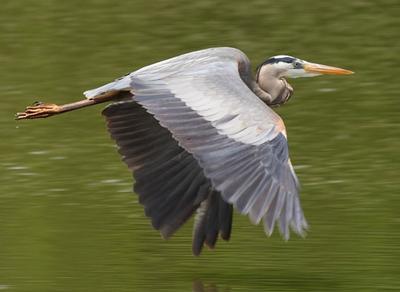
great blue heronBack in the late ’80s, Lissa and I were camped along the lower Colorado River somewhere near Blythe. It was winter, but it’s always warm there. Out in the middle of the river, on an island, we watched an enormous bird, just sitting. The bird book and binoculars suggested a great blue heron. Our old copy of Peterson’s “Field Guide to Western Birds” has this note:

11/86 – Sat on tiny island in Colorado River all morning, picking at its feathers.

It is our tradition to make marginal notes in whatever bird book we happen to have with us. There are an additional 8 great blue heron sitings noted in our Peterson’s, and another 2 in our copy of The Sibley Guide to Birds. My favorite is the great blue that followed us on a boat trip down the San Juan River in Utah in 2002.

I suspect it is not the same bird, following us around over the decades, but there is a certain familiarity about him, a comfortable patience. This year, Lissa spotted him as we were driving down a sand spit on Lopez Island, in the San Juans north of Seattle. He was sitting in a hollow in the salt marsh on the inland side of the spit. Just sitting. We saw him again the next day, or perhaps one of his chums, as we were walking down a cold and deserted beach.

Also seen:

  • a sea otter fishing
  • gulls picking at the fried clams and bread on the Seattle pier (they really are lovely birds, despite their common trash-picking image)
  • dogs more than happy to chase sticks in the chilly Puget Sound water as far as their humans could throw them
  • boats of all sorts – ferries, sailboats, fishing boats, drug smugglers (not sure which were the latter, but surely some of the boats we saw plying the narrow San Juan waterways must have been)
  • heavy snow falling into the ocean – big, warm, wet flakes glimpsed from the warmth of a ferry
  • friends
  • family

(photo courtesy of Fermilab – we didn’t have a camera)

Off to the Great Northwest

Seattle ferryWhen I was coming of age, I spent six great years in the Pacific Northwest, and I’ve always held a romantic fondness as a result. I’ve not been back in a long time, so Lissa and I are off for 10 days to Seattle and the islands to the north. They’ve got oceans and boats and rain and stuff – things we don’t have much of here in the desert southwest.

See ya in a couple of weeks.